Piel Island
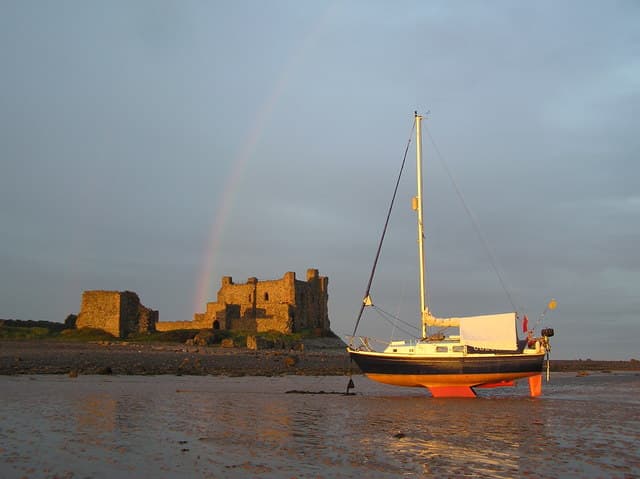
Piel Castle, located on Piel Island just half a mile off the Furness Peninsula in England, stands as a remarkable example of medieval military architecture with a rich history intertwined with monastic power and coastal defense. This 14th-century concentric fortress was built by the monks of Furness Abbey and served as a strategic stronghold to control shipping, trade, and protect the region from Scottish raids. Today, the castle’s ruins offer a glimpse into the medieval past amidst ongoing challenges from coastal erosion.
The island itself is accessible by ferry from Roa Island or via a guided walk across the sands at low tide, making it a unique destination for visitors interested in history and natural beauty. Near the island’s jetty stands the historic Ship Inn, established in the 18th century and expanded over time. The inn is famous for its quirky tradition of crowning "the King of Piel," a ceremonial monarch chosen by local custom involving a playful knighting ritual and rounds of drinks. This tradition, rooted in local folklore and a 15th-century uprising, adds cultural charm to the island’s historic atmosphere.
Historical background and construction
Piel Castle was constructed beginning around 1327 under the direction of John Cockerham, the Abbot of Furness Abbey, following a licence to crenellate granted by King Edward III. Its primary purpose was to safeguard the abbey’s economic interests by controlling the nearby harbour and defending against frequent Scottish raids that had affected the region in the early 14th century. The castle may have been built on or near the site of an earlier 12th-century fortification, possibly established during the reign of King Stephen, though this remains uncertain.
The castle’s construction occurred in three main phases: initially, a central keep was built as a summer residence for the abbey’s leadership. This was followed by the creation of an inner bailey with defensive walls, and later, an outer bailey to enhance its fortifications. Despite these efforts, the castle’s defenses were somewhat outdated even upon completion.
In 1408, Abbot John Bolton sought permission to dismantle the castle due to costly maintenance, but King Henry IV intervened to preserve its strategic value, leading to rebuilding efforts around 1429. The castle later became a hub for smuggling wool, causing complaints from merchants in Calais, a major English trading port at the time.
Significantly, Piel Castle played a role in national politics during the Wars of the Roses, serving as a base for Lambert Simnel, a pretender to the English throne, before his defeat at the Battle of Stoke Field in 1487.
By the early 16th century, the castle had fallen into decline. Following the dissolution of Furness Abbey in 1537 under Henry VIII, the castle passed into Crown ownership and was later granted to the Duke of Albemarle after the monarchy’s restoration in 1660. The island’s maritime role evolved in the late 18th century, serving as a base for pilots guiding ships through nearby waters.
Architectural features and layout
Piel Castle is an example of a concentric castle, featuring multiple layers of defensive walls designed to provide layered protection. At its heart lies a three-storey keep situated on the south-eastern corner of the site. This keep, rising approximately 45 feet (14 meters) tall and measuring about 76 by 74 feet (23 by 23 meters), was constructed on a low clay mound and reinforced with prominent buttresses. A tower on the keep’s south-eastern corner enhances its defensive profile.
The castle’s walls enclose two baileys: an inner bailey and a larger outer bailey. The stone curtain walls protecting these baileys are up to 8 feet (2.4 meters) thick. The outer bailey is defended by a wide moat approximately 13 meters (43 feet) across and nearly 3 meters (9.8 feet) deep, while the inner bailey is surrounded by a moat about 25 feet (7.6 meters) wide. Defensive towers approximately 15.5 feet (4.7 meters) wide punctuate the walls, and gatehouses provide controlled access.
The castle was primarily built using local beach stones bonded with liquid mortar, providing a sturdy foundation. For finer architectural details such as doorways and window frames, red sandstone ashlar was imported from the mainland. The keep’s entrance was originally at ground level but was later modified with a gatehouse on the north side, raising the doorway to the first floor. Above the gatehouse entrance arch is a carved figure, possibly representing Salome, though interpretations vary.
Inside the keep, each floor was divided into three parts by internal walls, creating central hallways running through every level. Large windows on the upper floors allowed light into the chambers, though some lower sections were later blocked. Unfortunately, the eastern side of the keep has collapsed due to sea erosion, a persistent threat to the castle’s survival.
Within the outer bailey stands a stone building often called "the chapel," measuring approximately 31 by 15 feet (9.4 by 4.6 meters). Its original function is unclear, and it was likely added late in the castle’s history after the main structures had begun to fall into ruin.
Cultural significance and traditions
The island’s cultural heritage is enriched by the Ship Inn and its unique tradition of crowning "the King of Piel." This playful monarchy, dating back to the 19th century, involves a ceremonial crowning where alcohol is poured over the monarch’s head while seated in an ancient chair holding a sword. Visitors can participate in a "knighting ceremony" by buying a round of drinks to earn the honour of sitting in an oak seat. The most recent king, crowned in September 2022, was selected from over 200 applicants, demonstrating the enduring popularity of this local custom.
Local lore also tells of a hidden tunnel linking the castle to Furness Abbey, purportedly used by monks as an escape route. Despite its persistence in popular legend, no archaeological evidence has been found to support this claim.
Preservation and current status
Piel Castle is currently managed by English Heritage and protected as a Grade I listed building. Extensive restoration efforts have been undertaken, including major work in the late 19th century by Walter Scott, Duke of Buccleuch, and further conservation following an archaeological survey in 1984 led by Rachel Newman. These efforts helped stabilize the ruins and protect them from ongoing coastal erosion.
Despite these measures, the castle remains vulnerable to the effects of rising sea levels and climate change, which continue to threaten its structural integrity. The island and castle serve as a poignant reminder of the challenges faced by coastal heritage sites and the importance of ongoing conservation.
Today, visitors to Piel Island can explore the castle ruins, enjoy the unique local traditions, and appreciate the island’s natural beauty and historical significance. The combination of medieval architecture, monastic history, and coastal folklore makes Piel Castle a fascinating destination for history enthusiasts and tourists alike.
Frequently asked questions (FAQ)
- How do I get to Piel Island?
- You can reach Piel Island by taking a ferry from Roa Island, which is located near Barrow-in-Furness. The ferry operates regularly, but it's best to check the schedule in advance to plan your visit.
- What is the historical significance of Piel Island?
- Piel Island has a rich history dating back to the 12th century when it was established as a fortified site. It served as a strategic location during various conflicts and is known for its medieval castle, which played a role in the defense of the area.
- When was Piel Castle built?
- Piel Castle was built in the 14th century, around 1327, by the Furness Abbey as a defense against Scottish invasions. The castle's remains are a testament to its historical importance and architectural design of that era.
- Can I explore the castle grounds?
- Yes, visitors are welcome to explore the grounds of Piel Castle. There are no entry fees, and you can enjoy the scenic views and learn about the castle's history at your own pace.
- Why is Piel Island a popular destination?
- Piel Island is popular for its stunning natural beauty and historical significance. Visitors enjoy the tranquil atmosphere, the unique architecture of Piel Castle, and the opportunity for birdwatching and walking along the coast.
- Is it possible to stay overnight on Piel Island?
- Overnight stays on Piel Island are limited, but there is a pub on the island that sometimes offers accommodation. It's advisable to check availability ahead of your visit, as options can be limited.
- What are the opening hours for Piel Island?
- Piel Island is accessible year-round, but the ferry service operates on a seasonal schedule, typically from March to October. It's best to verify the ferry timings before your visit to ensure you can make the most of your time on the island.
- What is the best time to visit Piel Island?
- The best time to visit Piel Island is during the summer months, from June to August, when the weather is milder and the ferry service is fully operational. This is also when local wildlife is most active, providing a picturesque setting for your visit.
- Are there any nearby attractions to Piel Island?
- Yes, nearby attractions include the historic town of Barrow-in-Furness and the beautiful beaches of Walney Island. Additionally, you can explore the South Lakes area for stunning landscapes and outdoor activities.
- What are the ticket prices for the ferry to Piel Island?
- Ferry tickets to Piel Island are typically affordable, with prices around £5 for a round trip. Children usually receive discounted rates, and it's a good idea to check with the ferry operator for any special offers or family tickets.
Photo gallery

Information
Website
Visit websiteSources & official resources
Verify the information above using these authoritative references.
Loading map...
Visitor reviews
No reviews yet. Been here? Write the first review and help other travelers!
Write the first reviewVisited this castle? Share your experience
Your review helps other travelers and adds first-hand knowledge to our encyclopedia.