Dalton Castle
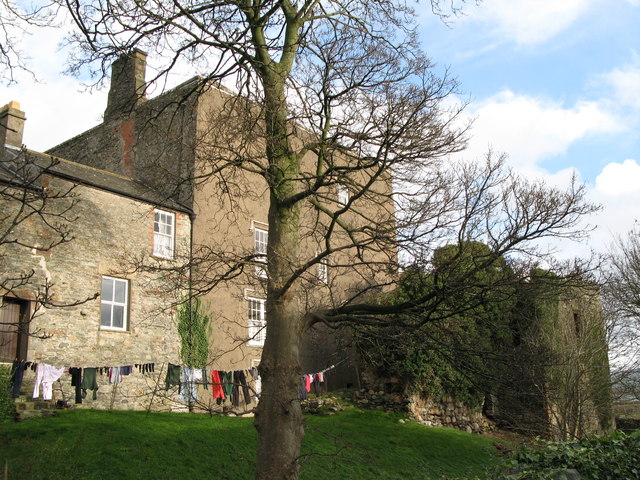
Dalton Castle stands prominently in Dalton-in-Furness, England, as a remarkable example of a medieval peel tower with a rich history spanning several centuries. Constructed in the 14th century by the monastic community of Furness Abbey, the castle was designed to serve both defensive and administrative purposes within the town. Its strategic location on a slight hill provided a vantage point to protect the nearby market settlement and assert the authority of the abbey over the surrounding lands.
The castle's construction reflects the dual role it played during the medieval period. As a fortified tower, it was built to withstand potential raids common in northern England during this era. The robust stone walls and narrow slit windows are characteristic features of peel towers, which were small fortified keeps designed for defense and refuge. Beyond its military function, Dalton Castle was the center of local governance, where the Abbot of Furness Abbey exercised judicial and administrative control. This dual function made the castle a pivotal site for both protection and law enforcement.
Architectural features and defensive design
Dalton Castle exemplifies the typical architecture of 14th-century peel towers, a style prevalent in northern England and southern Scotland. These towers were generally built with thick stone walls to resist attacks and often featured battlements or crenellations at the top for defenders to observe and repel attackers. While detailed plans of Dalton Castle’s interior are limited, it is known to have contained secure chambers for administration and detention.
The tower’s design includes narrow slit windows, which served as arrow loops, allowing defenders to shoot while remaining protected. The entrance was likely fortified with a heavy wooden door reinforced with iron, typical of the period’s defensive measures. The castle’s elevated position enhanced its defensive capabilities, providing clear sightlines over the surrounding landscape.
Historical role as a prison and administrative center
One of Dalton Castle’s most notable functions was its long-standing use as a prison. From at least 1257, the castle operated continuously as a detention facility for over five centuries, until 1774. This extended use highlights its importance in regional law enforcement, serving both ecclesiastical and civil authorities. Prison cells within the tower were used to hold individuals awaiting trial or punishment, reflecting the castle’s role in the administration of justice.
In addition to its penal function, Dalton Castle was the local seat of governance under the auspices of the Abbot of Furness Abbey. The abbot exercised judicial powers from the castle, conducting official matters and legal proceedings. This made the tower a center of power within the abbey’s territorial domain, overseeing the administration of the surrounding area.
Preservation, heritage status, and modern use
Today, Dalton Castle is recognized as a Grade I listed building, reflecting its exceptional architectural and historical significance. The castle is managed by the National Trust, an organization dedicated to preserving the United Kingdom’s cultural heritage. Its well-preserved condition allows visitors to appreciate the medieval defensive architecture and the castle’s historical role.
The castle now functions as a museum, showcasing local history and heritage. Among its exhibits is a display dedicated to George Romney, a prominent 18th-century painter born in Dalton-in-Furness. The museum helps maintain the castle’s connection to the community, offering educational opportunities and insights into the region’s past.
Location and significance within the region
Dalton Castle is situated at coordinates 54°09′19″N 3°11′11″W, occupying a commanding position in the town of Dalton-in-Furness. Its location on a hill enhances its visibility and defensive advantages, typical of hill castles designed to oversee and protect key settlements.
The castle’s enduring presence and protection by English Heritage underscore its importance as a cultural landmark. It stands as one of the region’s key historical sites, illustrating the medieval interplay between monastic power, local governance, and defensive architecture.
Historical context and the abbey’s influence
The construction of Dalton Castle by the monks of Furness Abbey reflects the significant influence monastic institutions held during the medieval period. Furness Abbey was a powerful religious and economic force in the region, and the castle served as a physical manifestation of its authority. The abbey’s need to protect its assets and administer justice led to the development of fortified structures like Dalton Castle.
Throughout the medieval period, the abbey’s control over the castle ensured that it was maintained as a secure administrative hub. The castle’s use as a prison further exemplifies the intertwining of religious and secular power, as ecclesiastical authorities often held judicial responsibilities in their territories.
Architectural modifications and adaptations
Over the centuries, Dalton Castle underwent modifications to suit its evolving roles, particularly to accommodate its function as a prison. These adaptations included the reinforcement of internal chambers and the installation of secure holding areas. Despite these changes, the castle has retained much of its original medieval character, allowing modern visitors to experience authentic elements of its defensive and administrative architecture.
The preservation efforts by the National Trust have focused on maintaining the structural integrity of the castle while enabling public access. The museum’s layout incorporates the historical features of the building, providing context for its use across different periods.
Frequently asked questions (FAQ)
- How do I get to Dalton Castle?
- Dalton Castle is located in the United Kingdom, easily accessible by car and public transport. If you're traveling by train, the nearest station is Dalton, which is just a short walk from the castle.
- What is the historical significance of Dalton Castle?
- Dalton Castle dates back to the 14th century and was originally built as a defensive structure. It played a vital role in local governance and has been a focal point of the community for centuries, making it a significant historical landmark.
- When was Dalton Castle built?
- Dalton Castle was constructed in 1390, showcasing the architectural style of the late medieval period. Its robust stone structure reflects the defensive needs of that era, highlighting its importance in local history.
- Can I take a guided tour of Dalton Castle?
- Yes, guided tours of Dalton Castle are available during the peak visiting season. These tours provide fascinating insights into the castle's history, architecture, and the stories of its past inhabitants.
- Why is Dalton Castle considered an architectural gem?
- Dalton Castle is renowned for its well-preserved medieval architecture, featuring a unique blend of defensive and domestic elements. Its impressive stone walls and historical design attract architecture enthusiasts and history buffs alike.
- Is it possible to visit Dalton Castle year-round?
- Dalton Castle has specific opening hours that vary by season, so it’s best to check the official website for current visiting times. Generally, it is open to visitors year-round, but certain areas may be restricted during winter months.
- What are the ticket prices for visiting Dalton Castle?
- Ticket prices for Dalton Castle are quite affordable, with discounts available for children, students, and seniors. It’s advisable to purchase tickets in advance during peak seasons to ensure entry.
- What is the best time to visit Dalton Castle?
- The best time to visit Dalton Castle is during the late spring and summer months when the weather is pleasant and gardens are in bloom. These months also offer the most frequent guided tours and special events.
- Are there any nearby attractions to Dalton Castle?
- Yes, there are several nearby attractions, including local parks, historic sites, and charming villages. Visitors can explore the surrounding countryside, which is perfect for hiking and enjoying the scenic views.
Information
Website
Visit websiteSources & official resources
Verify the information above using these authoritative references.
Loading map...
Visitor reviews
No reviews yet. Been here? Write the first review and help other travelers!
Write the first reviewVisited this castle? Share your experience
Your review helps other travelers and adds first-hand knowledge to our encyclopedia.