Pidhirtsi Castle
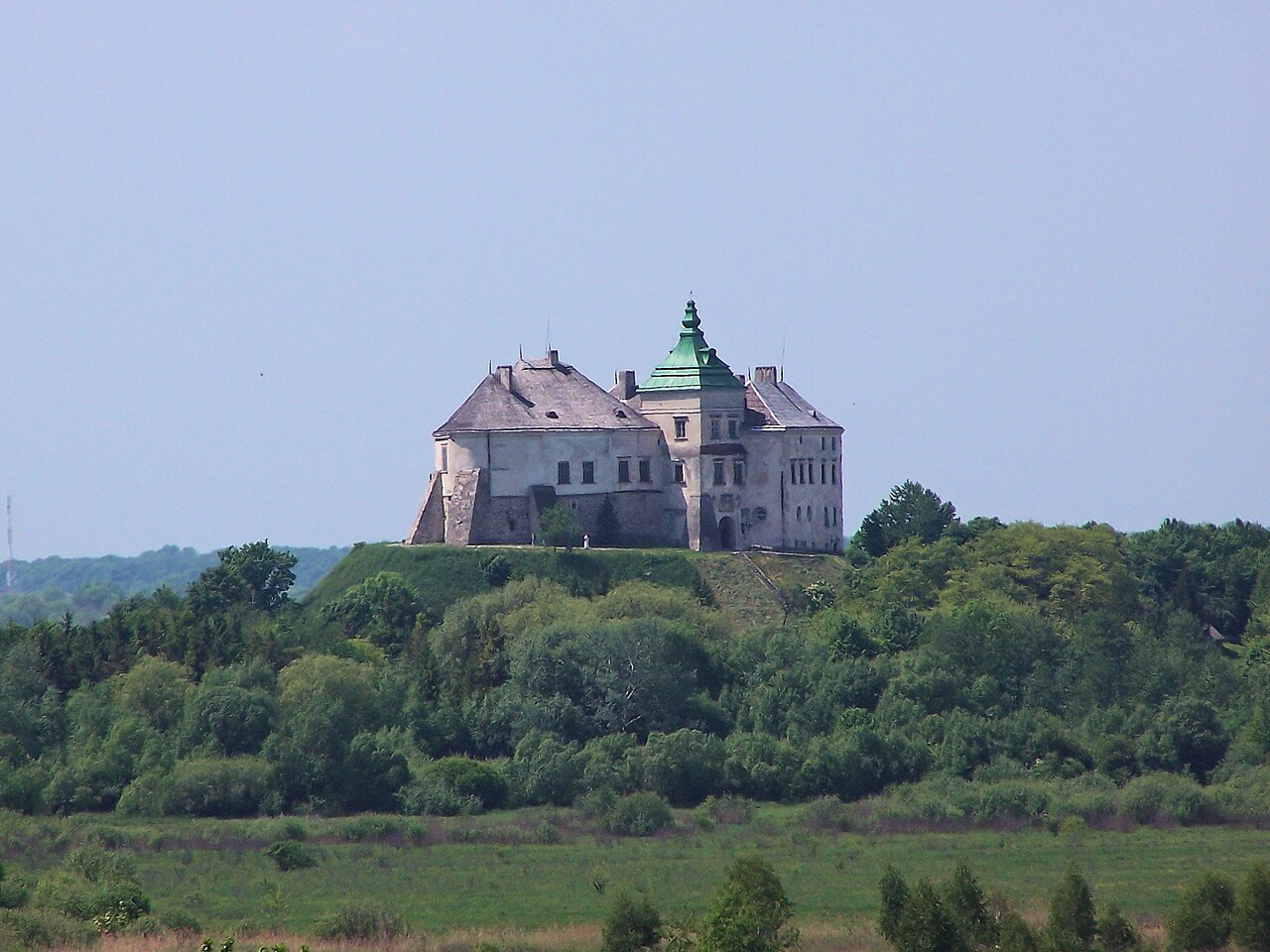
Pidhirtsi Castle stands as a monumental example of 17th-century Renaissance architecture in Ukraine, blending the grandeur of a noble residence with the formidable features of a fortress. Situated in the village of Pidhirtsi in the Lvivska oblast, this castle has a rich history marked by military significance, cultural flourishing, and enduring legends that contribute to its mystique and appeal.
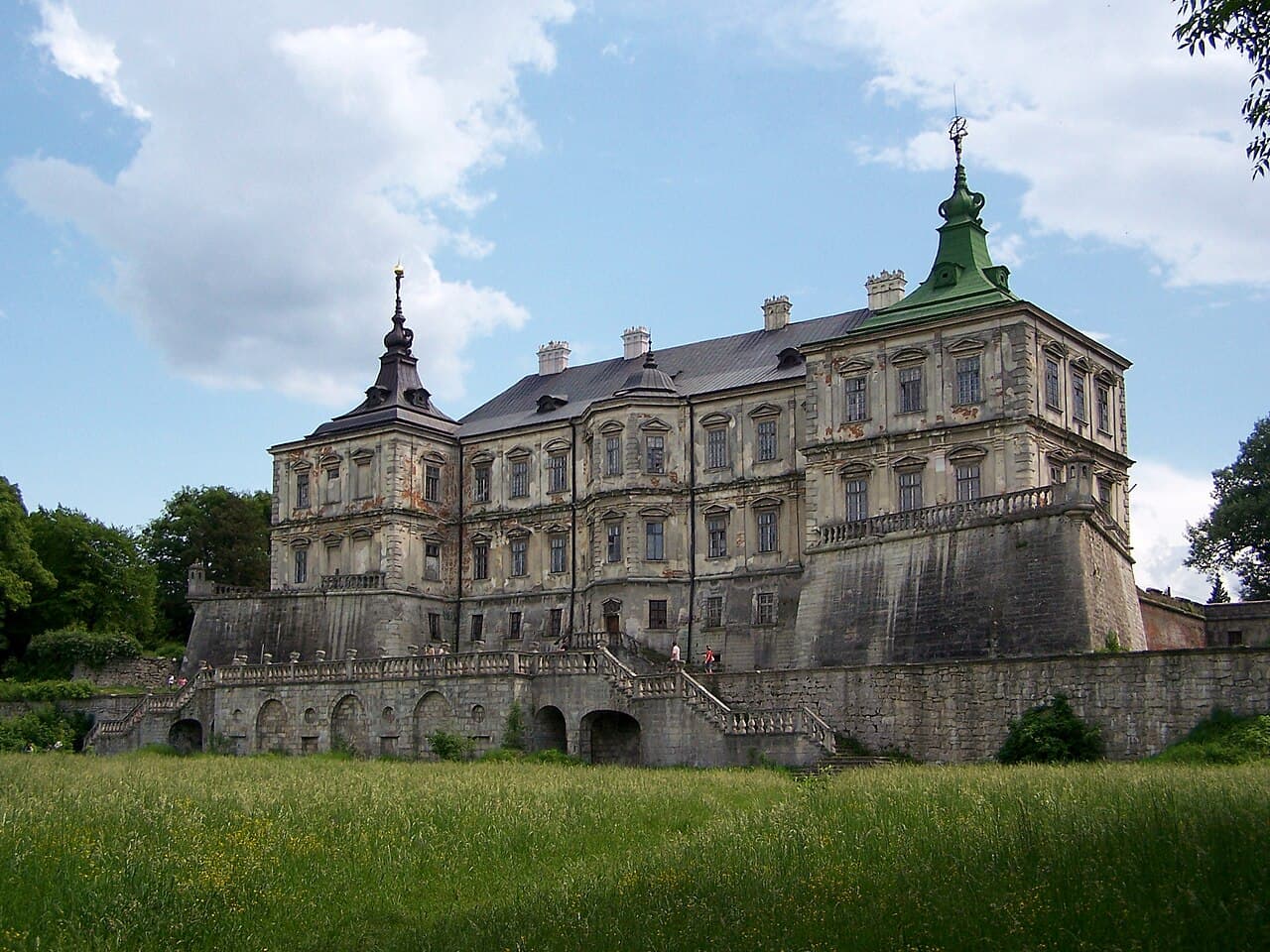
Constructed between 1635 and 1640 under the commission of Crown Hetman Stanisław Koniecpolski, the castle was designed to serve as a fortified residence on the eastern frontier of the Polish-Lithuanian Commonwealth. The design was influenced by the Italian palazzo in fortezza model, combining a grand palace with defensive military architecture. This synthesis is evident in the castle's roughly square plan, fortified with pentagonal bastions at each corner topped by sandstone watchtowers known as cavaliers, and surrounded by a deep stone-lined moat and earthen ramparts.
Architectural design and features
Fortifications and layout
The castle occupies a plateau at an elevation of 399 meters on the northern slope of the Voroniaky hills, overlooking the upper Styr River valley. Its construction primarily employs brick and stone, creating a robust and imposing structure. The defensive elements include casemates—vaulted chambers with smooth stone slab roofs between the inner and outer walls—used as terraces for walking and artillery placement, enclosed by protective balustrades.
The original structure rose to two floors with three-story pavilions and a central tower. In the 18th century, renovations added a third floor and removed the original drawbridge, signaling a shift from a fortress to a more comfortable noble residence. The main entrance is marked by an imposing portal with two columns supporting a marble plaque inscribed in Latin, commemorating military victories and periods of peace.
Residential and decorative elements
Inside, the castle featured richly decorated chambers named for their distinctive themes, including the Chinese Room, a notable example of chinoiserie in the region, as well as the Golden, Dining (Knight's), Green, Mirror, and Mosaic Rooms. These rooms were adorned with paintings, richly patterned wallpapers, marble tiled floors, and marble fireplaces. The furnishings included trophies from battles against the Turks and Tatars, such as Persian carpets and Turkish tents, reflecting the martial and cultural heritage of the owners.
Historical context and ownership
The site had defensive significance since at least 1530 before the construction of the current castle. The castle's early history was marked by damage during the Khmelnytsky Uprising in the mid-17th century, a major Cossack rebellion against Polish rule. Restoration efforts from 1656 to 1680 repaired and reinforced the structure.
Ownership passed through several noble families, including the Żółkiewski and Sanguszko families, who undertook extensive renovations in the 18th century. The castle was also once held by King Jan III Sobieski. During the 18th and 19th centuries, it functioned as a noble residence and cultural center, housing a printing house, theater, orchestra, and an extensive art collection of approximately 900 paintings by Flemish, Italian, and Polish artists.
20th-century challenges and restoration
In the 20th century, the castle suffered significant damage during both World Wars. It was occupied by Austro-Hungarian forces in World War I and looted by Russian troops, resulting in the loss of many valuable artworks. Under Soviet control, the castle was nationalized and repurposed as a tuberculosis sanatorium starting in 1949. A devastating fire in 1956 destroyed much of the interior decoration.
Since 1997, stewardship by the Lviv Art Gallery and charitable foundations has spearheaded ongoing restoration efforts. These projects aim to recover the castle's interiors and preserve its cultural heritage, supported by volunteer groups and exhibitions that have revived public interest.
Gardens, auxiliary structures, and religious sites
The castle's Italian-style gardens, originally laid out over three terraces with fountains and imported marble sculptures, were once a highlight of the estate. Although many sculptures were removed during the Soviet era and the gardens fell into decay, some structural elements like staircases and arcades remain, albeit closed for safety.
The complex included auxiliary buildings such as a granary, private menagerie, vineyards, apiary, trout ponds, and a wheelwright's workshop, supporting the estate's self-sufficiency and noble lifestyle.
Nearby stands the Roman Catholic Church of the Exaltation of the Holy Cross and St. Joseph, a Baroque rotunda built between 1752 and 1766 by architect Karol Romanus. This church served as a family mausoleum and is connected to the castle by a 300-meter lime tree avenue lined with 18th-century sculptures of St. Joseph and the Virgin Mary, creating a ceremonial link between the sacred and secular domains.
Legend and cultural significance
Pidhirtsi Castle is also known for its ghostly lore, particularly the legend of the lady in white, believed to be Maria Zhevuska, the wife of the Duke Zhevuski. Her spirit is said to wander the castle grounds, adding to the site's mystique and attracting visitors interested in paranormal history.
Today, the castle remains a significant cultural landmark in Ukraine, embodying a blend of military, residential, and artistic heritage. Its well-preserved fortifications and ongoing restoration efforts make it a compelling destination for historians, architects, and tourists alike.
Frequently asked questions (FAQ)
- How do I get to Pidhirtsi Castle?
- Pidhirtsi Castle is located in Pidhirtsi, Ukraine, and can be accessed by car or public transport from major cities like Lviv. The closest train station is in Brody, which is approximately 20 kilometers away. Local buses and taxis are available for the final leg of your journey to the castle.
- What is the historical significance of Pidhirtsi Castle?
- Pidhirtsi Castle, built in the 17th century, is a prime example of Renaissance architecture in Ukraine. It was designed as a defensive fortress and later transformed into a luxurious residence for the Radziwiłł family. The castle has witnessed numerous historical events, making it a significant cultural landmark.
- When was Pidhirtsi Castle constructed?
- Construction of Pidhirtsi Castle began in 1635 and was completed in 1640. It was designed by the renowned Italian architect Andrea del Aquila. The castle has since undergone various restorations, preserving its historical integrity.
- Can I take guided tours of Pidhirtsi Castle?
- Yes, guided tours are available at Pidhirtsi Castle, providing visitors with in-depth knowledge of its history and architecture. Tours typically include access to the castle grounds, gardens, and key interior rooms. It is recommended to check in advance for tour availability and schedules.
- Why is Pidhirtsi Castle considered an architectural marvel?
- Pidhirtsi Castle showcases a unique blend of Renaissance and Baroque architectural styles, characterized by its impressive façade and intricate details. The castle features beautiful gardens and a grand entrance, making it a stunning example of 17th-century design. Its strategic location and fortifications further enhance its architectural significance.
- Is it possible to visit Pidhirtsi Castle year-round?
- Yes, Pidhirtsi Castle is open to visitors year-round, but hours of operation may vary by season. It is advisable to check the official website or contact the castle administration for the most accurate information regarding opening hours and any seasonal events. Visiting in spring and summer offers a chance to enjoy the gardens in full bloom.
- What are the ticket prices for Pidhirtsi Castle?
- Ticket prices for Pidhirtsi Castle are generally affordable, with discounts available for students and seniors. Prices may vary based on guided tour options and special events. It is best to check the official website for the latest pricing information before your visit.
- What are some nearby attractions to Pidhirtsi Castle?
- In addition to Pidhirtsi Castle, visitors can explore the nearby Brody Castle and the picturesque town of Zolochiv, which is home to Zolochiv Castle. The region is also rich in natural beauty, offering picturesque landscapes and opportunities for outdoor activities. Make sure to allocate time to discover the surrounding attractions.
Photo gallery

Information
Website
Visit websiteSources & official resources
Verify the information above using these authoritative references.
Loading map...
Visitor reviews
No reviews yet. Been here? Write the first review and help other travelers!
Write the first reviewVisited this castle? Share your experience
Your review helps other travelers and adds first-hand knowledge to our encyclopedia.