Piccolomini Castle (Capestrano)
Piccolomini Castle, located in the town of Capestrano in the Province of L'Aquila, Abruzzo, Italy, is a notable example of a 15th-century hill castle from the late medieval period. This fortress is historically significant for its association with the prominent Piccolomini family, a noble lineage that played an influential role in Italian history during the Renaissance and late medieval eras.
The historical context of Piccolomini Castle
The castle was constructed in the 15th century, a time characterized by political fragmentation and frequent conflicts among feudal lords in Italy. The Piccolomini family, originally from Siena, expanded their influence into Abruzzo and commissioned the building of this castle to assert control over the surrounding territory and to serve as a defensive stronghold against rival factions and external threats.
Its strategic location on a hilltop provided commanding views of the surrounding valley, enabling early detection of approaching enemies. This defensive advantage was crucial during the turbulent times of the late medieval period, marked by frequent skirmishes and power struggles.
Architectural features and design
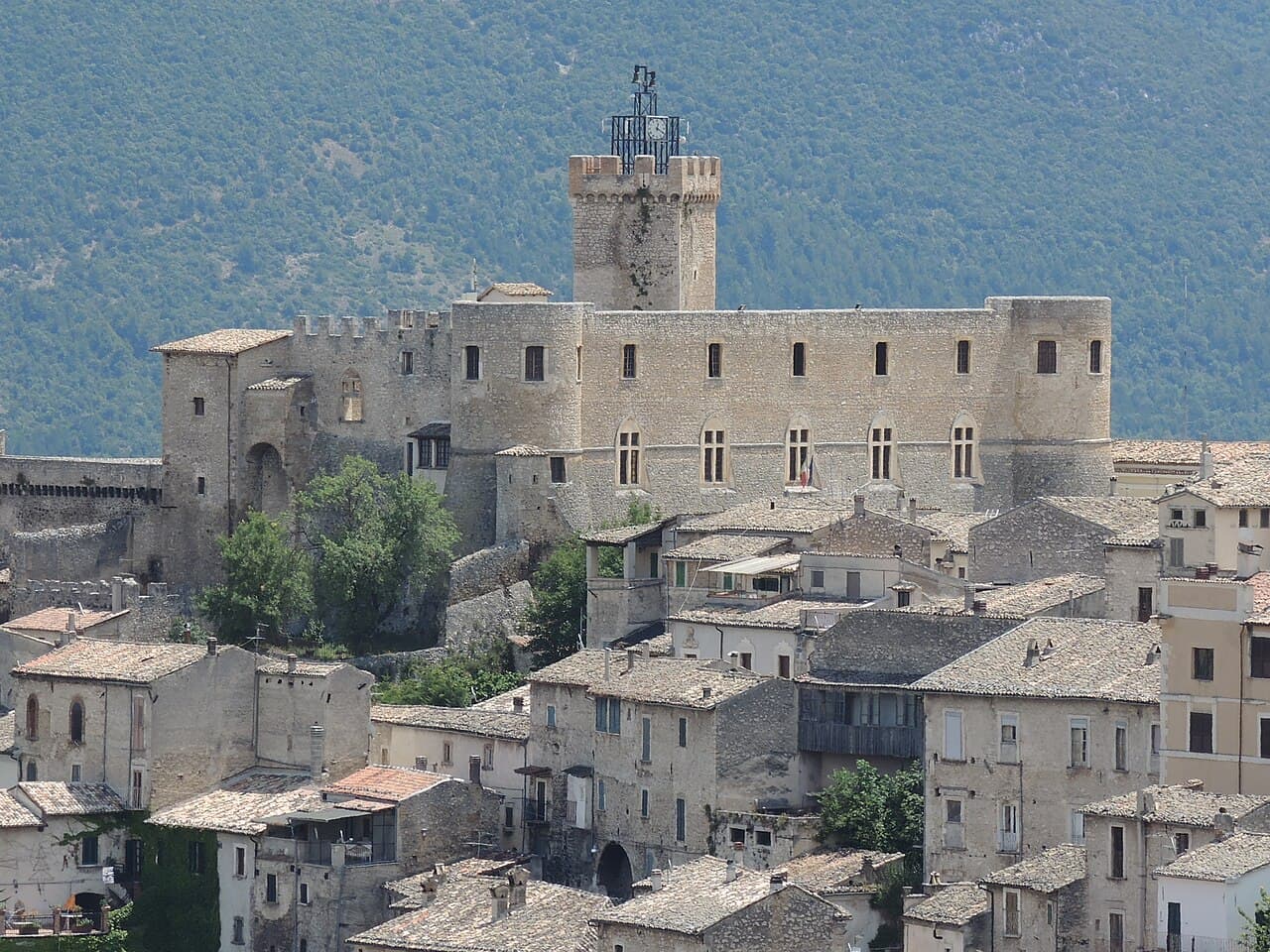
Piccolomini Castle exemplifies the typical characteristics of a hill castle built for both defense and residence. The castle's design includes robust stone walls that enclose a central courtyard, with towers positioned at key points to enhance surveillance and fortification. The walls are thick and built to withstand siege weaponry common in the 15th century.
The entrance is fortified with a gatehouse, often featuring a portcullis and defensive machicolations, allowing defenders to protect the main access point effectively. Inside, the castle contains residential quarters, storage rooms, and possibly a chapel, reflecting the dual function of the castle as a noble residence and military fortress.
The architectural style is predominantly late medieval, with elements that hint at the transition toward Renaissance aesthetics, which the Piccolomini family embraced in their later constructions elsewhere.
Defensive structures
The castle’s battlements and arrow slits are designed for archers and crossbowmen to defend against attackers while remaining protected. The towers provide elevated platforms for observation and defense, and their placement ensures overlapping fields of fire.
The hilltop position naturally enhances the castle's defense by limiting access routes and making direct assaults difficult.
Residential and functional spaces
Within the walls, the castle likely contained a great hall used for gatherings and administrative functions. Living quarters, kitchens, and storage areas are arranged to support the daily life of the noble family and their retainers. The presence of a chapel would align with the religious practices of the time, serving both spiritual needs and reinforcing the family’s status.
The Piccolomini family and their legacy
The Piccolomini family is renowned for producing prominent figures, including two popes: Pope Pius II and Pope Pius III. Their patronage extended to the arts and architecture, influencing the cultural landscape of Italy during the Renaissance.
While the Capestrano castle was primarily a military and administrative center, it also symbolized the family's power and prestige in the region. The castle’s preservation allows insight into the feudal structures and noble lifestyles of late medieval Italy.
Current condition and visitor information
Today, Piccolomini Castle in Capestrano remains a well-preserved example of a late medieval hill castle. Its stone walls and towers stand largely intact, allowing visitors to appreciate the architectural and historical significance firsthand.
The castle is accessible to the public and is a point of interest for those exploring the Abruzzo region's medieval heritage. Visitors can explore the castle grounds, including the defensive walls and towers, gaining insight into the military architecture of the period.
Its location in the scenic Abruzzo countryside also offers opportunities to enjoy the natural landscape surrounding the fortress.
Photo gallery

Information
Loading map...
Visitor reviews
No reviews yet. Been here? Write the first review and help other travelers!
Write the first reviewVisited this castle? Share your experience
Your review helps other travelers and adds first-hand knowledge to our encyclopedia.