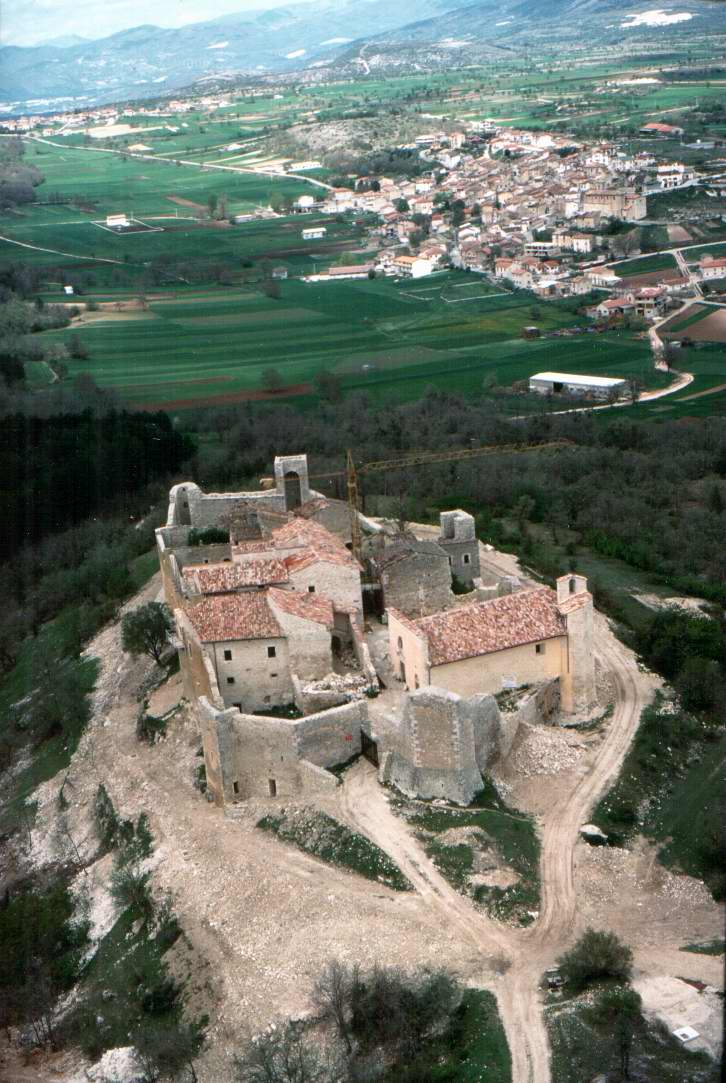
The Castle of Bominaco stands as a significant example of medieval military architecture in Italy, located in the small settlement of Bominaco within the municipality of Caporciano. Built originally in the 12th century, this hill castle was strategically positioned to oversee and protect the fertile Navelli plateau, a key area for agriculture and trade during the medieval period. Its commanding location allowed the feudal lords to exert control over the surrounding territory while providing a defensive stronghold against potential invaders.
Historical context and construction
The castle's origins are closely tied to the medieval inhabitants who sought to establish a fortified presence above important religious sites, notably the church of Santa Maria Assunta and the oratory of San Pellegrino. This proximity underscores the intertwined nature of spiritual and feudal power in the region during the Middle Ages. The initial construction likely featured typical defensive elements of the time, including thick stone walls and lookout towers, designed to withstand sieges and raids.
In the early 15th century, the castle became a focal point of conflict during a period of regional warfare. In either August 1423 or 1424, the fortress was attacked and destroyed by forces led by the famous condottiero Braccio da Montone. This assault resulted in the death of the then feudal lord, Castellano della Rosa, marking a violent chapter in the castle's history and reflecting the turbulent political landscape of Italy during this era.
Following its destruction, the castle was rebuilt under the supervision of Cipriano da Forfona, whose family had longstanding ties to the area, with his father Jacobucci having previously held lordship over Bominaco. The reconstruction received formal approval from Pope Martin V, illustrating the influence of papal authority in legitimizing feudal rule and fortification efforts. This rebuilding phase likely incorporated advancements in military architecture to enhance the castle's defensive capabilities.
Architectural features and defensive design
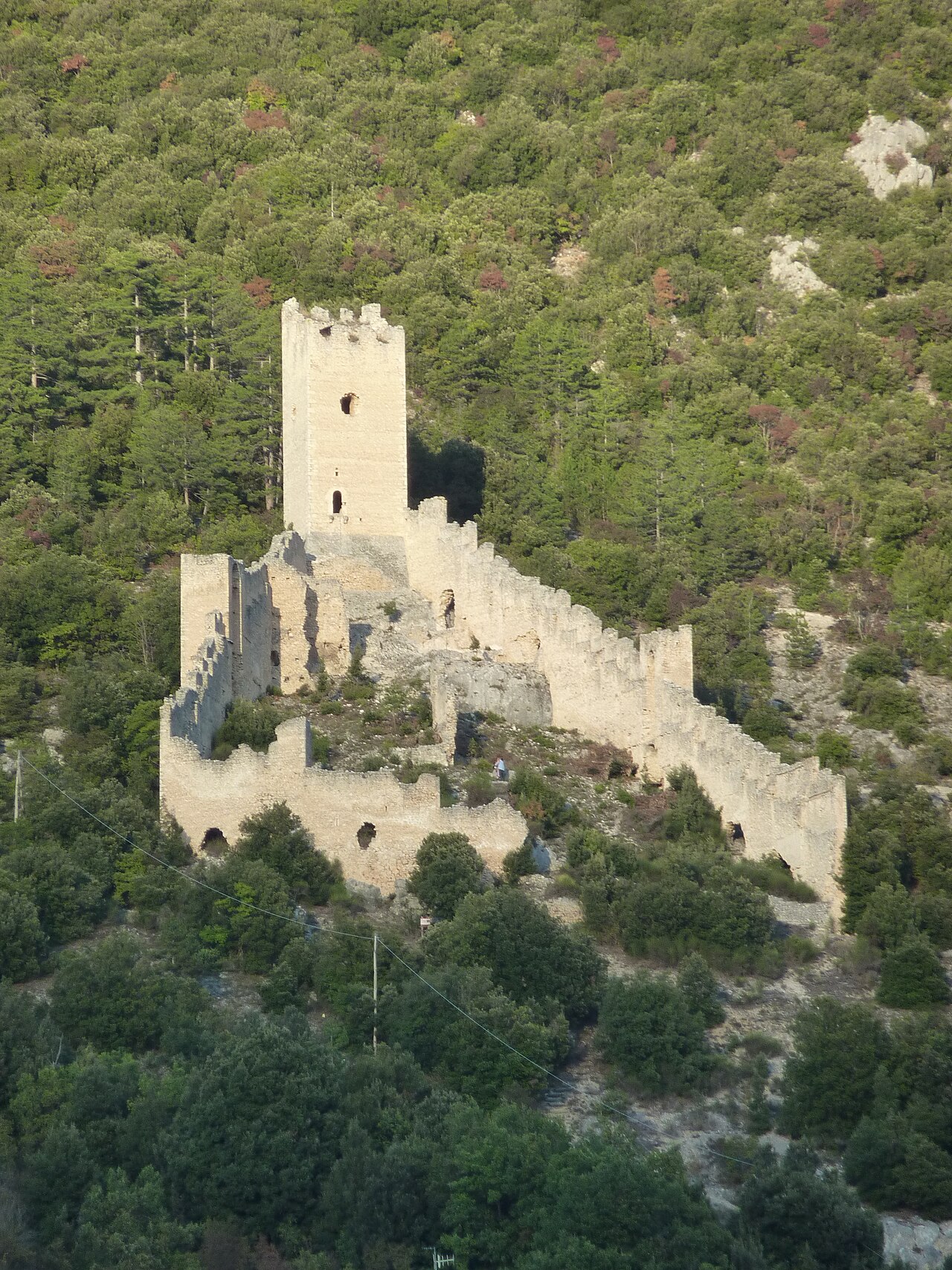
The surviving remains of the Castle of Bominaco reveal a thoughtfully designed trapezoidal outer wall enclosing the fortress. This wall is reinforced by a series of square towers positioned at intervals, each serving as a bastion to provide overlapping fields of fire and surveillance. Such a layout was typical of medieval fortifications, aiming to cover all possible approaches and reduce blind spots vulnerable to attackers.
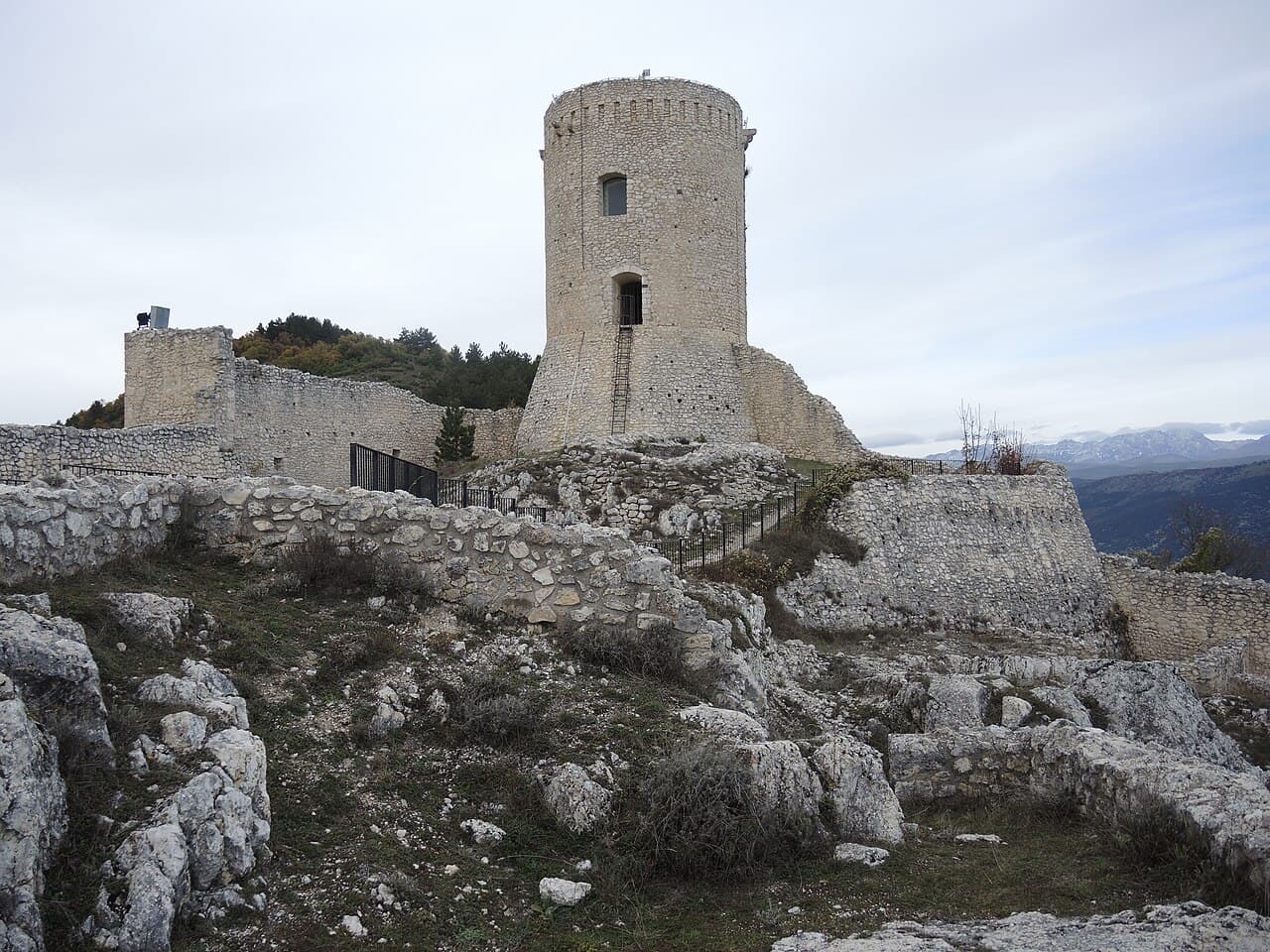
Dominating the highest point within the enclosure is a prominent cylindrical keep, or mastio, which functioned as the ultimate defensive refuge during sieges. The keep features a sharply outward-sloping base, known as a scarp, designed to prevent undermining and make scaling the walls more difficult for assailants. The upper edge of the keep is crowned with a projecting battlement, providing defenders with protected positions to launch counterattacks and observe the surrounding landscape.
Inside the castle walls, the remains of various residential and functional buildings can still be discerned. These masonry ruins mark the locations of living quarters, storage areas, and other essential spaces that supported the daily life and military readiness of the castle's occupants. Although only partial ruins survive, they offer valuable insights into the layout and organization of a medieval fortress adapted for both habitation and defense.
The castle's role in regional power and papal influence
The Castle of Bominaco not only served as a military bastion but also as a symbol of feudal authority in the Navelli plateau region. Its reconstruction under papal approval highlights the important role the Papacy played in shaping political and military landscapes in medieval Italy. By granting formal sanction to Cipriano da Forfona's rebuilding efforts, Pope Martin V reinforced the legitimacy of local lords aligned with the Church, thereby stabilizing governance and defense in this contested area.
This dynamic between secular and ecclesiastical power was characteristic of the late medieval period, where castles often functioned as administrative centers as well as fortresses. The Castle of Bominaco exemplifies this dual role, overseeing both the spiritual sites below and the surrounding lands, ensuring control over resources and population.
Current condition and archaeological significance
Today, the Castle of Bominaco exists as partially preserved ruins, with significant portions of its defensive walls, towers, and keep still standing. The trapezoidal layout and the imposing cylindrical keep remain key features for visitors and scholars alike, offering a tangible connection to the medieval past. Archaeological studies of the site have helped clarify the castle's construction phases, defensive strategies, and the lifestyle of its inhabitants.
Preservation efforts focus on maintaining the structural integrity of the remaining walls and towers, while also facilitating public access and education about the castle's historical importance. The site attracts visitors interested in medieval architecture, military history, and the complex interplay of feudal and religious power in Italy.
Architectural details of the keep
The mastio or keep is notable for its cylindrical form, which was less common than rectangular keeps but offered strategic advantages such as deflecting projectiles and eliminating blind spots. The scarped base not only strengthened the foundation but also served as a deterrent against mining operations aimed at collapsing the walls. The projecting battlements atop the keep provided defenders with a commanding view and protected positions to repel attackers.
Defensive towers and walls
The square towers integrated into the trapezoidal outer wall were equipped to house guards and archers, enabling a layered defense system. Their placement allowed crossfire coverage, making any assault costly and difficult. The trapezoidal shape itself was a strategic choice to adapt to the terrain and maximize defensive angles.
Relationship with religious structures
The castle's location above the church of Santa Maria Assunta and the oratory of San Pellegrino reflects the medieval practice of situating fortifications near spiritual centers. This proximity symbolized the protection of sacred sites by feudal powers and reinforced the alliance between religious and secular authorities. It also provided the lords with spiritual legitimacy and control over pilgrimage routes and local populations.
Frequently asked questions (FAQ)
- How do I get to the Castle of Bominaco?
- The Castle of Bominaco is located in the Abruzzo region of Italy, easily accessible by car from major cities like L'Aquila and Pescara. If you are using public transport, you can take a train to L'Aquila and then a bus or taxi to reach the castle.
- What is the historical significance of the Castle of Bominaco?
- The Castle of Bominaco dates back to the 10th century and is a significant example of medieval military architecture in Italy. It played a crucial role in the defense of the region during various historical conflicts, reflecting the rich history of the area.
- When was the Castle of Bominaco built?
- Construction of the Castle of Bominaco began in the 10th century, during the time of the Lombards. It was expanded and fortified over the following centuries, showcasing the evolution of military architecture in response to changing warfare techniques.
- Can I visit the Castle of Bominaco?
- Yes, visitors are welcome to explore the Castle of Bominaco. The site offers guided tours that provide insights into its history and architecture, making it a great destination for history enthusiasts and casual visitors alike.
- Why is the architecture of the Castle of Bominaco important?
- The architecture of the Castle of Bominaco is important because it exemplifies the military style of the medieval period, with its fortified walls and strategic positioning. The structure also reflects the cultural influences of the time, showcasing the craftsmanship and engineering skills of the era.
- Is it possible to access the castle with limited mobility?
- Access to the Castle of Bominaco may be challenging for visitors with limited mobility due to the uneven terrain and steep paths leading up to the castle. It is advisable to contact the site in advance to inquire about specific accessibility options that may be available.
- What are the opening hours for the Castle of Bominaco?
- The Castle of Bominaco is typically open to visitors from 9 AM to 5 PM, but hours may vary depending on the season. It’s best to check the official website or contact the site directly for the most current information before planning your visit.
- What are the ticket prices for visiting the Castle of Bominaco?
- Ticket prices for the Castle of Bominaco are generally affordable, with discounts available for students and seniors. It’s recommended to check the official site for the latest pricing information and any special offers that may be available during your visit.
- When is the best time to visit the Castle of Bominaco?
- The best time to visit the Castle of Bominaco is during the spring and early autumn months when the weather is mild and pleasant. Visiting during these seasons allows you to enjoy the beautiful surrounding scenery and avoid the summer tourist crowds.
- Are there nearby attractions to visit while in Bominaco?
- Yes, there are several nearby attractions worth exploring, including the beautiful village of Bominaco itself and the stunning landscapes of the Gran Sasso National Park. Other historical sites, such as the nearby Abbey of Santa Maria di Bominaco, also offer enriching experiences for visitors.
Photo gallery

Information
Website
Visit websiteSources & official resources
Verify the information above using these authoritative references.
Loading map...
Visitor reviews
No reviews yet. Been here? Write the first review and help other travelers!
Write the first reviewVisited this castle? Share your experience
Your review helps other travelers and adds first-hand knowledge to our encyclopedia.