Castle of San Pio delle Camere
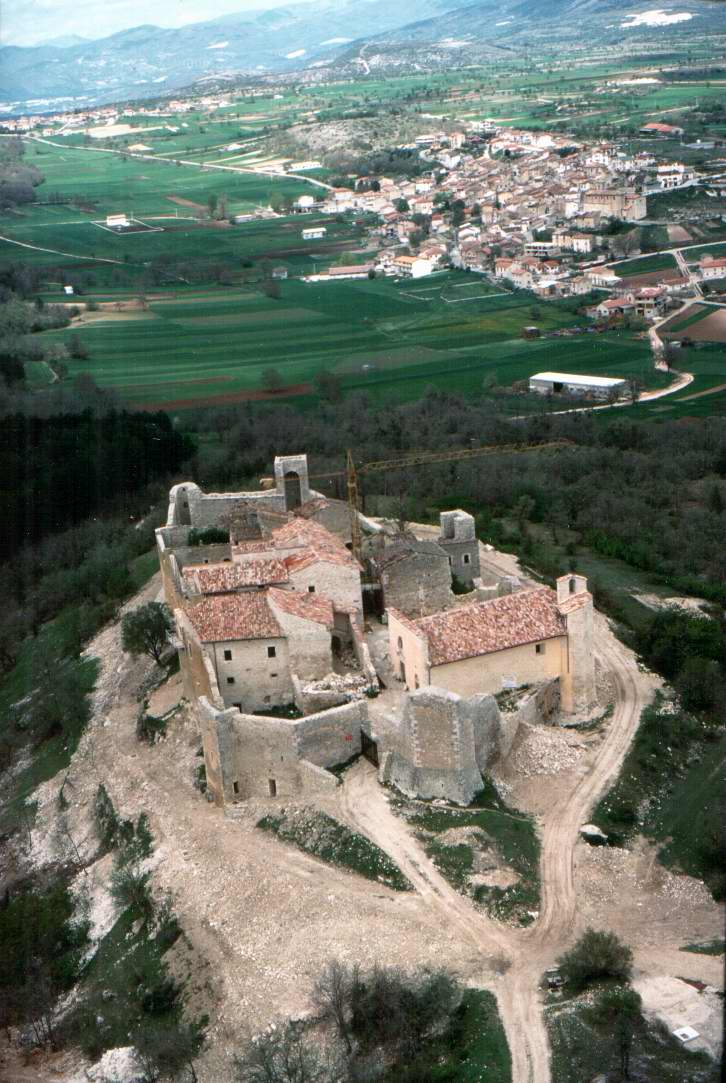
The Castle of San Pio delle Camere is a significant example of medieval military architecture located in the municipality of San Pio delle Camere, within the province of L'Aquila in the Abruzzo region of southern Italy. Constructed originally in the 12th century, this hill castle was strategically positioned on the slopes of Monte Gentile, overlooking the village and the expansive Navelli plain. Its location offered commanding views of the surrounding landscape, including the ancient tratturo Magno, a vital livestock route linking L'Aquila to Foggia, underscoring the castle's role in controlling important regional pathways.
Medieval origins and feudal ownership
The castle's earliest documented mention dates back to 1173, identifying it as a fiefdom under the Bonagiunta family from Poppleto (modern-day Coppito). This situates the fortress within the feudal network characteristic of central Italy during the high medieval period. Later, ownership transitioned to the Caracciolo family, a noble lineage that maintained control through the Middle Ages. Throughout its active use, the castle functioned primarily as a defensive refuge rather than as a permanent noble residence, providing shelter for local inhabitants and their livestock during times of conflict or unrest. This defensive purpose highlights the castle's importance amid the turbulent political dynamics of medieval Abruzzo.
Architectural features and construction phases
The mastio and triangular plan
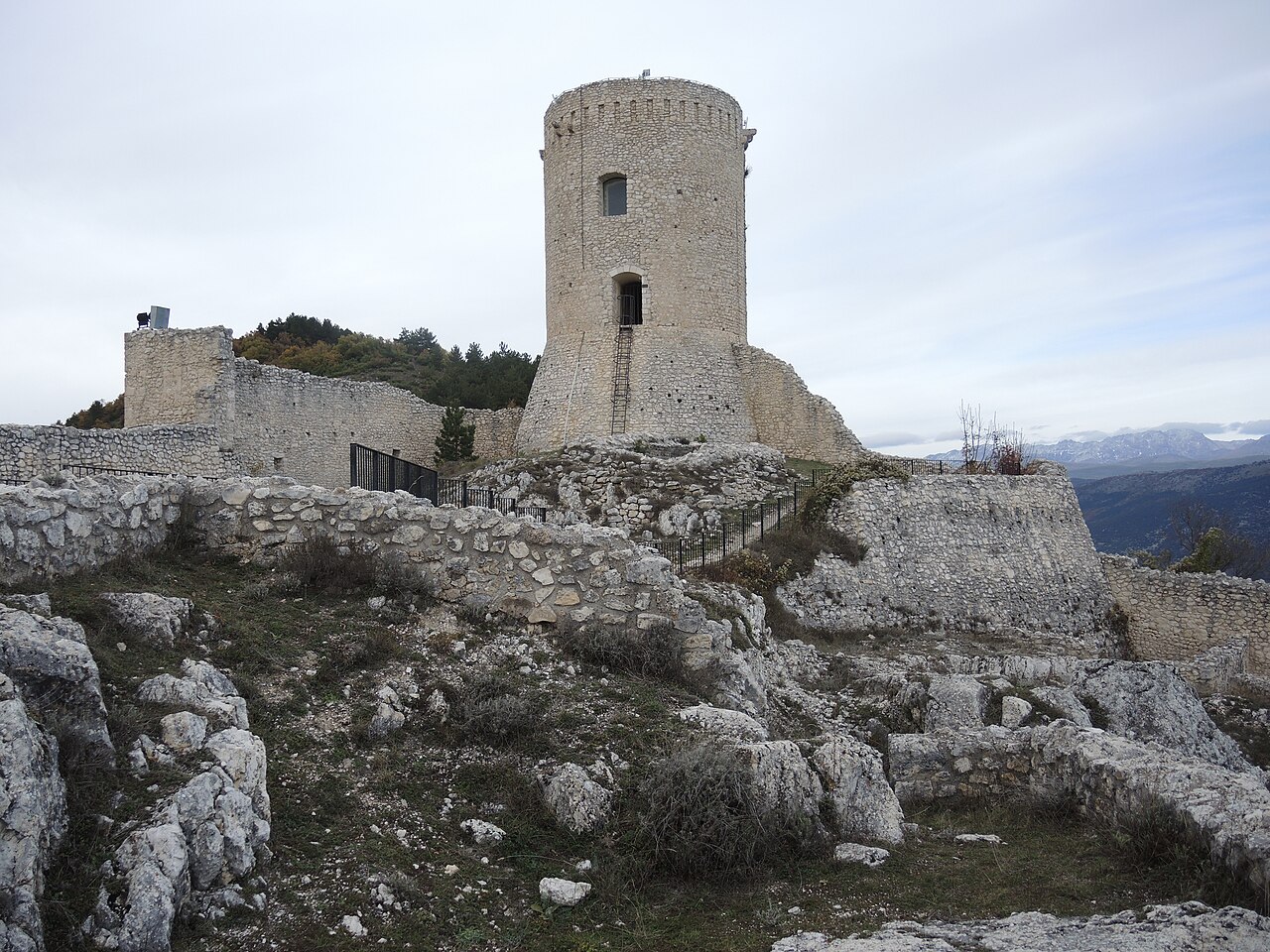
The castle's most distinctive architectural feature is its mastio, or main tower, which exhibits a rare "a puntone" design combining a square base with an equilateral triangular plan. This unique geometric form reflects a sophisticated approach to medieval fortification, balancing structural stability with defensive needs. The mastio was the first element constructed, serving as the core stronghold around which the rest of the fortress was developed.
Curtain walls and defensive towers
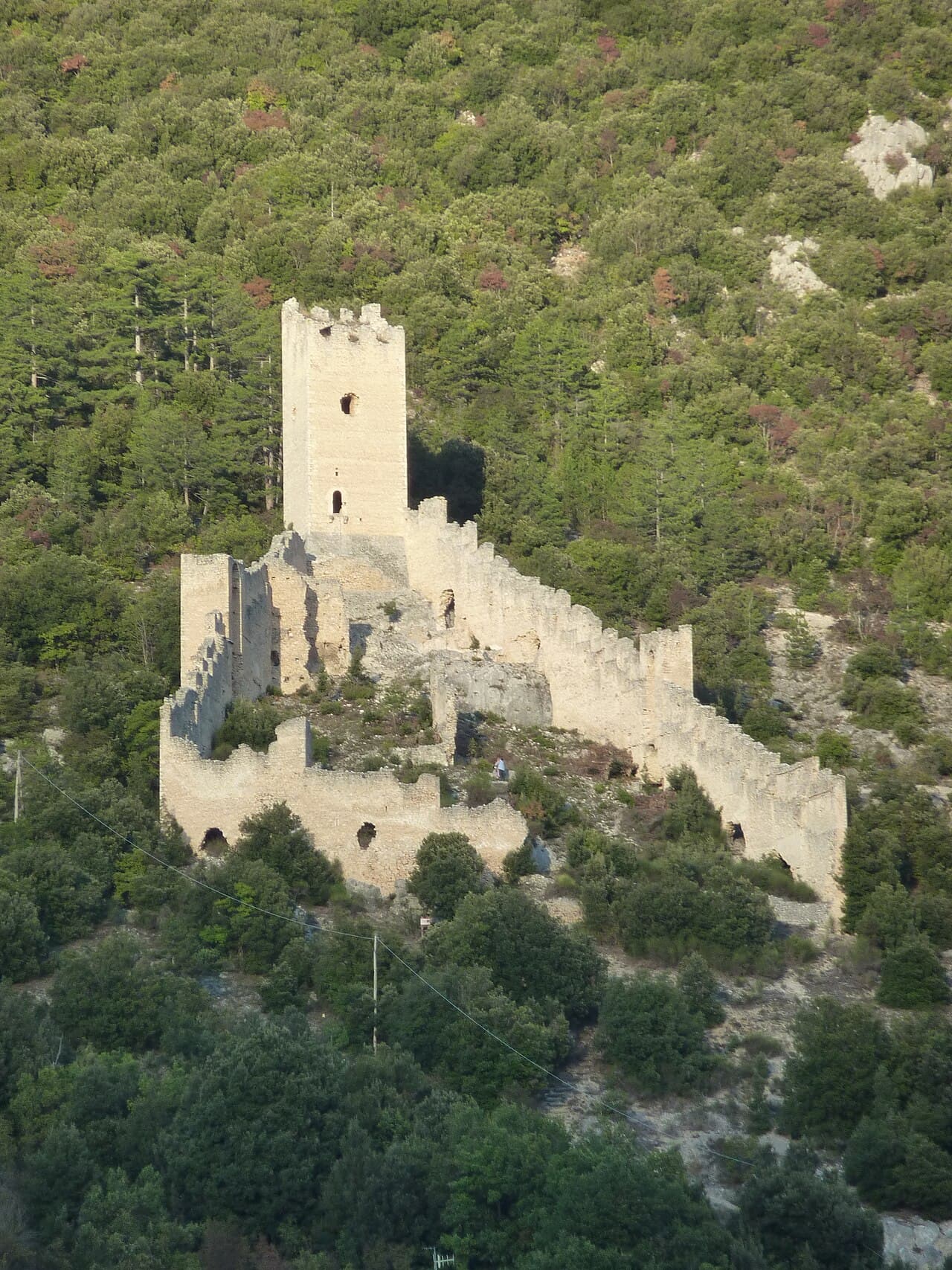
Surrounding the mastio is a triangular fortified enclosure formed by curtain walls built using a stepped technique, which rise progressively to encircle the main tower. Along these walls, smaller defensive towers known as torri rompitratta are positioned at regular intervals. These towers served multiple defensive functions: they provided elevated vantage points for surveillance, allowed defenders to interrupt and break up enemy advances, and facilitated patrols along the chemin de ronde, the wall walk used for defense.
14th-century enhancements
In the 14th century, the castle underwent significant modifications, particularly the elevation and reinforcement of its enclosing walls. These changes reflect adaptations to evolving military technologies and tactics, enhancing the fortress's ability to withstand sieges and attacks. The stepped construction of the walls during this phase improved their defensive strength and allowed for better positioning of defenders.
Historical conflicts and decline
The castle's military significance made it a target during regional conflicts, most notably in 1424 during the war of L’Aquila. It was attacked by forces led by the famed condottiero Braccio da Montone, who also assaulted nearby castles such as those at Barisciano, Bominaco, Fossa, Ocre, and Tussio. This assault inflicted severe damage, leaving the castle in ruins and ending its role as a defensive stronghold. The destruction from this conflict remains evident in the castle's current state.
Present-day ruins and cultural significance
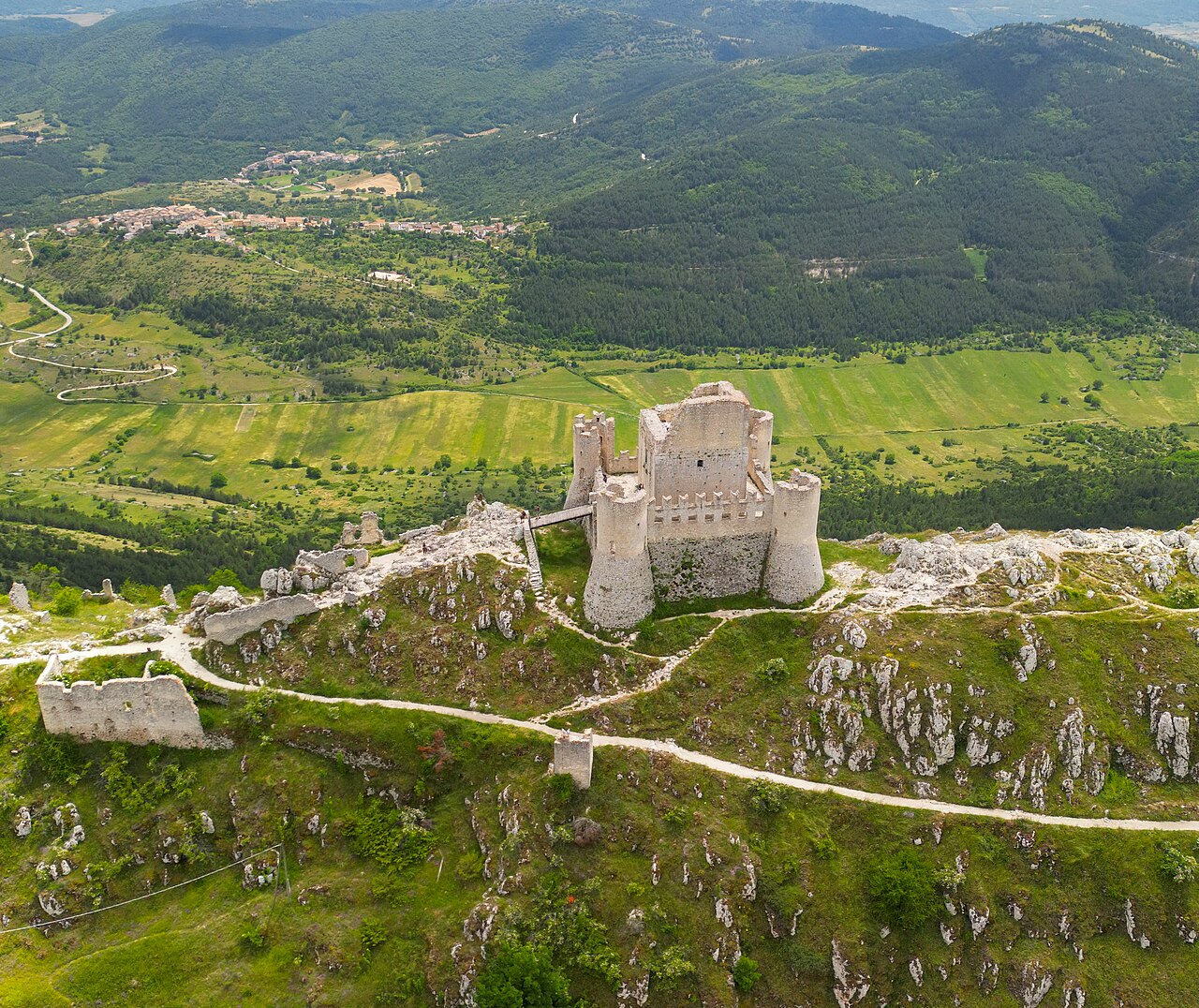
Today, the ruins of the Castle of San Pio delle Camere stand as a testament to its medieval past. The remains clearly outline the original triangular layout and the prominent mastio, offering insights into the castle's defensive design and strategic purpose. The site provides valuable information about medieval fortification techniques in Abruzzo and the broader context of Italian feudal military architecture.
Its location overlooking the Navelli plain and the tratturo Magno emphasizes the castle's historical role in controlling important economic and military routes. The ruins attract scholars and visitors interested in medieval history, architecture, and the complex feudal relationships that shaped the region.
The castle's preservation as a hill castle ruin allows for ongoing archaeological study and cultural appreciation, contributing to the understanding of medieval defensive strategies and regional history in central Italy.
Frequently asked questions (FAQ)
- When was the Castle of San Pio delle Camere built?
- The castle was constructed in the 12th century during the high medieval period, with the earliest written record dating to 1173.
- What is the architectural layout of the castle?
- The castle features a unique triangular plan with a main tower (mastio) designed in a combined square and equilateral triangle shape, surrounded by stepped curtain walls and smaller defensive towers.
- What happened to the castle during the war of L’Aquila?
- In 1424, the castle was attacked by forces led by condottiero Braccio da Montone, resulting in significant damage and its eventual ruin.
- Is the castle open to visitors?
- The castle is currently in ruins and may be accessible for visits, but there are no specific visiting hours or ticket information available.
- Where is the castle located?
- It is located on Monte Gentile in the municipality of San Pio delle Camere, Abruzzo, Italy, overlooking the Navelli plain.
Photo gallery

Information
Loading map...
Visitor reviews
No reviews yet. Been here? Write the first review and help other travelers!
Write the first reviewVisited this castle? Share your experience
Your review helps other travelers and adds first-hand knowledge to our encyclopedia.