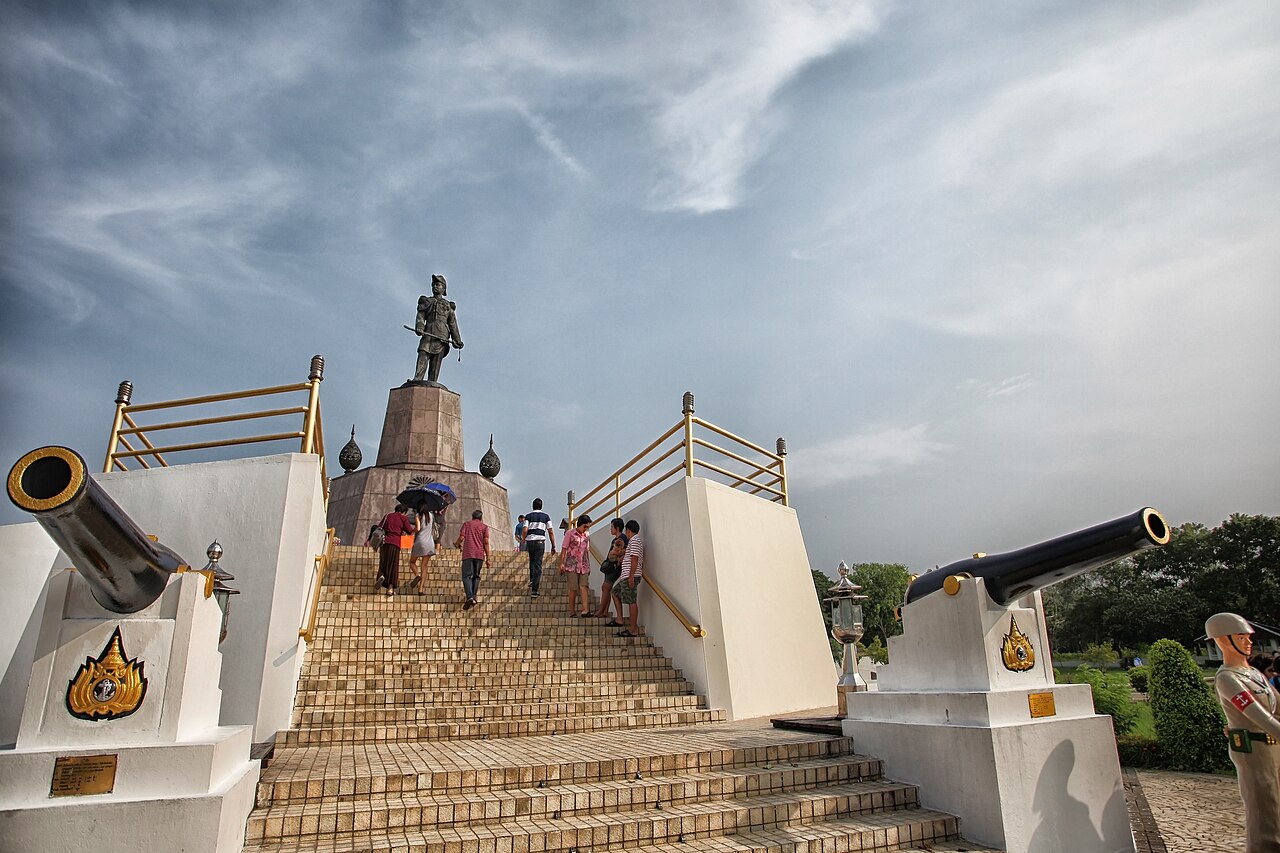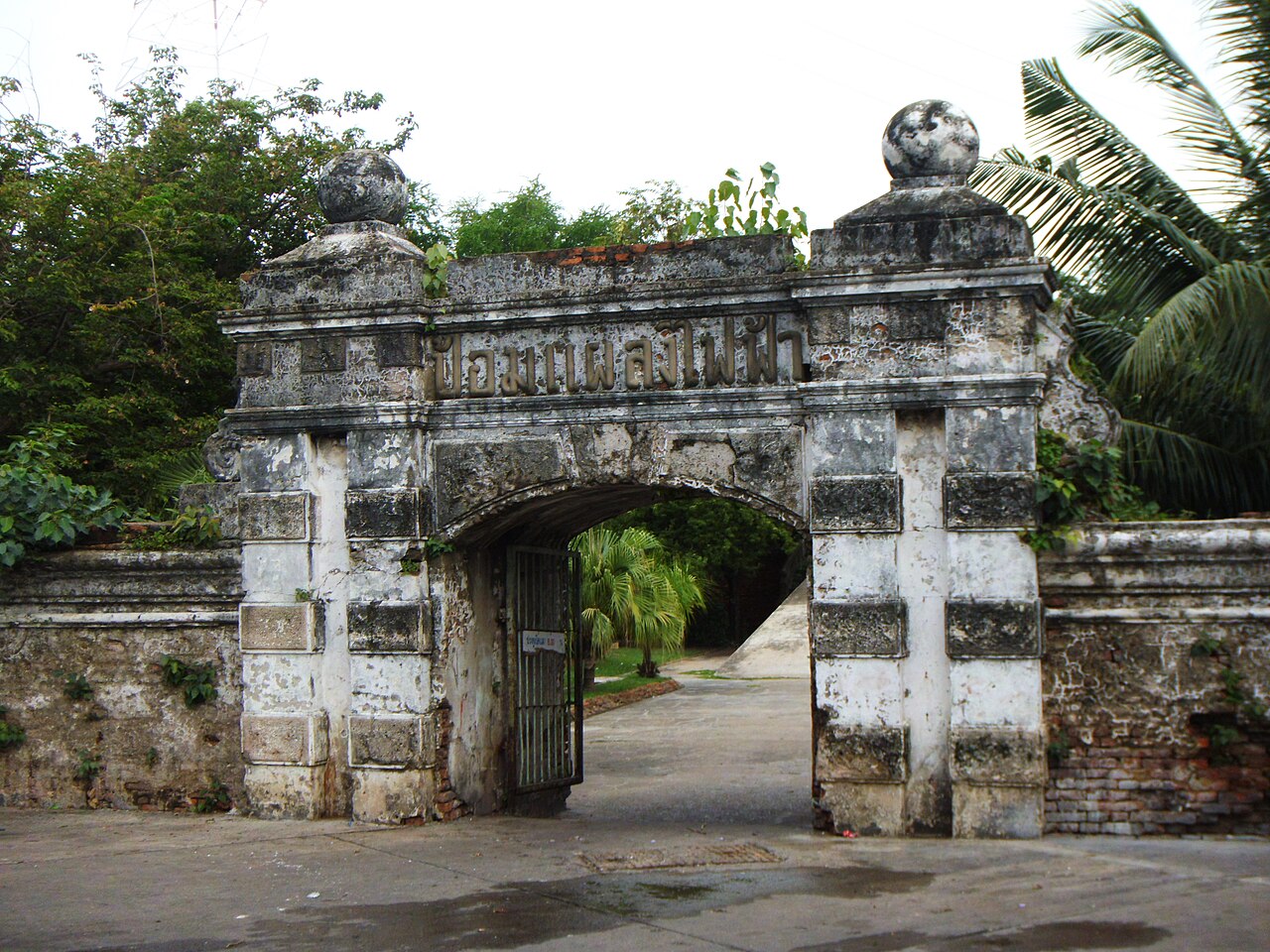
Phi Suea Samut Fort is a bastioned fortress located on the coast of Thailand, notable for its role in the country's maritime defense during the 19th century. Constructed under the reign of King Rama IV (Mongkut) in the mid-1800s, this fortification was part of a broader effort to strengthen Thailand's coastal defenses against potential colonial threats from European powers.
Historical context and strategic importance
During the 19th century, Southeast Asia experienced increasing pressure from European colonial expansion. Thailand, then known as Siam, sought to maintain its sovereignty by modernizing its military infrastructure. Phi Suea Samut Fort was built as a response to these geopolitical challenges, serving as a coastal defense fortress guarding the Gulf of Thailand. Its location was chosen strategically to protect important maritime routes and nearby settlements from naval attacks.
Architectural features and design
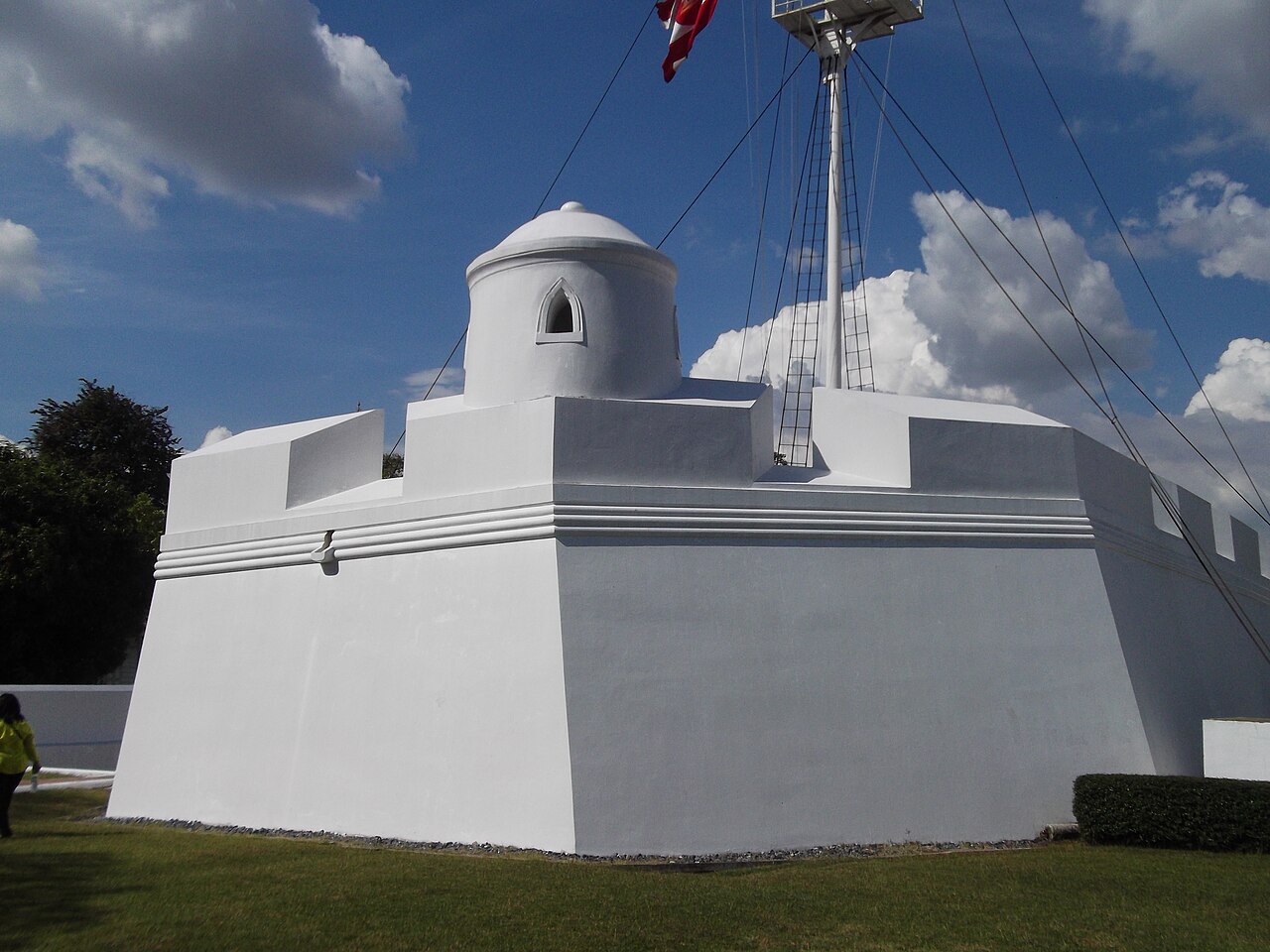
The fort exemplifies the bastioned fortress design, characterized by angular bastions projecting outward from the main walls. This design allowed defenders to cover adjacent walls with cannon fire, eliminating blind spots and enhancing the fort's defensive capabilities. The walls were constructed using thick masonry, designed to withstand artillery bombardment common in the era.
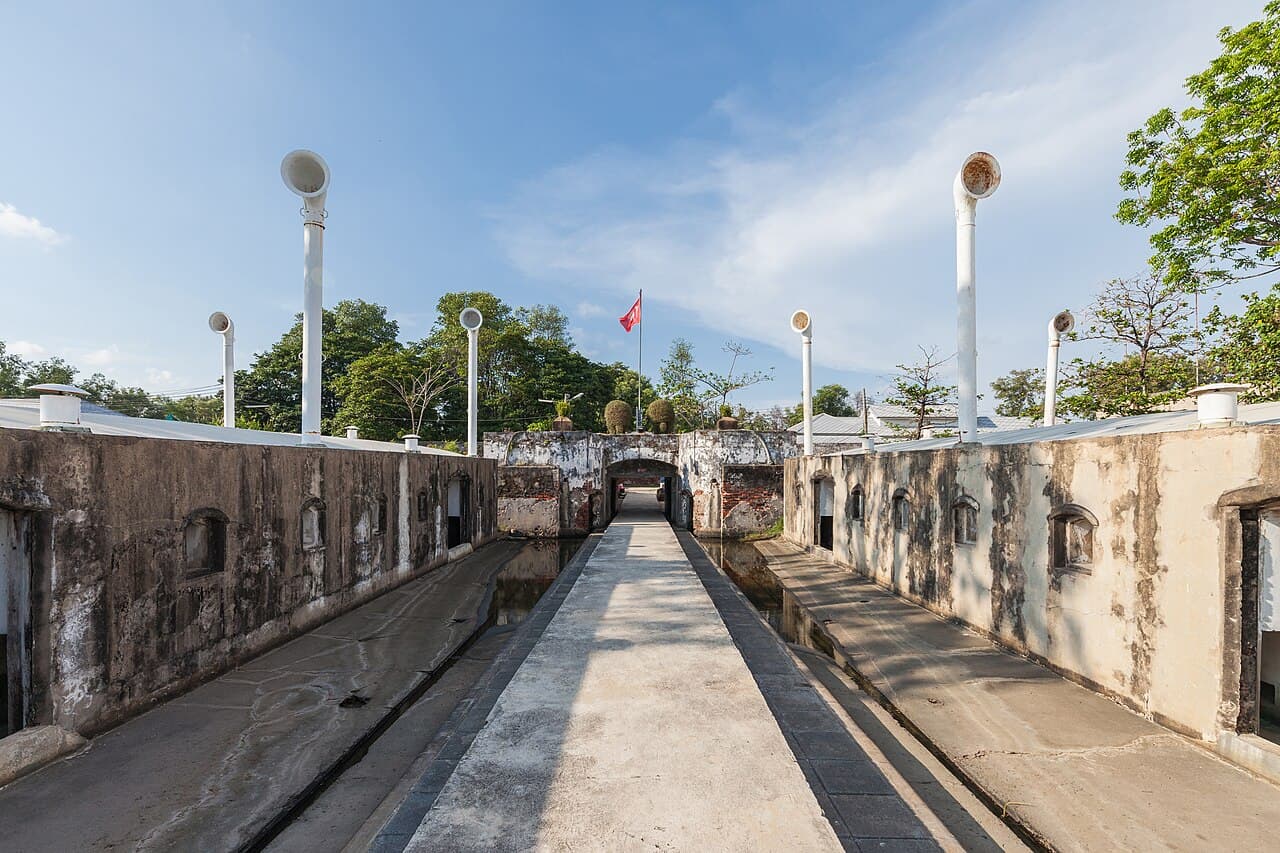
The layout includes several bastions, ramparts, and a central courtyard, with cannon placements oriented towards the sea. The fort's construction incorporated both traditional Thai building techniques and Western military architectural principles, reflecting the period's cross-cultural influences.
Construction and materials
Built primarily from locally sourced bricks and mortar, the fort's robust walls were designed to endure harsh coastal weather and potential sieges. The use of brick masonry was typical for Thai military structures of the period, providing both durability and relative ease of construction. The bastions feature embrasures for mounting artillery pieces, which were crucial for the fort's defensive role.
Historical significance and legacy
Phi Suea Samut Fort played a key role in Thailand's efforts to maintain independence during a period of intense colonial competition in Southeast Asia. While it never faced a major siege, its presence served as a deterrent against foreign naval incursions. The fort stands today as a symbol of Thailand's strategic military adaptations in the 19th century.
Currently, the fort is recognized as a well-preserved historical site, attracting visitors interested in military history and coastal fortifications. Its preservation allows for insight into the architectural and military strategies employed by Thailand during a critical period of its history.
Visiting phi suea samut fort
The site is accessible to the public, offering a glimpse into Thailand's coastal defense heritage. Visitors can explore the bastions, walls, and cannon placements, gaining an understanding of the fort's design and function. The surrounding area provides scenic views of the Gulf of Thailand, enhancing the visitor experience.
Information about visiting hours and ticket prices may vary, so prospective visitors should check local resources or official tourism websites for the latest details.
Frequently asked questions (FAQ)
- When was Phi Suea Samut Fort built?
- Phi Suea Samut Fort was constructed in the 19th century during the reign of King Rama IV as part of Thailand's coastal defense strategy.
- What is the architectural style of Phi Suea Samut Fort?
- The fort features a bastioned fortress design, incorporating angled bastions for improved defense, typical of post-medieval military architecture.
- Can visitors explore Phi Suea Samut Fort?
- Yes, the fort is accessible to the public and visitors can walk around the bastions and walls to learn about its historical significance.
- Why was Phi Suea Samut Fort built?
- It was built to protect Thailand's coast from potential naval attacks during a period of colonial expansion in Southeast Asia.
- Is Phi Suea Samut Fort well preserved?
- Yes, the fort is well preserved and remains a significant historical site reflecting 19th-century military architecture in Thailand.
Photo gallery

Photo by This Photo was taken by Supanut Arunoprayote. Feel free to use any of my images, but please mention me as the author and may send me a message. (สามารถใช้ภาพได้อิสระ แต่กรุณาใส่เครดิตผู้ถ่ายและอาจส่งข้อความบอกกล่าวด้วย) Please do not upload an updated image here without consultation with the Author. The author would like to make corrections only at his own source. This ensures that the changes are preserved.Please if you think that any changes should be required, please inform the author.Otherwise you can upload a new image with a new name. Please use one of the templates derivative or extract.•CC BY 4.0
Information
Loading map...
Visitor reviews
No reviews yet. Been here? Write the first review and help other travelers!
Write the first reviewVisited this castle? Share your experience
Your review helps other travelers and adds first-hand knowledge to our encyclopedia.