Chulachomklao Fort
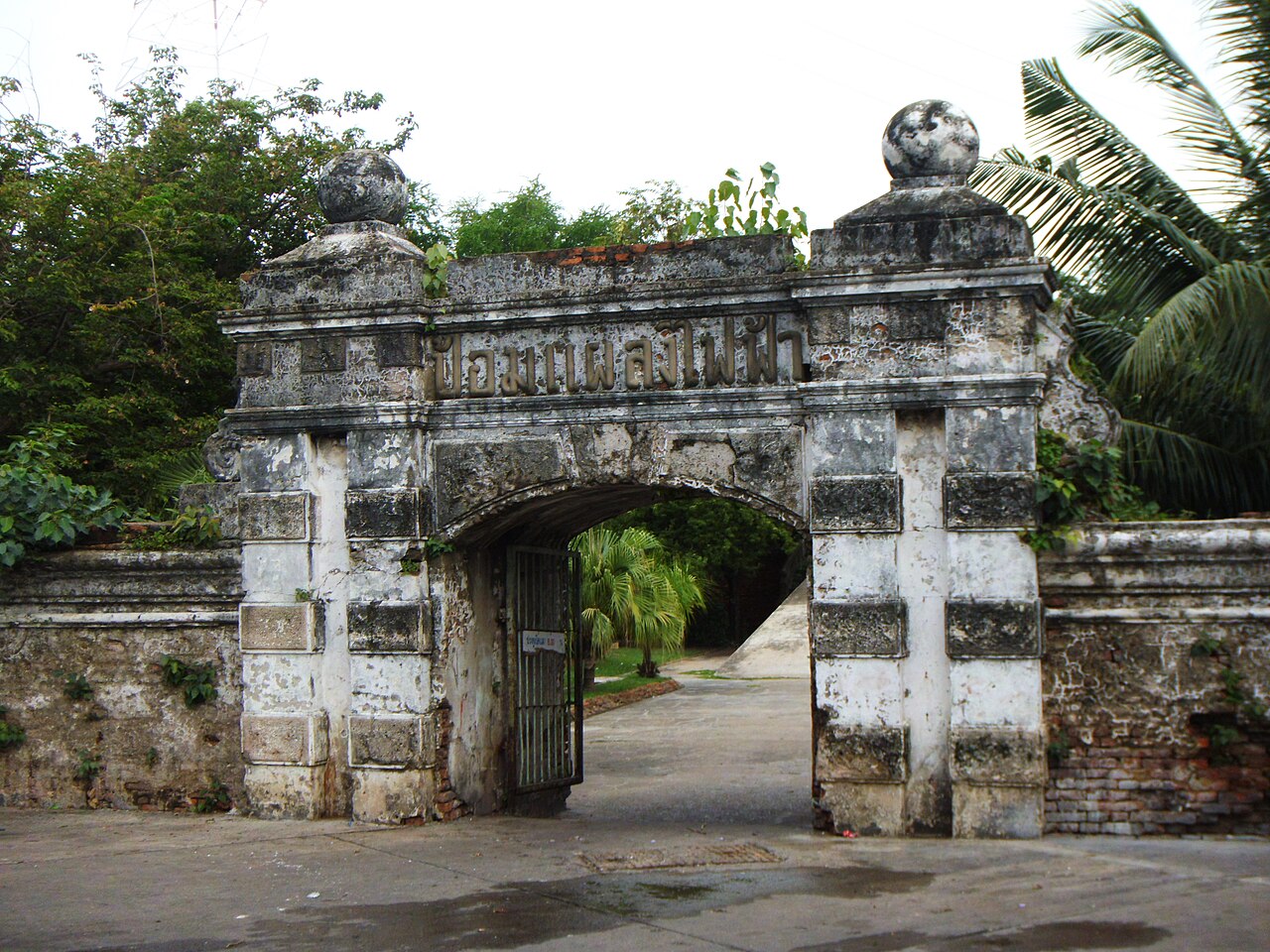
Phra Chulachomklao Fort (ป้อมพระจุลจอมเกล้า), also known as "Phra Chun Fort," is a significant bastioned fortress located in the Laem Fa Pha sub-district of Phra Samut Chedi District, Samut Prakan Province, Thailand. This water fortress was constructed in the late 19th century under the reign of King Chulalongkorn (King Rama V) as part of Thailand's efforts to modernize its coastal defenses against colonial threats from European powers such as England and France.
Historical context and construction
Although there is no precise record of the exact construction date, it is widely accepted that Phra Chulachomklao Fort was built around March 1884. This period was marked by increasing tensions in Southeast Asia, with colonial powers expanding their influence. King Rama V recognized the need for a modern fortification to protect the mouth of the Chao Phraya River and the approaches to Bangkok from naval attacks.
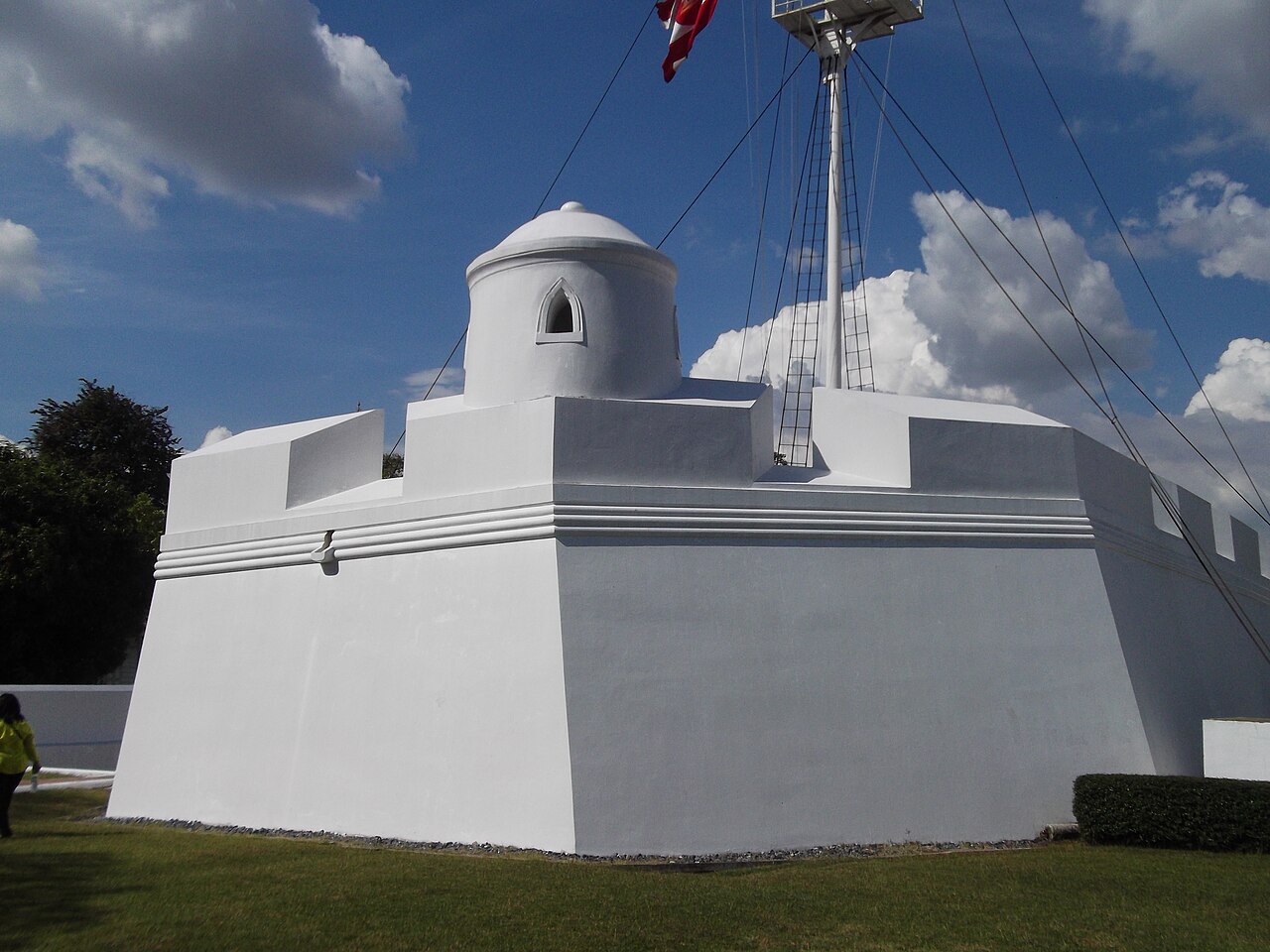
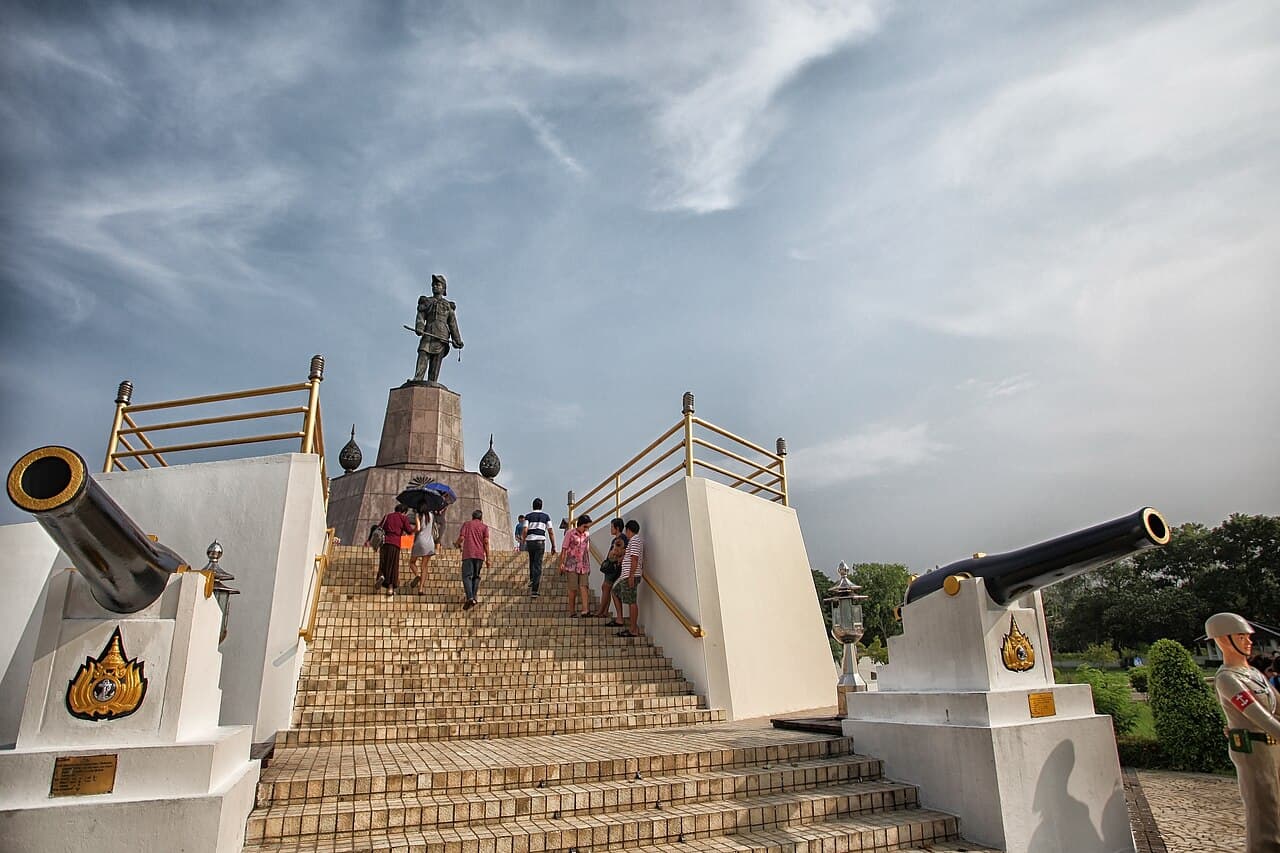
The fort was designed as a bastioned fortress with water defenses, incorporating the latest military technology of the time. It was equipped with seven 153/32 mm Armstrong cannons, famously nicknamed the "crouching tiger cannon" due to their distinctive design and powerful artillery capability. These cannons represented state-of-the-art weaponry and were a key factor in the fort's defensive strength.
Architectural features and military significance
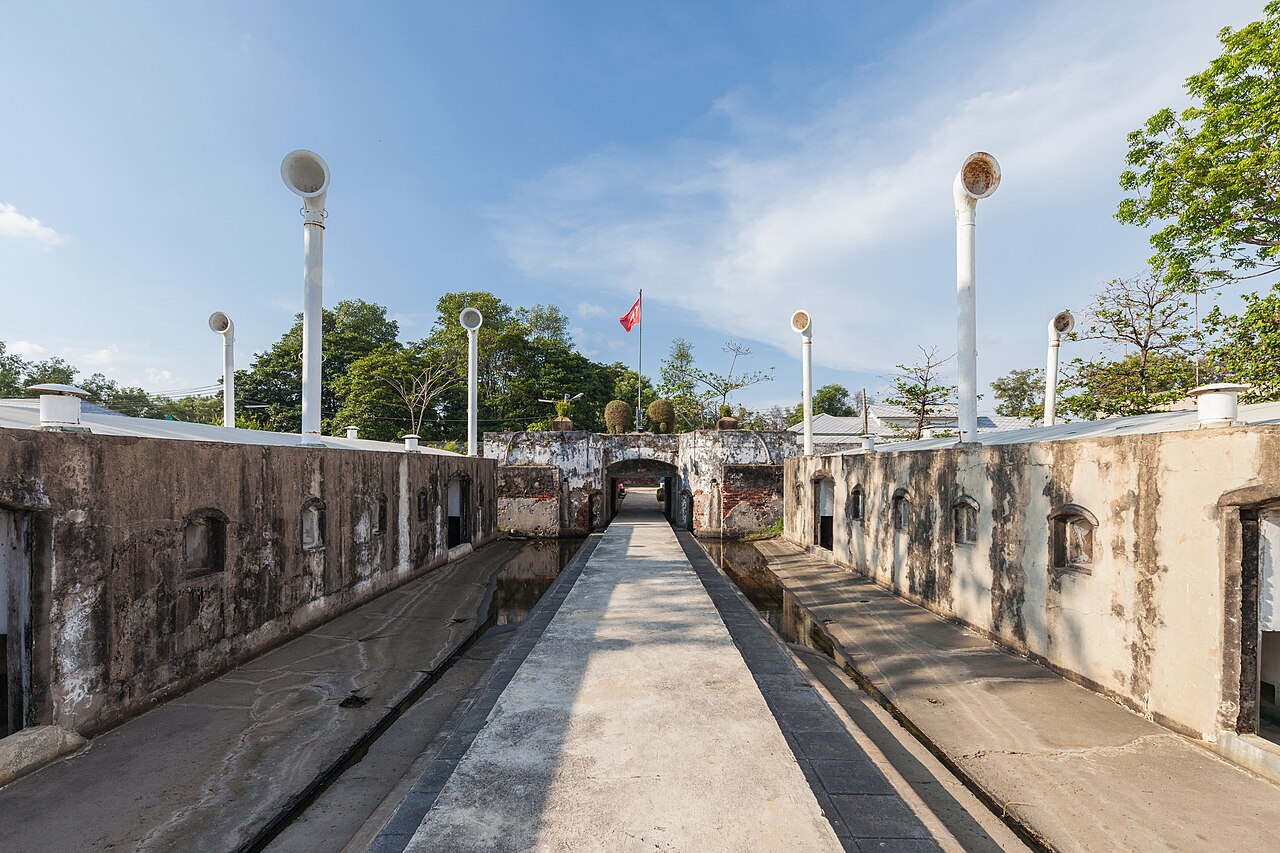
Phra Chulachomklao Fort is notable for its strategic position along the coast, guarding the river mouth with a combination of water moats and bastioned walls that allowed defenders to cover multiple angles of approach. The fort's design reflects Western military engineering principles of the late 19th century, adapted to local conditions.
The seven Armstrong cannons were housed in fortified gun emplacements, allowing for rapid and effective firing against enemy ships. The nickname "crouching tiger cannon" highlights the unique design and feared reputation of these weapons during their operational period.
On May 28, 1893, King Rama V personally tested one of the crouching tiger cannons, demonstrating his commitment to the fort's defensive capabilities. Later that year, the fort played a crucial role in the Paknam Incident, where it fired upon French warships attempting to assert control over the region. This engagement underscored the fort's importance in protecting Thailand's sovereignty during a turbulent colonial era.
Later history and preservation
Following its active military use, Phra Chulachomklao Fort underwent changes in function and management. In 1993, a statue of King Rama V was erected at the site to honor his vision and leadership in modernizing Thailand's defenses.
By 1996, the Royal Thai Navy officially decommissioned the fort as an active military installation. Since then, it has been preserved as an open-air museum under the management of the Bangkok Naval Base. The museum showcases the fort's historical artillery, military architecture, and its role in Thailand's defense history.
Today, Phra Chulachomklao Fort is an important cultural and tourist destination in Samut Prakan Province. Visitors can explore the well-preserved bastioned walls, gun emplacements, and other military structures while learning about the fort's significance in the late 19th and early 20th centuries.
Significance in thai heritage
The fort represents a key chapter in Thailand's efforts to maintain independence during a period of intense colonial pressure. Its construction under King Rama V marked a shift toward adopting Western military technology and architectural styles, blending them with local strategic needs.
Phra Chulachomklao Fort stands as a symbol of Thailand's resilience and adaptation in the face of imperial ambitions. Its preservation as a museum allows contemporary audiences to appreciate the historical and architectural legacy of this unique coastal fortress.
Frequently asked questions (FAQ)
- When was Phra Chulachomklao Fort built?
- Phra Chulachomklao Fort was constructed around March 1884 during the reign of King Rama V as a coastal defense fortification.
- What is the significance of the crouching tiger cannon?
- The crouching tiger cannon refers to the seven 153/32 mm Armstrong cannons installed at the fort, which were advanced artillery pieces for their time and played a key role in the fort's defense.
- Can visitors tour Phra Chulachomklao Fort today?
- Yes, the fort is now an open-air museum managed by the Bangkok Naval Base and is open to the public as a historical site and tourist attraction.
- What role did the fort play in the Paknam Incident?
- During the Paknam Incident in 1893, Phra Chulachomklao Fort fired upon French warships attempting to enter the Chao Phraya River, defending Thai sovereignty.
- Who currently manages Phra Chulachomklao Fort?
- The fort is currently managed by the Bangkok Naval Base and serves as a museum and cultural heritage site.
Photo gallery

Information
Current owner
Bangkok Naval Base
Loading map...
Visitor reviews
No reviews yet. Been here? Write the first review and help other travelers!
Write the first reviewVisited this castle? Share your experience
Your review helps other travelers and adds first-hand knowledge to our encyclopedia.