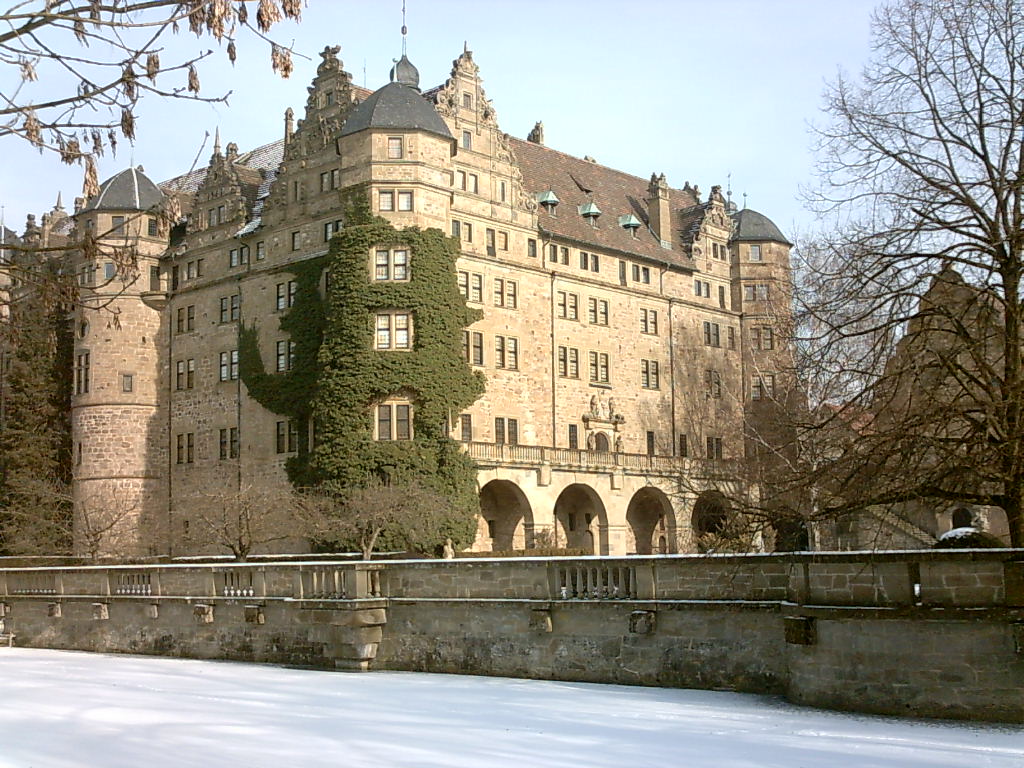
Pfedelbach Castle
Pfedelbach Castle was constructed between 1568 and 1572 as a Renaissance winter residence for the counts of Hohenlohe-Waldenburg. This period marked a shift from medieval fortress architecture to more comfortable and representative noble homes, reflecting the changing needs and tastes of the aristocracy in the 16th century. The castle's design embodies typical Renaissance architectural elements such as symmetry, proportion, and the integration of classical motifs, while still maintaining some defensive features customary in earlier periods.
Architectural design and features
The castle is arranged around a central courtyard, a common Renaissance layout that facilitated both security and social functions. The courtyard is bordered by buildings featuring characteristic 16th-century stone masonry and ornate window frames. Despite later modifications, the original structure has remained largely intact, preserving the architectural intent of its creators.
Within the courtyard, visitors can observe several baroque elements introduced during subsequent renovations. These include decorative stucco work, curved gables, and elaborate door surrounds that contrast with the more restrained Renaissance style. The blend of styles illustrates the castle's continuous use and adaptation through the centuries.
The castle chapel is a particularly well-preserved feature, retaining its historical character and serving as a venue for weddings and concerts. Its interior likely contains period details such as vaulted ceilings, frescoes, or woodwork typical of noble chapels of the era.
Historical context and ownership
The counts of Hohenlohe-Waldenburg, a prominent noble family in the region, commissioned Pfedelbach Castle as a winter residence, indicating its role as a seasonal retreat rather than a primary fortress. This reflects the relative stability of the region during the late Renaissance, allowing aristocrats to focus on comfort and prestige.
Over the centuries, the castle has seen various additions and alterations, yet its core Renaissance character has been preserved. Its continued use as a civic building today demonstrates the adaptability of such noble residences to modern functions.
Modern use and preservation
Currently, Schloß Pfedelbach serves multiple community functions. It houses the city’s Bürgersaal (citizens' hall), which likely hosts public meetings, cultural events, and social gatherings. Additionally, several apartments within the castle provide residential use, integrating historical architecture with contemporary living.
The castle chapel remains an important cultural venue, hosting weddings and concerts that draw on its historic ambiance. Preservation efforts have maintained the chapel’s integrity, ensuring that its architectural and artistic features continue to be appreciated.
Significance in regional heritage
Pfedelbach Castle stands as a significant example of Renaissance noble architecture in the Baden-Württemberg region of Germany. Its preservation and continued use highlight the importance of adaptive reuse in maintaining historical structures. The castle not only reflects the lifestyle and status of the Hohenlohe-Waldenburg family but also serves as a cultural landmark within the community.
Visitors to Pfedelbach can experience a blend of 16th-century Renaissance design with later Baroque influences, offering insight into architectural evolution and noble life in early modern Germany.
Information
Loading map...
Visitor reviews
No reviews yet. Been here? Write the first review and help other travelers!
Write the first reviewVisited this castle? Share your experience
Your review helps other travelers and adds first-hand knowledge to our encyclopedia.