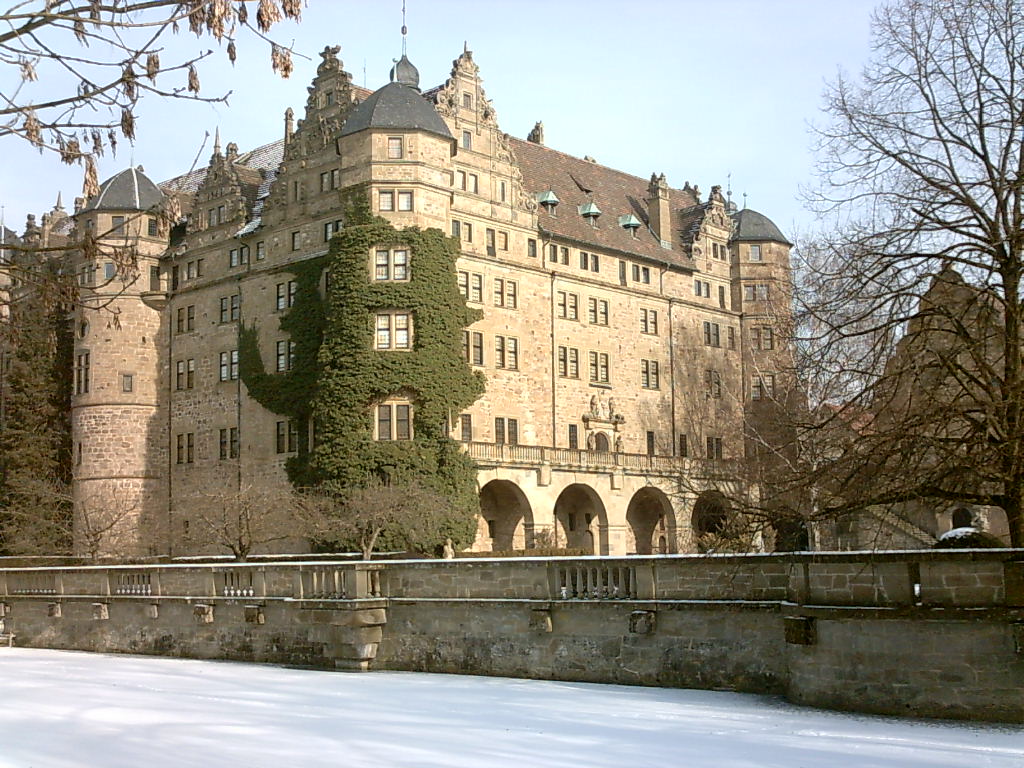
Burg Maienfels
Burg Maienfels is a remarkable medieval hill castle located in the municipality of Wüstenrot, Germany. Nestled strategically on a promontory overlooking the Brettach valley, this castle exemplifies the defensive ingenuity of the High Middle Ages and the complex feudal and noble relationships that shaped the region. Its origins date back to the early 14th century, with the first documentary mention in 1302, and it remains a significant cultural and architectural landmark.
Historical background and feudal significance
The castle was originally constructed by a ministerial family affiliated with the Neudeck lineage, who served the influential House of Hohenlohe and maintained ties with the Staufer dynasty. The Neudeck family, who later adopted the name Maienfels, established the castle as their residence, marking it as a seat of local power and administration.
Ownership transitioned in the late 14th century to the Hohenlohe family, a prominent noble house in the region. By 1426, Burg Maienfels became a Ganerbenburg — a jointly inherited fortress — shared among several noble families including the von Urbach, von Venningen, von Sickingen, and von Weiler. This shared ownership was governed by a Kunkellehen feudal arrangement, which often led to internal tensions and external conflicts, particularly with nearby free imperial cities.
The castle's strategic importance made it a focal point of regional power struggles. In 1441, a coalition of imperial cities led by Hall laid siege to Burg Maienfels, resulting in a prolonged three-month siege and significant structural damage. Following the siege, the castle was pledged as a fief to the Count Palatine of the Palatinate in 1464, securing protection amid ongoing hostilities.
Subsequent political changes brought the castle under the control of Württemberg in 1504 after the conquest of Weinsberg by Ulrich of Württemberg. Over the centuries, the Gemmingen family acquired increasing shares of the castle, ultimately gaining full possession between the 15th and 18th centuries. The castle ceased to be a primary residence after the extinction of the Gemmingen-Maienfels line in 1799, passing to the Gemmingen-Hornberg family.
Architectural features and defensive design
Burg Maienfels is classified as an Abschnittsburg, a castle type characterized by fortifications concentrated on a single side, with natural steep slopes providing defense on the other sides. This design effectively utilizes the hilltop terrain to minimize the need for extensive walls on all fronts, demonstrating medieval strategic planning.
The surviving castle complex includes a palas (main residential building), robust curtain walls, and a prominent tower. Among the oldest preserved elements are the Wehrgang or battlement walkway, which allowed defenders to patrol and defend the ramparts efficiently. Above the main gate facing the village church stands an Abwurferker, a projecting defensive turret historically used to repel attackers by dropping projectiles or boiling liquids.
A distinctive feature of the castle is a corner tower with a timber-framed upper section, reflecting the architectural style of its era. This tower uniquely housed the bells of the adjacent Protestant parish church until around 1920, illustrating the close integration of the castle with the local community and religious life.
Integration with the village and later modifications
The castle is closely intertwined with the village of Maienfels, with residential buildings and narrow lanes abutting its outer walls. The medieval moat that once encircled the castle has partially been built over as the village expanded, indicating a gradual shift from purely defensive functions to civilian settlement.
Restoration efforts led by the Burg Maienfels Foundation have preserved key elements such as the Staufer-era curtain wall and the timber-framed tower. These efforts included repairing roofs and refurbishing the courtyard and former stables, which are now used for cultural events, blending heritage preservation with contemporary use.
Modern history and preservation
After a period of dormancy, the castle was restored and reoccupied in 1930 by Hans Dieter von Gemmingen and his wife Martha. Martha's urn was interred on the castle grounds, symbolizing a lasting personal connection to the site.
In 1961, a notable natural event occurred when a rockslide caused damage to the village below, marking a significant moment in the castle's recent history. Ownership subsequently passed through the Gemmingen family, with Udo von Gemmingen establishing the Burg Maienfels Foundation in 1997 to ensure the castle's long-term preservation.
Today, Burg Maienfels remains a privately owned residence but also serves as a cultural venue, reflecting its historical significance and ongoing vitality. In recognition of its architectural and historical importance, the castle was named Monument of the Month by the Denkmalstiftung Baden-Württemberg in November 2007.
Cultural importance and visitor experience
Burg Maienfels stands as an exemplary High Medieval hill castle that has witnessed centuries of noble stewardship, feudal complexities, and regional conflicts. Its architecture offers insight into Staufer-period construction techniques and defensive strategies, while its ongoing conservation highlights the value placed on cultural heritage in Germany.
Visitors to the castle can appreciate the preserved battlement walkways, defensive turrets, and the unique timber-framed tower that once served ecclesiastical functions. The castle's integration with the village and the adaptive reuse of its spaces for cultural events provide a dynamic experience that connects medieval history with contemporary life.
Frequently asked questions (FAQ)
- When was Burg Maienfels first mentioned in historical records?
- Burg Maienfels was first documented in 1302 as the residence of a cadet branch of the Neudeck family, who later took the name Maienfels.
- What is a Ganerbenburg and how does it relate to Burg Maienfels?
- A Ganerbenburg is a castle jointly inherited and shared by multiple noble families. Burg Maienfels became a Ganerbenburg in 1426, shared among families such as the von Urbach, von Venningen, von Sickingen, and von Weiler.
- What architectural features characterize Burg Maienfels?
- Key features include a palas, curtain walls, a Wehrgang (battlement walkway), an Abwurferker (defensive turret), and a timber-framed corner tower that once housed church bells.
- Is Burg Maienfels open to the public?
- Burg Maienfels is privately owned and not generally open to the public, but it hosts cultural events in its restored courtyard and stables.
- Why was Burg Maienfels significant in regional conflicts?
- The castle's strategic hilltop location and status as a Ganerbenburg made it a focal point in disputes with free imperial cities, including a notable siege in 1441.
Information
Sources & official resources
Verify the information above using these authoritative references.
Loading map...
Visitor reviews
No reviews yet. Been here? Write the first review and help other travelers!
Write the first reviewVisited this castle? Share your experience
Your review helps other travelers and adds first-hand knowledge to our encyclopedia.