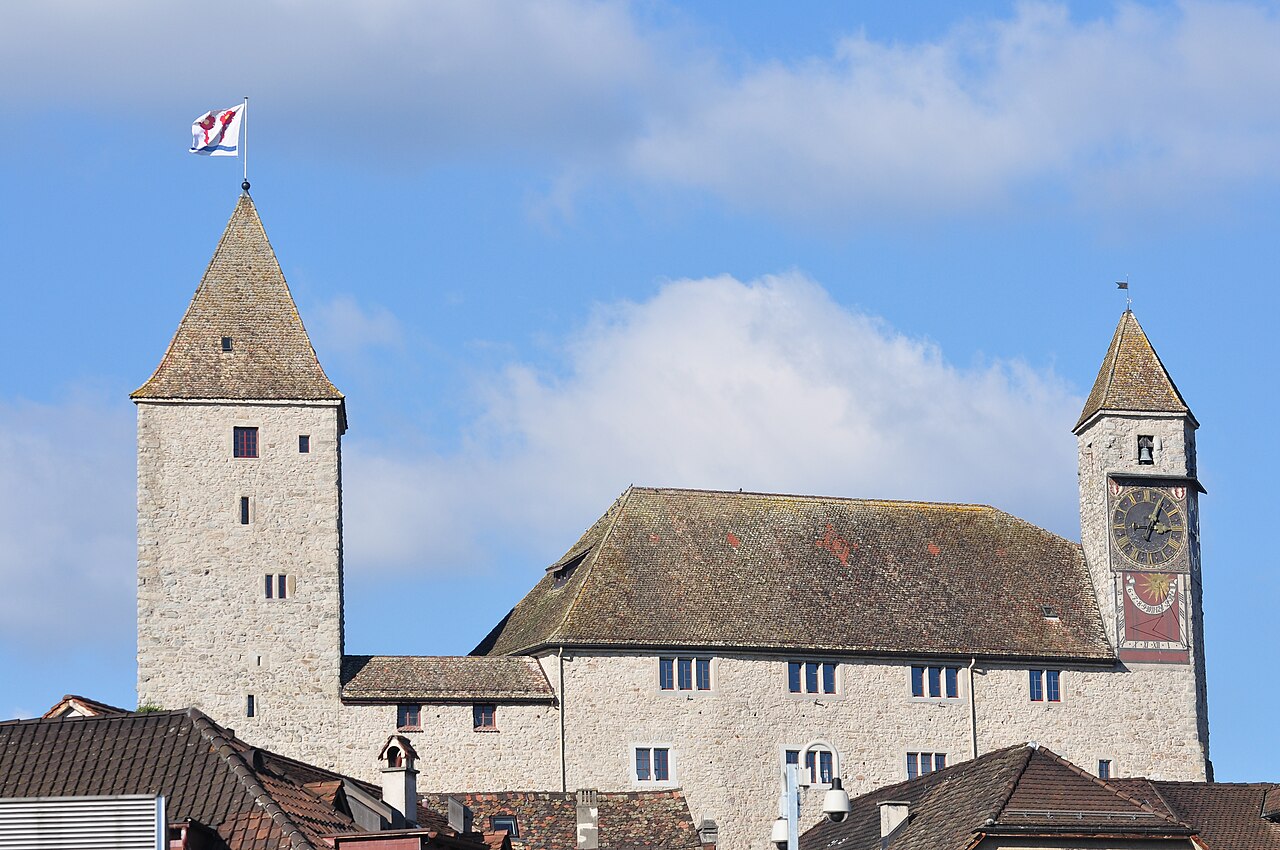
Pfaffikon Castle
Pfaffikon Castle stands as a remarkable example of a high medieval fortified residence located in Freienbach, Switzerland. Constructed in the mid-13th century by the Abbot of Einsiedeln, the castle was designed to serve both as a summer residence and a defensive stronghold. Its strategic position near Lake Zurich allowed it to function as a watchtower, granary, and administrative center for the Abbey's extensive landholdings in the region.
The origins of the site date back to 965 when Emperor Otto I granted farms and surrounding lands at Pfäffikon to the Einsiedeln Abbey. Shortly thereafter, the Abbey constructed a large granary to support its agricultural operations. Between 1233 and 1266, Abbot Anshelm von Schwanden replaced this granary with a robust stone tower that formed the core of the castle. This tower was built with massive stone blocks, featuring walls up to 2.3 meters thick at the base, tapering to 1.4 meters on the upper floors, emphasizing its defensive purpose.
Architectural features and fortifications
The tower of Pfaffikon Castle is a commanding square structure measuring approximately 12.3 meters on each side and rising to a height of 13 meters. Its main entrance is located on the west side of the first floor, accessible originally by a wooden staircase that could be retracted for protection. The second and third stories were designed as living quarters, with the second floor featuring large windows with built-in seating that provided expansive views over the lake.
Originally, the tower was likely topped with a wooden overhanging structure, which was later replaced by the current pitched roof installed in 1839. Surrounding the tower, defensive walls, ramparts, and a moat were added in 1299 by Prince-Abbot Johann von Schwanden during a regional conflict known as the Marchenstreit, which involved disputes over grazing rights with the nearby community of Schwyz.
In the 15th century, the castle underwent significant expansion under Abbot Burkard von Weissenburg-Krenkingen (1418-1438), who renamed it Weissenburg. He added a residential wing on one side of the tower and a chapel on the other, enhancing both the castle's functionality and its status as a summer residence. The chapel features a rectangular nave with a small polygonal choir. Its portal is Gothic, while the interior decoration was updated to the Baroque style between 1780 and 1785, with later late 19th-century Neo-classical stucco and murals. The mahogany altars were crafted by Father Rudolf Blättler in 1892.
Historical significance and events
Pfaffikon Castle played a crucial role in protecting the Abbey's interests during turbulent periods. In 1314, during the Marchenstreit conflict, a mob from Schwyz attacked the Abbey aiming to destroy land and tax records. The Abbot had anticipated the assault and secured important documents at Pfaffikon Castle, which helped preserve the Abbey's claims. By 1359, the castle was established as the Abbot's summer residence in addition to its defensive and administrative roles.
The castle also served as a refuge during emergencies. Notably, after a devastating fire in 1577 destroyed much of Einsiedeln Abbey and the surrounding village, monks and villagers took shelter within Pfaffikon Castle for seven months while rebuilding efforts were underway.
Following the political upheavals of the late 18th century, including the 1798 French invasion and the establishment of the Helvetic Republic, the castle was heavily damaged and confiscated by the Canton of Linth. It was returned to the Abbey in 1803 after the Act of Mediation restored much of the old order. Subsequent renovations in the 19th and 20th centuries have preserved the castle's structural integrity and historical character.
Restoration and modern use
The castle has undergone several phases of restoration to maintain its condition. The chapel was renovated in 1928, and between 1986 and 1988, the chapel, tower, and moat received significant repairs. Today, Pfaffikon Castle functions as a vibrant cultural and administrative center. The castle houses a restaurant and hosts conferences, piano concerts, meetings, and various events. Meanwhile, the residential wings accommodate municipal administration offices, integrating the historic site into contemporary community life.
Castle site and remaining features
The castle's moat, once part of an extensive defensive system including multiple moats and fortifications, has mostly been filled in, with only the main moat surviving. The 15th-century two-story fortification near the tower was demolished in the 16th century to make way for the current chapel. The curtain walls that once enclosed the site were largely dismantled in 1820, but the main tower and chapel remain well preserved.
Pfaffikon Castle's combination of medieval military architecture and later residential and religious additions offers a rich glimpse into the evolving functions of monastic castles in Switzerland. Its enduring presence reflects the Abbey's historical power and the region's complex medieval history.
Frequently asked questions (FAQ)
- What is the historical significance of Pfaffikon Castle?
- Pfaffikon Castle, located in Freienbach, Switzerland, dates back to the 13th century and is an important example of medieval architecture in the region. It was originally built as a defensive structure and has served various purposes throughout its history, including as a residence for local nobility.
- When was Pfaffikon Castle built?
- Pfaffikon Castle was constructed in the 13th century, with its foundations laid around the year 1230. Over the centuries, it has undergone several renovations and restorations, preserving its historical integrity while adapting to modern needs.
- Can I visit Pfaffikon Castle?
- Yes, Pfaffikon Castle is open to visitors, allowing them to explore its rich history and impressive architecture. Guided tours are available, providing insights into the castle's past and its significance in Swiss heritage.
- What are the opening hours of Pfaffikon Castle?
- Pfaffikon Castle typically opens to visitors from Tuesday to Sunday, with hours varying by season. It is recommended to check the official website for the most current opening times before planning your visit.
- Is it possible to access Pfaffikon Castle by public transport?
- Yes, Pfaffikon Castle is accessible by public transport. Visitors can take a train to the nearby Pfaffikon station and then enjoy a short walk to the castle, making it convenient for those traveling without a car.
- What is the best time to visit Pfaffikon Castle?
- The best time to visit Pfaffikon Castle is during the spring and early autumn months when the weather is mild, and the surrounding gardens are in full bloom. Additionally, these seasons often feature fewer crowds, allowing for a more enjoyable experience.
- Are there any nearby attractions to visit along with Pfaffikon Castle?
- Yes, nearby attractions include the beautiful Lake Zurich and the scenic town of Freienbach, both offering picturesque views and leisurely activities. Visitors can also explore local shops and restaurants, enhancing their overall experience in the area.
- What are the ticket prices for visiting Pfaffikon Castle?
- Ticket prices for Pfaffikon Castle are generally affordable, with discounted rates for children and seniors. It is advisable to check the official website for the latest pricing information and any special offers that may be available.
Information
Website
Visit websiteSources & official resources
Verify the information above using these authoritative references.
Loading map...
Visitor reviews
No reviews yet. Been here? Write the first review and help other travelers!
Write the first reviewVisited this castle? Share your experience
Your review helps other travelers and adds first-hand knowledge to our encyclopedia.