Petrovaradin Fortress
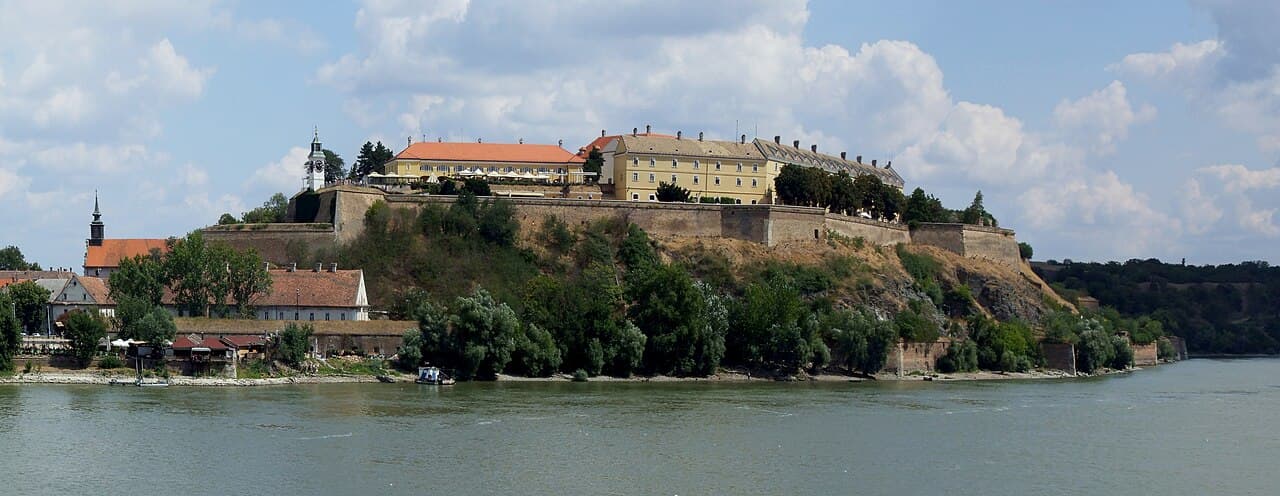
Petrovaradin Fortress, often called the "Gibraltar on the Danube", is a monumental bastioned fortress located in the town of Petrovaradin, part of the city of Novi Sad in Serbia. Perched on the right bank of the Danube River, this fortress is a striking example of post-Renaissance military architecture designed to withstand the artillery warfare of the 17th and 18th centuries. Its strategic placement allowed it to control river traffic and defend the region from Ottoman incursions and other threats.
Historical background and strategic importance
The site of Petrovaradin Fortress has been fortified since Roman times, but the current fortress largely dates from the 18th century. The cornerstone of the southern part of the fortress was laid on 18 October 1692 by Charles Eugène de Croÿ, a military engineer who played a key role in its design and construction. The fortress was built by the Habsburg Monarchy as part of a defensive line against the Ottoman Empire, reflecting the military tensions of the post-Renaissance period.
Its nickname, "Gibraltar on the Danube," highlights its formidable defensive capabilities and its commanding position overlooking the river, which was a crucial trade and military route. The fortress was never taken by force, demonstrating its effectiveness as a military stronghold.
Architectural design and features
Petrovaradin Fortress is renowned for its extensive bastion system, which includes multiple angled bastions designed to provide overlapping fields of fire, minimizing blind spots and maximizing defensive coverage. This design is characteristic of bastioned fortresses developed in the post-Renaissance era, influenced by the principles of Vauban-style fortifications.
The fortress complex covers an area of approximately 112 hectares and includes a network of over 16 kilometers (9.9 miles) of underground tunnels and corridors. These subterranean passages were used for troop movements, storage, and as a countermine system to detect and prevent enemy sappers from undermining the walls.
Key architectural elements include the massive outer walls, moats, gatehouses, and watchtowers. The fortress also features a well-preserved citadel and numerous defensive platforms that once housed cannons and other artillery.
The underground tunnel network
The fortress's underground complex is one of its most remarkable features. The tunnels extend beneath the entire fortress and were engineered to allow safe and secretive movement of soldiers and supplies. The countermine galleries were an innovative defensive measure to detect enemy mining operations, a common siege tactic of the time.
Cultural significance and preservation
In recognition of its historical and architectural value, Petrovaradin Fortress was declared a Spatial Cultural-Historical Unit of Great Importance by the Republic of Serbia in 1991. This status ensures legal protection and promotes conservation efforts.
Today, the fortress is a major cultural venue, hosting events such as the famous EXIT music festival, which attracts visitors from around the world. Its well-preserved structures and tunnels offer a unique glimpse into military engineering and regional history.
Visitor experience and accessibility
Visitors to Petrovaradin Fortress can explore its extensive ramparts, bastions, and underground passages. The fortress provides panoramic views of Novi Sad and the Danube River, making it a popular destination for tourists interested in history, architecture, and scenic landscapes.
The site includes museums and exhibition spaces that detail the fortress's history and the broader military context of the region. Guided tours are available, offering insights into the fortress's construction, strategic role, and daily life within its walls.
Frequently asked questions (FAQ)
- What is the best time to visit Petrovaradin Fortress?
- The best time to visit Petrovaradin Fortress is during the spring and summer months when the weather is pleasant, and outdoor events like the EXIT festival take place. Autumn also offers beautiful views of the Danube and cityscape.
- How do I access the underground tunnels of the fortress?
- Visitors can access the underground tunnels through guided tours offered at the fortress. These tours provide safe passage and detailed explanations of the tunnel system's history and function.
- Is Petrovaradin Fortress wheelchair accessible?
- While some parts of Petrovaradin Fortress are accessible, the extensive underground tunnels and older ramparts may pose challenges for wheelchair users. It is recommended to check with the visitor center for specific accessibility information.
- Are there any annual events held at the fortress?
- Yes, Petrovaradin Fortress hosts the internationally renowned EXIT music festival every summer, attracting thousands of visitors. Other cultural and historical events are also held throughout the year.
- What architectural style characterizes Petrovaradin Fortress?
- Petrovaradin Fortress is characterized by post-Renaissance bastioned fortification architecture, influenced by Vauban-style military engineering principles prevalent in the 17th and 18th centuries.
Photo gallery

Information
Address
Petrovaradinska tvrđava, Novi Sad, Serbia
Loading map...
Visitor reviews
No reviews yet. Been here? Write the first review and help other travelers!
Write the first reviewVisited this castle? Share your experience
Your review helps other travelers and adds first-hand knowledge to our encyclopedia.