
Pesteils Castle
Pesteils Castle, also known as Château de Pesteils, is a remarkable medieval fortress perched on a commanding rocky outcrop overlooking the village of Polminhac in the Cantal department of France. Its strategic location atop a hill provides sweeping views of the Cère river valley and the surrounding Cantal mountains, emphasizing its original defensive purpose. The castle's origins date back to the 13th century, with its earliest fortifications mentioned during that period, marking it as an enduring symbol of feudal power in the High Medieval era.
The castle's most prominent feature is its imposing 40-meter-high square keep, or donjon, constructed in the late 14th century by Jean de Foulhols. This towering stone structure served as both a stronghold and a residence, embodying the military architecture of the time. The keep is notable for its restored 15th-century frescoes, rare surviving examples of medieval wall paintings that provide insight into the artistic culture of the period.
Historical development and ownership
The castle's history is closely tied to the turbulent events of the Hundred Years' War. In 1414, the fortress was seized by Renaud de Murat during conflicts involving Bernard VII d’Armagnac, a powerful nobleman. Murat's control lasted until his death in 1418, after which the castle was restored to the Foulhols family. Subsequently, the keep underwent alterations under Rigaud de Montamat, reflecting the evolving needs of its occupants.
During the 15th century, the castle expanded with the construction of the main residential building in front of the medieval keep. This addition likely coincided with the region's return to peace following the war, signaling a shift from purely military functions to more comfortable habitation.
Ownership of the castle transitioned through dynastic marriages, passing from the Foulhols to the Pesteils family, who lent their name to the castle. In 1608, it came into the possession of the Cassagnes de Beaufort de Miramon family, who remain its custodians to this day.
Architectural evolution and restoration
The castle experienced significant architectural modifications in the second half of the 17th century, including the enlargement of the main residential wing and the addition of an angle pavilion adjacent to the original tower. These changes reflect the broader European trend of transforming medieval fortresses into more comfortable noble residences.
At the end of the 19th century, the castle underwent a comprehensive renovation led by architects Anatole and Gabriel de Miramon with the involvement of Émile Lemaigre. This remodeling introduced neo-Gothic decorative motifs, a popular revival style of the period, and featured a distinctive double-spiral staircase in the entrance hall, which remains a highlight of the interior design.
Interior features and artistic heritage
The interiors of the castle blend medieval, 17th-century, and 19th-century elements. The painted ceilings in the residential wing depict scenes from Greek mythology, illustrating the cultural interests of the castle's inhabitants during the early modern period. The historic kitchen was meticulously restored in 2000, earning recognition with the prestigious La Cornue award for its faithful preservation and craftsmanship.
The castle also houses a valuable collection of paintings, furniture, and tapestries, enriching its historical ambiance. Wax figures from the Grévin Museum are displayed throughout the site, providing visitors with a vivid representation of the castle's layered history and its former occupants.
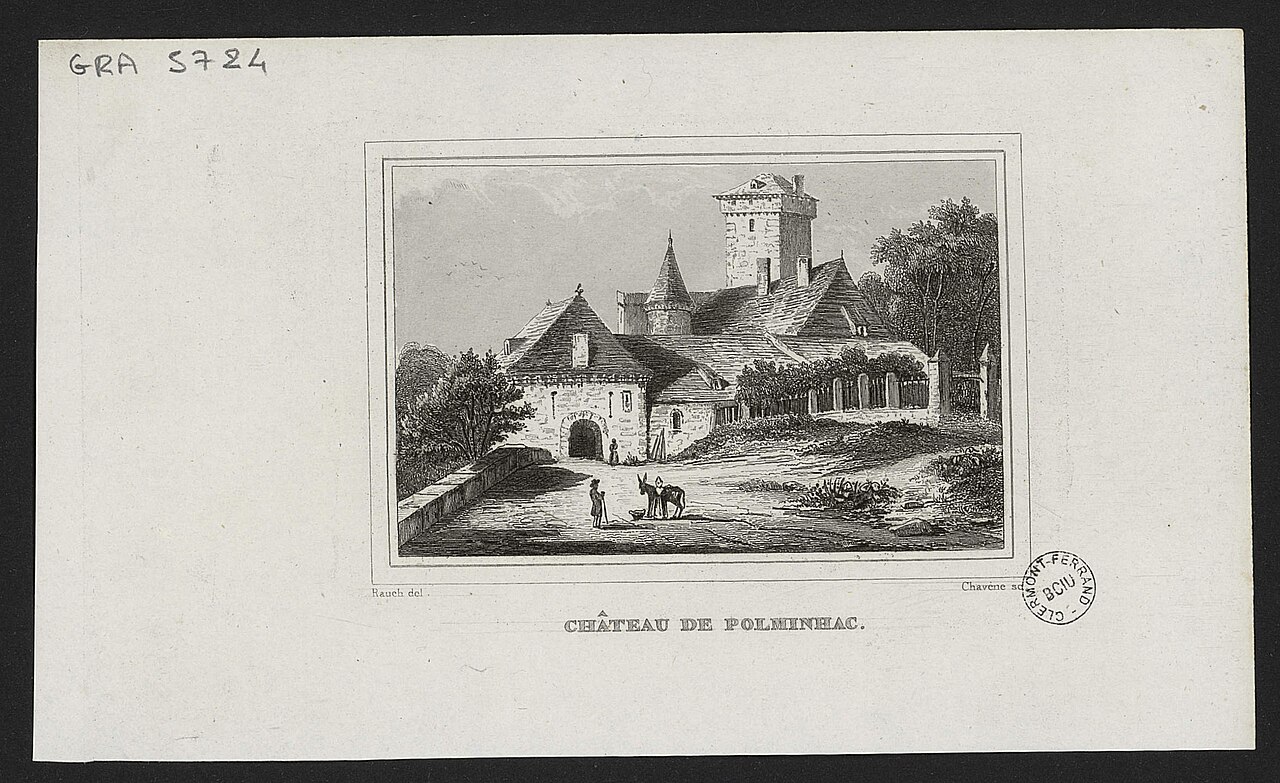
Photo by Clermont Auvergne Métropole • CC BY-SA 4.0
Grounds and landscape design
Surrounding the castle is a thoughtfully designed early 20th-century park that includes a terrace supported by an earthwork platform, a kitchen garden, and an orchard. These features reflect the landscaping trends of the period and the owners' desire to blend utility with aesthetic appeal.
Cultural significance and visitor experience
Today, Pesteils Castle stands as a well-preserved example of a High Medieval hill castle that has evolved through centuries of architectural and ownership changes. Its designation as a French historic monument since 1994 underscores its cultural and heritage importance.
Visitors to the castle can explore its interiors freely without a guide, allowing an intimate experience of its rich history and architectural beauty. The combination of medieval fortifications, early modern expansions, and 19th-century neo-Gothic renovations offers a unique window into the changing tastes and functions of French noble residences over several centuries.
The castle's location in the Hauts-de-France region within the broader context of the Cantal department situates it in a landscape rich with historical and natural attractions, making it a compelling destination for those interested in medieval architecture and French history.
Frequently asked questions (FAQ)
- What is the historical significance of Pesteils Castle?
- Pesteils Castle, dating back to the 12th century, is an important example of medieval military architecture in France. It served as a strategic fortification during various regional conflicts and reflects the feudal history of the Auvergne region.
- When was Pesteils Castle built?
- Pesteils Castle was constructed in the early 12th century, making it over 900 years old. Its long history has allowed it to witness significant events and changes in the region.
- Can I visit Pesteils Castle?
- Yes, Pesteils Castle is open to visitors throughout the year. Guided tours are available, allowing guests to explore the castle's rich history and stunning architecture.
- What are the opening hours for Pesteils Castle?
- Pesteils Castle typically opens its doors at 10 AM and closes at 6 PM during the peak season. It is advisable to check the official website for any seasonal changes in hours.
- Is it possible to access Pesteils Castle with limited mobility?
- Access to certain areas of Pesteils Castle may be challenging for visitors with limited mobility due to its historical structure. However, the staff can provide assistance and information on accessible routes.
- When is the best time to visit Pesteils Castle?
- The best time to visit Pesteils Castle is during the spring and early autumn months when the weather is mild and pleasant. These seasons also provide a picturesque backdrop for exploring the castle and its surroundings.
- What are the ticket prices for Pesteils Castle?
- Ticket prices for Pesteils Castle are generally affordable, with discounts available for students and seniors. Families can also benefit from group rates, making it an excellent outing for all.
- Are there any nearby attractions to explore after visiting Pesteils Castle?
- Yes, there are several nearby attractions, including the charming village of Polminhac and the stunning landscapes of the Auvergne region. Outdoor activities such as hiking and exploring local markets enhance the overall experience.
Photo gallery

Information
Website
Visit websiteSources & official resources
Verify the information above using these authoritative references.
Loading map...
Visitor reviews
No reviews yet. Been here? Write the first review and help other travelers!
Write the first reviewVisited this castle? Share your experience
Your review helps other travelers and adds first-hand knowledge to our encyclopedia.