Château de Vixouze
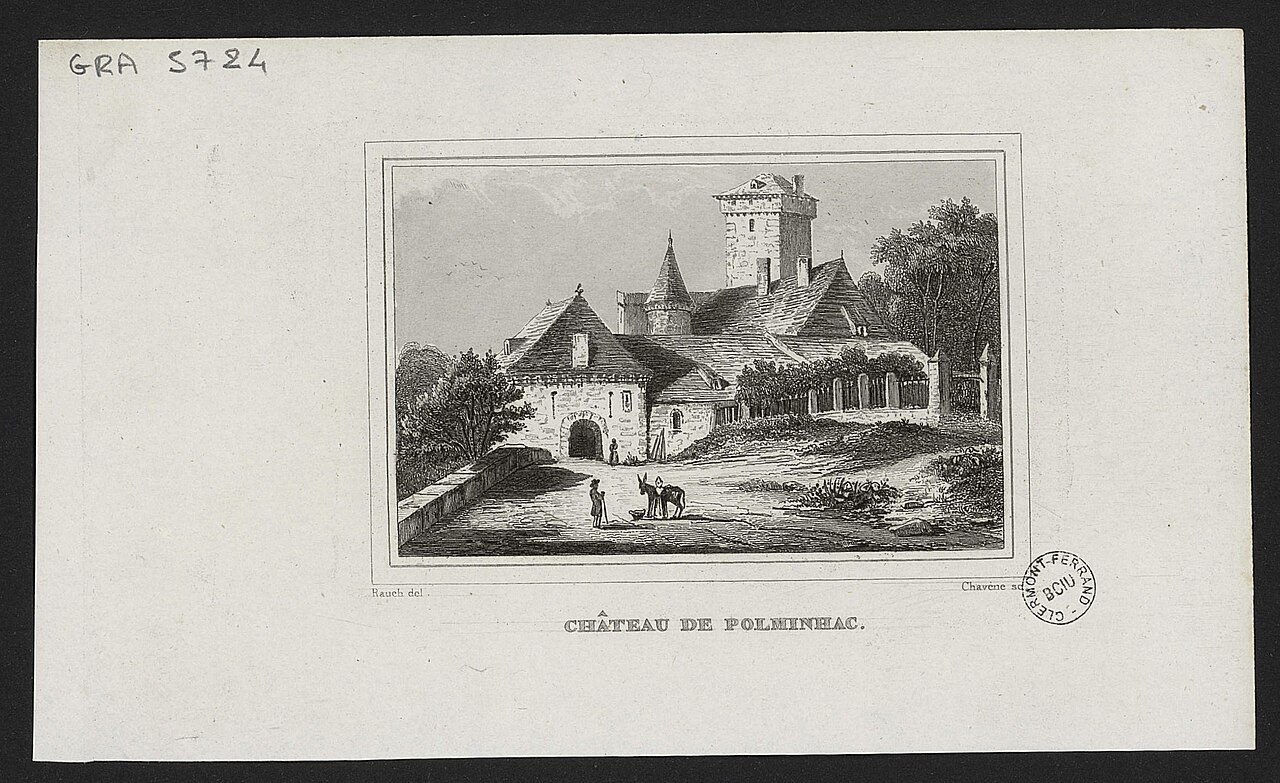
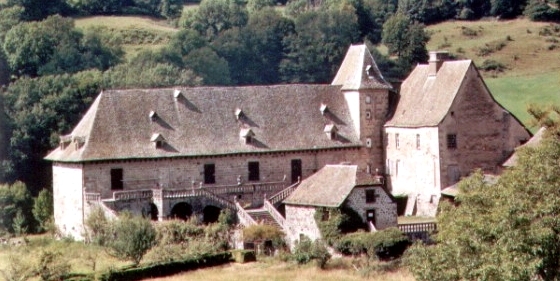
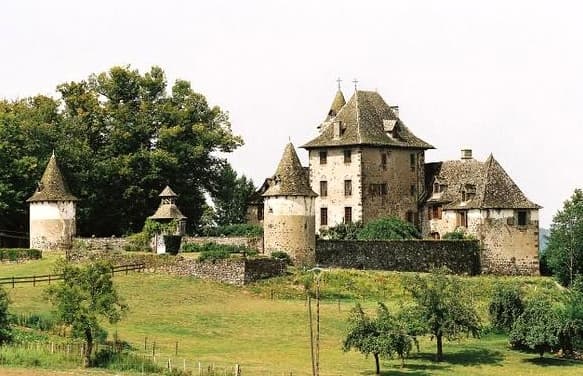
The Château de Vixouze is a significant medieval hill castle located in the commune of Polminhac in the Auvergne region of France. This castle exemplifies the architectural evolution and historical shifts from the early Middle Ages through the 17th century, reflecting both military and residential functions over the centuries. Its origins trace back to a rural estate first documented in 930 under the name "Vidditiosa," marking its early connection to feudal and monastic powers.
Initially established by local feudal lords, the castle was donated by Bernard de Carlat, the vicomte of Carlat, to the abbey of Conques in the 10th century, indicating the intertwining of secular and religious influences in its early history. By the mid-13th century, the site had transformed into a fortified structure featuring a rectangular keep surrounded by defensive walls and towers, characteristic of high medieval military architecture.
Medieval origins and architectural evolution
The castle's central feature is its rectangular keep, dating from the 13th century. This tower rises above a raised ground floor and includes two upper floors, originally accessed by a high entrance on the third floor, a typical defensive design to prevent easy enemy access. This entrance was later sealed and replaced in the 16th century by an external staircase tower, reflecting architectural adaptations to changing needs and styles.
Surrounding the keep is a fortified enclosure with defensive walls, towers, and a gate. The enclosure was expanded with two additional building wings in later centuries, blending defensive and residential functions. An inscription dated 1719 on the enclosing wall marks continued development during the early modern period.
Defensive features and modifications
During the Hundred Years’ War (14th-15th centuries), the castle suffered significant damage, necessitating restoration and strengthening efforts in the late 15th century. These works likely included reinforcement of the walls and towers to withstand siege warfare. The castle’s transformation in the 17th century from a fortress to a more comfortable pavilion-style residence reflects broader changes in military technology and aristocratic lifestyles, as the need for heavy fortifications diminished.
Domestic and functional buildings within the castle grounds
The castle complex includes several ancillary structures that illustrate its role as a self-sufficient noble estate. A vaulted chapel with a semicircular barrel vault ceiling, dating from the 17th century, serves as a testament to the religious practices maintained on site. Adjacent to the chapel is a bread oven covered by a pointed barrel vault, also from the same century, highlighting the domestic and culinary functions within the castle.
A barn-stable complex with characteristic half-hipped roofs bears construction dates of 1613 and 1777, indicating phases of agricultural development essential to the estate’s economy. Nearby, a mill with an imperial-style roof further underscores the castle’s role in local production and sustenance.
The original entrance gate once featured a lantern roof, a small rooftop structure that no longer survives, while a 19th-century fountain installed after 1811 marks later enhancements to the castle’s exterior environment.
Interior spaces and historic preservation
The interior of Château de Vixouze contains several rooms officially classified as historic monuments, reflecting their cultural and architectural importance. These include the kitchen and dining room, which served as the heart of domestic life, as well as rooms located on the first and second floors of the keep. The second-floor room is notable for its large monumental fireplace, a key feature for heating and social gatherings.
Other protected interiors include a room adorned with pilasters—decorative flattened columns—and a northern chamber, both illustrating the castle’s transition toward residential comfort and stylistic refinement during the early modern period.
Ownership history and cultural significance
Ownership of the castle passed through several noble families, beginning with the Vixouze family in the 13th and 14th centuries, followed by the Brunenc family in the 15th century, and then the Pagès de Vixouze family from the 17th century onward. Detailed family records from the Pagès de Vixouze lineage have been preserved, providing valuable insight into the castle’s social history.
In the 20th century, descendants sold the property in 1913. After a period of private ownership, the castle was acquired in 1990 by André Léonard, an artist who undertook restoration works and used the site for cultural events. Since 2013, it has been owned by Serge Pilicer-Moncorger. The entire complex, including its walls, towers, and interior historic rooms, was officially recognized and protected as a monument historique by the French government in 2000, ensuring its preservation and appreciation as a cultural heritage site.
Architectural style and classification
The Château de Vixouze is classified as a hill castle, characteristic of its elevated position which provided natural defensive advantages. Its architectural style reflects the high medieval origins with fortified keeps and defensive walls, later modified during the Renaissance and early modern periods to incorporate residential and agricultural functions.
The castle’s preservation status is well preserved, with significant restoration efforts maintaining its structural integrity and historic interiors. The blend of military architecture with domestic adaptations offers a rich narrative of the castle’s evolution over nearly a millennium.
Frequently asked questions (FAQ)
- When was Château de Vixouze originally built?
- The site was first mentioned in 930 as a rural estate, with the castle's main keep constructed in the 13th century.
- What architectural style is Château de Vixouze known for?
- The castle combines high medieval defensive architecture with Renaissance and early modern residential modifications.
- Is Château de Vixouze open to the public for visits?
- The castle is privately owned, and visiting arrangements may vary; it is advisable to check locally for any public access or cultural events.
- What notable features can be seen inside Château de Vixouze?
- Visitors can find historic rooms including a kitchen, dining room, monumental fireplace, and a chapel, all classified as historic monuments.
- How did the Hundred Years’ War affect Château de Vixouze?
- The castle suffered damage during the war and was restored in the late 15th century, reflecting its strategic importance and resilience.
- What is the significance of the vaulted chapel within the castle?
- The 17th-century vaulted chapel demonstrates the religious practices maintained at the castle and features a semicircular barrel vault ceiling.
Photo gallery

Information
Sources & official resources
Verify the information above using these authoritative references.
Loading map...
Visitor reviews
No reviews yet. Been here? Write the first review and help other travelers!
Write the first reviewVisited this castle? Share your experience
Your review helps other travelers and adds first-hand knowledge to our encyclopedia.