Castle of Vixouze

Castle of vixouze: medieval fortress in polminhac, france
Polminhac, Occitanie, France
High Medieval (11th–13th c.)
Partially Preserved

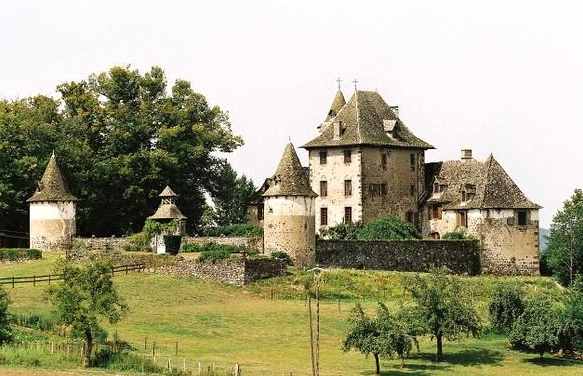
The Castle of Vixouze stands as a remarkable example of medieval architecture in the commune of Polminhac, located in the Aveyron region of southern France. This high medieval fortress traces its origins back to the 10th century, when it was first recorded as a small villa. The earliest known historical reference to Vixouze dates from this period, when Bernard de Carlat, the Viscount of Carlat, donated the property to the abbey of Conques. This initial mention indicates the site's longstanding significance in the region, predating the castle's later fortifications.

The current structure of the castle primarily began taking shape in the 13th century, with construction commencing in 1267 under the direction of Guy de Vixouze. His vision was to establish a noble residence centered around a single square defensive keep, which remains the castle's defining architectural feature to this day. This keep exemplifies the typical high medieval military architecture of the period, designed for both defense and residence.

Architectural evolution and defensive features

The square keep at Vixouze is a prominent example of medieval fortification, constructed with thick stone walls and narrow windows suitable for archers. Its robust design was intended to withstand sieges and provide a secure stronghold for its inhabitants. The keep's elevated position within the castle complex allowed for commanding views of the surrounding landscape, enhancing its defensive capabilities.

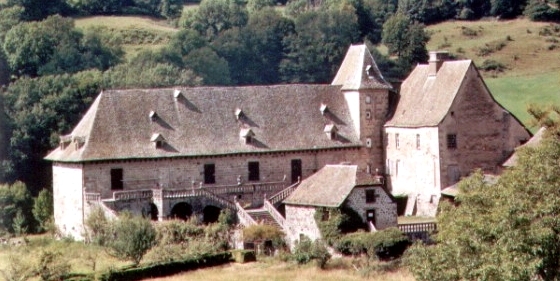
Throughout the centuries, the castle underwent several modifications reflecting changing architectural styles and functional needs. The Hundred Years' War (1337–1453) inflicted significant damage on the structure, necessitating extensive rebuilding efforts in the 15th century. During this period, a main staircase was added, which remains a notable interior feature. The reconstruction likely included reinforcement of walls and the addition of living quarters to adapt to evolving residential requirements.

Later additions and enhancements

Following the medieval period, Vixouze Castle saw further expansions and improvements. In the 17th century, a barn was constructed, reflecting the castle's role in managing agricultural estates. The 18th century brought the addition of a chapel and two new wings, which introduced elements of residential comfort and possibly baroque stylistic influences, although the core medieval character remained dominant.

The entrance to the castle is marked by a 19th-century fountain, which adds to the site's aesthetic appeal and indicates continued occupation or care during that era. These successive enhancements illustrate how the castle evolved from a purely defensive fortress to a more complex noble residence over time.

Historical significance and current status

The Castle of Vixouze holds considerable historical significance as a witness to the medieval history of the Aveyron region. Its survival through turbulent periods such as the Hundred Years' War and its architectural evolution provide valuable insights into feudal life and military architecture in France.

Today, the castle is partially preserved and accessible to the public. Visitors can explore the exterior grounds free of charge, appreciating the imposing defensive keep and the surrounding structures. The castle occasionally hosts painting exhibitions, contributing to the cultural life of the region and offering a unique setting that blends history and contemporary art.

Visitor experience and accessibility

The castle's exterior offers a glimpse into medieval fortification techniques and noble residence layouts, making it an attractive destination for history enthusiasts and tourists. While the interior access may be limited, the site’s ambiance and architectural features provide a meaningful experience. Its location in Polminhac situates it within a scenic part of France, often visited alongside other historical landmarks in the Aveyron area.

Frequently asked questions (FAQ)

How do I get to the Castle of Vixouze?
The Castle of Vixouze is located in Polminhac, France, easily accessible by car or public transport. If you're driving, you can find parking nearby, and there are bus services that connect to the local area.
What is the historical significance of the Castle of Vixouze?
The Castle of Vixouze dates back to the 12th century and played a crucial role in the region's defensive architecture. It has witnessed numerous historical events and offers insight into medieval life in France.
When was the Castle of Vixouze built?
The construction of the Castle of Vixouze began in the 12th century, with various additions and renovations made over the centuries. This long history makes it a fascinating site for those interested in medieval architecture and history.
Can I take a guided tour of the Castle of Vixouze?
Yes, guided tours are available and provide an in-depth look at the castle's history and architecture. These tours are led by knowledgeable guides who can share interesting stories and facts about the castle and its surroundings.
Why is the architecture of the Castle of Vixouze unique?
The architecture of the Castle of Vixouze showcases a blend of medieval styles, with its towers and fortified walls reflecting the defensive needs of the time. Its design offers stunning views of the surrounding landscape, making it a remarkable example of medieval military architecture.
Is it possible to visit the Castle of Vixouze year-round?
The Castle of Vixouze has specific opening hours and is typically open to visitors from spring through autumn. It's best to check the official website or contact the visitor center for the most current information regarding seasonal openings.
What are the ticket prices for visiting the Castle of Vixouze?
Ticket prices for the Castle of Vixouze vary, with discounts often available for students and seniors. Children under a certain age may enter for free, making it an affordable option for families.
What is the best time to visit the Castle of Vixouze?
The best time to visit the Castle of Vixouze is during the late spring and early autumn months when the weather is pleasant and ideal for exploring the grounds. Visiting during these times also allows you to enjoy various events and activities that may be hosted at the castle.
Are there any nearby attractions to the Castle of Vixouze?
Yes, there are several nearby attractions, including the beautiful landscapes of the Auvergne region and other historical sites. Visitors can also enjoy local restaurants and shops that showcase traditional French culture.

Information

Hill Castle

Sources & official resources

Verify the information above using these authoritative references.

Loading map...

Visitor reviews

No reviews yet. Been here? Write the first review and help other travelers!

Write the first review

Visited this castle? Share your experience

Your review helps other travelers and adds first-hand knowledge to our encyclopedia.
Write a review

(5/5)

0/2000 characters

Your review will be visible after admin approval

Nearby castles

0.2 km
Pesteils Castle — France castle

Pesteils Castle

Polminhac, France

Pesteils Castle, also known as Château de Pesteils, is a remarkable medieval fortress perched on a commanding rocky outcrop overlooking the village of Polminhac in the Cantal department of France. Its strategic location atop a hill provides sweeping views of the Cère river valley and the surrounding Cantal mountains, emphasizing its original defensive purpose. The castle's origins date back to the 13th century, with its earliest fortifications mentioned during that period, marking it as an enduring symbol of feudal power in the High Medieval era. The castle's most prominent feature is its imposing 40-meter-high square keep, or donjon, constructed in the late 14th century by Jean de Foulhols. This towering stone structure served as both a stronghold and a residence, embodying the military architecture of the time. The keep is notable for its restored 15th-century frescoes, rare surviving examples of medieval wall paintings that provide insight into the artistic culture of the period. Historical development and ownership The castle's history is closely tied to the turbulent events of the Hundred Years' War. In 1414, the fortress was seized by Renaud de Murat during conflicts involving Bernard VII d’Armagnac, a powerful nobleman. Murat's control lasted until his death in 1418, after which the castle was restored to the Foulhols family. Subsequently, the keep underwent alterations under Rigaud de Montamat, reflecting the evolving needs of its occupants. During the 15th century, the castle expanded with the construction of the main residential building in front of the medieval keep. This addition likely coincided with the region's return to peace following the war, signaling a shift from purely military functions to more comfortable habitation. Ownership of the castle transitioned through dynastic marriages, passing from the Foulhols to the Pesteils family, who lent their name to the castle. In 1608, it came into the possession of the Cassagnes de Beaufort de Miramon family, who remain its custodians to this day. Architectural evolution and restoration The castle experienced significant architectural modifications in the second half of the 17th century, including the enlargement of the main residential wing and the addition of an angle pavilion adjacent to the original tower. These changes reflect the broader European trend of transforming medieval fortresses into more comfortable noble residences. At the end of the 19th century, the castle underwent a comprehensive renovation led by architects Anatole and Gabriel de Miramon with the involvement of Émile Lemaigre. This remodeling introduced neo-Gothic decorative motifs, a popular revival style of the period, and featured a distinctive double-spiral staircase in the entrance hall, which remains a highlight of the interior design. Interior features and artistic heritage The interiors of the castle blend medieval, 17th-century, and 19th-century elements. The painted ceilings in the residential wing depict scenes from Greek mythology, illustrating the cultural interests of the castle's inhabitants during the early modern period. The historic kitchen was meticulously restored in 2000, earning recognition with the prestigious La Cornue award for its faithful preservation and craftsmanship. The castle also houses a valuable collection of paintings, furniture, and tapestries, enriching its historical ambiance. Wax figures from the Grévin Museum are displayed throughout the site, providing visitors with a vivid representation of the castle's layered history and its former occupants. Grounds and landscape design Surrounding the castle is a thoughtfully designed early 20th-century park that includes a terrace supported by an earthwork platform, a kitchen garden, and an orchard. These features reflect the landscaping trends of the period and the owners' desire to blend utility with aesthetic appeal. Cultural significance and visitor experience Today, Pesteils Castle stands as a well-preserved example of a High Medieval hill castle that has evolved through centuries of architectural and ownership changes. Its designation as a French historic monument since 1994 underscores its cultural and heritage importance. Visitors to the castle can explore its interiors freely without a guide, allowing an intimate experience of its rich history and architectural beauty. The combination of medieval fortifications, early modern expansions, and 19th-century neo-Gothic renovations offers a unique window into the changing tastes and functions of French noble residences over several centuries. The castle's location in the Hauts-de-France region within the broader context of the Cantal department situates it in a landscape rich with historical and natural attractions, making it a compelling destination for those interested in medieval architecture and French history.

High Medieval (11th–13th c.)
Details
1.8 km
Château de Vixouze — France castle

Château de Vixouze

Polminhac, France

The Château de Vixouze is a significant medieval hill castle located in the commune of Polminhac in the Auvergne region of France. This castle exemplifies the architectural evolution and historical shifts from the early Middle Ages through the 17th century, reflecting both military and residential functions over the centuries. Its origins trace back to a rural estate first documented in 930 under the name "Vidditiosa," marking its early connection to feudal and monastic powers. Initially established by local feudal lords, the castle was donated by Bernard de Carlat, the vicomte of Carlat, to the abbey of Conques in the 10th century, indicating the intertwining of secular and religious influences in its early history. By the mid-13th century, the site had transformed into a fortified structure featuring a rectangular keep surrounded by defensive walls and towers, characteristic of high medieval military architecture. Medieval origins and architectural evolution The castle's central feature is its rectangular keep, dating from the 13th century. This tower rises above a raised ground floor and includes two upper floors, originally accessed by a high entrance on the third floor, a typical defensive design to prevent easy enemy access. This entrance was later sealed and replaced in the 16th century by an external staircase tower, reflecting architectural adaptations to changing needs and styles. Surrounding the keep is a fortified enclosure with defensive walls, towers, and a gate. The enclosure was expanded with two additional building wings in later centuries, blending defensive and residential functions. An inscription dated 1719 on the enclosing wall marks continued development during the early modern period. Defensive features and modifications During the Hundred Years’ War (14th-15th centuries), the castle suffered significant damage, necessitating restoration and strengthening efforts in the late 15th century. These works likely included reinforcement of the walls and towers to withstand siege warfare. The castle’s transformation in the 17th century from a fortress to a more comfortable pavilion-style residence reflects broader changes in military technology and aristocratic lifestyles, as the need for heavy fortifications diminished. Domestic and functional buildings within the castle grounds The castle complex includes several ancillary structures that illustrate its role as a self-sufficient noble estate. A vaulted chapel with a semicircular barrel vault ceiling, dating from the 17th century, serves as a testament to the religious practices maintained on site. Adjacent to the chapel is a bread oven covered by a pointed barrel vault, also from the same century, highlighting the domestic and culinary functions within the castle. A barn-stable complex with characteristic half-hipped roofs bears construction dates of 1613 and 1777, indicating phases of agricultural development essential to the estate’s economy. Nearby, a mill with an imperial-style roof further underscores the castle’s role in local production and sustenance. The original entrance gate once featured a lantern roof, a small rooftop structure that no longer survives, while a 19th-century fountain installed after 1811 marks later enhancements to the castle’s exterior environment. Interior spaces and historic preservation The interior of Château de Vixouze contains several rooms officially classified as historic monuments, reflecting their cultural and architectural importance. These include the kitchen and dining room, which served as the heart of domestic life, as well as rooms located on the first and second floors of the keep. The second-floor room is notable for its large monumental fireplace, a key feature for heating and social gatherings. Other protected interiors include a room adorned with pilasters—decorative flattened columns—and a northern chamber, both illustrating the castle’s transition toward residential comfort and stylistic refinement during the early modern period. Ownership history and cultural significance Ownership of the castle passed through several noble families, beginning with the Vixouze family in the 13th and 14th centuries, followed by the Brunenc family in the 15th century, and then the Pagès de Vixouze family from the 17th century onward. Detailed family records from the Pagès de Vixouze lineage have been preserved, providing valuable insight into the castle’s social history. In the 20th century, descendants sold the property in 1913. After a period of private ownership, the castle was acquired in 1990 by André Léonard, an artist who undertook restoration works and used the site for cultural events. Since 2013, it has been owned by Serge Pilicer-Moncorger. The entire complex, including its walls, towers, and interior historic rooms, was officially recognized and protected as a monument historique by the French government in 2000, ensuring its preservation and appreciation as a cultural heritage site. Architectural style and classification The Château de Vixouze is classified as a hill castle, characteristic of its elevated position which provided natural defensive advantages. Its architectural style reflects the high medieval origins with fortified keeps and defensive walls, later modified during the Renaissance and early modern periods to incorporate residential and agricultural functions. The castle’s preservation status is well preserved, with significant restoration efforts maintaining its structural integrity and historic interiors. The blend of military architecture with domestic adaptations offers a rich narrative of the castle’s evolution over nearly a millennium.

High Medieval (11th–13th c.)
Details
7.4 km
Château de Cropières — France castle

Château de Cropières

Raulhac, France

The Château de Cropières is a notable hill castle located in Raulhac, within the Cantal department of the Auvergne region in France. Constructed in the 13th century during the High Medieval period, this castle exemplifies the defensive architecture typical of its era, designed to oversee and control the surrounding landscape. Historical context and significance The castle's origins trace back to the turbulent times of the High Middle Ages, a period marked by feudal conflicts and the consolidation of noble power in the French countryside. Château de Cropières was strategically positioned on a hilltop, a common practice to maximize defensive capabilities and visibility over the surrounding territory, which was essential for both military and administrative control. Throughout its history, the castle served as a stronghold for local lords and played a role in regional power dynamics within Auvergne. While specific historical events tied directly to the castle are less documented, its existence contributes to understanding the feudal landscape of medieval France. Architectural features and design The castle is characteristic of High Medieval military architecture, featuring robust stone walls, a fortified keep, and defensive structures adapted to the hilltop terrain. The use of local stone materials not only provided strength but also helped the castle blend into its natural surroundings. Key architectural elements likely include a donjon or central tower, curtain walls with battlements, and possibly a moat or ditch adapted to the hillside. The layout would have been designed to maximize defense while accommodating the residential and administrative needs of its occupants. Construction techniques Medieval builders employed traditional masonry techniques, with thick walls designed to withstand sieges and attacks. The castle's elevated position would have been reinforced with terracing and retaining walls to stabilize the structure on uneven ground. Preservation and current condition Today, the Château de Cropières remains a significant historical monument, though it is classified as partially preserved. Some sections of the castle have survived intact, while others show signs of ruin or decay due to centuries of exposure and historical wear. Efforts to maintain and restore parts of the castle have helped preserve its architectural heritage, allowing visitors and scholars to appreciate its medieval construction and historical context. Visiting Château de Cropières The castle is accessible to visitors interested in medieval history and architecture. Its location in the scenic Auvergne region offers a picturesque setting, with views over the surrounding countryside. Visitors can explore the castle grounds and observe the remains of its fortifications, gaining insight into medieval defensive strategies and noble life in the 13th century. The site also serves as a cultural landmark within Cantal, contributing to the region's rich historical tapestry. Nearby attractions The Auvergne region is known for its volcanic landscapes and historical sites, making Château de Cropières a worthwhile stop for travelers exploring the area's natural beauty and medieval heritage. Architectural legacy and cultural importance As a High Medieval hill castle, Château de Cropières represents the architectural and feudal traditions of its time. Its design reflects the strategic priorities of medieval lords in controlling territory and defending against rivals. The castle contributes to the understanding of regional history in Auvergne and serves as a tangible link to France's medieval past. Its preservation allows ongoing study and appreciation of medieval military architecture and the social history of the period.

High Medieval (11th–13th c.)
Details