Penrith Castle
Penrith Castle stands as a significant medieval fortress located within the town of Penrith in Cumbria, England. Constructed primarily during the turbulent 14th and 15th centuries, this hill castle played a crucial role in the defense of the northern English border against Scottish incursions. Its strategic position reflects the ongoing conflicts between England and Scotland during the late Middle Ages, making it a vital stronghold in border security.
The origins of Penrith Castle are closely linked to the establishment of the lordship of Penrith in 1397, which coincided with the creation of the Earl of Westmorland title. This marked the beginning of the castle's importance as a seat of local power and administration. While early historical accounts attributed the castle's construction to William Strickland, who later became Bishop of Carlisle, more recent scholarship identifies Richard Neville, the 5th Earl of Salisbury, as the likely architect behind its main construction phase. It remains unclear whether Neville built the castle entirely anew or incorporated earlier fortifications on the site. Documentary evidence from 1412 and 1413 indicates a phased building process, including the approval of a tower by the Earl of Westmorland, suggesting the castle evolved over time rather than being erected in a single campaign.
The nevilles and the castle's role in border defense
Throughout the 15th century, Penrith Castle served as the primary residence and administrative center for the powerful Neville family. Following the death of Richard Neville, the 5th Earl of Salisbury, in 1460, ownership passed to his son, Richard Neville, the 16th Earl of Warwick, famously known as "the Kingmaker" for his pivotal role in the Wars of the Roses. Upon the younger Neville's death in 1471 without a male heir, the castle and its lordship reverted to the Crown.
King Edward IV subsequently granted the property to his brother, Richard, Duke of Gloucester, who would later become King Richard III. Richard used Penrith Castle as a strategic base for military operations against Scottish forces. His tenure as sheriff of Cumberland for five years is well documented, and records from 1478 confirm his residence at the castle. This period highlights the castle's continued military and administrative significance during the late medieval era.
Post-medieval ownership and transformation
After Richard III's death at the Battle of Bosworth in 1485, Penrith Castle remained under royal ownership for over two centuries. In 1696, King William III transferred the property to Hans Willem Bentinck, 1st Earl of Portland. The estate later passed to the Dukes of Devonshire in 1787 before being sold to the Lancaster & Carlisle Railway Company. The railway company constructed Penrith railway station directly opposite the castle ruins, marking a significant shift in the site's context from military fortress to a location integrated into modern transportation infrastructure.
In the early 20th century, local authorities converted the grounds surrounding the ruins into a public park, enhancing community access and preserving the site’s heritage. Residential development nearby further transformed the area, embedding the castle ruins within the fabric of modern Penrith. Today, the castle is managed by English Heritage and holds Grade I listed status, recognizing its outstanding historical and cultural importance.
Architectural remains and site features
The ruins of Penrith Castle occupy a site in the western part of Penrith, believed to be built atop the remains of a Roman military camp. The underlying Roman site featured an irregular quadrilateral shape, which likely influenced the layout of the medieval fortress. This connection to Roman military architecture underscores the site's long-standing strategic value.
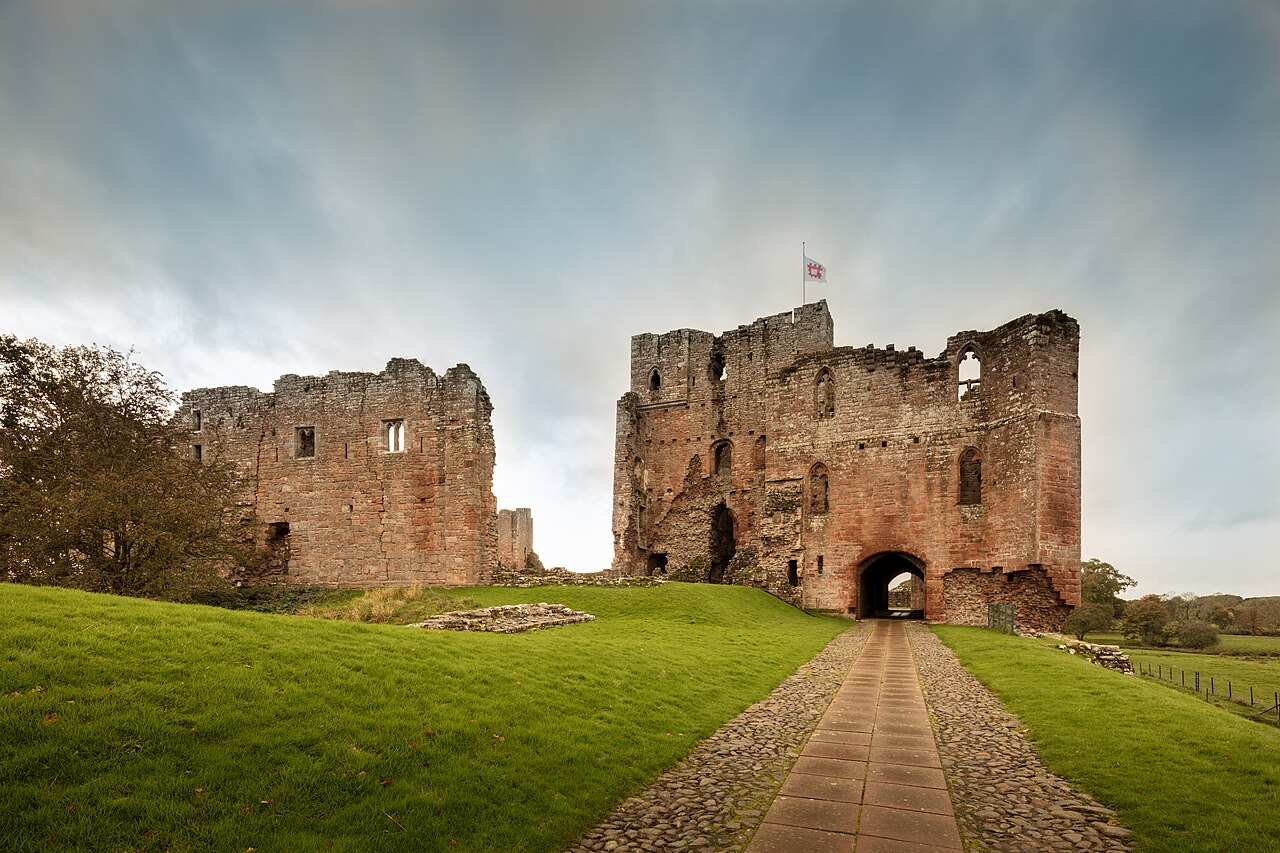
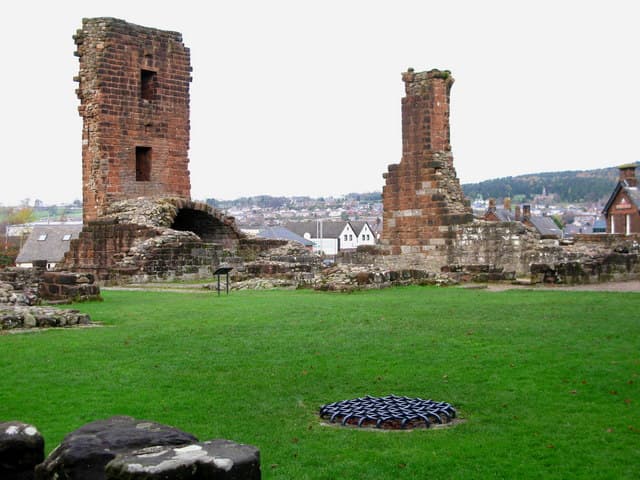
Today, no grand architectural features survive intact, but the remains reveal the castle's considerable scale and complexity. The eastern face of the ruins displays projecting stone corbels that once supported an open corridor, indicating a sophisticated design for movement along the castle walls. Inside, several large vaulted chambers remain visible, thought to have served as prison cells. These vaulted spaces demonstrate advanced stone masonry techniques intended to create secure and durable interiors.
The castle's defensive walls, although broken in several places, retain original window openings that offer different views depending on the angle of observation. Following the English Civil War, the fortress was deliberately dismantled as part of the slighting process common to many castles of the period. Some building materials were removed and sold, contributing to the castle's fragmented condition today.
Located directly opposite the 19th-century Penrith railway station, the ruins have been preserved as a historic monument. English Heritage's stewardship ensures visitors can appreciate the footprint of this once-active medieval stronghold and understand its role in England's border history.
Cultural and historical significance
Penrith Castle is a prominent symbol of medieval power dynamics in northern England. Its association with the Neville family, particularly the influential Earls of Salisbury and Warwick, ties it to key events such as the Wars of the Roses and border conflicts with Scotland. The castle's military function, administrative role, and later transformation reflect the shifting political and social landscape over several centuries.
As a Grade I listed building, the castle is recognized for its exceptional heritage value. Its ruins provide insight into medieval fortification techniques and the strategic importance of border castles. The site's layered history, from Roman military origins to medieval stronghold and modern heritage site, makes Penrith Castle an important destination for those interested in English history and castle architecture.
Frequently asked questions (FAQ)
- How do I visit Penrith Castle?
- Penrith Castle is open to the public year-round with no entrance fee. Visitors can explore the ruins and the surrounding public park during daylight hours.
- What is the historical significance of Penrith Castle?
- Penrith Castle was a key fortress in defending northern England from Scottish invasions and was the residence of the powerful Neville family during the 15th century.
- When was Penrith Castle built?
- The castle was constructed primarily in the early 15th century, with documented building activity around 1412 and 1413.
- Can I see the remains of the Roman camp beneath the castle?
- While the castle is believed to be built atop a Roman military camp, no visible remains of the Roman site are apparent at the castle today.
- Is Penrith Castle accessible for visitors with mobility issues?
- The castle ruins are mostly uneven terrain and may be challenging for visitors with mobility impairments. Assistance or alternative arrangements are recommended.
Photo gallery

Information
Sources & official resources
Verify the information above using these authoritative references.
Loading map...
Visitor reviews
No reviews yet. Been here? Write the first review and help other travelers!
Write the first reviewVisited this castle? Share your experience
Your review helps other travelers and adds first-hand knowledge to our encyclopedia.