Lowther Castle
Lowther Castle stands as a remarkable historic estate nestled in the heart of the English Lake District, within the county of Westmorland, England. This hill castle site has evolved over centuries, reflecting the changing fortunes and tastes of the Lowther family, a noble lineage with roots dating back to the medieval period. The castle's story is intertwined with architectural innovation, aristocratic grandeur, and the shifting social landscape of Britain from the 12th century through to the modern era.
Originally established around 1120 by Dolfin de Lowther, a nobleman descended from Viking settlers during the era of the Danelaw, the site has witnessed continuous habitation and transformation. The medieval origins gave way to a grand country house in the late 17th century, known as Lowther Hall, completed in 1685 for John Lowther, 1st Viscount Lonsdale. This residence served as a social and political hub in the region, attracting notable figures such as Mary, Queen of Scots, and celebrated Romantic poets like William Wordsworth and Robert Southey. The landscape artist J. M. W. Turner also found inspiration within the estate's picturesque surroundings.
Architectural evolution and 19th-century rebuilding
Between 1806 and 1814, the estate underwent a significant transformation when William Lowther, 1st Earl of Lonsdale, commissioned the construction of the current Lowther Castle. Designed by the architect Robert Smirke—noted for his later work on the British Museum—this project was Smirke's first major commission and marked a departure from purely defensive medieval architecture to a more ornamental and symbolic style.
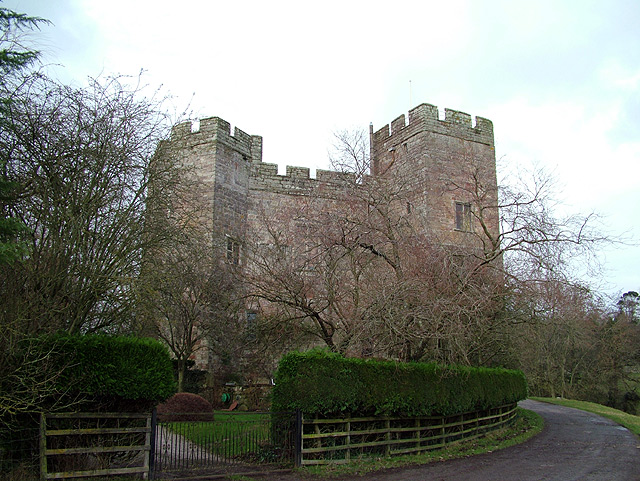
The castle exemplifies the sham castle style, a romanticized interpretation of medieval fortifications intended for aesthetic grandeur rather than defense. The complex features a central nine-bay block with embattled parapets and angle turrets, crowned by a taller central tower. The design incorporates elements salvaged from the earlier 1685 Lowther Hall, blending architectural motifs from different centuries.
The facade is notable for its mixture of Gothic pointed arches and Tudor-style flat-topped windows, creating a varied yet harmonious architectural vocabulary. A porte-cochère provides a grand covered entrance for carriages and later automobiles, while the service wing to the east supported the household's domestic functions. The castle is enclosed by a battlemented wall with turrets and a gatehouse, enhancing its manor-like fortress appearance.
Decline and wartime use
The estate flourished under the Lowther family until the late 19th and early 20th centuries when financial difficulties began to mount. Hugh Lowther, 5th Earl of Lonsdale, inherited the estate in 1882 and led a lavish lifestyle that contributed significantly to the estate's economic decline. By 1935, he had vacated the castle, marking the beginning of its deterioration.
During World War II, the castle grounds were requisitioned by the military for tank training exercises, notably for the development of the secret Canal Defence Light, an armored vehicle illumination system. This militarization caused damage to the estate's grounds and gardens.
Following the war, the castle's contents were auctioned in 1947. In an effort to avoid property taxes, the roof was removed in 1957, leaving the structure exposed to the elements and accelerating its decay. Subsequently, parts of the estate were repurposed for agricultural use, including timber production, livestock farming, and even a chicken-broiler factory, reflecting a significant shift from aristocratic residence to practical utility.
Gardens and landscape design
The gardens of Lowther Castle were once renowned for their beauty and variety, comprising several distinct areas each with unique features. The Rock Garden and the Sweet Scented Garden featured aromatic plants, oval flower beds, small ponds with miniature waterfalls, and rustic seating areas. A French vase gifted by the German Kaiser and inscribed with verses by the Persian poet Omar Khayyam added a touch of international cultural significance.
The japanese garden
Created in 1904, the Japanese Garden was a standout feature, incorporating imported trees, scarlet-painted ornamental bridges, pools with Japanese water lilies and irises, and life-size bronze animal sculptures. The garden's design emphasized tranquility and contemplation, with hidden pathways, tiny islands, shrines, and carefully maintained dwarf trees, reflecting the period's fascination with Japanese aesthetics.
The terrace and hugh's garden
The Terrace stretched approximately 1.6 kilometers, landscaped with grass and bordered by diverse trees and shrubs, offering sweeping views over the River Lowther and the surrounding hills. Hugh's Garden, designed before World War I and inspired by the gardens of Versailles, featured six wide grass avenues radiating from a central point, separated by clipped yew hedges and dotted with Italian stone fountains amid thousands of ground cover plants.
Rose and iris gardens
The Rose Garden was notable for its vast collection of approximately 25,000 rose bushes arranged on a green lawn centered by a fountain and rock feature. Adjacent to this was the Iris Garden, enclosed by clipped hedges and featuring lily ponds and stone seating, adding to the estate's botanical diversity and appeal.
Recent restoration and visitor experience
Starting in the early 21st century, significant restoration efforts have been undertaken to stabilize the castle ruins and revive the gardens. A partnership launched in 2005 initiated a comprehensive program to conserve the historic fabric and landscape. The castle reopened to the public in 2011, managed by the Lowther Castle and Gardens Trust, which continues to oversee ongoing restoration and development.
Today, visitors can explore the dramatic castle ruins, wander through the gardens within gardens, and enjoy amenities such as a large wooden adventure playground built from sustainably sourced timber. The site welcomes people of all ages, including families and pets, offering a rich cultural and natural experience that blends history, architecture, and horticulture.
The restoration has included replanting with species like Hydrangea aspera Sargentiana and Parthenocissus henryana, alongside thousands of roses and other perennials, ensuring the gardens continue to flourish. The conversion of former stables and agricultural buildings into visitor facilities has enhanced accessibility and comfort, making Lowther Castle a unique destination that honors its past while embracing the future.
Frequently asked questions (FAQ)
- What are the opening hours of Lowther Castle?
- Lowther Castle is typically open to visitors from 10 AM to 5 PM during the spring and summer months. In the autumn and winter, hours may vary, so it's best to check the official website for the most current information before planning your visit.
- How do I get to Lowther Castle?
- Lowther Castle is located near Penrith in the Lake District, easily accessible by car or public transport. The nearest train station is Penrith, and from there, you can take a taxi or a local bus to reach the castle.
- Is Lowther Castle accessible for visitors with disabilities?
- Yes, Lowther Castle is committed to providing an accessible experience for all visitors. There are wheelchair-friendly paths throughout the grounds, and staff are available to assist with any specific needs during your visit.
- What is the historical significance of Lowther Castle?
- Lowther Castle has a rich history dating back to the 12th century, originally built as a defensive stronghold. It has undergone various renovations and changes over the centuries, reflecting the architectural styles of different eras and serving as a residence for the Lowther family.
- Can I bring my dog to Lowther Castle?
- Yes, dogs are welcome in the gardens and grounds of Lowther Castle, but they must be kept on a lead at all times. However, please note that dogs are not allowed inside the castle itself.
- When is the best time to visit Lowther Castle?
- The best time to visit Lowther Castle is during the spring and summer months when the gardens are in full bloom and outdoor activities are available. However, autumn also offers beautiful foliage, making it a picturesque time to explore the grounds.
- What are the ticket prices for Lowther Castle?
- Ticket prices for Lowther Castle vary based on the season and whether you are an adult, child, or family group. It's advisable to check the official website for the latest prices and any available discounts before your visit.
- Are there any nearby attractions to Lowther Castle?
- Yes, the Lake District National Park is nearby, offering stunning landscapes and numerous outdoor activities. Additionally, the charming market town of Penrith and the historic ruins of Brougham Castle are also worth exploring during your visit.
Information
Website
Visit websiteSources & official resources
Verify the information above using these authoritative references.
Loading map...
Visitor reviews
No reviews yet. Been here? Write the first review and help other travelers!
Write the first reviewVisited this castle? Share your experience
Your review helps other travelers and adds first-hand knowledge to our encyclopedia.