Brougham Castle
Brougham Castle stands prominently near Penrith in England, occupying a site steeped in history dating back to Roman times. The castle's location was originally the Roman fort of Brocavum, strategically positioned at the confluence of the Eamont and Lowther rivers. This site’s military significance was recognized and utilized through successive centuries, culminating in the construction of the medieval fortress that endures today.
Founded in the early 13th century by Robert I de Vieuxpont, a loyal supporter of King John, Brougham Castle was designed to control this vital river junction and assert feudal dominance in the region. The castle's initial phase featured typical early medieval defensive elements, including timber fortifications and earthworks, which were gradually replaced by stone structures as the castle evolved.
Following the death of Robert de Vieuxpont, the castle passed through turbulent ownership. The Vieuxpont family held the estate until the mid-13th century, when political upheaval led to the confiscation of the property after Robert de Vieuxpont’s grandson was declared a traitor in 1264. By 1269, the castle came under the control of the Clifford family through marriage, who would significantly enhance and fortify the castle, especially during the volatile period of the Wars of Scottish Independence.
Medieval fortifications and architectural evolution
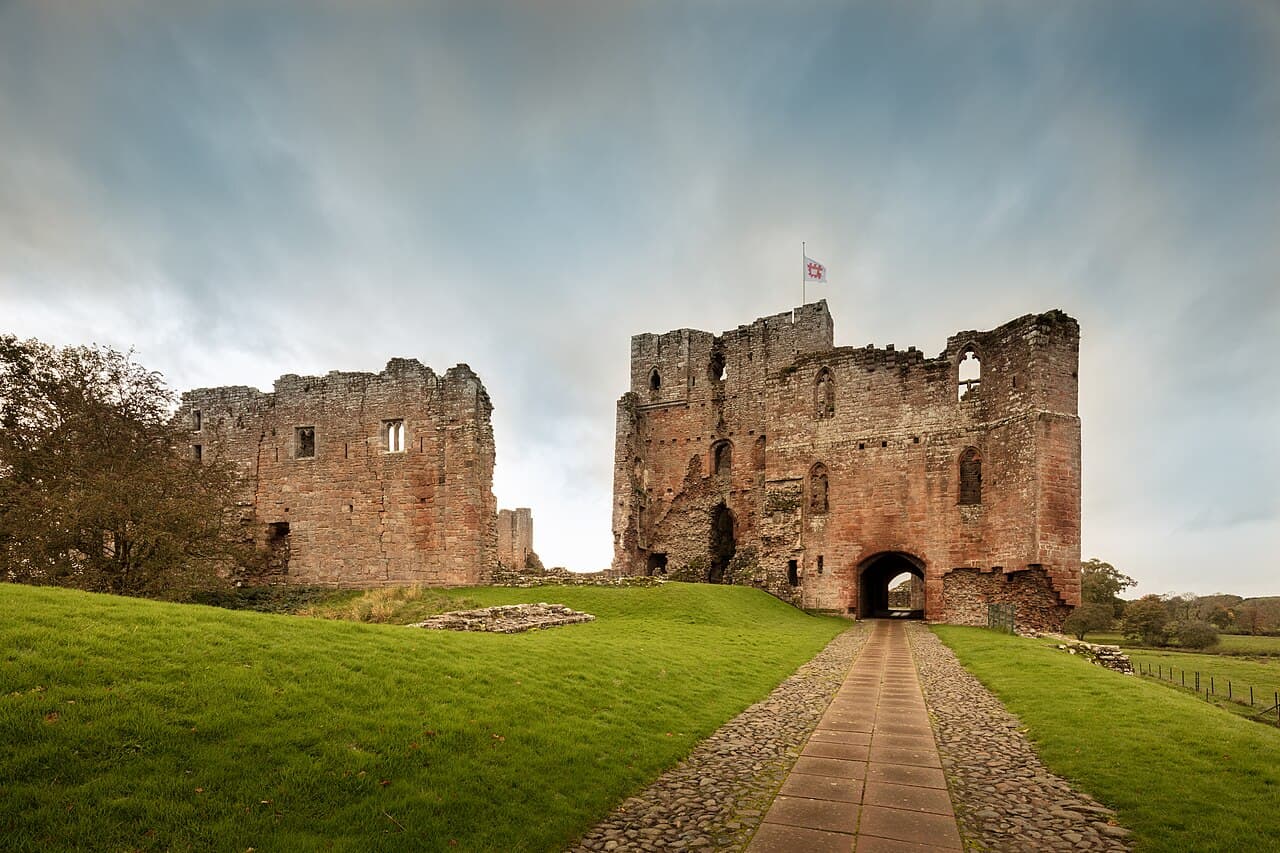
The Clifford family undertook major construction projects at Brougham Castle in the late 13th and early 14th centuries. Robert Clifford, 1st Baron de Clifford, replaced earlier wooden defenses with formidable stone curtain walls and constructed a substantial gatehouse complex around 1300. This gatehouse, consisting of two gatehouses facing each other with a courtyard between, was a critical defensive feature. The inner gatehouse remains largely intact, standing about 12.5 meters high with a vaulted passage, portcullis, and a secret postern gate. The outer gatehouse, taller at 14.5 meters, contained a dungeon and guardroom, and likely featured machicolations for dropping projectiles on attackers, though these have not survived.
The castle’s keep, dating from the 13th century, is a prominent feature rising nearly 20 meters tall. It is roughly square in plan and includes a spiral staircase, garderobe, and multiple floors serving various functions from storage to residential quarters for the lord and household. The keep was enhanced in the early 14th century with an additional fourth floor, reflecting the castle’s growing strategic importance.
Additional structures and defensive elements
South-east of the keep lies a stone hall built by Roger Clifford in the late 14th century, replacing an earlier timber hall. This hall served as a dining area and featured large windows with wooden shutters. Adjacent to it were essential domestic facilities including a kitchen, lodgings, a water well, and a chapel, illustrating the castle’s role as both a military stronghold and a noble residence.
The Tower of League in the south-west corner, a four-story square tower constructed around 1300, housed distinguished guests and provided additional defense. Each floor had a fireplace and garderobe, with defensive provisions allowing archers to cover the gatehouse approaches.
Stone curtain walls replaced earlier earthworks and timber palisades during the 14th century, enclosing the irregular polygonal castle layout on terraced ground. A moat, originally up to 15 meters wide and 3.4 meters deep, surrounded the east, south, and west sides, greatly enhancing the castle’s defenses when filled with water.
Historical significance and ownership transitions
The castle’s history is marked by its strategic role during the Wars of Scottish Independence and the shifting fortunes of its owners. After the Vieuxponts, the Cliffords fortified the castle to withstand Scottish raids. Despite these efforts, Brougham Castle was captured and looted by Scottish forces in 1388. The castle’s importance declined as the Cliffords acquired other estates, notably Skipton Castle, leading to reduced investment in Brougham.
By the late 16th century, the castle was no longer a primary residence and had fallen into disrepair under George Clifford, 3rd Earl of Cumberland. Some restoration occurred in the early 17th century, enough for King James I to stay there in 1617. Lady Anne Clifford, inheriting the estate in 1643, undertook extensive repairs, transforming the castle into a more comfortable country house and establishing a 17th-century walled garden on the site of the former Roman fortifications.
Following Lady Anne’s death in 1676, the castle again fell into decline. By 1714, the castle’s furnishings were sold off, and it was abandoned. Local villagers quarried stone from the castle ruins for building materials, accelerating its decay.
Cultural legacy and preservation efforts
Brougham Castle attracted the attention of Romantic artists and poets in the 18th and 19th centuries. The renowned painter J. M. W. Turner captured its picturesque ruins in his artwork, while poet William Wordsworth referenced the castle in his autobiographical poem The Prelude and composed a song celebrating the restoration efforts of the Clifford family.
In the 20th century, the castle was formally recognized as a monument of national importance. Custodianship was transferred to the Office of Works in 1927, leading to extensive repairs during the 1930s. Archaeological investigations, including a detailed survey in 1984, have further illuminated the castle’s layered history, revealing Roman artifacts such as coins and altars within the grounds.
Today, Brougham Castle stands as one of the best-documented and studied medieval castles in northern England. Its well-preserved ruins offer a vivid illustration of the evolution of castle architecture from the early 13th century through the late medieval period. Visitors can explore the remains of the impressive gatehouse complex, the towering keep, the stone hall, and the Tower of League, as well as the remnants of the Roman fortifications and the 17th-century walled garden.
A museum on site provides further interpretation, enriching the visitor experience with insights into the castle’s military, residential, and cultural significance over the centuries. The castle’s enduring presence on the landscape continues to inspire interest in England’s medieval heritage and the complex history of border conflicts with Scotland.
Frequently asked questions (FAQ)
- How do I get to Brougham Castle?
- Brougham Castle is located just outside Penrith in the United Kingdom. You can reach it easily by car or public transport, with nearby train and bus services connecting to Penrith. There is also parking available for visitors at the site.
- What is the historical significance of Brougham Castle?
- Brougham Castle dates back to the 13th century and holds great historical importance as a stronghold during the conflicts between Scotland and England. It was once the home of Lord William de Brougham and played a key role in the defense of the region. The ruins reflect the architectural styles of its time and offer insight into medieval life.
- When was Brougham Castle built?
- Brougham Castle was constructed in the early 13th century, with its first records dating around 1220. It was built as a defensive structure and has evolved over the centuries, showcasing various architectural modifications. The castle's long history is evident in its impressive ruins.
- Can I visit Brougham Castle year-round?
- Yes, Brougham Castle is open to visitors throughout the year, although opening times may vary seasonally. It is advisable to check the official website for the most current information on visiting hours before your trip. The castle often has special events that may affect regular hours.
- Why is Brougham Castle a popular tourist attraction?
- Brougham Castle is popular due to its rich history, stunning architecture, and picturesque setting. Visitors are drawn to its dramatic ruins, which provide a glimpse into the past, as well as the beautiful surrounding landscapes. The castle also offers educational opportunities about medieval history and heritage.
- Is it possible to take guided tours of Brougham Castle?
- Yes, guided tours are available at Brougham Castle, providing visitors with in-depth insights into its history and architecture. Knowledgeable guides share fascinating stories and details that enhance the experience. Check the website for tour schedules and availability during your visit.
- What are the ticket prices for visiting Brougham Castle?
- Ticket prices for Brougham Castle are generally affordable, with discounts available for children, students, and seniors. Family tickets may also be offered for a better value. It's best to check the official site for the latest pricing details and any special offers.
- When is the best time to visit Brougham Castle?
- The best time to visit Brougham Castle is during the spring and early autumn months when the weather is mild and the surrounding landscapes are vibrant. Summer can be busy with tourists, while winter may see fewer visitors but offers a unique charm. Consider visiting during weekdays for a quieter experience.
- Are there any nearby attractions to explore after visiting Brougham Castle?
- Yes, there are several nearby attractions worth exploring, including the beautiful Lake District National Park and the historic town of Penrith. Other nearby sites include the stunning Lowther Castle and Gardens, and the picturesque village of Askham. These sites provide great opportunities for further exploration and enjoyment of the area.
Photo gallery

Information
Website
Visit websiteSources & official resources
Verify the information above using these authoritative references.
Loading map...
Visitor reviews
No reviews yet. Been here? Write the first review and help other travelers!
Write the first reviewVisited this castle? Share your experience
Your review helps other travelers and adds first-hand knowledge to our encyclopedia.