Dacre Castle
Dacre Castle is a notable example of a moated tower house located in the village of Dacre, approximately 4 miles southwest of Penrith in Cumbria, England. Constructed in the mid-14th century, this castle was likely built by Margaret Multon amid the turbulent times marked by frequent Scottish invasions and border raids. Its strategic location and defensive features reflect the need for security in the borderlands during the Late Medieval period.
Architectural features and design
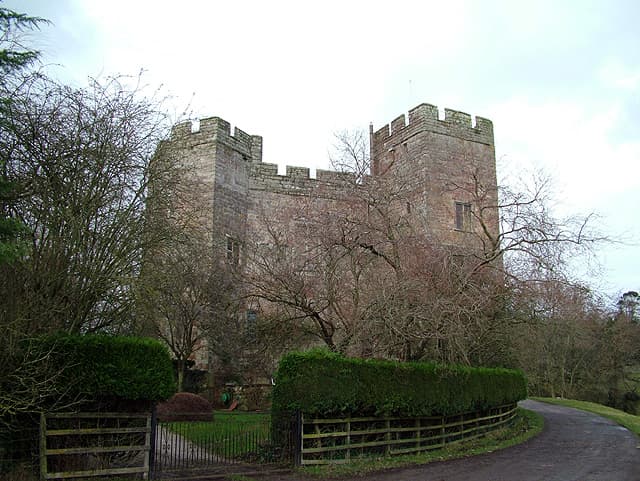
The castle is primarily constructed from local sandstone, giving it a robust and imposing appearance. It rises to a height of about 66 feet (20 meters) and is characterized by its crenellated battlements crowning the roofline. The structure is a compact tower house with a central block flanked by four projecting turrets, which enhance its defensive capabilities and provide vantage points for surveillance.
Surrounding the castle is a moat, a water-filled defensive ditch typical of fortified residences of this era, which added an additional layer of protection against attackers. The moat at Dacre Castle remains a distinctive feature, emphasizing its role as a fortified dwelling rather than a mere manor house.
Inside, the castle retains several noteworthy features, including an ornate lavabo located in the main hall. This lavabo, a basin used for ritual handwashing, reflects the castle's status and the importance of ceremonial practices during the medieval period.
Historical context and ownership
Dacre Castle was held by the Dacre family for several centuries, from its construction through to the 17th century. The family's stewardship of the castle coincided with a period of frequent conflict along the Anglo-Scottish border, necessitating strong defensive structures like Dacre Castle.
During the 17th century, the castle underwent changes in ownership and usage, reflecting the broader social and political shifts in England during and after the medieval era. The castle's defensive role diminished as the threat of border conflict waned.
Restoration and current use
After periods of neglect and disrepair, Dacre Castle was subject to renovations in the 1670s and again in the 1960s. These restoration efforts helped preserve the castle's structural integrity and historical character.
Today, the castle is maintained as a private residence, which has ensured its continued upkeep and conservation. While not generally open to the public, the castle remains an important architectural and historical landmark in Cumbria.
Significance in medieval architecture
Dacre Castle exemplifies the Late Medieval tower house typology common in the border regions of northern England and Scotland. Its combination of residential comfort and military defense illustrates the dual purpose of such structures during a period marked by frequent skirmishes and raids.
The castle's moat, turrets, and crenellations are characteristic defensive features, while the interior elements like the lavabo indicate the social status of its occupants and their attention to ritual and hygiene.
Architectural comparison
Compared to other moated tower houses in England, Dacre Castle is notable for its well-preserved turrets and height, standing taller than many similar structures. Its use of local sandstone also ties it closely to the regional geology and building traditions of Cumbria.
Legacy and cultural heritage
Dacre Castle remains a significant example of medieval fortification adapted for domestic use. It contributes to the understanding of border life in medieval England and the architectural responses to the challenges posed by the Anglo-Scottish conflicts.
Frequently asked questions (FAQ)
- How do I get to Dacre Castle?
- Dacre Castle is located in the picturesque village of Dacre, just a short drive from Penrith in Cumbria. Visitors can reach the castle by car via the A66 road, or by public transport with local bus services connecting to nearby towns.
- What is the historical significance of Dacre Castle?
- Dacre Castle dates back to the 14th century and showcases the architectural styles of the medieval period. It played a significant role in the region's history, serving as a defensive stronghold and residence for the Dacre family, who were influential in the area.
- When was Dacre Castle built?
- Dacre Castle was originally constructed in the late 14th century, around the year 1380. Over the centuries, it has undergone various renovations and restorations, reflecting the changes in architectural trends and the needs of its inhabitants.
- Can I visit Dacre Castle?
- Yes, Dacre Castle is accessible to visitors, although it is primarily a private residence. It is advisable to check in advance for any open days or guided tours to ensure you have the opportunity to explore the castle.
- Why is Dacre Castle an important architectural site?
- Dacre Castle is a notable example of a medieval tower house, featuring distinctive architectural elements such as its stone walls and defensive structures. Its preservation offers insight into the living conditions and defensive strategies of the nobility during the medieval period.
- Is it possible to take guided tours of Dacre Castle?
- Guided tours of Dacre Castle may be available during special open events or heritage days. Visitors should check the official website or local listings for any scheduled tours and to confirm availability.
- What are the opening hours for Dacre Castle?
- The opening hours for Dacre Castle can vary, particularly since it is a private residence. It is recommended to contact the local tourism office or check online for the most current visiting information and any seasonal changes in hours.
- What is the best time to visit Dacre Castle?
- The best time to visit Dacre Castle is during the warmer months, from late spring to early autumn, when the weather is pleasant for outdoor exploration. Additionally, some events or tours may only be available during this period, enhancing the visitor experience.
- Are there any nearby attractions to visit along with Dacre Castle?
- Yes, visitors to Dacre Castle can explore other nearby attractions such as the stunning Ullswater Lake and the historic town of Penrith. The area is rich in natural beauty and offers opportunities for hiking, boating, and enjoying the scenic Lake District.
- What are the ticket prices for Dacre Castle?
- Ticket prices for visiting Dacre Castle can vary depending on the type of event or tour offered. It is best to check the official website or local tourism information for the latest pricing details and any discounts that may apply.
Photo gallery

Information
Current owner
Private owner
Loading map...
Visitor reviews
No reviews yet. Been here? Write the first review and help other travelers!
Write the first reviewVisited this castle? Share your experience
Your review helps other travelers and adds first-hand knowledge to our encyclopedia.