Peniscola Castle
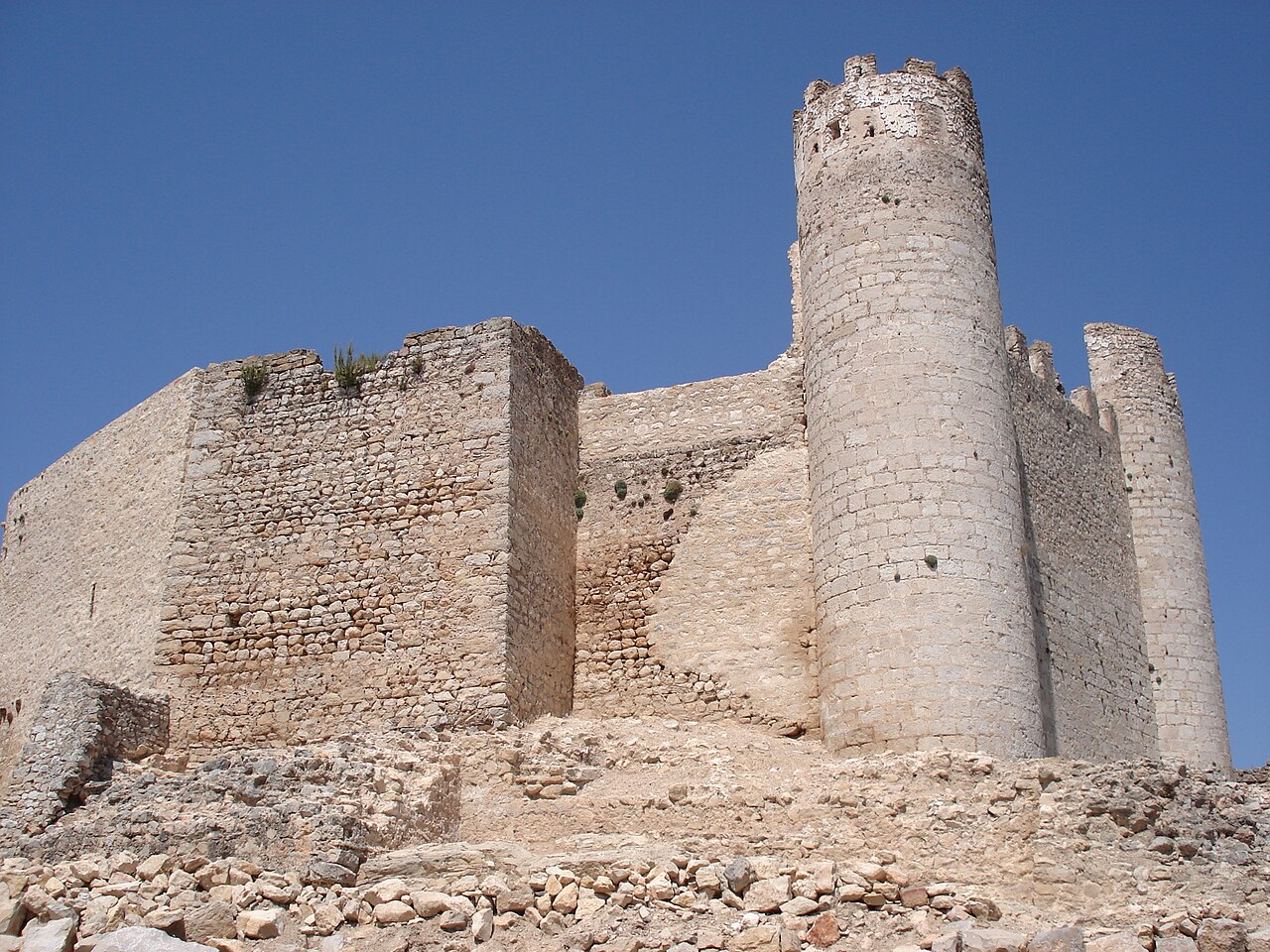
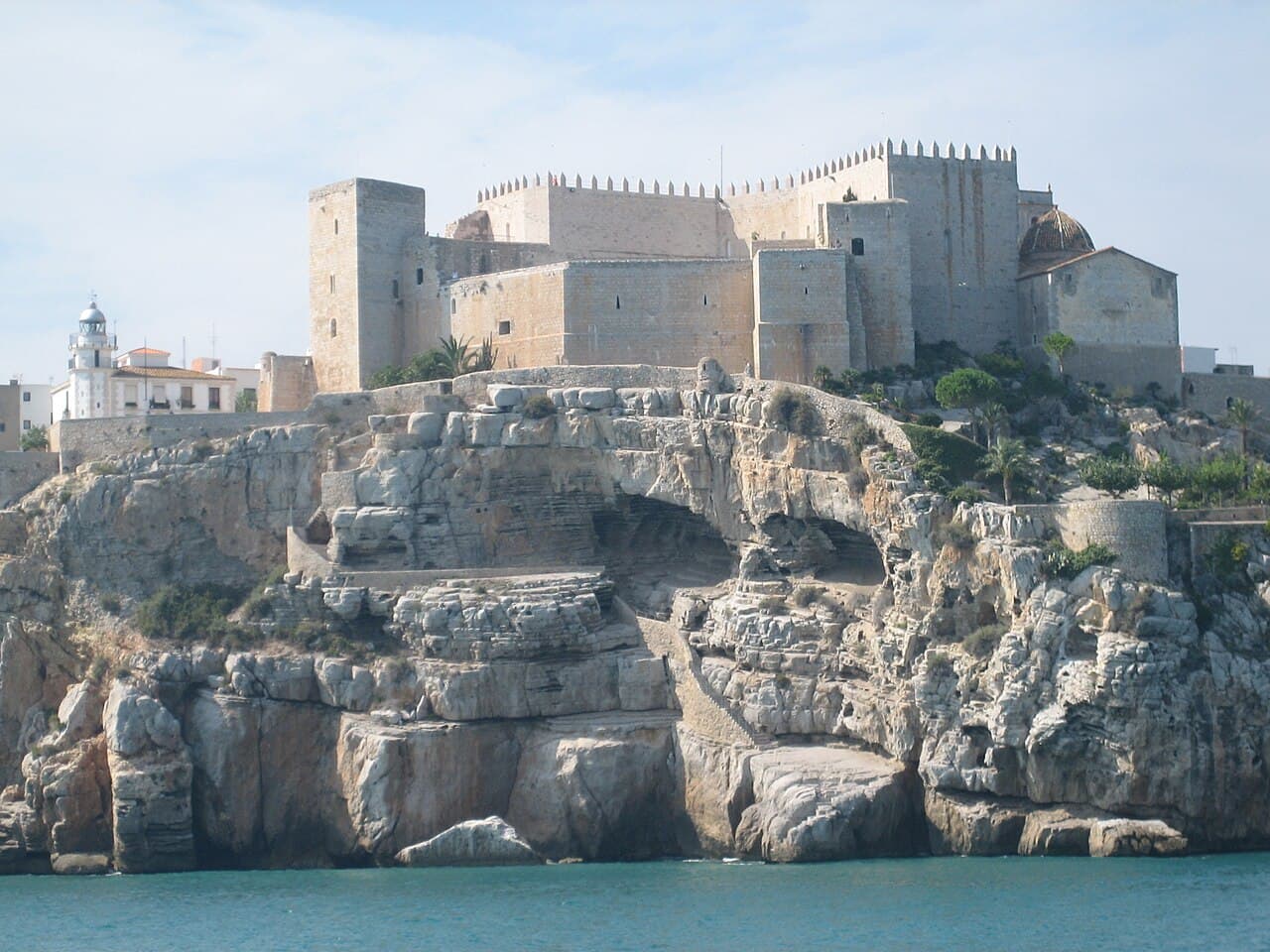
Peniscola Castle is a remarkable medieval fortress located in the coastal town of Peñíscola in the Valencia region of Spain. This hill castle stands prominently on a rocky headland overlooking the Mediterranean Sea, commanding strategic views and access to the surrounding area. It is renowned for its rich history, architectural significance, and role in major historical events such as the Western Schism of the Catholic Church and various military conflicts spanning several centuries.
The castle's origins trace back to the late 13th and early 14th centuries when it was constructed by the Knights Templar between 1294 and 1307. It was built over earlier fortifications including an Andalusian alcazaba from the 11th century and even older Ibero-Roman defensive works dating to the first and second centuries B.C. The site’s strategic importance was recognized by various powers, including the Moorish rulers and the Kingdom of Aragon.
Historical background and significance
The site originally hosted a Moorish castle described by the 11th-century Arab geographer Al-Idrisi, who noted its commanding position overlooking the sea. The fortress was a key defensive position during the Reconquista, with King James I of Aragon unsuccessfully attempting to capture it in 1225 before finally securing it in 1233. Subsequently, it was granted to the Knights Templar by James II of Aragon in 1294, who demolished the existing Muslim fortifications and rebuilt the castle in a style consistent with Templar military architecture.
Following the suppression of the Templar Order in 1307, Peniscola Castle passed into the hands of the Order of Montesa, which completed the fortress and established the Priory of Saint James within its walls by 1329. The castle's most famous resident was Antipope Benedict XIII, also known as Papa Luna, who took refuge there during the Western Schism from 1411 until his death in 1423. Benedict XIII transformed the castle into a papal residence, adding a pontifical palace, a library, and strengthening the fortifications to serve both religious and military functions.
Architectural features and castle layout
The castle exhibits a transitional Romanesque architectural style characterized by finely cut ashlar masonry, barrel vaults, and round arches with slight pointed curves. Its walls form a roughly heptagonal shape enclosed within an irregular square plan, stretching approximately 230 meters in perimeter and rising about 20 meters high. The fortress is defended by five square towers, with the northern towers being larger and more robust to face the landward side.
The main entrance, located on the southern side between two towers, is distinguished by a frieze bearing the heraldic shields of the Knights Templar and their leaders. This emblematic decoration also appears above the door of the Templar chapel inside the castle. A 16th-century bastion guards the approach to the original gate, reflecting later modifications to resist artillery attacks.
Interior arrangement and notable chambers
The castle’s interior is arranged over two floors. The ground floor housed military and practical facilities including guard quarters, stables, a cistern for water storage, a cellar, living spaces, a storeroom known as the Conclave Hall, a prison, and an armory. These rooms were essential for the daily operations and defense of the fortress.
The upper floor was remodeled in the early 15th century to accommodate the papal residence of Benedict XIII. It contains the pontifical palace, the Commander’s Hall, and the Templar chapel, along with kitchen and bathing areas. These rooms surround a large open courtyard called the parade ground. A wide terrace on the eastern side overlooks the castle grounds, replacing the original Templar living quarters destroyed during the 1814 bombardment.
The pontifical palace occupies the southwest corner of the courtyard and preserves several chambers, including what is believed to have been the pope’s study or library, marked by Benedict XIII’s coat of arms above its doorway. Nearby, grooves and sockets carved into the stone walls indicate the former presence of a covered wooden gallery.
Fortifications and military evolution
Peniscola Castle’s defenses were significantly upgraded in the 16th century under the direction of military engineer Giovanni Battista Antonelli. These enhancements focused on adapting the fortress to withstand artillery fire, especially along the tombolo—the narrow land strip connecting the castle to the mainland. The bastion and thickened walls were part of this modernization effort to protect the only accessible approach.
Throughout its history, the castle and town walls were involved in numerous conflicts including the War of the Spanish Succession in the early 18th century, where Peniscola remained loyal to Philip V and endured sieges. The town was honored with titles reflecting its loyalty and bravery, and royal symbols such as fleurs-de-lis were added to its coat of arms. The sanctuary dedicated to the Virgin of the Hermitage was constructed adjacent to the castle’s north tower during this period.
In the Peninsular War of the early 19th century, French forces occupied Peniscola but abandoned it after Spanish naval bombardments caused damage to the castle and town. The castle’s military importance declined thereafter, with the garrison disbanded by 1890.
Cultural legacy and modern preservation
Peniscola Castle’s cultural significance extends beyond its military and religious history. In 1960, the castle and town walls were used as a film set for the epic movie El Cid, starring Charlton Heston and Sophia Loren, where it represented the city of Valencia. This exposure helped boost its profile as a tourist destination.
Declared a National Historic-Artistic Monument and a Cultural Interest Asset by the Spanish government in 1931, the castle has benefited from ongoing restoration and preservation efforts since the mid-20th century. These efforts have maintained its structural integrity and restored many of its architectural and decorative elements, making it one of the most intact medieval fortresses in the Catalan-speaking regions.
Visitors today can explore the castle’s extensive fortifications, chambers, and terraces, as well as the adjoining old town which clings to the castle walls. A bronze statue of Antipope Benedict XIII by sculptor Sergio Blanco stands near the entrance, commemorating the castle’s unique role in religious history.
Access and visitor experience
The castle is accessible via the narrow tombolo connecting it to the mainland, providing dramatic views of the sea and surrounding landscape. Its commanding position and well-preserved state offer visitors a vivid glimpse into medieval military architecture and the complex history of the region. The integration of the castle with the old town walls creates a cohesive historic environment that enriches the visitor experience.
Peniscola Castle remains a popular attraction for history enthusiasts, architecture lovers, and tourists seeking to explore Spain’s rich medieval heritage along the Mediterranean coast.
Frequently asked questions (FAQ)
- What is the historical significance of Peñíscola Castle?
- Peñíscola Castle, built in the 14th century, is an iconic fortress that served as a papal residence for Pope Benedict XIII. Its strategic location on a rocky outcrop overlooking the Mediterranean Sea made it a vital military stronghold throughout history, particularly during the Reconquista.
- When was Peñíscola Castle built?
- Construction of Peñíscola Castle began in 1294, and it was completed in the early 14th century. The castle was built by the Knights Templar and later expanded under the orders of Pope Benedict XIII in the 15th century, showcasing a blend of Gothic and Renaissance architectural styles.
- What are the opening hours for Peñíscola Castle?
- Peñíscola Castle is typically open to visitors daily from 9:00 AM to 8:00 PM during the summer months, with reduced hours in winter. It’s advisable to check the official website for any seasonal changes or special closures before your visit.
- Can I buy tickets in advance for Peñíscola Castle?
- Yes, you can purchase tickets online in advance to avoid long queues at the entrance. Booking online also allows you to secure specific time slots, ensuring a smoother experience during your visit.
- Is Peñíscola Castle accessible for visitors with disabilities?
- The castle has made efforts to improve accessibility for all visitors, including wheelchair ramps and designated paths. However, due to its historic nature and uneven surfaces, some areas may still pose challenges for those with mobility issues.
- What is the best time to visit Peñíscola Castle?
- The best time to visit Peñíscola Castle is during the spring and fall when the weather is mild and the tourist crowds are smaller. Visiting early in the morning or later in the afternoon can also enhance your experience with fewer visitors on-site.
- Are there any nearby attractions to visit after Peñíscola Castle?
- Yes, after exploring Peñíscola Castle, you can visit the charming old town of Peñíscola, which is filled with quaint streets, shops, and restaurants. The nearby beaches and the Natural Park of Serra d'Irta also offer beautiful scenic views and opportunities for outdoor activities.
- What are the ticket prices for Peñíscola Castle?
- As of the latest information, ticket prices for Peñíscola Castle are generally around €5 for adults, with reduced prices for students and seniors. Children under a certain age often enter for free, making it an affordable outing for families.
Photo gallery

Information
Website
Visit websiteSources & official resources
Verify the information above using these authoritative references.
Loading map...
Visitor reviews
No reviews yet. Been here? Write the first review and help other travelers!
Write the first reviewVisited this castle? Share your experience
Your review helps other travelers and adds first-hand knowledge to our encyclopedia.