Cervera Castle
Cervera Castle, located in Cervera del Maestre, Spain, stands as a remarkable example of a hill castle with a rich history tracing back to the Iron Age. The site initially hosted an Iberian castro, laying the foundation for the later medieval fortress. Its strategic position atop a rocky hill allowed for commanding views over the surrounding landscape, making it an ideal defensive stronghold.
The castle's construction is primarily attributed to the 12th century during the Almohad period, reflecting the architectural and military influences of the Muslim rulers who controlled the region at the time. This period saw the enhancement of the northern section of the fortress with reinforced walls, a tower, and an alternative gateway, which contrasted with the later Christian medieval entrance on the opposite side.
Following the Reconquista, King James I of Aragon secured the castle in 1233, transferring control to the Knights Hospitaller. This religious and military order played a significant role in the castle's history, managing it as both a military bastion and an administrative center throughout the 13th century. The castle was further integrated into the Christian kingdom's defensive network in northern Valencia.
Historical significance and ownership transitions
After the suppression of the Knights Templar in the early 14th century, the castle was handed over to the newly established Order of Montesa in 1317. This order used Cervera Castle as a residence for its masters and as the seat of the lieutenant general and archive until the mid-16th century, underscoring its administrative importance in the region.
The castle's military relevance waned after the Valencian revolt of 1521, when it was briefly seized by the agermanats (local rebels). Subsequently, King Philip II incorporated the Order of Montesa into the Spanish crown, transferring the castle to royal ownership. As warfare and political dynamics evolved, the fortress lost much of its defensive and administrative roles.
In the 18th century, during the War of the Spanish Succession, the castle suffered significant damage and partial demolition ordered by King Philip V, accelerating its decline. Though it was used temporarily during the Carlist Wars in the 19th century, the structure continued to deteriorate, with parts collapsing and the site eventually repurposed for agriculture by the 20th century.
Architectural features and layout
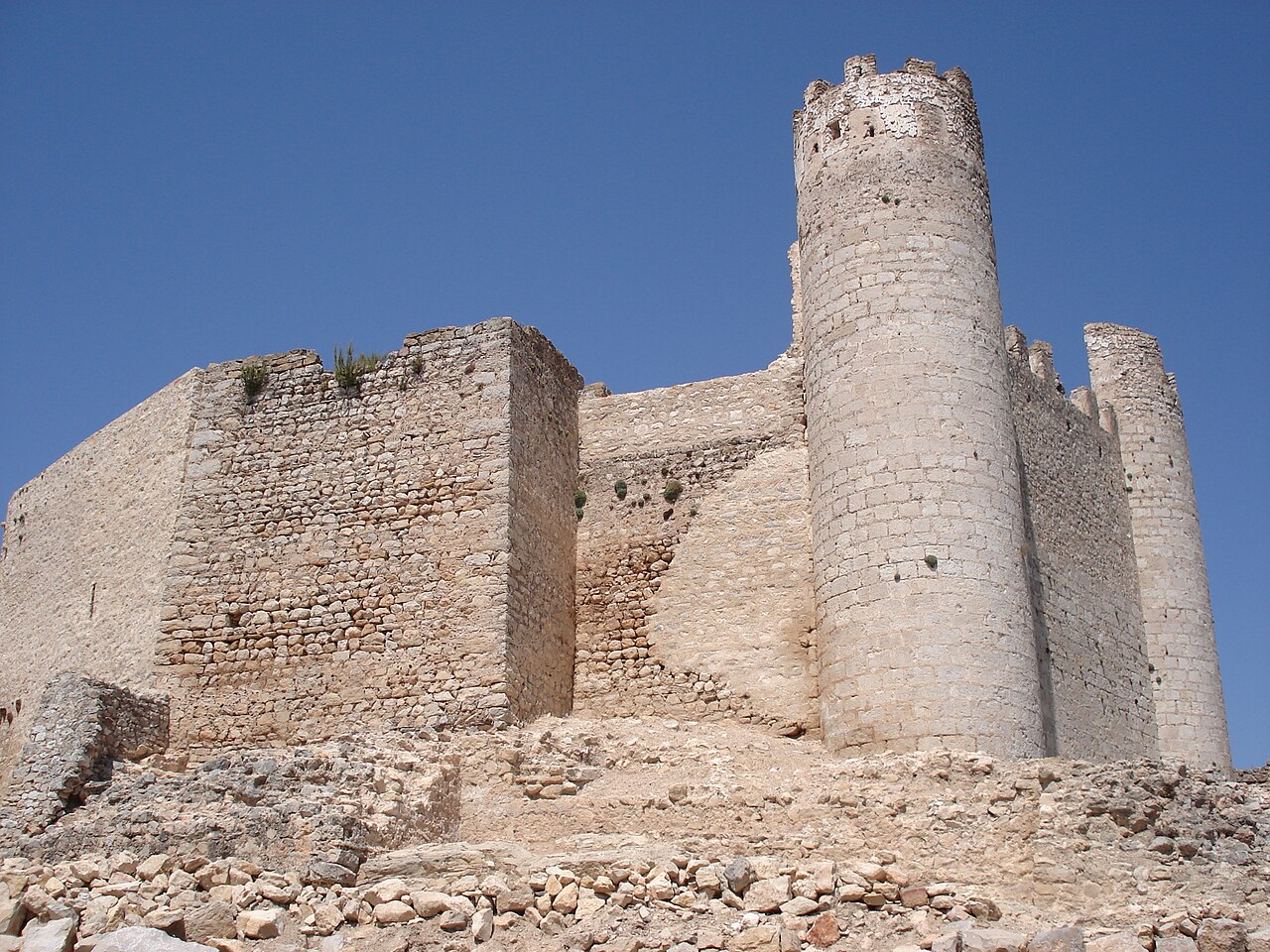
The castle spans approximately 7,500 square meters atop the hill, with an irregular layout shaped by the natural rocky terrain and the ancient Iberian foundations. The fortified enclosure was originally protected by a defensive wall reinforced by multiple towers strategically placed to cover vulnerable approaches.
Among the defensive structures were four towers, including a prominent keep known as the tower of homage, which served as the last line of defense and residence for the lord or commander. The main entrance, located on the southeast side, features a semicircular arch gateway accessible via a narrow path, designed to control and restrict access to the fortress.
Within the enclosure, several buildings served various functions. Notably, three cisterns (aljubs) were constructed to collect and store rainwater, a vital resource for sustaining inhabitants during sieges. Two chapels, dedicated to Saint John and the Virgin of the Coast, once provided religious services, although only their foundations remain visible today.
The castle's construction cleverly integrates natural rock formations into its walls, enhancing its defensive capabilities by blending man-made fortifications with the rugged terrain. Archaeological excavations have uncovered vaulted ovens and other infrastructure elements that reveal insights into the daily life and military preparedness of the castle's occupants.
Archaeological discoveries and preservation efforts
One of the most remarkable archaeological finds at the site is a throne carved from rock, complete with armrests and a footrest, believed to date back to the Iron Age or Iberian period. This artifact suggests the site's longstanding significance as a seat of power or administration even before the medieval castle was built.
Since the 1980s, renewed interest in the castle has led to multiple archaeological campaigns spearheaded by the Cultural Association Amics del Castell and other entities. These efforts have focused on excavation, stabilization, and conservation of the ruins to prevent further degradation.
In 2003, the castle was officially declared a Bien de Interés Cultural by the Spanish Ministry of Culture, recognizing its cultural and historical importance. Today, the castle remains under municipal ownership, with ongoing preservation work aimed at safeguarding its ruins and enhancing public awareness of its heritage.
Visiting cervera castle today
Visitors to Cervera Castle can explore the extensive ruins that include remnants of walls, towers, and the main gate. The site offers panoramic views of the surrounding countryside, providing a tangible connection to the region's layered history from the Iberian era through the medieval period and into modern times.
While the castle is in a ruinous condition, the preserved structures and archaeological features make it a compelling destination for those interested in medieval military architecture and Spanish history. Walking paths around the castle allow visitors to appreciate the strategic layout and the integration of natural and built elements.
Educational signage and guided tours occasionally provide context about the castle's role in the Reconquista, its association with the Knights Hospitaller and Order of Montesa, and its decline following the War of the Spanish Succession. The castle's story encapsulates centuries of conflict, religious influence, and regional power struggles.
Information
Loading map...
Visitor reviews
No reviews yet. Been here? Write the first review and help other travelers!
Write the first reviewVisited this castle? Share your experience
Your review helps other travelers and adds first-hand knowledge to our encyclopedia.