Chivert Castle
Chivert Castle, also known as Xivert Castle, is a remarkable hilltop fortress located in the municipality of Alcalà de Xivert, Spain. Perched on the southwestern foothills of the Sierra de Irta, this castle exemplifies the complex historical layering of the Iberian Peninsula, reflecting both Islamic and Christian medieval military architecture. Originally constructed in the late 11th to early 12th centuries during the High Medieval period, the fortress underwent significant transformations following its capture by the Knights Templar in the early 13th century.
The castle's strategic position atop a rocky hill about 370 meters above sea level allowed it to dominate the fertile plains below and control vital travel routes through the region. Its origins trace back to a Muslim ḥiṣn (fortified stronghold) built on the foundations of earlier Bronze Age and Iberian settlements, underscoring the site's long-standing importance as a defensive and administrative center.
The historical evolution of Chivert Castle
Pre-medieval occupation and Islamic foundation
Archaeological findings reveal continuous human occupation of the hilltop since at least the 14th to 13th centuries BCE. During the Bronze Age, the site hosted a settlement characterized by communal urnfield burials. Later, Iberian groups inhabited the area before the Islamic conquest introduced new defensive constructions. The original fortress was erected by Muslim builders in the 10th and 11th centuries, replacing earlier structures with a fortified complex designed to secure the territory and oversee agricultural lands.
Christian reconquest and Templar modifications
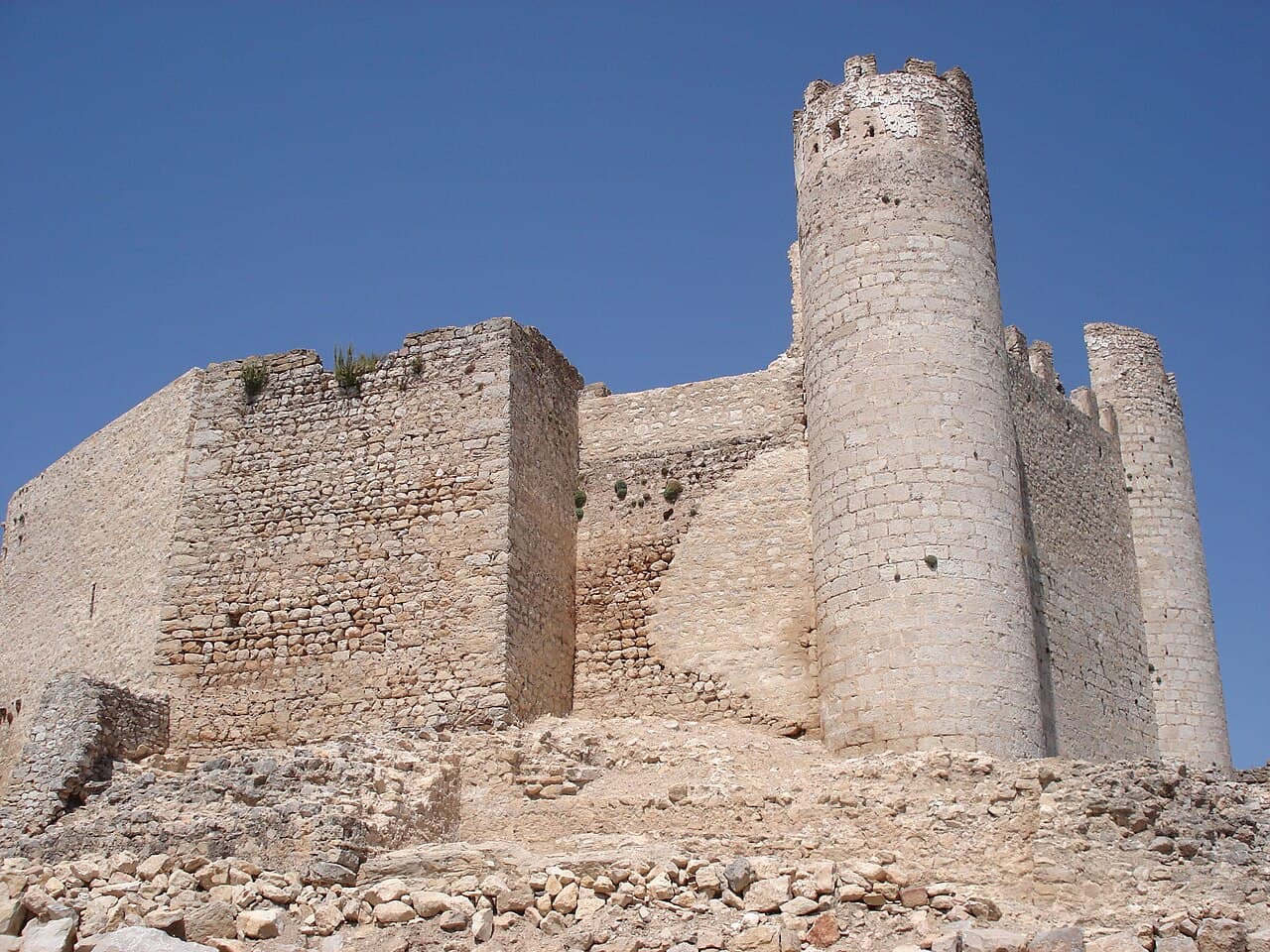
In 1234, the castle was peacefully seized by the Knights Templar, who extensively remodeled the fortress to suit their military and religious purposes. The Templars reinforced the castle's defenses by constructing two imposing circular towers on the eastern side of the inner fortress, known as the alcazaba. These towers, connected by a high defensive wall, were built in two phases: an initial stage using finely cut ashlar masonry and a subsequent phase employing rougher stonework to increase their height and defensive capabilities.
The Templars also added functional buildings within the walls, including dormitories, kitchens, and stables, although most of these structures have not survived intact. The remains of a church near the South Tower indicate the religious dimension of the castle under Templar control, with the lower chamber repurposed as a sacristy.
Architectural features and defensive elements
Layout and fortifications
The castle covers approximately 8,000 square meters and is organized around a polygonal outer ward called the albacar. This outer enclosure is protected by robust walls punctuated with multiple defensive towers, including two original Islamic structures: the West Tower and the South Tower. Both towers have been carefully restored to preserve their historical integrity.
The West Tower is notable for its construction using rammed earth, a technique involving compacted soil layers. It stands about 10 meters tall and contains two chambers, likely serving as a storage silo and a guard post. The South Tower features a trapezoidal plan with two ground-level rooms divided by a pointed arch, restored to approximately 8.5 meters in height and topped with a protective terrace to prevent erosion.
Alafia Wall and inscriptions
A striking feature of the castle is the Alafia Wall on the southern side of the albacar, measuring 12.45 meters long and nearly 10 meters high at its tallest point. This wall exhibits multiple construction phases: a foundation of rough stone masonry laid directly on the rock, a middle section built using a box masonry technique with stone blocks forming hollow boxes filled with rubble, and a top layer of rammed earth decorated to imitate finely cut ashlar stones.
The wall bears a 12th-century Arabic inscription reading "al-fatih Allah", meaning "the one who grants victory is God," highlighting the castle's Islamic heritage.
Main gate and water management
The castle's main entrance is a complex bent passageway featuring two paved ramps and a square guardhouse tower about 4 meters wide, likely adapted from an original Muslim tower. This design enhanced the castle's defensibility by preventing direct access.
Water supply was secured by a large cistern built by the Templars near the main entrance, measuring approximately 11 by 5 meters and oriented north-south. This cistern collected and stored rainwater, a vital resource for sustaining the garrison during sieges.
Later history and decline
Order of Montesa and morisco settlement
After the suppression of the Knights Templar in the early 14th century, the castle passed to the Order of Montesa, who continued to use the fortress for military and administrative purposes. By the 16th century, the castle's strategic importance declined as a morisco community—Muslims converted to Christianity—developed on the western slopes of the hill.
This settlement, known as an aljama, was enclosed partly by a rammed earth wall and featured a network of streets and traditional houses. The morisco aljama was formally recognized as a villa in 1580, reflecting its growing civil significance. However, the royal edict of 1609 ordering the expulsion of moriscos led to the abandonment of both the village and the castle, initiating their gradual ruin.
Modern archaeological efforts and preservation
Interest in Chivert Castle was revived in the late 20th century, with archaeological excavations beginning in 1996. These efforts uncovered extensive remains of the fortress and the morisco village, including the chapel, stables, kitchen, and earlier Muslim cistern.
Restoration work has focused on stabilizing key structures such as the West and South Towers and the Alafia Wall, as well as preserving parts of the morisco settlement's urban fabric. Today, the castle stands as a ruined but stabilized monument, offering valuable insights into the region's layered history and architectural evolution.
Visiting Chivert Castle
Visitors to Chivert Castle can explore the extensive ruins and appreciate the blend of Islamic and Christian military architecture. The castle's elevated position provides panoramic views of the surrounding landscape, including the Sierra de Irta and the Mediterranean coast. The site’s archaeological trails guide visitors through the main defensive structures, towers, and remnants of the morisco village, making it a rich cultural and historical destination.
Interpretive signage and guided tours often highlight the castle’s role in the Reconquista, the influence of the Knights Templar, and the unique construction techniques such as rammed earth and ashlar masonry. The site’s preservation efforts ensure that this important monument remains accessible and informative for future generations.
Frequently asked questions (FAQ)
- How do I get to Chivert Castle?
- Chivert Castle is located in Alcalà de Xivert, Spain, and can be accessed by car or public transport. The nearest major city is Castellón, from where you can take a bus or drive approximately 30 kilometers to reach the castle.
- What is the historical significance of Chivert Castle?
- Chivert Castle dates back to the 12th century and played a crucial role during the Reconquista. It was strategically positioned to protect the region and served as a defensive stronghold against invasions, showcasing the military architecture of the time.
- When was Chivert Castle built?
- Construction of Chivert Castle began in the 12th century, specifically around the year 1160. It was built by the Knights Templar and later expanded, reflecting various architectural styles over the centuries.
- Can I visit Chivert Castle year-round?
- Yes, Chivert Castle is open to visitors throughout the year, but it is advisable to check specific opening hours before your visit, as they may vary seasonally. Guided tours are available, enhancing your experience and understanding of the castle's history.
- Why is Chivert Castle a popular tourist attraction?
- Chivert Castle is popular due to its stunning views of the surrounding landscape and its well-preserved ruins that offer a glimpse into medieval life. Additionally, the castle's historical significance and architectural features attract history enthusiasts and tourists alike.
- Is it possible to access all areas of Chivert Castle?
- While many areas of Chivert Castle are accessible to visitors, some parts may have restricted access for safety reasons. However, the main sections of the castle, including the towers and walls, can be explored, providing a comprehensive experience.
- What are the ticket prices for visiting Chivert Castle?
- Ticket prices for Chivert Castle are generally affordable, with discounts available for students and seniors. It is recommended to check the official website or local tourist information for the most current pricing and any special offers.
- What are the best times to visit Chivert Castle?
- The best times to visit Chivert Castle are during the spring and fall when the weather is mild and pleasant. Avoiding the peak summer months can enhance your experience, as the crowds are smaller and the temperatures are more comfortable for exploring.
- Are there any nearby attractions to visit alongside Chivert Castle?
- Yes, nearby attractions include the picturesque town of Alcalà de Xivert and the beautiful beaches of the Costa del Azahar. Additionally, you can explore other historical sites in the region, such as the ruins of nearby monasteries and churches.
Photo gallery

Information
Website
Visit websiteSources & official resources
Verify the information above using these authoritative references.
Loading map...
Visitor reviews
No reviews yet. Been here? Write the first review and help other travelers!
Write the first reviewVisited this castle? Share your experience
Your review helps other travelers and adds first-hand knowledge to our encyclopedia.