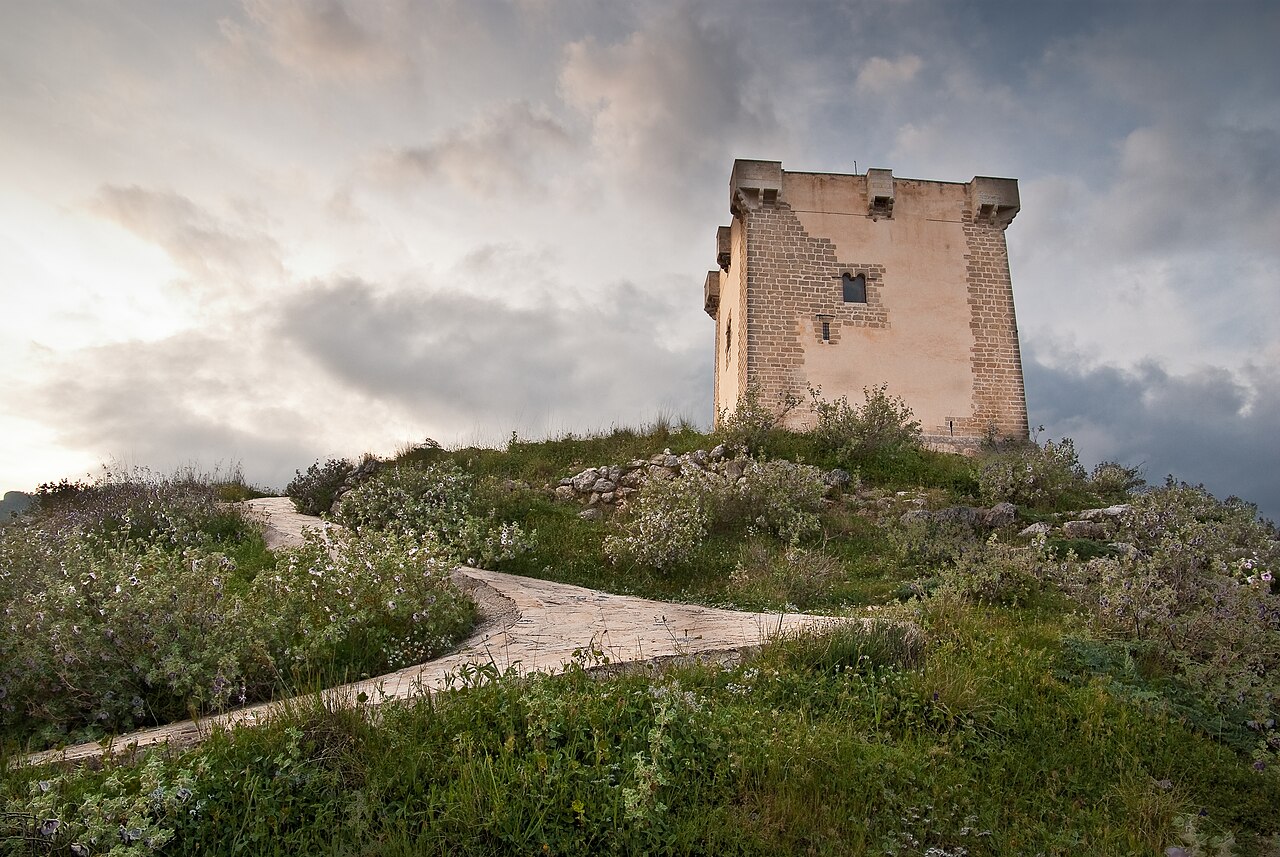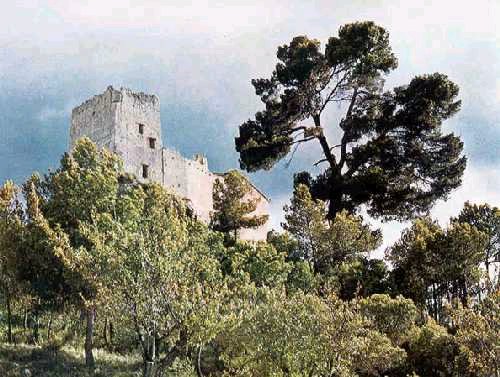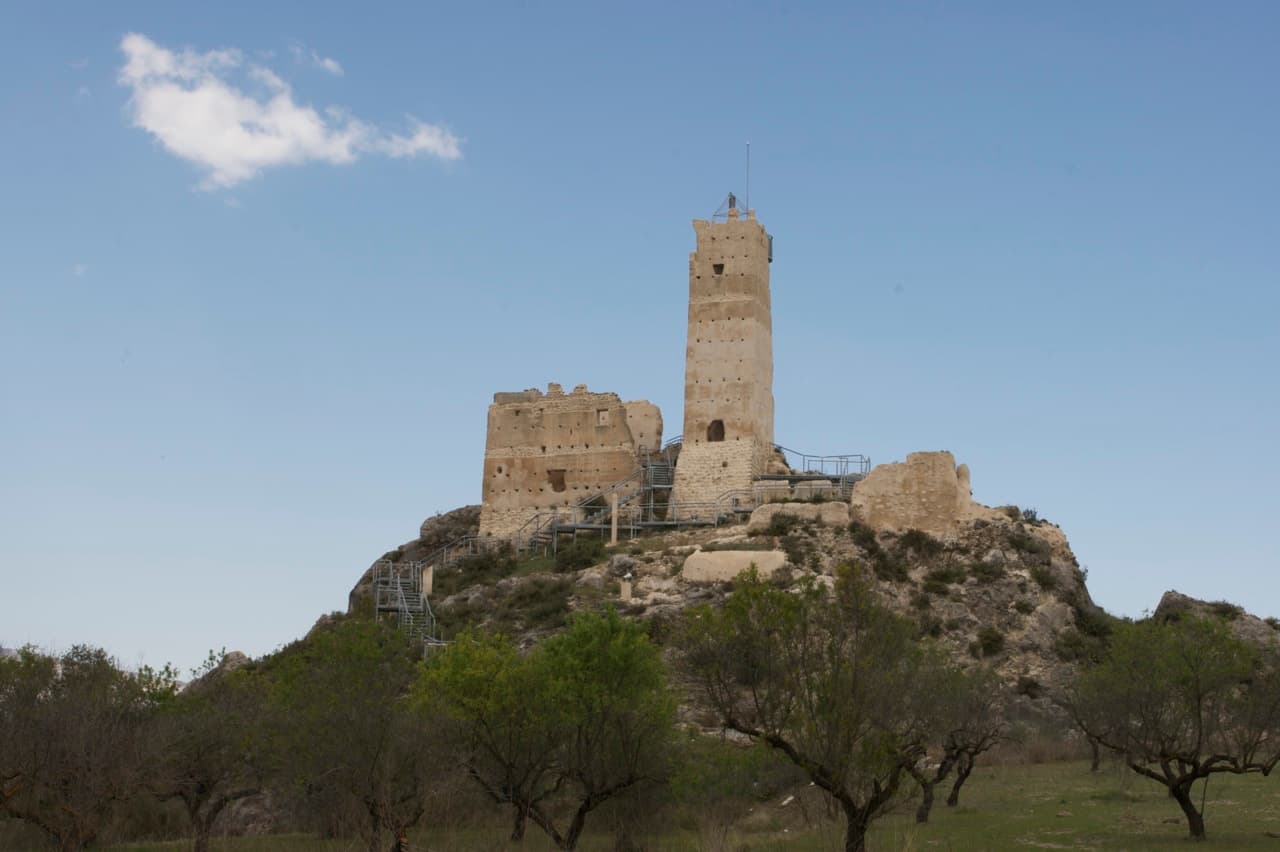
Penella Castle stands as a remarkable example of a 13th-century hill castle located near Cocentaina in the province of Alicante, Spain. Perched atop a commanding limestone crag with steep vertical walls on its northern side, the castle's strategic position offered both natural defense and extensive views across the surrounding landscape. This medieval fortress is a notable representation of rural castles or fortified manor houses typical of the early Christian reconquest period in the Iberian Peninsula.
The castle owes its origins to a royal decree by King James I of Aragon in 1271, who granted the villages of Peniella and Forminyàn to Ponç Guillem de Villafranca. The king authorized Ponç Guillem to construct a fortress on the rocky outcrop known as the "roca de Peniella," marking the foundation of the castle. This authorization reflects the broader context of territorial consolidation and Christian expansion during the late High Medieval period in the region.
Historical significance and ownership
The Castell de Penella served as the administrative and residential center for the lordship that combined the villages of Penella and Formigà under the stewardship of the Villafranca family. Its location between Cocentaina and Benilloba made it a strategically important site for controlling local territories during a period marked by frequent conflicts and shifting allegiances.
Over the centuries, the castle remained closely tied to the history and identity of Cocentaina. Although it eventually fell into ruin, the castle's legacy endured in local folklore and cultural memory. It features prominently in the folktale "Els guants de la felicitat" by Enric Valor, where it is depicted as the home of Lord Raül de Mataplana and his son Carles. This literary connection highlights the castle's role beyond military and residential functions, embedding it in regional storytelling traditions.
Architectural features and construction
The keep and defensive structures
The most prominent surviving feature of Penella Castle is its keep, also known as the tower of homage. This imposing square tower measures approximately 4 meters on each side and rises to a height of around 12 meters. Its top is crowned with crenellations, which provided defenders with protected positions from which to repel attackers.
Adjacent to the keep is a quadrangular building that also features crenellated walls, forming part of the castle's defensive complex. The fortress was originally enclosed by walls and smaller towers, fragments of which still survive, outlining the perimeter of the fortified site. These architectural elements underscore the castle's dual function as a noble residence and a defensive stronghold.
Construction techniques and materials
The castle's construction showcases a combination of traditional medieval building methods. A base of stone masonry was used to level and stabilize the foundation on the uneven rocky terrain. Above this base, walls were constructed using rammed earth or tapial, a technique involving compacting earth within wooden frames to create sturdy and durable walls. This method was common in rural fortifications of the time, balancing resource availability and defensive needs.
Archaeological findings and preservation
Archaeological excavations around Penella Castle have uncovered artifacts and structural remains dating to the late 13th century, corroborating the historical timeline of its foundation. Despite its current ruined state, the castle's keep remains structurally intact enough to offer insight into its original design and strategic purpose.
In the early 21st century, the local government of Cocentaina undertook restoration efforts to stabilize and preserve the ruins. These interventions aimed to safeguard the castle's primary architectural features for future study and public education, ensuring that Penella Castle continues to be a cultural landmark within the region.
Penella Castle in the context of medieval fortifications in Spain
Penella Castle exemplifies the characteristics of High Medieval rural castles in Spain, which often combined residential and defensive functions on naturally defensible sites. Its location on a limestone rock with sheer cliffs provided a formidable natural defense, enhanced by man-made fortifications such as the keep, walls, and towers.
The use of tapial construction alongside stone masonry reflects regional building traditions that adapted to available materials and terrain. The castle's relatively modest size compared to larger royal fortresses highlights its role as a fortified manor house, serving local lords rather than acting as a major military bastion.
Visiting Penella Castle today
Today, visitors to Penella Castle can explore the remains of the keep and the adjoining crenellated structures, gaining a sense of the castle's historical importance and architectural ingenuity. The site offers panoramic views of the surrounding landscape, including the nearby towns of Cocentaina and Benilloba.
While the castle is in a ruined but stabilized condition, it remains a significant cultural and historical monument. The restoration work has made the site safer and more accessible, allowing visitors to appreciate the medieval heritage of the Alicante region.
Frequently asked questions (FAQ)
- How do I get to Penella Castle?
- Penella Castle is located in Cocentaina, Spain, and can be accessed by car or public transport. The nearest major city is Alcoy, which is approximately a 15-minute drive away. There are signposts directing visitors from the main roads to the castle site.
- What is the historical significance of Penella Castle?
- Penella Castle dates back to the 13th century and played a crucial role in the defense against Moorish invasions. It showcases the rich history of the region and offers insights into medieval military architecture. The castle is a testament to the strategic importance of Cocentaina during its time.
- When was Penella Castle built?
- Construction of Penella Castle began in the early 13th century, around the time of the Reconquista, when Christian forces were reclaiming territory from the Moors. Over the centuries, it has undergone various renovations and restorations, reflecting the architectural styles of different periods. Today, it stands as a preserved monument of medieval history.
- Can I enter Penella Castle?
- Yes, visitors can enter Penella Castle and explore its historic grounds. There are designated pathways and viewing areas that allow you to appreciate the castle's architecture and enjoy the surrounding landscape. Guided tours may also be available for a more in-depth experience.
- Why is Penella Castle a popular tourist destination?
- Penella Castle attracts visitors due to its stunning views and well-preserved architecture, making it a perfect spot for photography and exploration. Its historical significance adds to its allure, as many come to learn about its role in Spain's history. The picturesque location also lends itself to hiking and outdoor activities.
- Is it possible to access the castle with mobility issues?
- While Penella Castle does have some accessible areas, the terrain can be uneven and may pose challenges for visitors with mobility issues. It is advisable to check ahead for the best routes and any available accommodations. Staff on-site may provide assistance to ensure a comfortable visit.
- What are the opening hours for Penella Castle?
- Penella Castle is typically open to visitors from 10 AM to 6 PM, but hours may vary depending on the season or special events. It is recommended to check the official website or contact local tourist information for the most current opening times before your visit.
- What are the ticket prices for Penella Castle?
- Admission to Penella Castle is generally affordable, with tickets priced around 5 euros for adults and discounts available for children and seniors. Special group rates may also apply, so it's worth inquiring if you plan to visit with a larger party. Tickets can often be purchased on-site or through local tourism offices.
- What are some nearby attractions to visit along with Penella Castle?
- In addition to Penella Castle, visitors can explore the charming town of Cocentaina, known for its historic buildings and vibrant local culture. Nearby attractions include the Alcoy Natural Park for outdoor enthusiasts and the Monastery of Santa Maria for those interested in religious history. These sites provide a well-rounded experience of the region.
Photo gallery

Information
Loading map...
Visitor reviews
No reviews yet. Been here? Write the first review and help other travelers!
Write the first reviewVisited this castle? Share your experience
Your review helps other travelers and adds first-hand knowledge to our encyclopedia.