Pavone Castle
Pavone Castle, located in the municipality of Pavone Canavese in Italy, stands as a remarkable example of a late medieval hill castle with a rich history spanning over a millennium. Originally constructed between the 9th and 11th centuries, the castle was initially built by local communities as a fortified refuge against invasions by Hungarian and Saracen forces. Its strategic position atop a rocky hill allowed it to serve both defensive and administrative purposes throughout its existence.
The castle's early history is closely tied to the ecclesiastical authorities of the region. Around the year 1000, Emperor Otto III granted the surrounding territory to the bishop of Ivrea, integrating Pavone Castle into the bishopric's possessions. This ecclesiastical control persisted for centuries, with the castle functioning as a defensive stronghold and administrative center for the bishops rather than a residence for local nobility.
Architectural evolution and medieval fortifications
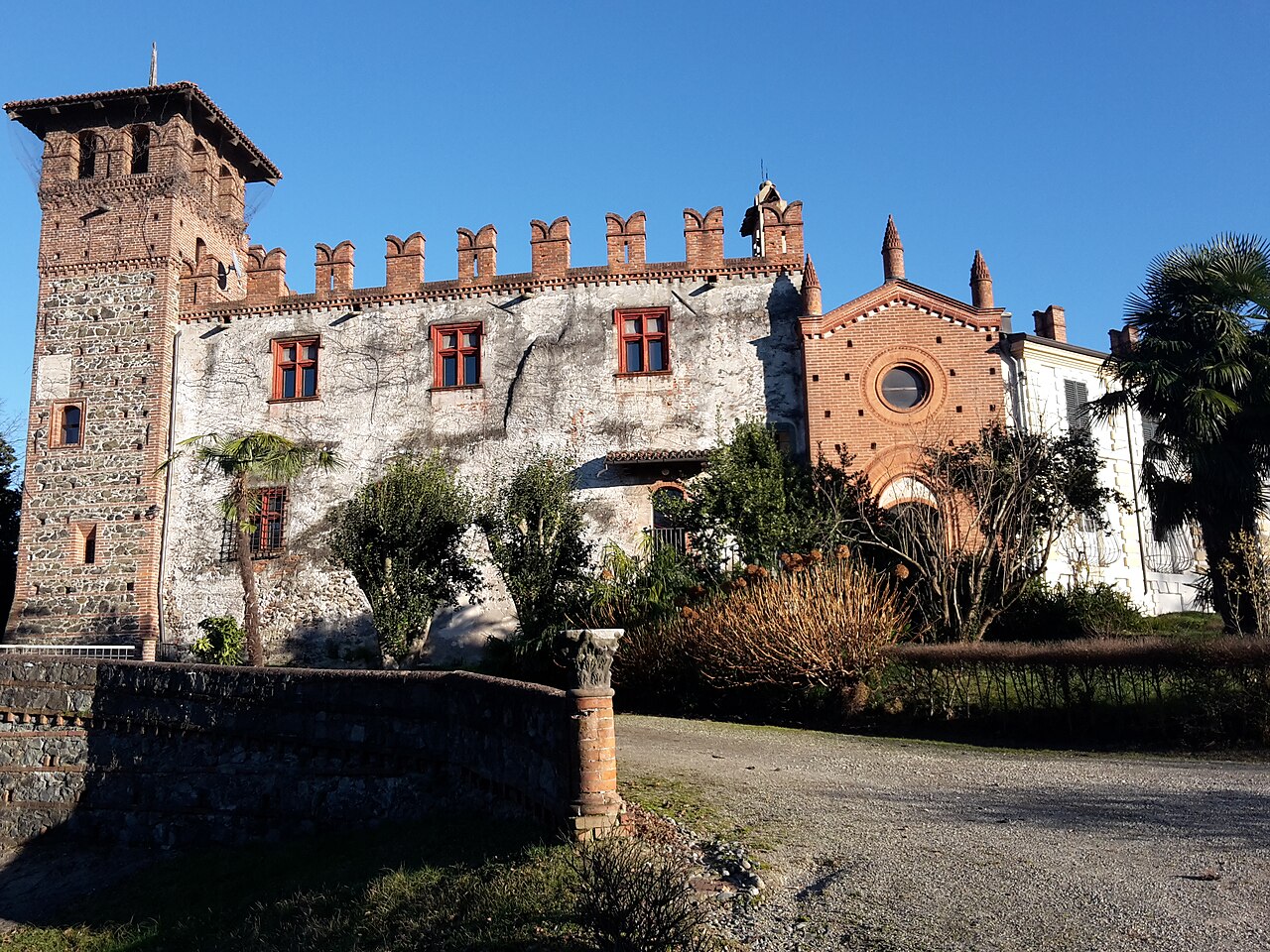
The architectural development of Pavone Castle reflects the military and residential needs of its occupants over time. In the 11th century, a square-plan tower was constructed to enhance surveillance and defense. This tower, built using typical medieval masonry techniques, remains one of the oldest surviving elements of the fortress.
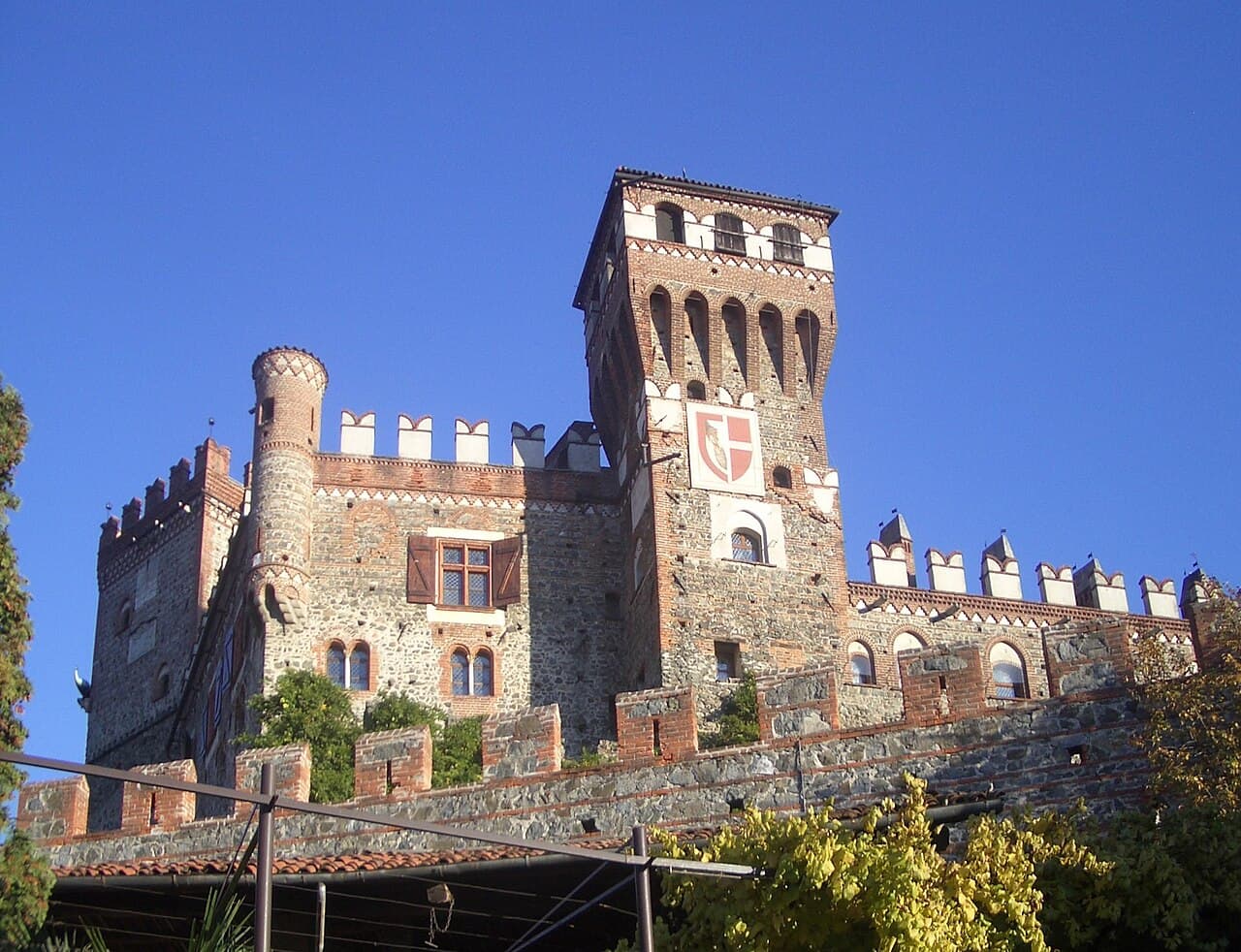
During the 12th century, the castle's keep was enlarged by adding a vertically stacked two-room structure, providing additional space for living quarters and defense. Between 1326 and 1346, the northern section of the castle underwent significant expansion, including the addition of a wing characterized by pointed-arch windows that display the Gothic architectural style prevalent at the time. This wing connected to a newly constructed tower-gate entrance on the north side, which served both as the main access point and a defensive feature.
Later in the 14th century, circular towers were incorporated into the outer walls to improve the castle's defensive capabilities. These towers projected outward, allowing for better vantage points to guard the courtyard and surrounding landscape. Additional rooms were also built facing the courtyard, enhancing the castle's residential and communal functions.
Internal layout and defensive features
The castle is shaped as an irregular polygon, adapting to the natural contours of the rocky hill it occupies. The northern half contains the internal structures, including the bishop's residential quarters, while the southern half remains an open courtyard enclosed by walls. The courtyard overlooks the historic church of San Pietro, which dates back to the castle's original construction period and remains preserved within the complex.
Inside, a notable decorative feature is the "Ceiling of King Arduino", a coffered wooden ceiling originally from the castle of Strambino. This ceiling is adorned with carvings of human figures and animals, reflecting the artistic themes typical of medieval interiors and adding significant cultural value to the castle's heritage.
Historical significance and events
Pavone Castle played a multifaceted role throughout its history, serving as a military fortress, administrative center, and place of refuge. In 1363, it was the site of a notable event when knight Robin du Aspen abducted Bishop Pietro de la Chambre and imprisoned him within the castle until a ransom was paid.
By 1467, the internal courtyard was divided by a wall, separating the bishop's private residence from the church and communal areas. This division reflected tensions between the bishopric and local inhabitants during that period.
During the 1630 plague outbreak, the castle served as a refuge for Bishop Giuseppe of Ivrea and his family. However, by the 18th century, the castle had lost its military and political importance and gradually fell into neglect.
Restoration and modern use
Following its nationalization in 1870, Pavone Castle entered a new phase of preservation and restoration. In 1888, architect Alfredo d'Andrade began extensive restoration work aimed at reviving the castle's historical character. After his death, his son Ruy d'Andrade continued and completed the restoration efforts.
The castle was officially declared a national architectural monument in 1981, recognizing its cultural and historical significance. In 1991, the Medic company acquired the castle and undertook further restoration to adapt the site for modern use while preserving its medieval features.
Today, Pavone Castle functions as a hotel-restaurant and convention center, equipped with facilities such as laboratories, medical training areas, and conference spaces. It also hosts a permanent museum exhibition managed by the Alfredo d'Andrade Foundation, dedicated to preserving and interpreting the castle's rich history.
Cultural heritage and architectural legacy
Pavone Castle exemplifies the integration of defensive architecture with ecclesiastical functions, showcasing how medieval fortifications served multiple roles beyond military defense. Its preserved structures, including the tower-gate entrance, circular towers, and the church of San Pietro, offer valuable insights into the architectural styles and construction techniques of the late medieval period.
The castle's restoration history highlights the importance of conservation efforts in maintaining Italy's architectural heritage. The work of the d'Andrade family and later restorers has ensured that Pavone Castle remains a vital cultural landmark, blending historical authenticity with contemporary functionality.
Frequently asked questions (FAQ)
- What is the best time to visit Pavone Castle?
- The best time to visit Pavone Castle is during the spring and autumn months when the weather is mild and the surrounding landscape is particularly scenic. These seasons offer comfortable conditions for exploring the castle grounds and enjoying outdoor events.
- Can I visit the interior of Pavone Castle?
- Yes, visitors can explore parts of the castle interior, including the permanent museum exhibition managed by the Alfredo d'Andrade Foundation. Some areas are adapted for hotel and conference use, so access may be limited to certain sections depending on events.
- What architectural styles are represented in Pavone Castle?
- Pavone Castle primarily showcases Gothic architectural elements, particularly visible in the pointed-arch windows and tower-gate entrance. The castle also features medieval masonry techniques from earlier construction phases, reflecting its long development history.
- Is Pavone Castle wheelchair accessible?
- Due to its medieval structure and hilltop location, Pavone Castle has limited wheelchair accessibility. Visitors with mobility concerns are advised to contact the management in advance to inquire about accommodations and accessible areas.
- Are there guided tours available at Pavone Castle?
- Guided tours are occasionally offered, especially during special events or by arrangement through the Alfredo d'Andrade Foundation. These tours provide detailed historical and architectural insights into the castle's significance.
Photo gallery

Photo by Laurom•Public domain
Information
Sources & official resources
Verify the information above using these authoritative references.
Loading map...
Visitor reviews
No reviews yet. Been here? Write the first review and help other travelers!
Write the first reviewVisited this castle? Share your experience
Your review helps other travelers and adds first-hand knowledge to our encyclopedia.