Banchette Castle
Banchette Castle stands as a remarkable example of layered history, combining medieval fortification with 19th-century neo-Gothic revival architecture in the Piedmont region of Italy. Originally constructed in the 12th century on the remains of an ancient Roman fort, the castle reflects centuries of transformation, ownership changes, and cultural significance. Its evolution from a defensive stronghold to a romantic villa highlights the shifting architectural and social landscapes in northern Italy.
Medieval origins and strategic importance
The castle's earliest phase dates back to the high medieval period, when the Di Banchette family established a fortified residence atop the foundations of a Roman military installation. This location was strategically chosen for its elevated position, providing a commanding view over the surrounding territory near the Dora Baltea river. The original structure was a square fortified house with a first-floor entrance designed for defense, narrow windows suitable for archery, and thick stone walls that incorporated masonry techniques from both Roman and medieval builders.
During the 13th century, the castle expanded with the addition of a defensive tower on one side, enhancing its function as a baronial seat and military lookout. This tower was integral to the castle's defensive system, allowing surveillance of the approaches and providing a strongpoint in times of conflict.
Feudal history and ownership transitions
On June 2, 1619, the castle and its estates, including Salerano and Samone, were formally feudalized under the ownership of the De Damas family. Over subsequent centuries, the property passed through several notable families, including the Pinchia, Passerin d’Entrèves, Novarese, and finally the Quaglia family, who remain the current owners.
Throughout its history, Banchette Castle endured numerous military actions, including attacks by bandits and occupation by forces aligned with Spanish and French armies. These events contributed to the castle's deterioration, particularly by the mid-19th century, when much of the medieval fortress was in ruins except for its outer battlements.
19th-century restoration and neo-gothic transformation
The castle's revival began in the late 1800s under the direction of Emilio Pinchia, a count, lawyer, and parliamentarian. He commissioned architect Ottavio Germano, known for his work with Alfredo d’Andrade, to restore the dilapidated structure. Germano's design transformed the ruins into a compact, two-story neo-Gothic villa that preserved the original footprint while introducing new living and reception spaces.
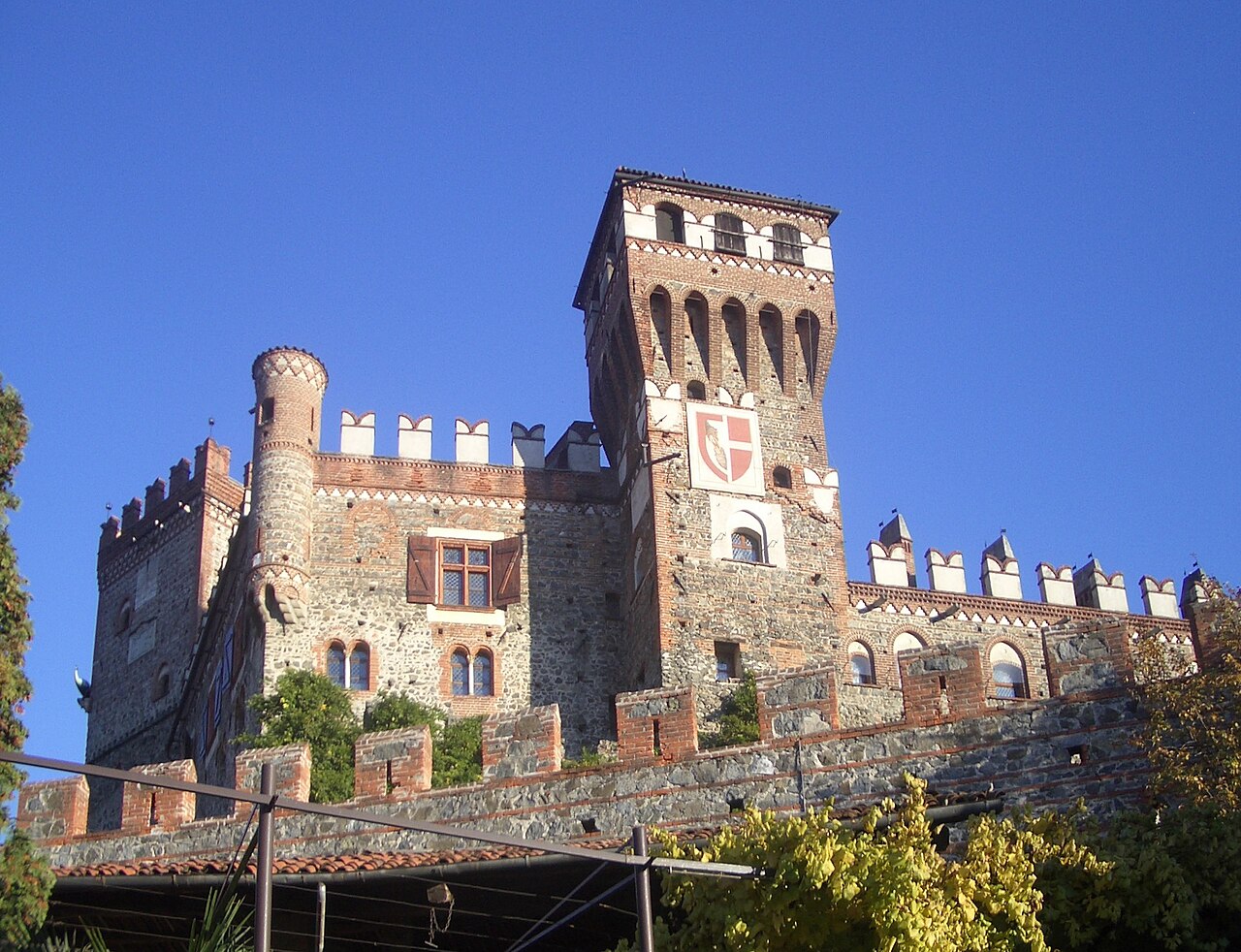
Key architectural elements from this renovation include a square corner tower, decorative terracotta window frames, and battlements that evoke the castle's medieval heritage. The villa is surrounded by an extensive park that slopes down to the Dora Baltea river, integrating the castle harmoniously into its natural setting.
Architectural features and layout
The castle's layout reflects its historical phases. The medieval core featured a fortified house with defensive characteristics such as narrow windows and elevated entrances. The later addition of a defensive tower strengthened its military role. Surrounding walls and auxiliary buildings were added in the 15th and 16th centuries to support the castle's functions.
The 19th-century restoration retained these historical elements while adapting the building for residential use. The neo-Gothic style is evident in the ornamental battlements and window detailing, blending romantic aesthetics with medieval forms.
Cultural significance and legends
Banchette Castle is also known for local legends that enrich its cultural heritage. One notable story from the mid-15th century involves a young woman named Alexina, whose fiancé killed a traveling knight within the castle walls. Following this tragic event, Alexina retreated to a monastery. The ghost of the slain knight is said to haunt the castle's library, appearing as a tall figure in a blood-stained nightgown. This tale connects the castle's physical history with local folklore, adding a layer of mystique to the site.
Current status and visitor experience
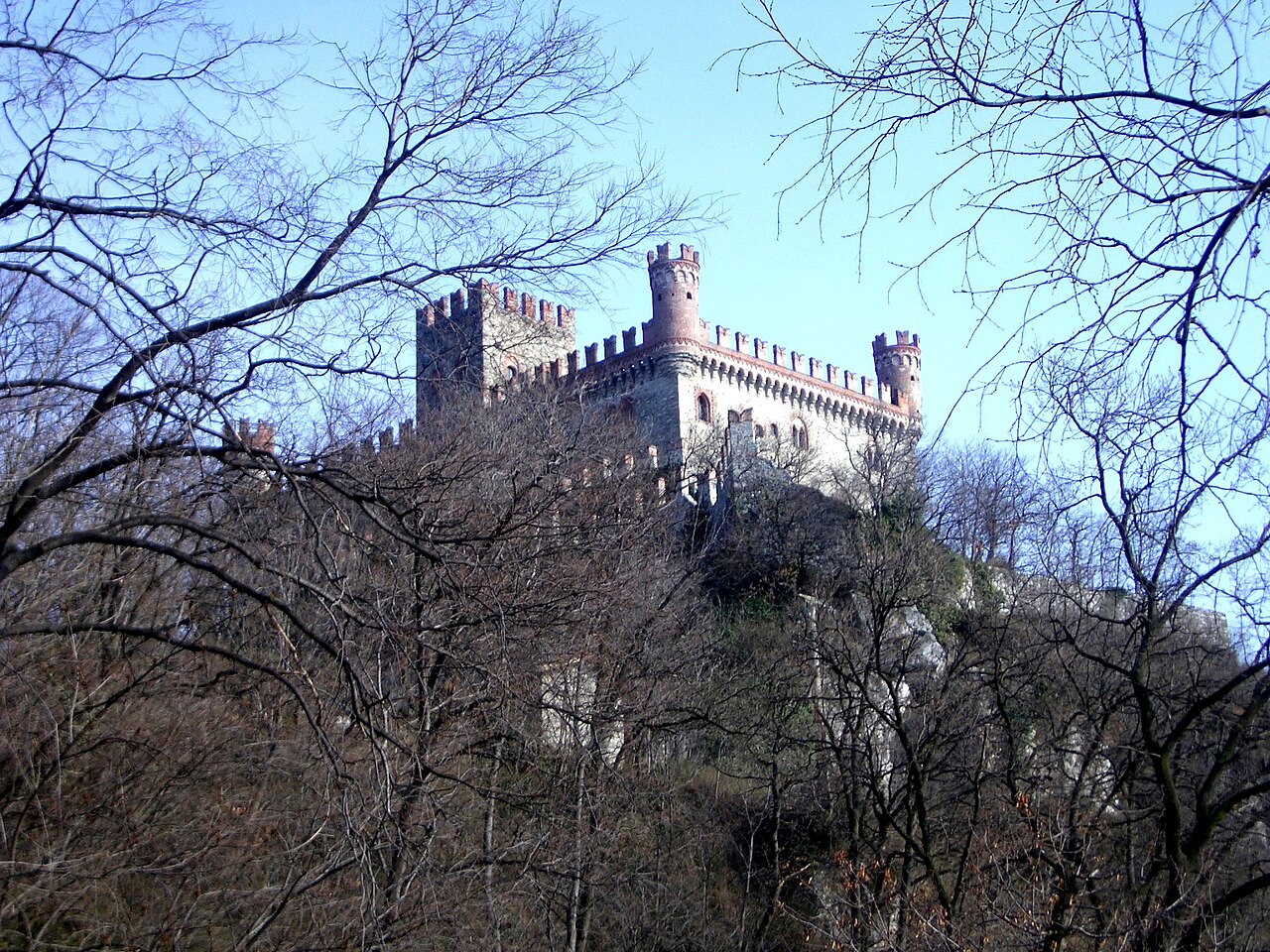
Today, Banchette Castle is a well-preserved example of a hill castle that encapsulates high medieval origins and romantic neo-Gothic architecture. The castle is privately owned but was reopened to the public in 2014 after acquisition by a private corporation. Visitors can explore the castle's exterior, its parkland, and some interior spaces, including the library connected to the ghost legend.
The castle's location in the Piedmont region makes it accessible for those interested in medieval history, architecture, and regional folklore. Its combination of Roman foundations, medieval fortifications, and 19th-century restoration offers a unique perspective on the architectural evolution of Italian castles.
Frequently asked questions (FAQ)
- How do I visit Banchette Castle?
- Banchette Castle is open to the public following its reopening in 2014. Visitors should check the official website or local tourist information for current opening hours and any guided tour availability.
- What architectural styles are visible at Banchette Castle?
- The castle showcases a blend of high medieval defensive architecture and 19th-century neo-Gothic revival, visible in its battlements, towers, and decorative window frames.
- When was Banchette Castle originally built?
- The castle was originally constructed in the 12th century on the foundations of an ancient Roman fort, marking its high medieval origins.
- Is there any ghost story associated with Banchette Castle?
- Yes, local legend tells of a ghost haunting the castle's library, believed to be the spirit of a knight killed within the castle in the 15th century.
- What makes Banchette Castle historically significant?
- Banchette Castle is significant for its continuous occupation from Roman times through the medieval period and its 19th-century neo-Gothic restoration, reflecting the region's historical and architectural evolution.
Photo gallery

Information
Sources & official resources
Verify the information above using these authoritative references.
Loading map...
Visitor reviews
No reviews yet. Been here? Write the first review and help other travelers!
Write the first reviewVisited this castle? Share your experience
Your review helps other travelers and adds first-hand knowledge to our encyclopedia.