Patarei Sea Fortress
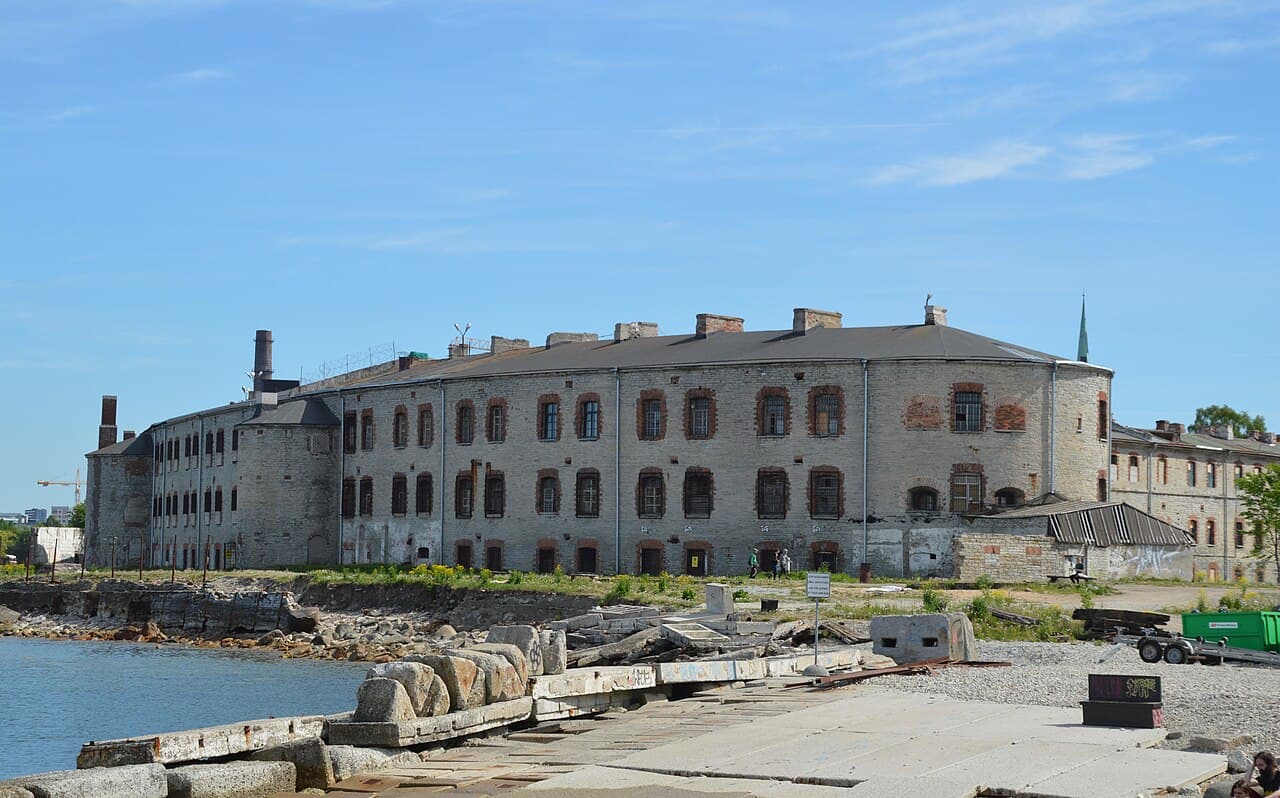
Patarei Sea Fortress, located in Tallinn, Estonia, is a prominent example of a 19th-century bastioned fortress designed to protect the city and its harbor from naval threats. Constructed during the modern period, this fortress represents the military architectural advancements of the time, combining traditional bastion fortifications with adaptations for coastal defense.
Historical background and strategic importance
Built in the 19th century under the Russian Empire, Patarei Sea Fortress was part of a broader effort to fortify the Baltic coast against potential naval incursions. Its location on the coast of Tallinn was strategically chosen to guard the entrance to the city's harbor and control maritime access. The fortress played a significant role during various military conflicts, including both World Wars, serving as a defensive stronghold and later as a prison facility.
Architectural features and design elements
The fortress is characterized by its bastioned fortification style, which includes angular bastions projecting outward from the main walls to provide overlapping fields of fire. This design was effective in defending against artillery and infantry assaults. The complex features thick stone walls, ramparts, and a series of defensive structures such as gun emplacements, moats, and gates that controlled access.
Coastal defenses and artillery placements
Patarei Sea Fortress was equipped with heavy coastal artillery positioned to cover the approaches by sea. These artillery batteries were mounted on bastions and within casemates, allowing defenders to engage enemy ships effectively. The fortress's layout maximized the defensive coverage of the surrounding waters.
Internal structures and facilities
Inside the fortress, there were barracks, storage rooms, and administrative buildings to support the garrison. Over time, parts of the fortress were converted into a prison, which added layers of internal walls and cells. This adaptation reflects the fortress's evolving role from purely military defense to incarceration during the 20th century.
Role during the 20th century conflicts
During World War I and World War II, Patarei Sea Fortress served as a key defensive position for controlling the Baltic Sea approaches to Tallinn. After the wars, the fortress was primarily used as a prison by Soviet authorities, which significantly altered its interior and contributed to its current state of partial preservation.
Current condition and preservation efforts
Today, Patarei Sea Fortress stands as a partially preserved historic monument. While much of the structure remains intact, the fortress has suffered from neglect and damage over the decades. Preservation initiatives aim to stabilize the ruins and open the site to visitors, highlighting its historical and architectural significance as a coastal bastioned fortress.
Visitor information and cultural significance
The fortress is accessible to the public and offers a glimpse into Estonia's military past and coastal defense strategies. Visitors can explore the imposing walls, bastions, and internal spaces, experiencing the scale and design of a 19th-century bastioned fortress. The site also serves as a cultural venue and a reminder of the complex history of Tallinn's maritime defenses.
Frequently asked questions (FAQ)
- What is the historical significance of Patarei Sea Fortress?
- Patarei Sea Fortress played a crucial role in coastal defense of Tallinn during the 19th and 20th centuries, serving as a military fortress and later a prison.
- Can I visit Patarei Sea Fortress today?
- Yes, the fortress is partially preserved and open to visitors, allowing exploration of its walls, bastions, and internal structures.
- When was Patarei Sea Fortress built?
- The fortress was constructed in the 19th century under the Russian Empire to protect Tallinn's harbor.
- What architectural style characterizes Patarei Sea Fortress?
- The fortress is an example of bastioned fortification architecture typical of coastal defenses in the modern period.
- Is Patarei Sea Fortress wheelchair accessible?
- Due to its historic structure and partial preservation, accessibility may be limited; visitors should check current access conditions before visiting.
- Are there any guided tours available at Patarei Sea Fortress?
- Guided tours are sometimes offered, providing detailed historical and architectural insights; visitors should inquire locally for schedules.
Photo gallery

Information
Address
Patarei 5, 10111 Tallinn, Estonia
Loading map...
Visitor reviews
No reviews yet. Been here? Write the first review and help other travelers!
Write the first reviewVisited this castle? Share your experience
Your review helps other travelers and adds first-hand knowledge to our encyclopedia.