Passavas Castle — Greece castle

Passavas Castle

Passavas Castle: historic crusader fortress in Greece
Ruins
Passavas Castle is a medieval fortress ruin located in the Peloponnese region of southern Greece. It was originally constructed by the Frankish Crusaders during the early 13th century, following the Fourth Crusade and the establishment of the Principality of Achaea. The castle occupies a strategic hilltop position that allowed control over important routes in the region, serving both military and administrative functions.

Historical background and strategic importance

The castle was built by the Crusaders shortly after 1205, when the Latin states were established in Greece. Passavas became one of the key fortifications in the Principality of Achaea, a Frankish feudal state that controlled much of the Peloponnese. Its location enabled oversight of the surrounding valleys and roads, making it a vital point for defense and control of the region. The castle played a role in the conflicts between the Crusaders, Byzantine forces, and later the Ottoman Empire.

Architectural features and layout

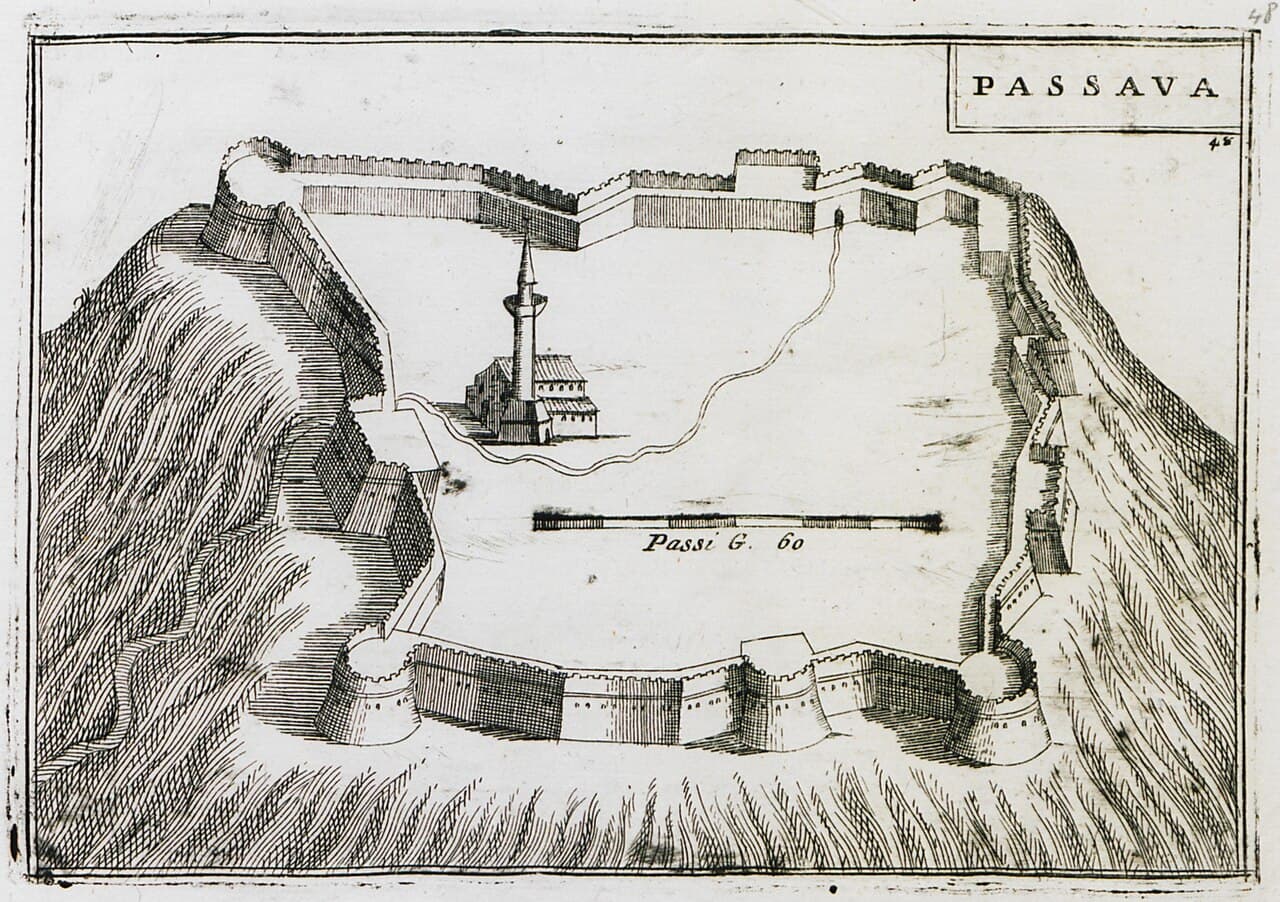
Passavas Castle was constructed primarily as a hill castle, taking advantage of the natural terrain for defense. The fortress featured thick stone walls, remnants of which remain today, enclosing a roughly rectangular area. The castle included defensive towers at key points, a gatehouse, and a central courtyard. The design reflects typical Frankish military architecture of the early medieval period, with adaptations to the local landscape.

Defensive structures

The castle's walls were reinforced with towers that provided vantage points for archers and lookouts. The gatehouse was fortified to control access, and the elevated position gave defenders a commanding view of any approaching forces. Although much of the structure is now in ruins, archaeological remains indicate the presence of battlements and possibly a moat or ditch surrounding parts of the castle.

Later history and decline

Over the centuries, Passavas Castle changed hands multiple times, reflecting the turbulent history of the Peloponnese. It was contested between the Franks, Byzantines, and Ottomans. By the late medieval period, the castle lost much of its military significance and gradually fell into disrepair. Today, it remains a ruin, with archaeological excavations revealing details about its construction and use.

Visiting Passavas Castle

Although in ruins, Passavas Castle attracts visitors interested in medieval history and archaeology. Its hilltop location offers panoramic views of the surrounding landscape. Access may require some hiking, and visitors should prepare for uneven terrain. The site is valuable for understanding the Crusader presence in Greece and the medieval fortifications of the Peloponnese.

Significance in medieval Greek history

Passavas Castle stands as a testament to the complex history of the Peloponnese during the Middle Ages. It illustrates the influence of Western European Crusaders in Greece and their military architecture. The castle's remains contribute to the study of feudal lordship and defense strategies in a region marked by cultural and political transitions between Latin, Byzantine, and Ottoman powers.

Frequently asked questions (FAQ)

How do I get to Passavas Castle?
Passavas Castle is located in Greece, easily accessible by car or public transport. If you're coming from nearby cities, you can take a bus or drive along scenic routes that offer stunning views of the surrounding landscape.
What is the historical significance of Passavas Castle?
Passavas Castle dates back to the medieval period and played a crucial role in the defense of the region. It is a testament to the architectural and strategic advancements of its time, showcasing the historical importance of fortifications in Greece.
When was Passavas Castle built?
Construction of Passavas Castle began in the 14th century and was completed in the 15th century. Its architecture reflects the military needs of the era, as well as the influence of various cultures that occupied Greece over the centuries.
Can I take guided tours of Passavas Castle?
Yes, guided tours are available and provide an in-depth look at the castle's history and architecture. These tours are led by knowledgeable guides who can answer your questions and share fascinating stories about the castle's past.
Why is Passavas Castle a popular tourist destination?
Passavas Castle attracts visitors due to its rich history, stunning architecture, and breathtaking views of the surrounding landscape. Its well-preserved structure offers a glimpse into the past, making it a must-visit for history buffs and tourists alike.
Is it possible to visit Passavas Castle year-round?
Yes, Passavas Castle is open to visitors throughout the year, but hours may vary by season. It's best to check the official website or contact local tourism offices for the most accurate information regarding opening hours during your planned visit.
What are the ticket prices for Passavas Castle?
Ticket prices for Passavas Castle are generally affordable, making it accessible for most visitors. Discounts may be available for students, seniors, and groups, so be sure to inquire when purchasing your tickets.
What is the best time to visit Passavas Castle?
The best time to visit Passavas Castle is during the spring and fall months when the weather is mild and the natural beauty of the surroundings is at its peak. Summer can be quite hot, making early morning or late afternoon visits more enjoyable.
Are there any nearby attractions to see when visiting Passavas Castle?
Yes, there are several nearby attractions, including charming villages and natural parks that offer hiking trails and scenic views. Exploring the surrounding area can enhance your visit and provide a deeper understanding of the region's culture and history.

Photo gallery

Passavas Castle
Click to view

Photo by Vincenzo Coronelli•Public domain

1 photo • Click any image to view in full screen

Information

Archaeological Site / Ruins

Loading map...

Visitor reviews

No reviews yet. Been here? Write the first review and help other travelers!

Write the first review

Visited this castle? Share your experience

Your review helps other travelers and adds first-hand knowledge to our encyclopedia.
Write a review

(5/5)

0/2000 characters

Your review will be visible after admin approval

Nearby castles

10.2 km
Kelefa Castle — Greece castle

Kelefa Castle

East Mani, Greece

Kelefa Castle is a historic hill castle located in the region of East Mani, Greece, positioned strategically about halfway between the modern village of Kelefa and the Bay of Oitylo. Constructed in 1679 by the Ottoman Empire, the castle was designed to assert control over the fiercely independent Inner Mani region, a rugged and mountainous area known for its resistant local population. Construction and strategic importance The castle's architecture reflects its military purpose during the Renaissance period, built primarily as a fortified stronghold to project Ottoman power in the Peloponnese. Its hilltop location provided commanding views of the surrounding landscape and the bay, allowing early detection of approaching forces. The castle's walls and defensive structures were typical of 17th-century Ottoman fortifications, designed to withstand sieges and control key routes in the Mani peninsula. Conflicts and sieges The maniot siege and venetian involvement In 1685, just six years after its construction, the castle was besieged by the Maniots, the local inhabitants determined to resist Ottoman rule. Recognizing the need for external support, the Maniots sent envoys to the Venetian Republic, then engaged in conflict with the Ottomans. The Venetians responded by dispatching a naval fleet under the command of Francesco Morosini, a notable Venetian admiral and military leader. The arrival of the Venetian fleet bearing the symbol of St Mark prompted the Ottoman garrison to surrender the castle without prolonged resistance. This event marked a significant shift in control, with the castle and surrounding territory falling under Venetian influence. Ottoman counterattack and later history In 1686, the Ottomans attempted to reclaim the castle by laying siege with a strong military force. Despite their efforts, the Ottoman forces were repelled by the combined Maniot and Venetian defenders. The castle remained under Venetian control for approximately three decades, serving as a key defensive position in the ongoing struggle for dominance in the Peloponnese. However, in 1715, during the Ottoman reconquest of the Peloponnese, the castle was retaken by Ottoman forces. It continued to serve as a military installation until around 1780, when the Ottomans abandoned it. Following its abandonment, the castle gradually fell into ruin and became derelict. Architectural features and current condition Kelefa Castle exemplifies the typical hill castle design, featuring robust defensive walls adapted to the uneven terrain of the Mani peninsula. The structure includes remnants of battlements, gatehouses, and possibly towers that would have provided vantage points for surveillance and defense. Its construction utilized local stone, integrating the fortress naturally into the rocky hillside. Today, the castle stands as a ruin, with significant portions of its walls and fortifications still visible. Its ruins offer valuable insights into the military architecture of the late 17th century in the region and the turbulent history of Mani during the Ottoman-Venetian conflicts. Historical significance and cultural context The castle's history is closely tied to the broader geopolitical struggles between the Ottoman Empire and the Venetian Republic in the Mediterranean. Its construction and subsequent sieges reflect the persistent resistance of the Maniots to Ottoman control and their alliances with Venice. Kelefa Castle thus represents a focal point of military and cultural interaction in the Peloponnese during the late Renaissance and early modern periods. Its location in Mani, a region known for its unique social structures and warrior culture, underscores the castle's role not only as a military bastion but also as a symbol of external attempts to dominate a fiercely independent population. Visiting kelefa castle Visitors to Kelefa Castle can explore the ruins set amidst the dramatic landscape of East Mani. The site offers panoramic views of the surrounding hills and the Bay of Oitylo, making it a destination for those interested in history, architecture, and natural scenery. While the castle is not fully restored, its remains provide a tangible connection to the region's complex past.

Renaissance (15th–17th c.)
Details
35.6 km

Castle of Geraki

Geraki, Greece

The Castle of Geraki stands as a remarkable example of a high medieval hill castle located near the village of Geraki in the Evrotas region of Greece. Constructed beginning in 1209 by the French baron Guy de Nivelet on the ancient Mycenaean acropolis of Geronthi, this fortress was strategically positioned to control the surrounding territory and assert Frankish dominance in the Peloponnese following the Fourth Crusade. Its elevated site atop the Palaiókastro hill, part of the Parnonas mountain range, rises approximately 400 meters above sea level, with the castle perched on the northern summit about 100 meters above the surrounding land, providing commanding views and a strong defensive position. The castle's origins are closely tied to the establishment of the Barony of Geraki, a feudal domain within the Principality of Achaea. The fortress served as the administrative and military center for the barony, reflecting the typical Frankish practice of constructing fortified seats to consolidate control over newly conquered lands. The castle complex includes the remains of defensive walls and towers built with local stone, designed to maximize the natural defensive advantages of the hilltop. Below the main fortress lies a fortified lower town extending down the slopes, illustrating a well-planned settlement structure that integrated military and civilian functions. Historical transitions and cultural layers After its initial Frankish occupation, the Castle of Geraki underwent significant political and cultural changes. In 1262, the fortress was surrendered to the Byzantine Empire, marking a pivotal shift in control during the turbulent medieval period. Under Byzantine rule, Geraki became part of the Despotate of the Morea, a semi-autonomous province that flourished in the late Byzantine era. This period saw a dramatic growth in the area’s religious and cultural life, evidenced by the construction and decoration of numerous churches within and around the castle precincts. The Byzantine influence is especially visible in the rich collection of ecclesiastical architecture and art scattered across the site. The castle and its environs contain the ruins of approximately thirty churches, dating from the 11th to the 15th centuries. These churches display a variety of architectural styles and layouts, including cross-roofed and monocline designs, and feature significant mural paintings that provide valuable insight into medieval religious art and iconography. Notable churches and religious art Among the most important religious structures are the church of Saint Sozon and the church of Saint Athanasius, both notable for their historical and artistic value. The cross-roofed church of Saint Paraskevi stands out for its well-preserved 13th-century murals arranged in three levels, illustrating biblical scenes with vivid colors and intricate detail. The monocline church of Zoodochos Pigi is renowned for its striking white murals, considered some of the most beautiful in the region. Other significant churches include the church of Taxiarchs located on the castle's second peak, which contains a rare mural depicting the biblical fall of Jericho by Jesus of Navi. The Temple of Agios Georgios, dating to the 11th century and situated at the highest point of the hill, exhibits notable Frankish architectural features combined with Byzantine elements. This church also houses a unique marble shrine adorned with heraldic and chivalric symbols, reflecting the castle's Frankish heritage. Venetian and ottoman periods The castle's strategic importance continued through the late medieval and early modern periods. In the mid-15th century, the Ottoman Empire expanded into the Peloponnese, capturing Geraki in 1460. Venetian forces briefly controlled the fortress between 1463 and 1468, and again from the late 17th century until 1715, before the Ottomans reclaimed it. These shifts in control reflect the broader geopolitical struggles in the region between the Ottomans and the Venetian Republic. Following these turbulent centuries, the castle was eventually abandoned as a military stronghold. The local population moved back to the ancient acropolis of Geronthrai, near the foot of the hill, giving rise to the modern village of Geraki. Despite its decline in military use, the castle area remained a significant cultural and religious site, as evidenced by the numerous churches and chapels that continued to be used or preserved. Architectural features and preservation The Castle of Geraki is characterized by its integration with the natural topography of the hill, utilizing steep slopes and rocky outcrops to enhance its defenses. The fortress walls and towers, though now largely in ruins, demonstrate typical Frankish military architecture adapted to the Greek landscape. The complex layout includes two main summits connected by a narrow ridge, creating a compact fortified area that dominated the surrounding countryside. Within the castle and on the surrounding slopes, the remains of numerous churches provide a unique open-air museum of Byzantine religious architecture. These structures vary in size and style but collectively illustrate the rich spiritual life of the medieval community. Restoration efforts have focused on stabilizing the ruins and preserving the mural paintings, allowing visitors to appreciate the site's historical depth and artistic heritage. The castle's domed gates, narrow alleys, and stone manors evoke the mystique of medieval times, offering a tangible connection to the past. The presence of chivalric symbols and heraldic decorations in some churches highlights the fusion of Frankish and Byzantine cultural elements unique to this region. Visitor experience and cultural significance Today, the Castle of Geraki functions as an open-air Byzantine museum, attracting visitors interested in medieval history, architecture, and religious art. The site’s numerous churches, each with distinctive murals and architectural details, provide a rich tapestry of cultural heritage. Visitors can explore the ruins of the fortress, walk through the narrow alleys, and admire the panoramic views from the hilltop. The castle and its churches stand as a testament to the complex history of the Peloponnese, reflecting layers of Frankish, Byzantine, Venetian, and Ottoman influence. Its preservation and presentation contribute significantly to understanding the medieval period in Greece and the interactions between Western European and Byzantine traditions.

High Medieval (11th–13th c.)
Details
40.1 km

Zarafona Castle

Sparta, Greece

Zarafona Castle stands as a notable example of late medieval fortification architecture in the region of Sparta, Greece. Constructed in the 15th century, its origins are closely linked to the turbulent period of the Despotate of Morea under the rule of Theodoros II Paleologos (1407-1448). This fortress was part of the Byzantine defensive strategy aimed at resisting the advancing Ottoman Empire, reflecting the military and political challenges of the time.The castle is strategically situated to oversee the surrounding landscape, embodying the typical features of Byzantine military architecture adapted to the needs of the era. Its almost trapezoid layout encloses an area of approximately 745 square meters, designed to maximize defensive capabilities while maintaining a compact footprint suitable for the terrain.Architectural design and structural featuresThe fortification's walls are constructed in five distinct straight sections, each forming vertical walls that create a robust perimeter. These walls are punctuated by three towers: two positioned on the western side and one on the eastern side, providing overlapping fields of defense and surveillance. The central tower, notably taller than the rest, rises to three levels and serves as the castle's keep or main stronghold.This central tower is architecturally significant, featuring a ground floor that houses a cistern, essential for water storage during sieges. The elevated design of the tower allowed defenders to monitor the surrounding area and coordinate the castle's defense effectively.Defensive elements and layoutThe castle's trapezoidal shape was a deliberate choice to adapt to the topography and to provide a strong defensive stance. The vertical walls are thick and constructed to withstand assaults, while the towers offer vantage points for archers and lookouts. The positioning of the towers at the west and east sides enabled crossfire coverage, enhancing the fortress's defensive depth.Historical context and significanceDuring the first half of the 15th century, the Byzantine Despotate of Morea was one of the last strongholds of Byzantine power in mainland Greece. The construction of Zarafona Castle under Theodoros II Paleologos was part of a broader effort to fortify the region against the growing threat of the Ottoman Turks, who were steadily expanding their territory.The castle's role was primarily military, serving as a defensive bastion to protect local populations and maintain control over strategic routes. Its preservation in relatively good condition offers valuable insights into the military architecture and defensive strategies employed during the late Byzantine period.Current condition and preservationZarafona Castle remains well preserved, allowing visitors to appreciate its original architectural layout and structural elements. The survival of the central tower with its three levels and the cistern provides a direct link to the castle's functional design during times of conflict.Its walls and towers, though weathered by centuries, still convey the strength and resilience of Byzantine fortifications. The site is accessible for study and tourism, contributing to the cultural heritage of Sparta and the broader region of the Peloponnese.Architectural style and influenceThe castle exemplifies the Byzantine military architectural style of the late medieval period, characterized by practical defensive features rather than ornamental design. Its straightforward geometric layout, robust walls, and strategically placed towers reflect the priorities of fortification during a time of frequent warfare and political instability.The use of a cistern within the central tower highlights the importance of self-sufficiency in siege conditions, a common feature in Byzantine castles designed to withstand prolonged attacks.

Late Medieval (14th–15th c.)
Details

