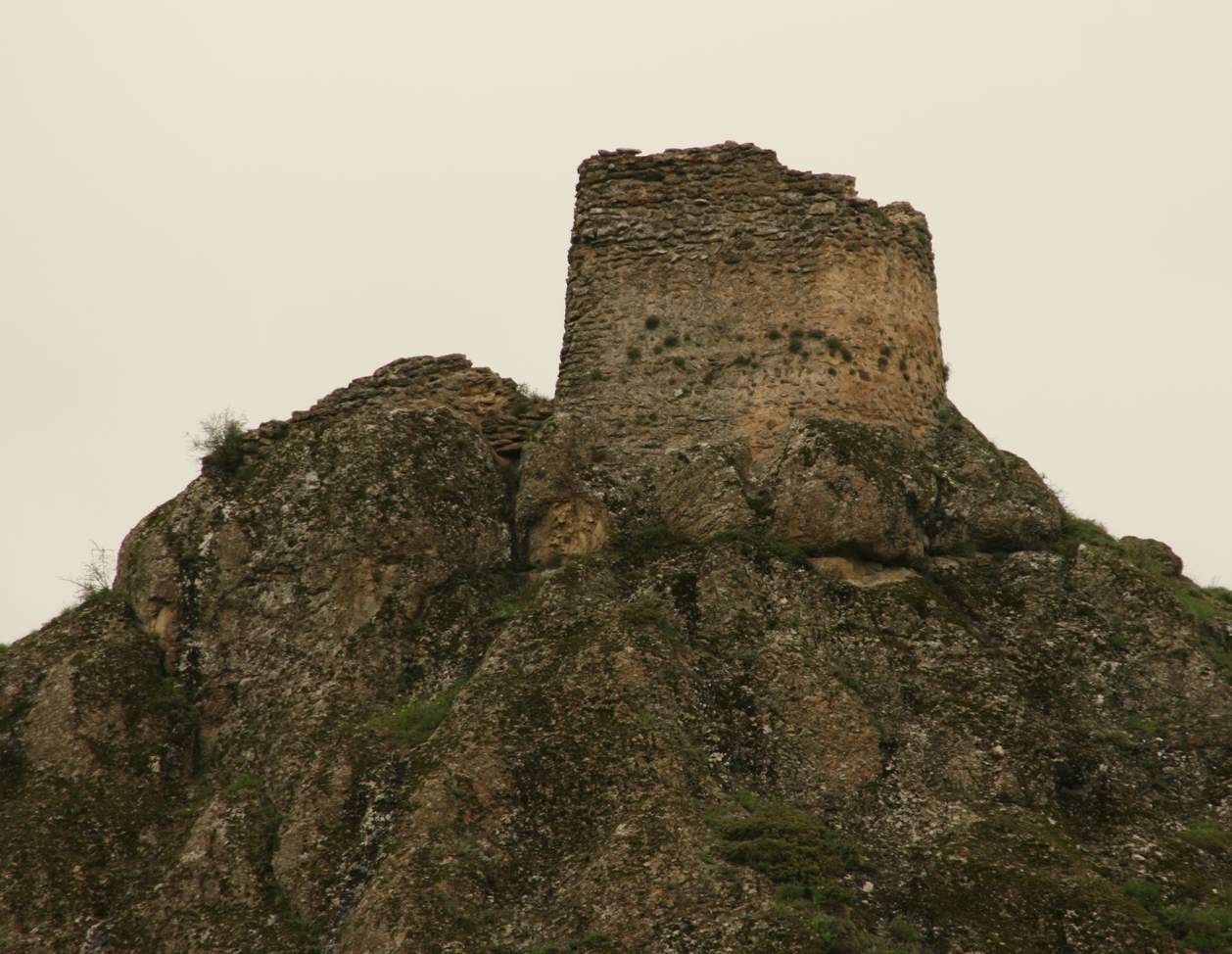
Samshvilde Castle
Samshvilde Castle is an ancient fortress located south of the village of Samshvilde, within the Tetritsqaro municipality of the Kvemo Kartli region in Georgia. This castle is a significant remnant of the lost ancient city of Samshvilde, which occupied a strategic promontory formed by the confluence of the Khrami and Chivchavi rivers. The site is nearly triangular and divided into three main parts: the royal city on the east, the city proper on the west, and the castle positioned between them.
The origins of Samshvilde trace back to antiquity, with traditions attributing its founding to Kartlos, the mythic ethnarch of the Georgians of Kartli. Historical records suggest the city emerged as a center of regional power by the 3rd century BC, becoming the capital of a duchy. The castle and city were strategically important due to their location overseeing key river valleys and trade routes.
Historical significance and medieval conflicts
Throughout its history, Samshvilde Castle witnessed numerous sieges, changes in control, and military conflicts reflecting the turbulent history of the Caucasus region. Around 890 AD, the city was occupied by Smbat I of Armenia, who entrusted it to the Armenian noble family of the Gntuni. However, internal conflicts led to further sieges by Armenian kings such as Ashot II to enforce loyalty.
In the late 10th century, Samshvilde became part of the Armenian Kingdom of Tashir-Dzoraget, serving as the residence of King David I Anhoghin. The city suffered devastation in 1001 during a revolt against Gagik I of Armenia. By the mid-11th century, Samshvilde changed hands multiple times, including conquest by the Seljuks under Malik-Shah I around 1074 and recovery by the Georgians in 1110 under the leadership of Bishop George of Chqondidi.
The castle was granted to the powerful Orbeli family by King David IV of Georgia in 1123 but faced rebellion and siege again in 1178 under King George III of Georgia. The Mongol invasion in 1236 further impacted the city as the invaders passed through on their way to Tbilisi.
Decline and later history
Samshvilde's decline accelerated after the 1440 sack by the Qara Qoyunlu under Jahan Shah, who brutally massacred the population and erected a minaret made of severed human heads at the city gate. This atrocity marked the end of Samshvilde as a major urban center, reducing it to a peripheral fortress.
In the subsequent centuries, the castle passed to the Kingdom of Kartli by the late 15th century. It was occupied by the Ottoman army in 1578 under Lala Mustafa Pasha but reclaimed by Simon I of Kartli in 1583. The fortress saw renewed military activity in the 18th century when Abdullah Beg of Kartli fortified it in 1747 to challenge Teimuraz II of Kakheti. The castle was stormed by Erekle II in 1749 and fell into ruin later in the century.
Architectural features and site layout
The castle and city ruins of Samshvilde cover a considerable area with distinct zones reflecting their historical functions. The castle itself occupies a defensible position between the royal city and the city proper, utilizing the natural protection offered by the steep river canyons. The fortress complex includes remnants of walls, towers, gates, and other defensive structures typical of early medieval fortifications in the Caucasus.
Although much of the castle is now in ruins, archaeological remains suggest a sophisticated layout with multiple defensive layers. The city proper and the royal city areas contain ruins of residential buildings, churches, and administrative structures, indicating Samshvilde’s importance as a political and religious center.
Access and current condition
Today, Samshvilde Castle is freely accessible to visitors interested in exploring its extensive ruins and scenic surroundings. The site offers panoramic views of the surrounding river valleys and the rugged landscape of Kvemo Kartli. However, reaching the castle requires either a serious off-road vehicle or an approximately one-hour hike from the nearest village, making it a destination suited for adventurous travelers.
Despite its ruined state, Samshvilde remains a valuable cultural heritage site, reflecting centuries of Georgian and regional history. Visitors can explore the castle ruins alongside the remnants of the ancient city, gaining insight into the architectural and historical development of this early medieval fortress and urban center.
Frequently asked questions (FAQ)
- What is the historical significance of Samshvilde Castle?
- Samshvilde Castle is a remarkable example of medieval Georgian fortifications, dating back to the 8th century. It played a crucial role in the defense of the region and showcases the architectural style of the period, reflecting the rich history of Georgia.
- When was Samshvilde Castle built?
- The construction of Samshvilde Castle began in the 8th century, with various renovations and expansions occurring over the centuries. Its strategic location on a hilltop allowed it to serve as a significant military stronghold throughout its history.
- Can I visit Samshvilde Castle?
- Yes, visitors are welcome to explore Samshvilde Castle. It is a popular destination for those interested in history and architecture, offering stunning views of the surrounding landscape.
- What are the opening hours for Samshvilde Castle?
- Samshvilde Castle is typically open to visitors from early morning until sunset, but it's advisable to check local sources for specific hours, as they may vary seasonally. Guided tours may also have set times throughout the day.
- Is it possible to access the castle easily?
- Accessing Samshvilde Castle involves a short hike up to the site, as it is perched on a hill. The trail is well-marked, although visitors should wear appropriate footwear for the trek.
- What is the best time to visit Samshvilde Castle?
- The best time to visit Samshvilde Castle is during the spring and autumn months when the weather is mild, and the natural scenery is at its most beautiful. These seasons also see fewer crowds compared to the summer months.
- Are there any nearby attractions to explore?
- Yes, the area around Samshvilde Castle features several attractions, including ancient churches and picturesque landscapes. Visitors can also explore the nearby town of Samshvilde, which offers a glimpse into local culture and history.
- What are the ticket prices for visiting Samshvilde Castle?
- Entrance to Samshvilde Castle is generally free, but there may be a small fee for guided tours or special events. It's best to check with local tourist information for the most current pricing details.
Information
Loading map...
Visitor reviews
No reviews yet. Been here? Write the first review and help other travelers!
Write the first reviewVisited this castle? Share your experience
Your review helps other travelers and adds first-hand knowledge to our encyclopedia.