Parigala
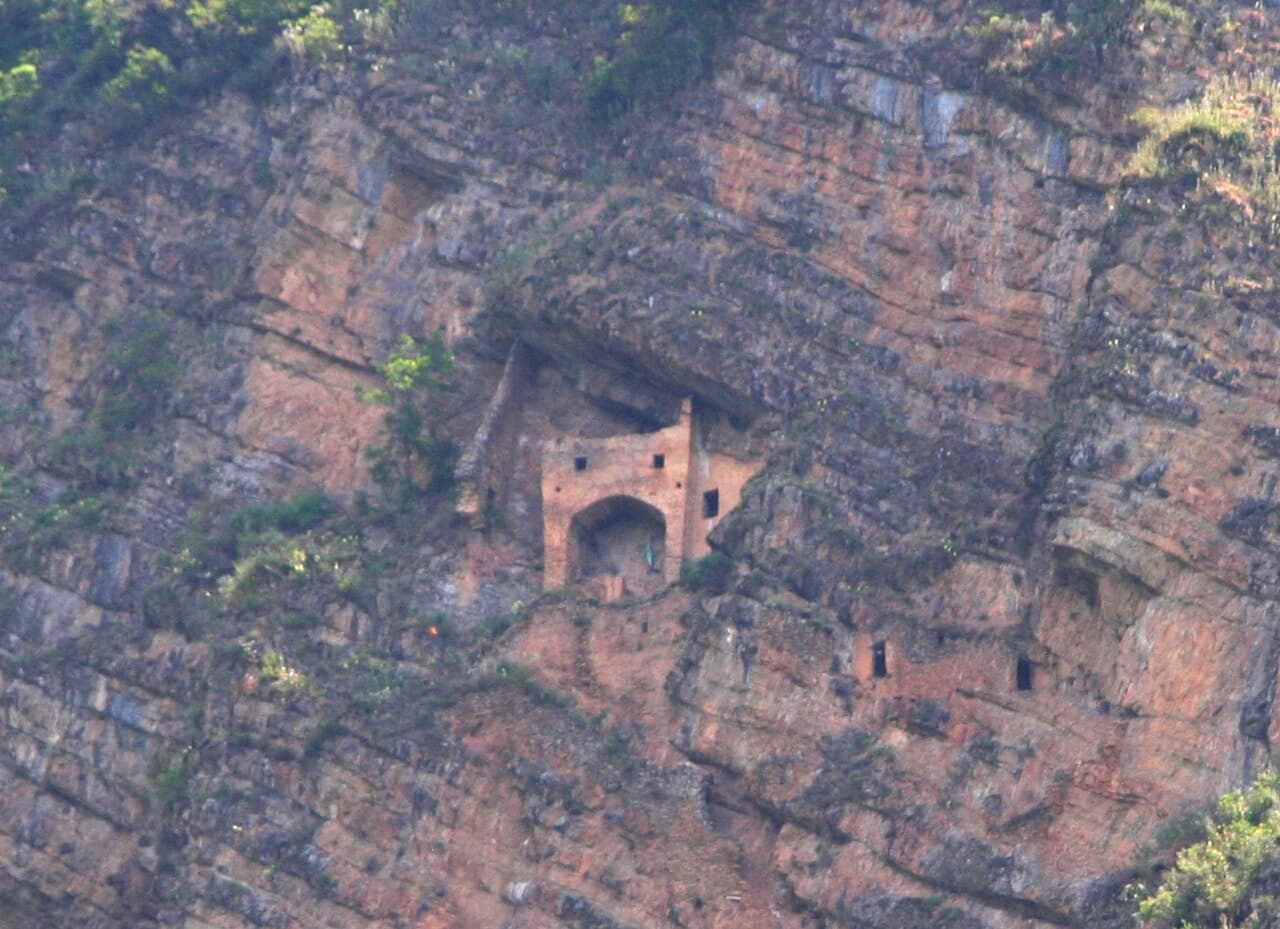
Parigala, meaning "Fairy Castle" in Azerbaijani, is a remarkable and enigmatic fortress perched high on a limestone cliff in the foothills of the Caucasus Mountains near the village of Chardaghlar in northwest Azerbaijan. This remote site is one of the country's lesser-known archaeological treasures, notable for its dramatic location and unusual construction. Built approximately 300 metres above the ground, the fortress clings to the cliffside, offering a unique example of ancient defensive architecture adapted to a challenging natural environment.
Historical context and period
The fortress is believed to date from the Caucasian Albanian period, roughly between the 4th and 8th centuries AD. Caucasian Albania was an ancient kingdom situated in the area of modern Azerbaijan and parts of southern Dagestan. Parigala's construction during this era places it within a significant historical context when the region was a crossroads of various cultures and empires, including influences from the Roman, Persian, and early Islamic worlds.
While the exact purpose of Parigala remains uncertain, its strategic cliffside position suggests a defensive role, possibly serving as a refuge or watchpoint against invaders. The fortress's isolation and difficult access may have contributed to its preservation and the mystery surrounding its original function.
Architectural features and construction
Parigala is built primarily from limestone bricks carefully fitted to the natural rock face. The structure consists of three interconnected rooms, each featuring a window, which indicates the importance of natural light and ventilation despite the fortress's precarious location. The rooms are arranged linearly along the cliff, maximizing the use of limited space.
Access to the fortress is one of its most striking features. Visitors must ascend a forty-metre stairway carved into the rock and reinforced with oak beams for stability. Additionally, a covered walkway provides some protection from the elements. Due to the site's inaccessibility, local guides have installed a ladder to aid climbers, but reaching Parigala still requires considerable physical effort and mountaineering skill.
The top of the stairway has suffered some damage, likely from an earthquake, which has caused it to separate from the rock face. Despite this, the overall condition of the fortress is well preserved. The wear on the limestone bricks and the structure itself suggests that Parigala was inhabited for an extended period, indicating its importance to the people who built and used it.
Significance and cultural heritage
Parigala holds a special place in Azerbaijani cultural heritage due to its unique location and historical background. The name "Fairy Castle" reflects local folklore and the mysterious aura surrounding the site. Its remote position has limited tourism, preserving its authenticity but also making it less accessible to the general public.
The fortress exemplifies the ingenuity of ancient builders who adapted their construction techniques to the natural landscape, creating a defensible position that leveraged the steep cliff for protection. Its survival through centuries of natural and human challenges adds to its archaeological and historical value.
Visiting Parigala
Due to its remote location and the physical demands of the ascent, Parigala is visited mainly by experienced hikers and those interested in archaeology and history. The climb requires a strong level of fitness and mountaineering skills, as well as caution due to the exposed nature of the stairway and ladder.
Visitors are advised to arrange visits with local guides familiar with the terrain to ensure safety. The site offers striking views of the surrounding Caucasus foothills and a rare glimpse into the region's ancient past.
Frequently asked questions (FAQ)
- How do I access Parigala fortress?
- Parigala is located on a cliffside and requires climbing a forty-metre stairway reinforced with oak beams, as well as a ladder installed by local guides. Visitors need good physical fitness and mountaineering skills to reach the site safely.
- What is the historical significance of Parigala?
- Parigala dates back to the Caucasian Albanian period between the 4th and 8th centuries, representing ancient defensive architecture adapted to the challenging terrain of the Caucasus foothills.
- Is Parigala fortress open to the public?
- While there are no formal opening hours or ticketing, Parigala can be visited with local guides who assist with the climb. Due to its remote location and difficult access, visits are limited to experienced hikers.
- Why is Parigala called the Fairy Castle?
- The name 'Parigala' translates to 'Fairy Castle' in Azerbaijani, inspired by local folklore and the fortress's mysterious and dramatic cliffside location.
- What condition is Parigala fortress in today?
- The fortress is well preserved overall, though the top of the stairway has been damaged, possibly by an earthquake. The limestone structure shows signs of long-term habitation.
Photo gallery

Information
Loading map...
Visitor reviews
No reviews yet. Been here? Write the first review and help other travelers!
Write the first reviewVisited this castle? Share your experience
Your review helps other travelers and adds first-hand knowledge to our encyclopedia.