Paraggi Castle
Paraggi Castle stands as a remarkable example of a 17th-century coastal fortress constructed by the Republic of Genoa to protect the strategic Gulf of Tigullio along the Ligurian Sea in Italy. Situated prominently on a small promontory marking the eastern edge of Paraggi Bay, the castle’s location was carefully chosen to provide a commanding view over naval approaches and to serve as a deterrent against pirate raids and potential invasions during a turbulent era of Mediterranean maritime conflict.
The decision to build the castle dates back to 1626, a period when the Republic of Genoa was actively reinforcing its maritime defenses. This was a time marked by frequent threats from rival maritime powers and corsairs, necessitating robust fortifications along the Ligurian coast. The castle’s construction reflects the military architectural principles of the early modern period, combining defensive functionality with strategic placement.
Architectural features and design
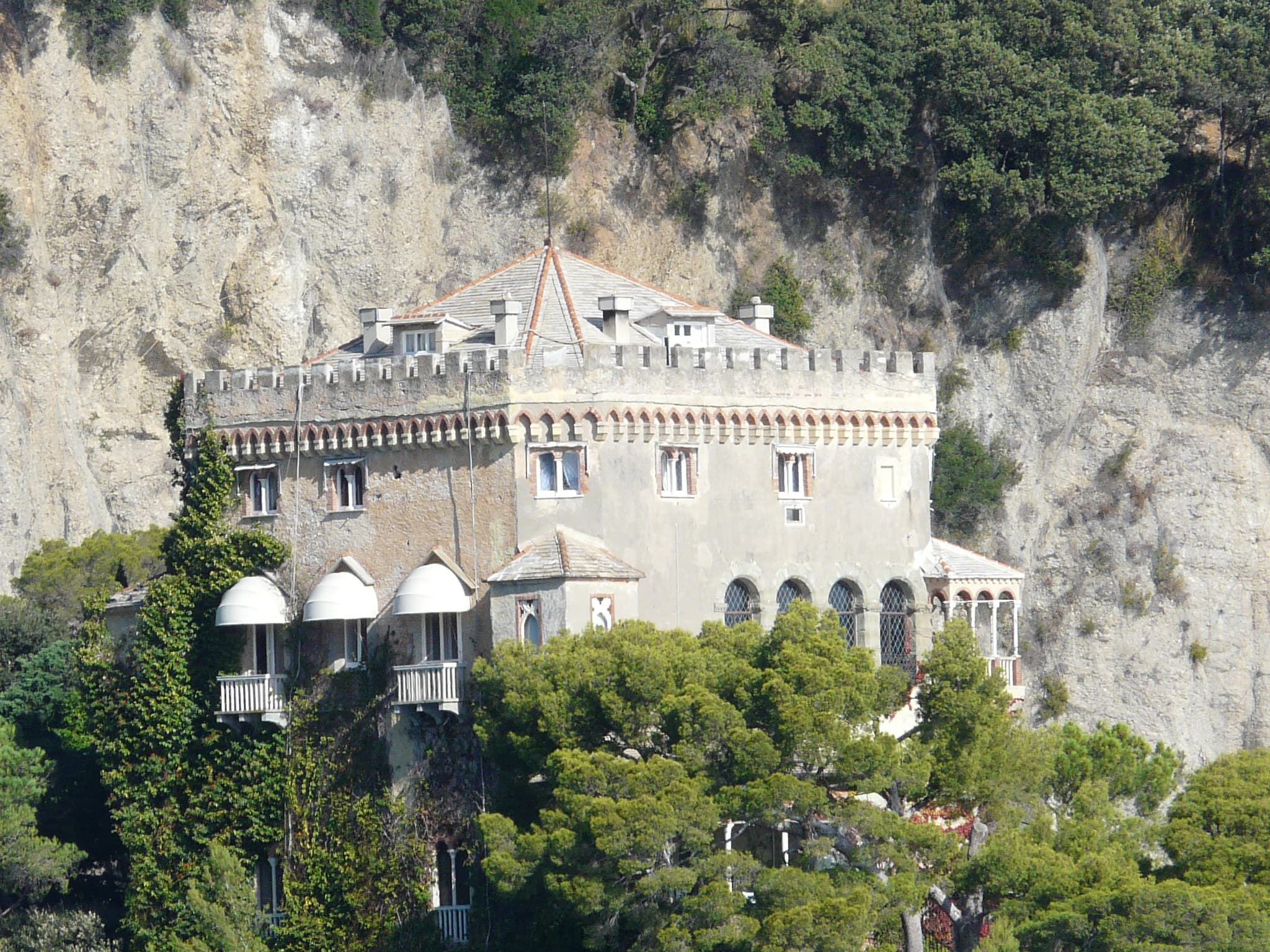
Paraggi Castle is constructed as a substantial stone fortress with a square base, embodying the typical characteristics of Genoese coastal fortifications. Its four corner turrets, which project outward and are supported by corbels, were designed to provide overlapping fields of fire and enhanced surveillance capabilities. These turrets likely served as lookout points and platforms for artillery or small arms, integral to the castle’s defensive role.
The castle’s southeastern façade features a large loggia, an open gallery or covered corridor, which suggests a dual function of the building as both a military installation and, later, a residential space. The loggia would have offered a vantage point over the bay while providing shelter and a social area for inhabitants.
The exterior walls are crowned with merlons in the Guelph style, a distinctive type of battlement characterized by squared-off notches as opposed to the swallow-tailed Ghibelline style. This architectural detail is significant as it reflects the historical factional symbolism prevalent in medieval and early modern Italian fortifications. The battlements allowed defenders to observe and fire upon attackers while remaining protected behind the parapet.
Historical context and military significance
During its operational period, Paraggi Castle was a key component of Genoa’s coastal defense network. Its role was primarily to monitor and control naval traffic in the Gulf of Tigullio, an important maritime corridor. The castle’s strategic position enabled early warning of approaching hostile forces and provided a strongpoint to repel attacks from sea or land.
Between 1812 and 1814, Paraggi Castle came under the control of the First French Empire during the Napoleonic Wars. French forces occupied the fortress as part of their broader military campaign in northern Italy. This occupation underscores the castle’s continued military relevance into the 19th century, even as advances in artillery and naval technology were beginning to render such fortifications less critical.
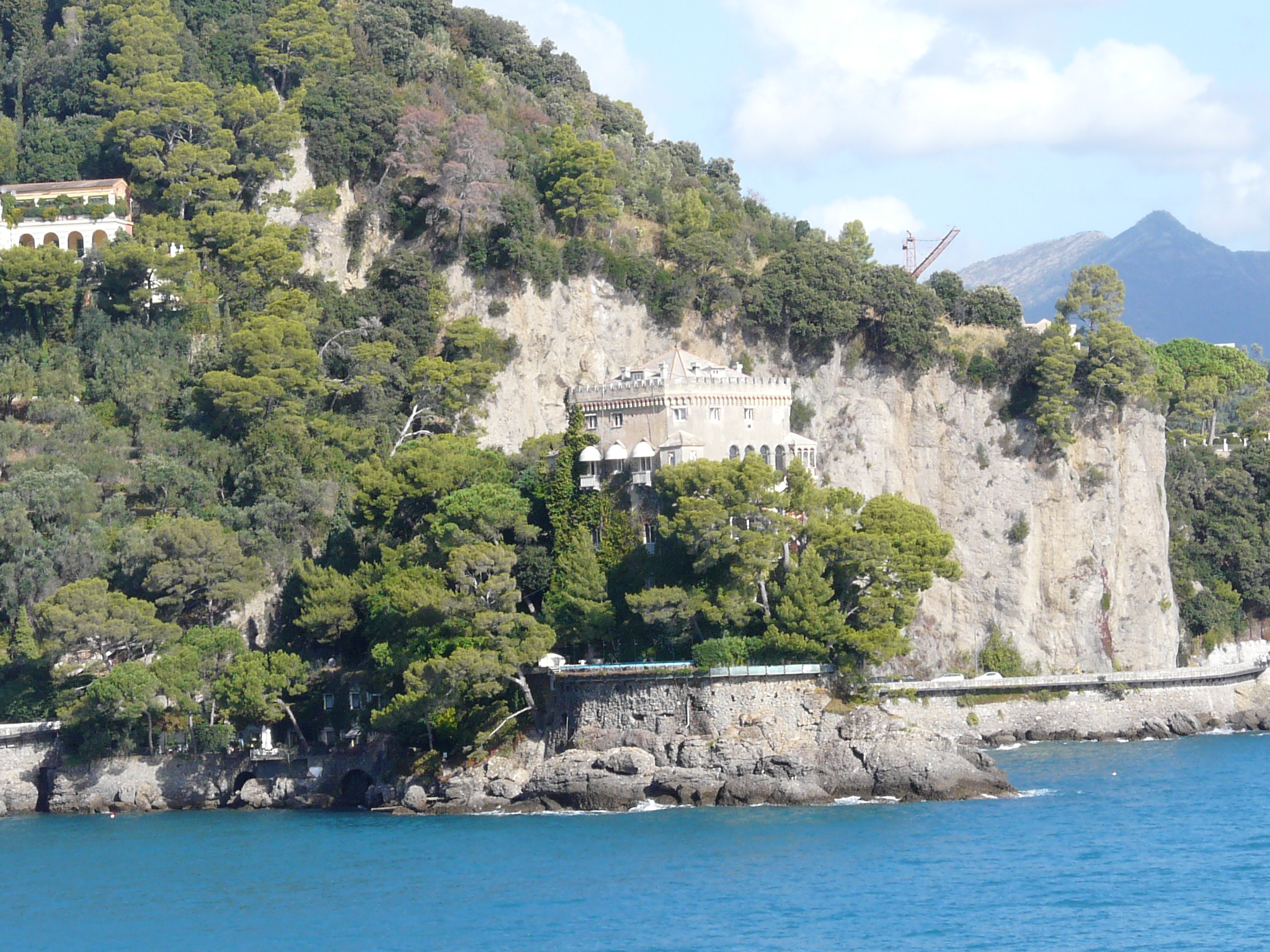
Photo by Davide Papalini • CC BY-SA 3.0
Transformation and modern history
Following its military use, the castle underwent significant adaptations to serve as a private residence. Over the centuries, modifications softened its austere military character, introducing elements suited to habitation and comfort while preserving its essential defensive features.
By the late 20th century, Paraggi Castle was owned by the Bonomi Bolchini family, notable textile industrialists from Biella. In the 1990s, the castle was leased to Silvio Berlusconi and his family, marking a shift from a fortress to an exclusive private dwelling. This transition reflects broader trends in the fate of historic military structures along the Italian coast, many of which have been repurposed for residential or touristic use.
Preservation and current condition
Today, Paraggi Castle remains a well-preserved example of Genoese coastal fortifications. Its durable stone masonry and distinctive architectural elements, such as the corner turrets and Guelph merlons, survive largely intact. The castle’s prominent position on the promontory continues to dominate the landscape of Paraggi Bay, offering visitors and observers a vivid connection to the region’s maritime heritage.
While the castle is primarily a private residence and not generally open to the public, its external features and setting provide valuable insights into the military architecture and historical maritime defense strategies of early modern Italy.
Frequently asked questions (FAQ)
- When was Paraggi Castle built and for what purpose?
- Paraggi Castle was constructed in 1626 by the Republic of Genoa as part of its coastal defense system to protect the Gulf of Tigullio from invasions and pirate attacks.
- What are the distinctive architectural features of Paraggi Castle?
- The castle features a square base with four corner turrets supported by corbels, a large southeastern loggia, and Guelph-style merlons crowning its exterior walls.
- Who controlled Paraggi Castle during the Napoleonic Wars?
- Between 1812 and 1814, Paraggi Castle was occupied by French forces under the First French Empire during Napoleon Bonaparte’s campaigns in northern Italy.
- Is Paraggi Castle open to the public for visits?
- Paraggi Castle is primarily a private residence and is generally not open to the public, but its exterior and location can be viewed from the surrounding area.
- How has Paraggi Castle’s function changed over time?
- Originally a military fortress, Paraggi Castle was later adapted into a private residence, reflecting its transition from a defensive stronghold to a historic home.
Photo gallery


Information
Current owner
Private owner
Loading map...
Visitor reviews
No reviews yet. Been here? Write the first review and help other travelers!
Write the first reviewVisited this castle? Share your experience
Your review helps other travelers and adds first-hand knowledge to our encyclopedia.



