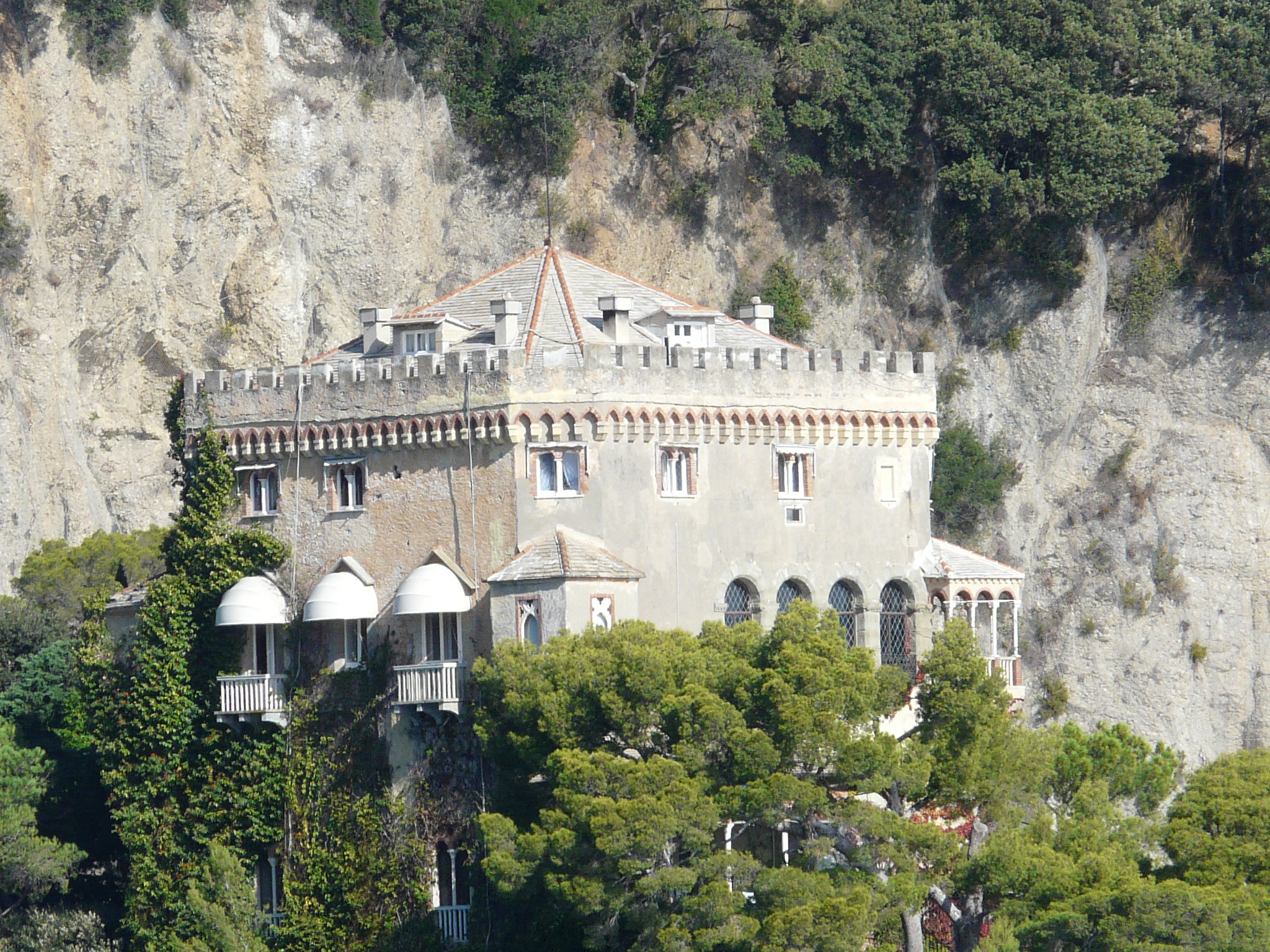
Brown Castle
Castello Brown is a remarkable Renaissance hill castle perched high above the picturesque harbor of Portofino, Italy. Its commanding position has made it a vital military and maritime defense site since antiquity, evolving through centuries of architectural and historical significance. The castle’s strategic location on the Ligurian coast allowed it to serve as a sentinel guarding the Gulf of Tigullio, offering panoramic views that were crucial for early warning and defense against naval threats.
The site’s origins trace back to Roman times, when a watchtower and a small fortification were constructed between the 2nd and 3rd centuries AD to monitor maritime activity and protect the coastline. These early Roman fortifications laid the foundation for the castle’s later expansions and military importance during the medieval and Renaissance periods.
Historical development and military significance
Throughout the medieval era, the fortress was controlled by various regional powers, reflecting the turbulent political landscape of northern Italy. The first documented mention of the castle dates to 1425, when Tomaso Fregoso, a former Doge of Genoa, occupied Portofino and its fortress amid territorial disputes. Shortly after, control reverted to the Republic of Genoa, which recognized the castle’s strategic value in protecting its maritime interests.
In the early 16th century, military engineer Giovanni Maria Olgiati designed comprehensive plans to transform the site into a fully fortified castle. Construction was largely completed by 1557, with the castle featuring robust stone walls, artillery platforms, and defensive structures suited to the era’s evolving warfare technology. The castle played a pivotal role in 1575 when it helped repel an attack led by Giò Andrea Doria, underscoring its military importance.
Between 1622 and 1624, the fortress underwent significant enlargement to bolster its defenses further. It was armed with bombards and cannons, typical of coastal fortifications designed to deter pirate raids and naval assaults. The castle’s fortifications were periodically updated, including a notable upgrade in 1728 to keep pace with advancements in artillery and siege tactics.
Despite its strength, the castle suffered damage during an English assault in 1798 amid the Napoleonic Wars, specifically targeting the Ligurian Republic, a Napoleonic client state. The small tower, a key defensive feature, was destroyed in this attack. After the Congress of Vienna in 1815, which reshaped the political order in Europe, the castle was decommissioned and abandoned as a military installation.
Transformation into a villa and cultural legacy
In 1867, the property was purchased by Montague Yeats-Brown, then the British consul in Genoa. He commissioned architect Alfredo D’Andrade to convert the former fortress into a comfortable villa. This transformation was carefully executed to preserve the castle’s external military character while adapting its interiors for residential use. The parade grounds were converted into terraced gardens, blending the martial heritage with cultivated elegance and maritime pines.
The villa’s interiors were furnished in a formal English style, featuring unique elements such as fittings salvaged from clipper ships and artworks including a copy of a William Hogarth painting and works by the artist Moenis. These details reflect the cultural tastes of the British owners and their desire to maintain a connection to both history and art.
During World War II, the castle was repurposed as a prison for members of the Italian Resistance, adding a complex layer to its historical narrative. The estate remained in the Yeats-Brown family until 1949, when it was sold to Colonel and Mrs. John Baber, who undertook significant restoration efforts to preserve the castle’s fabric and historical authenticity.
In 1961, ownership transferred to the municipality of Portofino, which has maintained the castle as a public museum and cultural landmark. Today, Castello Brown is celebrated not only for its military heritage but also for its literary and cinematic associations. It was the setting for Elizabeth von Arnim’s 1922 novel The Enchanted April and served as a filming location for the 1991 movie adaptation, attracting visitors interested in both history and the arts.
Architectural features and preservation
The castle’s architecture is a testament to its layered history, combining elements from its Roman origins, medieval fortifications, and Renaissance military design. The foundations include remnants of a Roman castrum and watchtower, constructed with traditional stone masonry techniques characteristic of the 2nd to 4th centuries AD.
The 16th-century expansions introduced artillery platforms and cannon batteries strategically positioned to defend against pirate raids and naval incursions. The castle’s curtain walls, battlements, and fortified towers were designed to withstand sieges and provide overlapping fields of fire. The small tower destroyed in 1798 was an integral part of the defensive network.
Alfredo D’Andrade’s 19th-century renovations preserved the castle’s robust external form while enhancing its livability. The towers were slightly heightened, and the interior spaces were transformed into elegant chambers and halls suitable for a villa. The terraced gardens created on the former parade ground add a scenic and tranquil dimension to the site, with maritime pines and other Mediterranean flora complementing the stone architecture.
Restoration efforts in the mid-20th century by the Baber family repaired damaged sections and conserved original features, ensuring the castle’s survival as a well-preserved historic monument. The municipality of Portofino continues to maintain the site, preserving its rich architectural and historical layers for education and tourism.
Visitor experience and cultural significance
Visitors to Castello Brown can explore its extensive grounds, which include the fortified walls, towers, and the elegantly restored villa interiors. The museum displays artifacts and artworks related to the castle’s military and residential history. The site offers spectacular views over Portofino’s harbor and the Ligurian Sea, making it a popular destination for tourists interested in history, architecture, and natural beauty.
The castle’s cultural significance is enhanced by its literary connections and role in film, attracting a diverse audience. Educational programs and guided tours provide insight into the castle’s evolution from a Roman lookout to a Renaissance fortress and finally to a refined villa and museum.
Frequently asked questions (FAQ)
- How do I get to Castello Brown in Portofino?
- Castello Brown is located on a hill above Portofino harbor. Visitors can reach it by walking uphill from the town center, a scenic route that takes about 15 minutes. There is no direct vehicle access to the castle, so comfortable walking shoes are recommended.
- What are the opening hours for Castello Brown?
- The castle is generally open to visitors daily from 10:00 AM to 6:00 PM, with extended hours during the summer months. It is advisable to check the official website or local tourist information for seasonal variations and special closures.
- Is there an entrance fee to visit Castello Brown?
- Yes, there is an entrance fee to visit Castello Brown. Prices typically range around €5 for adults, with discounts available for children, seniors, and groups. Tickets can be purchased at the entrance or online in advance.
- What historical periods does Castello Brown represent?
- Castello Brown represents multiple historical periods, including its origins in Roman times, medieval fortifications, and its Renaissance transformation. The castle’s architecture and artifacts reflect this layered history.
- Can I explore the gardens at Castello Brown?
- Yes, visitors can explore the terraced gardens created during the 19th-century villa conversion. The gardens feature maritime pines and Mediterranean plants, offering beautiful views and a peaceful atmosphere.
- Is Castello Brown accessible for visitors with mobility issues?
- Due to its hillside location and historic structure, accessibility can be challenging for visitors with mobility issues. The walk uphill and some uneven surfaces within the castle grounds may require assistance or careful planning.
Information
Sources & official resources
Verify the information above using these authoritative references.
Loading map...
Visitor reviews
No reviews yet. Been here? Write the first review and help other travelers!
Write the first reviewVisited this castle? Share your experience
Your review helps other travelers and adds first-hand knowledge to our encyclopedia.