Panopeus (Πανοπεύς), also known as Phanoteus in various ancient sources, was an ancient Greek town located in the region of Phocis, near the border with Boeotia. It lay along the important ancient road connecting Daulis to Chaeronea, two significant cities of classical Greece. The ruins identified as Panopeus are situated near the modern village of Agios Vlasios (Ἅγιος Βλάσις), approximately 20 stadia from Chaeronea and about 27 stadia from Daulis, although ancient measurements vary slightly.
The town of Panopeus was of great antiquity and held a prominent place in Greek mythology and history. According to tradition, it was originally inhabited by the Phlegyae, a legendary people often depicted as warlike and impious. The geographer Strabo attributed the founding of the city to a figure named Panopeus, from whom the town took its name. The town is also mentioned in Homer’s Iliad, specifically in the Catalogue of Ships, where its leaders, including Schedius, king of Panopeus, and his brother, are listed among the Phocians who fought in the Trojan War.
Mythological and cultural significance
Panopeus was renowned in antiquity for its association with the myth of Tityos, a giant who was slain by the gods Apollo and Artemis for attempting to assault their mother Leto on her way to Delphi. The grave of Tityos was a notable landmark near the town, described by Pausanias as a circular tomb about one-third of a stade in circumference, located by the river. Although no remains of this tomb survive today, it was an important cult site in ancient times.
Another cultural feature mentioned by Pausanias was a building constructed of unbaked bricks along the Sacred Way, which housed a statue carved from Pentelic marble. This statue was believed to represent either Prometheus or Asclepius. Local legend held that Prometheus fashioned the human race from the sand-colored rocks around Panopeus, which were said to retain the scent of human flesh, linking the town to foundational myths of humanity.
Historical events and military significance
Panopeus experienced multiple episodes of destruction and rebuilding throughout its history, reflecting its strategic importance in central Greece. It was destroyed by the invading forces of Xerxes I during the Greco-Persian Wars in 480 BCE, marking one of the earliest recorded devastations of the city.
Later, in 395 BCE, during conflicts involving the Boeotians, the town's territory was raided, with the attackers managing to capture only the suburbs, as the main city resisted successfully. This event highlights the defensive resilience of Panopeus during the classical period.
In 346 BCE, at the close of the Third Sacred War, the city was again destroyed by Philip II of Macedon, underscoring its continued military and political significance in the region. The Macedonian conquest was part of a broader campaign to assert control over central Greece.
The Romans captured Panopeus in 198 BCE during their expansion into Greece, taking the city on their first assault. However, the city suffered a third destruction during the turbulent conflicts of the 1st century BCE, specifically in the campaign between the Roman general Sulla and Archelaus, a general of Mithridates VI of Pontus. This repeated destruction reflects the town's ongoing strategic importance and vulnerability during the Hellenistic and Roman eras.
Architectural remains and archaeological features
By the time of Pausanias in the 2nd century CE, Panopeus had diminished considerably, with the city reduced to a small settlement of huts near a river. He recorded the city’s circumference as approximately 7 stadia, indicating a modest size in his era.
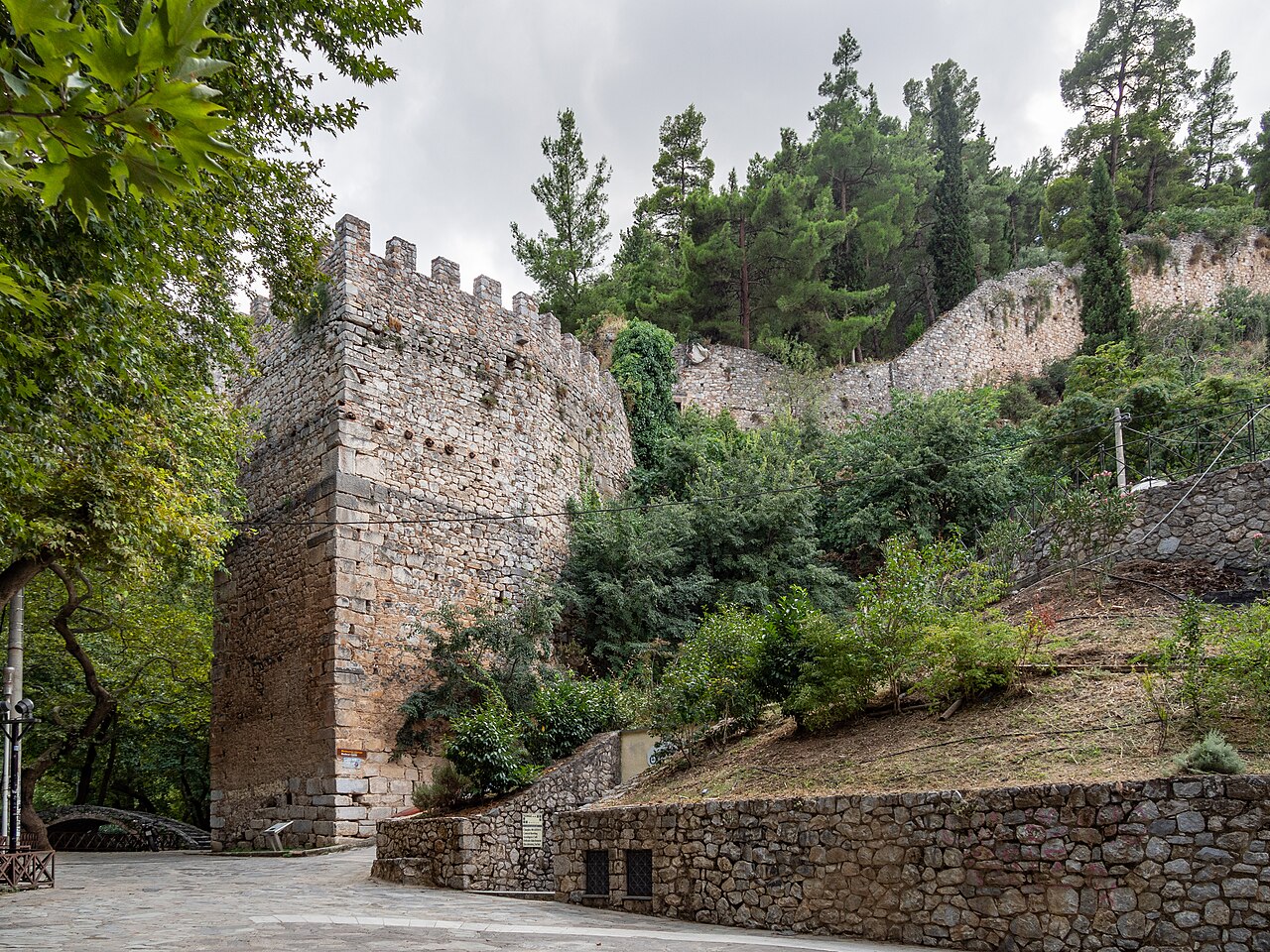
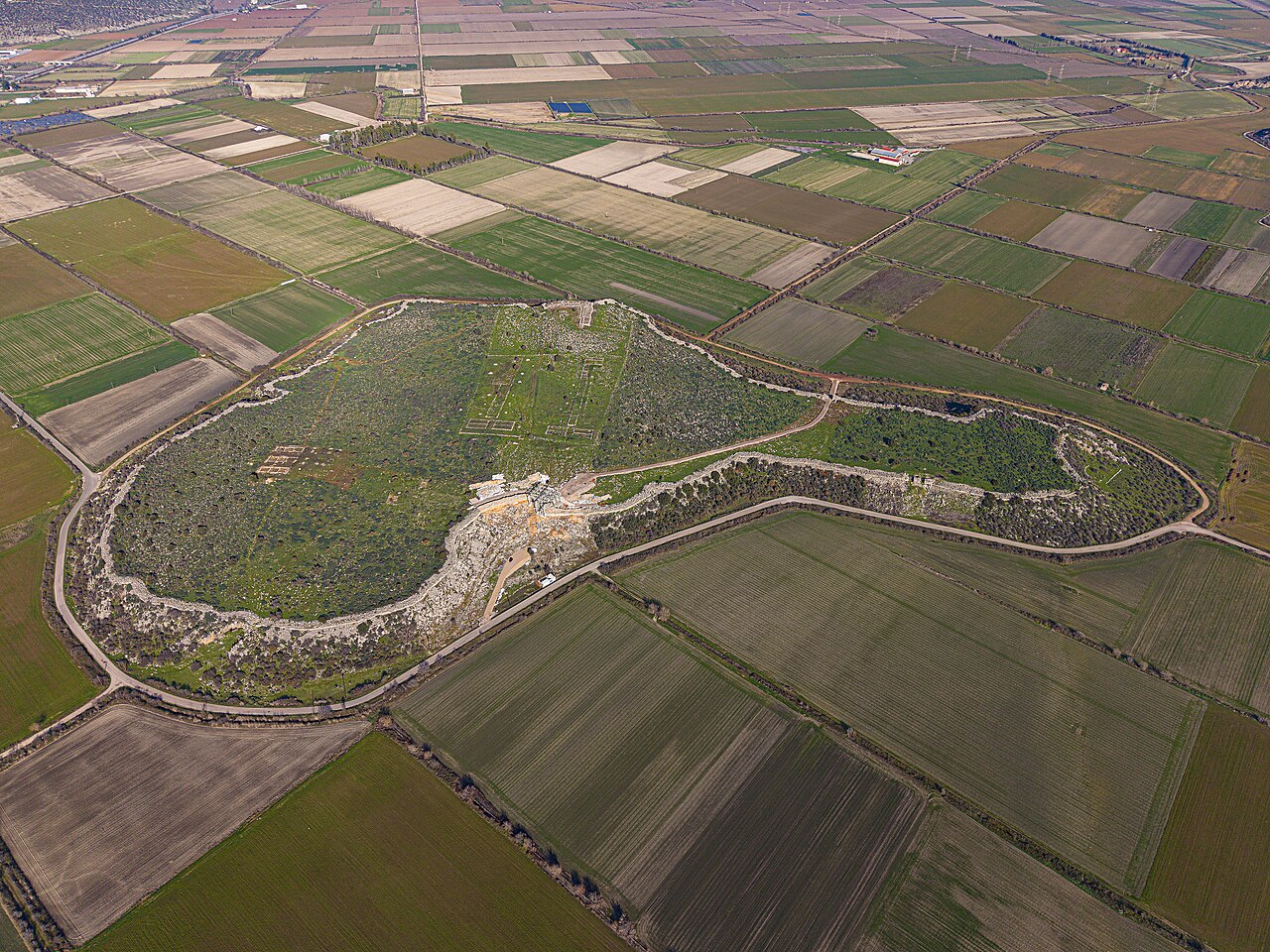
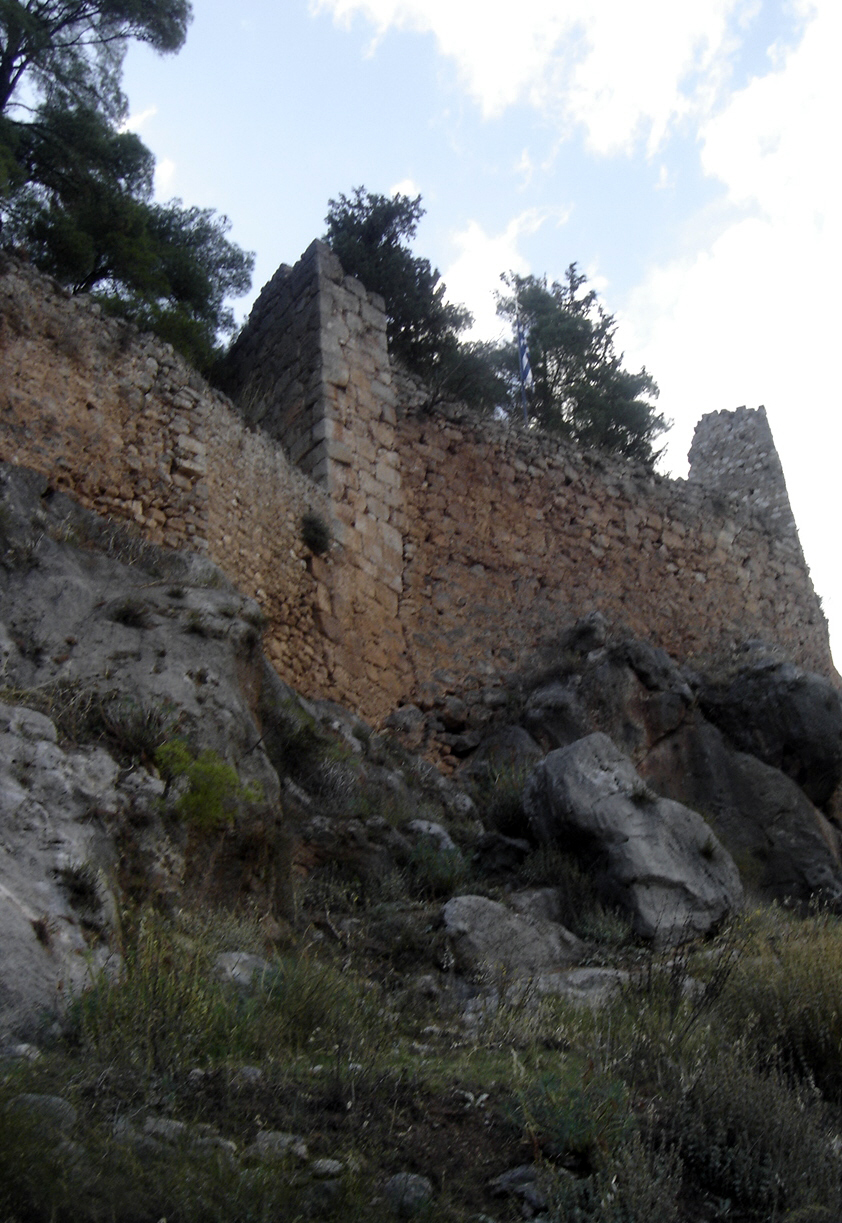
The ruins near Agios Vlasios include substantial remains of ancient city walls located on rocky heights overlooking the village. These fortifications exhibit masonry from various periods, reflecting the city's repeated destruction and reconstruction over centuries. The walls suggest a fortified settlement designed to withstand sieges and raids, characteristic of a bastioned fortress type, although the exact architectural details of the fortifications are not fully preserved.
Unfortunately, no remains survive of the tomb of Tityos, which was a significant cultural monument in antiquity. The site of the tomb was described as being adjacent to the river, but centuries of ruin and natural erosion have erased visible traces.
The mention by Pausanias of a building made of unbaked bricks containing a marble statue indicates the presence of religious or commemorative structures within or near the city, though these have not survived to the present day.
Geographical setting and strategic location
Panopeus was strategically situated near the frontier between Phocis and Boeotia, controlling a key route between Daulis and Chaeronea. This location gave it military and commercial importance in ancient Greece, as controlling this passage allowed influence over movements between central Greek regions.
The town’s position on elevated rocky terrain provided natural defensive advantages, which were enhanced by the construction of city walls and fortifications. The proximity to a river offered water resources essential for sustaining the population and defending the settlement during sieges.
Legacy and modern significance
Today, Panopeus is an archaeological site of interest for historians and archaeologists studying ancient Greek urbanism, warfare, and mythology. While much of the city lies in ruins, the surviving fortifications and the historical record provide valuable insights into the town’s role in classical and Hellenistic Greece.
The site continues to attract scholarly attention for its layered history of destruction and rebuilding, its mythological associations, and its strategic importance in ancient military campaigns. Visitors to the area can explore the remnants of the walls and appreciate the geographical context that shaped the town’s history.
Frequently asked questions (FAQ)
- What is the historical significance of Panopeus?
- Panopeus was an ancient Greek town with mythological ties and a history of repeated destruction during major conflicts such as the Greco-Persian Wars and the Third Sacred War.
- Where are the ruins of Panopeus located?
- The ruins of Panopeus are near the modern village of Agios Vlasios in Phocis, Greece, situated on rocky heights overlooking the area.
- Can visitors see the tomb of Tityos at Panopeus?
- No visible remains of the tomb of Tityos survive today, though it was once a notable landmark described by ancient sources.
- What remains can be seen at the archaeological site of Panopeus?
- Visitors can see the remains of ancient city walls and fortifications from various periods, reflecting the city's history of destruction and rebuilding.
- Why was Panopeus repeatedly destroyed?
- Panopeus was strategically located and involved in multiple military conflicts, leading to its repeated destruction by invading forces such as Xerxes, Philip II of Macedon, and during Roman campaigns.
Photo gallery

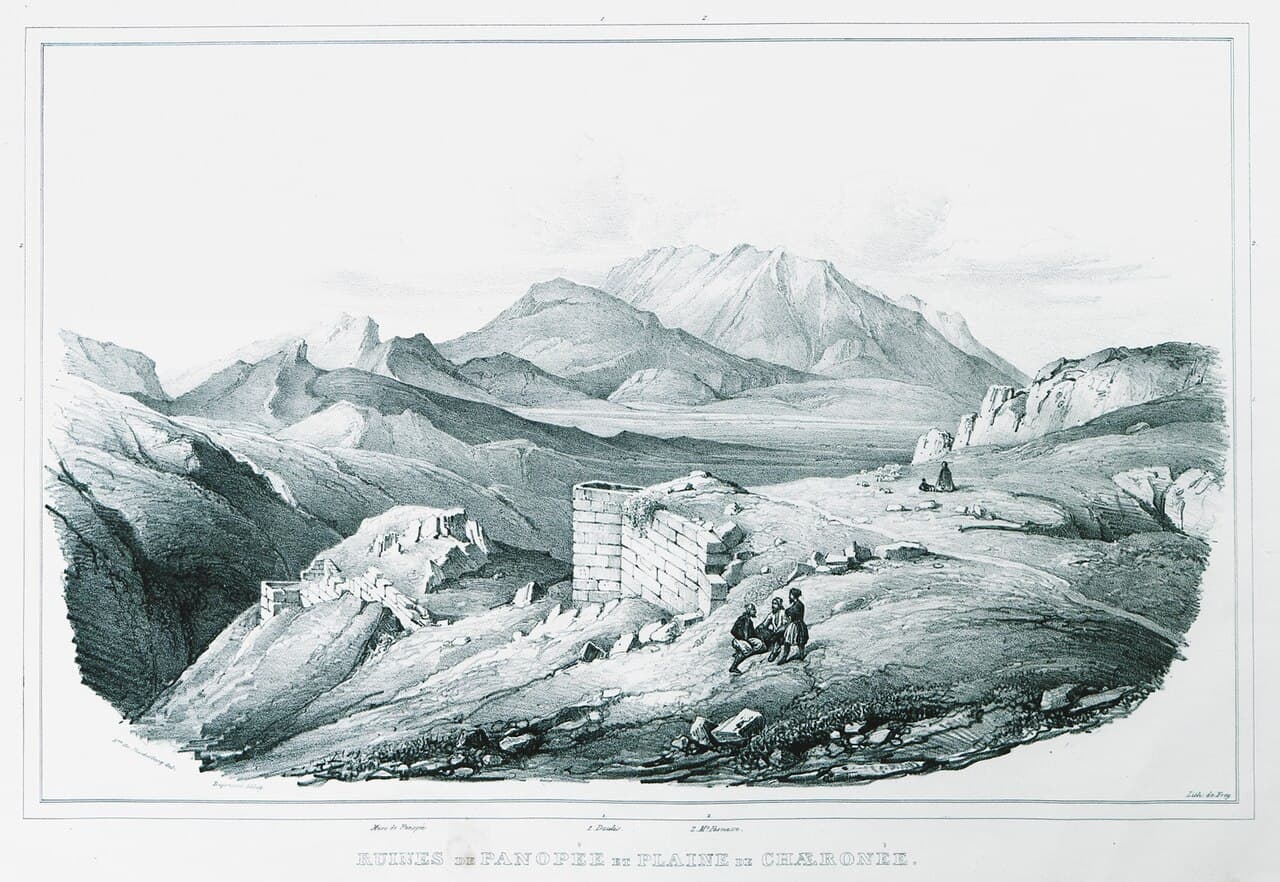
Photo by Otto Magnus von Stackelberg•Public domain
Information
Loading map...
Visitor reviews
No reviews yet. Been here? Write the first review and help other travelers!
Write the first reviewVisited this castle? Share your experience
Your review helps other travelers and adds first-hand knowledge to our encyclopedia.