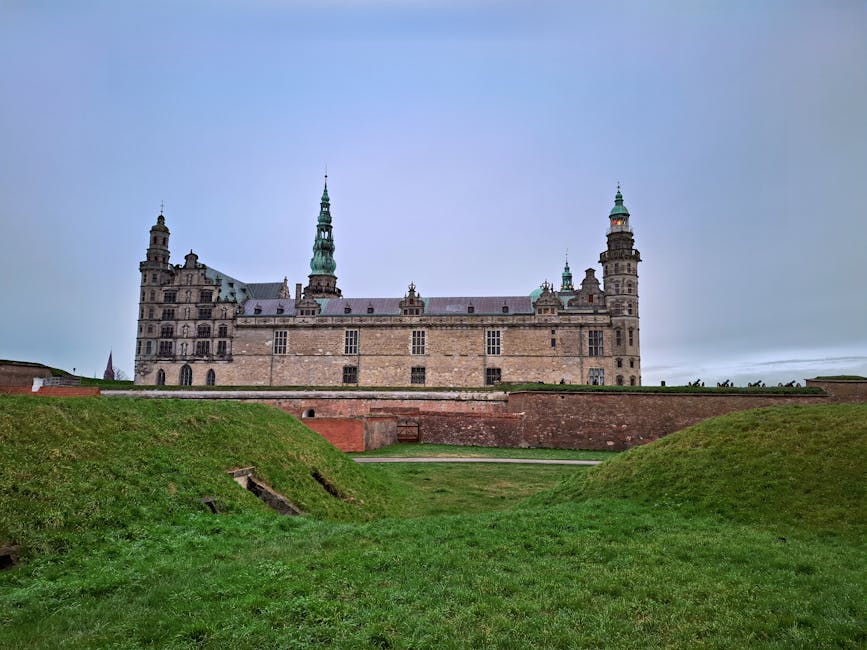
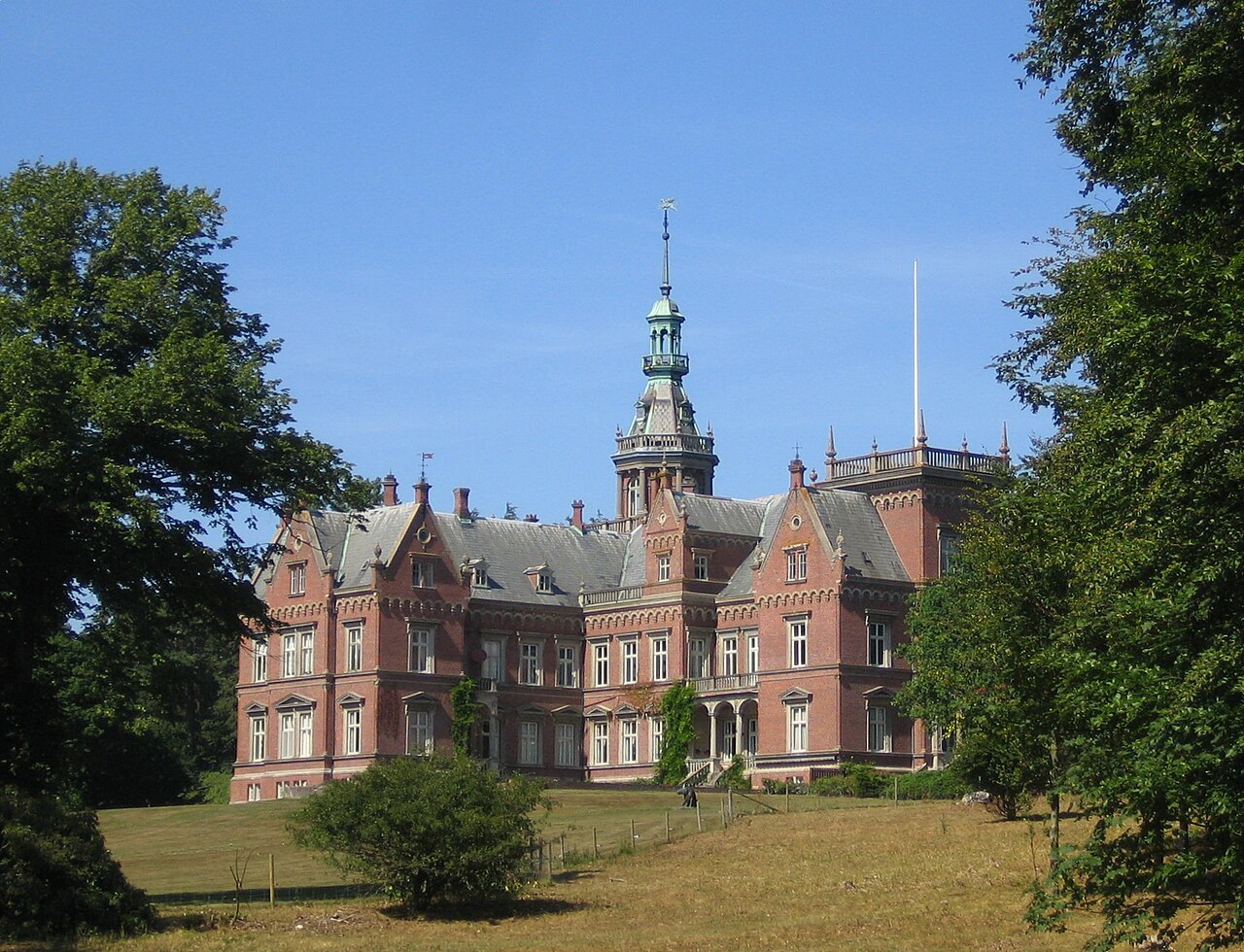
Pålsjö Castle

Pålsjö Castle in Helsingborg, Sweden
Helsingborg, Sweden
Renaissance (15th–17th c.)
Well Preserved

Pålsjö Castle, located in Helsingborg, Sweden, is a notable example of a Renaissance era estate with a rich history spanning several centuries. The castle as it stands today was primarily constructed between 1676 and 1679, following the destruction of the original estate during the Scanian War. The castle's origins trace back to the early 16th century, with the first recorded owner being Sten Torbensen Bille, who passed away in 1520. This early provenance places Pålsjö among the historically significant manors in the region.

Historical background and ownership

The original estate at Pålsjö was destroyed amid the turmoil of the Scanian War (1676–1679), a conflict between Denmark and Sweden that heavily affected the region of Scania. After the war, the estate was rebuilt by Magnus Paulin, then the Mayor of Helsingborg, who played a crucial role in the castle's restoration and reestablishment as a noble residence. This rebuilding effort gave Pålsjö its foundational structure seen today.

During the Great Northern War (1700-1721), Pålsjö Castle served a strategic military function. The castle was used as the headquarters by Earl Magnus Stenbock during the Battle of Helsingborg, underscoring its importance in regional military history. This period added to the castle's legacy as not just a residence but also a site of military command.

Architectural features and style

Pålsjö Castle's architecture reflects the Renaissance style, typical of the late 17th century when it was rebuilt. The structure includes characteristic elements such as symmetrical layouts and classical proportions. However, the castle's appearance was significantly influenced by a restoration carried out in 1873 by the Danish architect Christian Abraham. This restoration introduced elements that harmonized the Renaissance origins with 19th-century architectural sensibilities, enhancing the castle's aesthetic and structural integrity.

The French style park

One of the castle's distinctive features is its French style park, which dates from the 1760s. This garden reflects the formal French landscaping tradition, characterized by geometric patterns, symmetrical designs, and meticulously maintained greenery. The park adds significant cultural and historical value to the estate, providing insight into the landscaping trends favored by the nobility in 18th-century Sweden.

Significance in regional history

Pålsjö Castle's history is intertwined with the military and political conflicts that shaped the Scania region. Its destruction and subsequent rebuilding after the Scanian War highlight the castle's resilience and the strategic importance of Helsingborg as a border city. The castle's use during the Great Northern War further cements its role in Swedish and Danish military history.

The castle also reflects the social history of the area, having been owned and inhabited by notable figures such as Sten Torbensen Bille and Magnus Paulin. These owners contributed to the cultural landscape of Helsingborg and influenced the development of the estate over centuries.

Current status and preservation

Today, Pålsjö Castle stands as a well-preserved Renaissance estate with significant architectural and historical value. The 19th-century restoration by Christian Abraham has helped maintain the castle's structural condition and aesthetic appeal. The French style park remains a key attraction, offering visitors a glimpse into historical garden design.

The castle is situated near the coast in Helsingborg, enhancing its scenic and strategic location. It continues to be an important cultural landmark in the region, attracting visitors interested in history, architecture, and landscape design.

Visiting Pålsjö Castle

Visitors to Pålsjö Castle can explore the castle grounds and the French style park, experiencing the blend of Renaissance architecture and 18th-century landscaping. The castle's proximity to Helsingborg makes it accessible for day trips and cultural tours. While specific visiting hours and ticket information may vary, the estate is recognized for its historical significance and well-maintained condition.

Frequently asked questions

  • When was Pålsjö Castle originally built? The original estate dates back to at least the early 16th century, with the current structure built between 1676 and 1679.
  • What architectural style is Pålsjö Castle? The castle is primarily Renaissance in style, with significant 19th-century restoration influences.
  • Who was Magnus Paulin? He was the Mayor of Helsingborg who rebuilt the castle after its destruction in the Scanian War.
  • What is special about the castle's park? The French style park, established in the 1760s, features formal geometric landscaping typical of French garden design.
  • Can I visit Pålsjö Castle today? Yes, the castle and its grounds are open to visitors, though it is advisable to check current opening hours and ticket prices before planning a visit.
  • What role did Pålsjö Castle play in military history? It served as the headquarters for Earl Magnus Stenbock during the Battle of Helsingborg in the Great Northern War.

Frequently asked questions (FAQ)

How do I get to Pålsjö Castle?
You can reach Pålsjö Castle easily by public transportation or car. If you're using public transport, take bus number 1 or 2 to the nearby stop, then it's just a short walk to the castle. There is also parking available for those who choose to drive.
What is the historical significance of Pålsjö Castle?
Pålsjö Castle, built in the late 19th century, showcases the architectural styles of its time and serves as a testament to the region's aristocratic heritage. Originally constructed as a private residence, the castle reflects the grandeur of Swedish history and has been a notable landmark in Helsingborg ever since.
When was Pålsjö Castle constructed?
Construction of Pålsjö Castle began in 1885 and was completed in 1887. The castle was designed by architect A. H. R. Törnebladh, who incorporated elements of neo-Renaissance architecture. Over the years, it has maintained its historical charm while adapting to modern uses.
Can I visit Pålsjö Castle?
Yes, Pålsjö Castle is open to visitors, but it's advisable to check the opening hours ahead of your visit. Guided tours are often available, allowing you to explore the castle's rich history and beautiful architecture. Be sure to check for any special events or exhibitions that may be taking place during your visit.
Why is Pålsjö Castle a popular tourist attraction?
The castle's stunning architecture, beautiful surrounding park, and rich history make it a favored destination for both locals and tourists. Its picturesque setting provides a perfect backdrop for photos, and visitors often enjoy exploring the lush gardens and nearby walking trails. Additionally, the castle hosts various cultural events and exhibitions throughout the year.
Is it possible to have events at Pålsjö Castle?
Yes, Pålsjö Castle is available for hosting events such as weddings, conferences, and private gatherings. The castle's elegant interiors and scenic surroundings create a stunning venue for any occasion. It's recommended to contact the castle's administration for more information on booking and availability.
What are the opening hours for Pålsjö Castle?
Opening hours can vary seasonally, so it's best to check the official website for the most up-to-date information. Generally, the castle is open to visitors from late spring to early autumn, with extended hours during peak tourist season. Always verify before your visit to avoid disappointment.
What are the ticket prices for visiting Pålsjö Castle?
Ticket prices for Pålsjö Castle can vary based on the type of tour or event. Typically, general admission is quite affordable, making it accessible for families and groups. Discounts may be available for students, seniors, and children, so it's a good idea to inquire about any available offers when planning your visit.
What are some nearby attractions to visit after Pålsjö Castle?
After visiting Pålsjö Castle, you can explore the beautiful Pålsjö Forest, which offers hiking trails and scenic views. The nearby beach and Helsingborg's city center, filled with shops, restaurants, and cultural sites, are also worth visiting. Don't miss the chance to check out the iconic Kärnan tower for a panoramic view of the city and coastline.

Information

Lowland Castle

Loading map...

Visitor reviews

No reviews yet. Been here? Write the first review and help other travelers!

Write the first review

Visited this castle? Share your experience

Your review helps other travelers and adds first-hand knowledge to our encyclopedia.

Write a review

(5/5)

0/2000 characters

Your review will be visible after admin approval

Nearby castles

2.1 km

Sofiero Castle

Helsingborg, Sweden

Sofiero Castle stands as a distinguished former country mansion of the Swedish royal family, located in the municipality of Helsingborg, Sweden. Originally a Scanian farm named Skabelycke, the estate was acquired in 1864 by Crown Prince Oscar of Sweden and his wife Sophia of Nassau. The initial construction phase culminated in 1865 with the completion of a modest one-story palace, marking the estate's transformation into a royal residence. Following Crown Prince Oscar's ascension as King Oscar II of Sweden and Norway, the palace underwent significant expansion between 1874 and 1876. This development elevated the structure to a two-story building with 35 rooms, reflecting the growing status and needs of the royal household. The castle's architecture features elements typical of the period, blending functional design with aesthetic touches suitable for a royal summer retreat. Historical significance and royal heritage In 1905, Prince Gustaf Adolf, later King Gustaf VI Adolf, and his wife Crown Princess Margareta of Connaught received Sofiero Castle as a wedding gift. This marked the beginning of a new era for the estate, as the royal couple undertook extensive renovations and modernization efforts. They are especially credited with developing the expansive gardens, notably establishing the celebrated rhododendron collection that has become synonymous with Sofiero. Throughout the 20th century, Sofiero served as the official summer residence of King Gustaf VI Adolf and his second wife, Lady Louise Mountbatten, until his death in 1973. The king's deep affection for the estate was evident, and upon his passing, he generously bequeathed Sofiero to the city of Helsingborg. His intention was for the public to enjoy the castle and its gardens as much as he had during his lifetime. The castle has hosted numerous notable guests, including Tsar Alexander III in 1893, King Edward VII of the United Kingdom in 1901, Indian Prime Minister Jawaharlal Nehru in 1957, US President Dwight D. Eisenhower in 1962, and Vice President Lyndon B. Johnson in 1963, underscoring its diplomatic and cultural significance. Architectural features and estate layout The castle is a two-story structure originally built as a summer villa with six towers, a feature that adds to its distinctive silhouette. It is situated approximately five kilometers north of Helsingborg, perched above a ravine that slopes down to the shore of the Öresund strait. The location provides commanding views and a serene environment befitting a royal retreat. The estate encompasses an extensive 15-hectare park designed in the English Arts and Crafts gardening style. This park is renowned for its diverse plant life, especially the rhododendrons, which number around 10,000 plants representing nearly 500 species and hybrids. These are primarily arranged in two valleys flanking the palace, creating a spectacular floral display during blooming seasons. Gardens and horticultural highlights The rhododendron collection is the largest in northern Europe and a major draw for visitors. Additional garden features include a rose path, a kitchen garden, and dedicated plots for dahlias and melons. The estate houses a greenhouse and a labyrinth, providing varied visitor experiences and botanical interest. A pond and several sculptures, including a monument to King Gustaf VI Adolf, enhance the landscape's aesthetic and cultural value. A winery built in 1914 remains a functional part of the estate, nurturing grapevines planted during its original construction. The eastern boundary of the park is marked by a long stone wall, alongside which fruit trees such as plum and pear are cultivated. The Jubilee Garden, created in 2016 by landscape architect Mona Wembling, commemorates Sofiero's 150th anniversary and offers a peaceful retreat within the estate. Modern use and cultural importance Today, Sofiero Castle serves multiple public functions. The palace building hosts a restaurant, café, and occasional art exhibitions, blending hospitality with cultural enrichment. The surrounding park is meticulously maintained according to King Gustaf VI Adolf's wishes, ensuring the preservation of its historical layout and botanical treasures. The estate is also a vibrant cultural venue, hosting large outdoor concerts during summer on its expansive lawns. These events feature national and international artists, making Sofiero a lively destination that combines natural beauty with contemporary entertainment. In 2010, the gardens were recognized as Europe's most beautiful park, a testament to their horticultural excellence and design. Further enhancing the estate's infrastructure, Sofia's Bridge was constructed in 2018 across a ravine near the castle. This 57-meter-long steel bridge received a prestigious steel construction award in 2021, symbolizing a successful blend of historical preservation and modern engineering. Visitor experience and facilities Visitors to Sofiero Castle can explore the extensive gardens, enjoy the diverse plant collections, and relax in the carefully designed landscapes. The castle's restaurant and café provide amenities for dining and refreshments, while the occasional art exhibitions offer cultural engagement beyond the natural surroundings. The estate also includes a souvenir shop, a children's playground featuring a historic house from 1917, and workshop and exhibition spaces that support educational and artistic activities. The combination of historical architecture, botanical richness, and cultural programming makes Sofiero a unique destination in southern Sweden.

Modern (19th–20th c.)
Details
4.9 km
Kronborg Castle — Denmark castle

Kronborg Castle

Helsingør, Denmark

Kronborg Castle, located in Helsingør, Denmark, is one of Northern Europe's most iconic Renaissance castles, renowned for its strategic position at the narrowest point of the Øresund strait between Zealand and Scania. This fortress has played a pivotal role in maritime control, royal residence, and cultural history, notably immortalized as Elsinore in William Shakespeare's Hamlet. Its commanding location, just 4 kilometers from Sweden, underscores its historical importance in controlling naval passage and levying tolls on ships navigating the Baltic Sea. The castle's origins date back to the early 15th century when King Erik of Pomerania established the fortress known as Krogen to enforce the Sound Dues, a toll on maritime traffic. The initial medieval fortress was a square curtain-walled complex with multiple stone buildings, including the king's residence and a large banquet hall. Over the centuries, Kronborg evolved through significant architectural and functional transformations, reflecting the changing political and military landscape of northern Europe. Historical evolution and strategic significance Medieval beginnings and early fortifications The fortress began as Krogen in the 1420s, built by King Erik of Pomerania to assert Danish control over the Øresund. Its position on a sandy promontory enabled it to work in tandem with the fortress of Kärnan in Helsingborg, Sweden, to regulate and tax shipping traffic. The medieval structure featured robust brick walls and a square layout, elements of which survive today in the castle's north wing. In the mid-16th century, King Christian III reinforced the fortress by adding bastions to the medieval curtain walls, adapting to advancements in artillery and siege warfare. These fortifications marked the transition from medieval castle defense to early modern bastioned fortresses. Renaissance transformation under King Frederik II Between 1574 and 1585, King Frederik II commissioned a comprehensive reconstruction of Krogen into a grand Renaissance castle, renaming it Kronborg, meaning "Crown Castle". Flemish architects Hans Hendrik van Paesschen and Anthonis van Obbergen led the design, blending military functionality with Renaissance aesthetics. The castle was expanded into a three-winged complex enclosing a large square courtyard, with the addition of a magnificent banqueting hall, royal apartments, and a chapel. The castle also became a cultural hub under Frederik II, who sponsored theatrical performances from 1579 onward, establishing Kronborg as a center of courtly entertainment. The Trumpeter's Tower and the Queen's Gallery were notable architectural features from this period, enhancing both the castle's defensive capabilities and its ceremonial grandeur. The devastating fire and Christian IV's restoration In 1629, a catastrophic fire destroyed much of Kronborg, leaving only the chapel intact. King Christian IV promptly initiated restoration efforts, led by architect Hans van Steenwinckel the Younger, which lasted until 1639. The restoration faithfully preserved the castle's Renaissance character while incorporating Baroque interior elements, reflecting contemporary stylistic trends. The rebuilt castle maintained its original layout but featured updated interiors, including richly decorated royal apartments and a grand ballroom. The chapel, spared by the fire, retained its original altar, gallery, and carved wooden furnishings, offering a rare glimpse into the castle's medieval past. Military significance and later history Siege and fortification enhancements During the Dano-Swedish War (1658–1660), Kronborg was besieged and captured by Swedish forces under Carl Gustaf Wrangel. The occupation resulted in the removal of valuable artworks and treasures. After the Swedish withdrawal, Danish authorities undertook extensive fortification improvements, including the construction of the Crownwork bastions and new ramparts between 1688 and 1690, solidifying Kronborg's reputation as one of Europe's strongest fortresses. Transition to military and penal use From 1739 into the 20th century, Kronborg served as a military prison and barracks. Prisoners were often tasked with maintaining the fortifications. Notably, Queen Caroline Mathilde was imprisoned here in 1772. The castle ceased royal residential functions in 1785 and remained in military hands until 1923, after which restoration efforts began to preserve its historical and architectural legacy. Architectural features and interior highlights Castle layout and construction materials Kronborg occupies a promontory approximately 12 meters above sea level, overlooking the Øresund. The castle's layout is a square courtyard enclosed by thick curtain walls combining medieval brickwork and Renaissance sandstone facades sourced from nearby Scania. The copper-clad roofs and ornate sandstone portals exemplify Renaissance craftsmanship. Royal apartments and ceremonial halls The north wing houses the royal apartments, preserving original 16th-century furnishings alongside 17th and 18th-century additions. The King’s Chamber features a large bay window overlooking the main entrance, while the Queen’s Chamber connects to the Banqueting Hall via the elevated Queen's Gallery. The Banqueting Hall, measuring approximately 62 by 12 meters, was Northern Europe's largest at its completion in 1582. It originally featured a gilded ceiling and walls adorned with tapestries depicting Danish kings. After the 1629 fire, it was rebuilt with less lavish decoration but remains a magnificent ceremonial space. Adjacent is the Little Hall, decorated with surviving tapestries illustrating a lineage of Danish monarchs. The chapel and other notable rooms The castle chapel, inaugurated in 1582, is notable for surviving the 1629 fire intact. It contains original carved wooden furnishings and painted panels. Converted to a gymnasium and fencing hall in the 18th century, it was restored and reopened in the 19th century. Other significant interiors include the Scottish Suite and Frederik V’s apartments, which showcase a blend of Renaissance and later stylistic influences. Kronborg in culture and legend Kronborg's global fame is largely due to its identification as Elsinore in Shakespeare's Hamlet. The castle has hosted annual Shakespearean festivals since the 20th century, attracting visitors worldwide. The first recorded performance of Hamlet at Kronborg was by the castle garrison in 1816. A legendary connection to Ogier the Dane, a mythical Danish hero said to sleep within the castle until Denmark's dire need, enriches its cultural mystique. A statue of Ogier stands in the castle casemates, symbolizing this enduring folklore. UNESCO World Heritage status and modern preservation In 2000, Kronborg Castle was inscribed as a UNESCO World Heritage Site in recognition of its exceptional Renaissance architecture and historical significance in maritime control and cultural heritage. Extensive 20th-century restoration efforts have preserved its structural integrity and artistic treasures, making it a premier tourist destination and a testament to Denmark's rich history. Today, visitors can explore the castle's fortified walls, grand halls, royal chambers, and chapel, experiencing a remarkable continuity of history from medieval times through the Renaissance and beyond. Kronborg remains a vibrant cultural landmark, celebrated for its architectural splendor and its place in world literature.

Renaissance (15th–17th c.)
Details
5.3 km
Kulla Gunnarstorp Castle — Sweden castle

Kulla Gunnarstorp Castle

Helsingborg, Sweden

Kulla Gunnarstorp Castle, located in Helsingborg Municipality in the historical province of Scania in southern Sweden, is a notable example of a hill castle with a layered architectural history spanning from the late medieval period through the 19th century. Situated near the Öresund strait between the villages of Hittarp and Domsten, approximately 10 kilometers north of the city of Helsingborg, the castle occupies a strategic position overlooking the surrounding landscape and waterways. Early history and ownership Originally known as Gundestrup in the late 1400s, the estate was owned by the Pardsberg family. In the mid-16th century, ownership transferred to Jörgen Brahe, a prominent nobleman of the era, who constructed the older part of the castle that remains today. The Brahe family played a significant role in the region's history, and their influence is evident in the castle's Renaissance architectural elements. Subsequent ownership passed through several distinguished Swedish noble families, including the Sparre, De la Gardie, and de Geer families. Each contributed to the estate's development and upkeep, reflecting the changing tastes and needs of the Swedish aristocracy over the centuries. Architectural evolution and features The older castle The original castle constructed by Jörgen Brahe in the 1550s exhibits characteristics typical of the late medieval and early Renaissance periods in Scandinavia. Its design includes fortified stone walls, defensive towers, and a compact layout suitable for both defense and residence. The castle's position on a hill provided natural defensive advantages, complemented by man-made fortifications. 19th-century expansion Between 1865 and 1868, a newer section of the castle was added by Baltzar von Platen, a notable figure in Swedish history. This expansion was designed by the Danish architect Christian Zwingmann and reflects the Romantic Neo-Gothic architectural style popular in the 19th century. The addition introduced more ornate and picturesque elements, including decorative towers, intricate stonework, and expansive windows, contrasting with the older fortress-like structures. Location and surroundings Kulla Gunnarstorp Castle's location near the Öresund strait places it within a historically significant maritime corridor between Sweden and Denmark. The castle's proximity to Helsingborg, a key port city, underscores its strategic importance in controlling land and sea routes. The surrounding landscape features gently rolling hills and coastal views, enhancing the estate's aesthetic and defensive qualities. Current status and ownership Today, Kulla Gunnarstorp Castle remains privately owned and is not generally open to the public. The estate is maintained as a historic property, preserving both its late medieval origins and 19th-century Romantic Neo-Gothic additions. Its well-preserved condition offers valuable insights into the architectural and social history of Swedish nobility across several centuries. Cultural and historical significance Kulla Gunnarstorp Castle stands as a testament to the evolving architectural styles and noble lineages in southern Sweden. Its combination of Renaissance fortifications and Romantic Neo-Gothic expansions illustrates broader European trends in castle design and aristocratic residence. The castle's association with prominent families such as the Brahe, Sparre, De la Gardie, and de Geer lineages highlights its role in Swedish history. While not widely accessible, the castle remains a point of interest for historians and architectural scholars studying Scandinavian castles and noble estates. Its preservation contributes to the understanding of regional history and the adaptation of medieval structures to later stylistic movements.

Late Medieval (14th–15th c.)
Details