Kronborg Castle
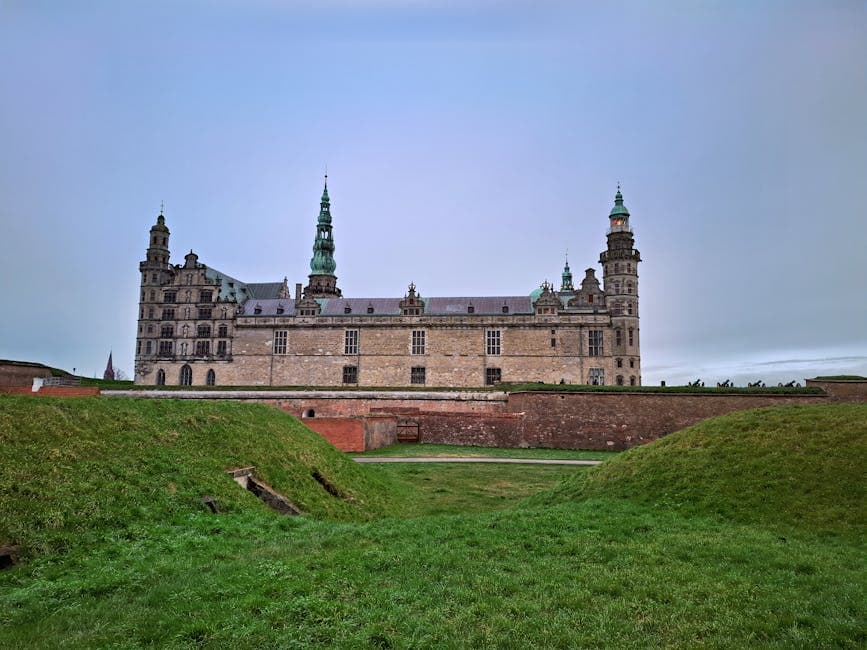
Kronborg Castle, located in Helsingør, Denmark, is one of Northern Europe's most iconic Renaissance castles, renowned for its strategic position at the narrowest point of the Øresund strait between Zealand and Scania. This fortress has played a pivotal role in maritime control, royal residence, and cultural history, notably immortalized as Elsinore in William Shakespeare's Hamlet. Its commanding location, just 4 kilometers from Sweden, underscores its historical importance in controlling naval passage and levying tolls on ships navigating the Baltic Sea.
The castle's origins date back to the early 15th century when King Erik of Pomerania established the fortress known as Krogen to enforce the Sound Dues, a toll on maritime traffic. The initial medieval fortress was a square curtain-walled complex with multiple stone buildings, including the king's residence and a large banquet hall. Over the centuries, Kronborg evolved through significant architectural and functional transformations, reflecting the changing political and military landscape of northern Europe.
Historical evolution and strategic significance
Medieval beginnings and early fortifications
The fortress began as Krogen in the 1420s, built by King Erik of Pomerania to assert Danish control over the Øresund. Its position on a sandy promontory enabled it to work in tandem with the fortress of Kärnan in Helsingborg, Sweden, to regulate and tax shipping traffic. The medieval structure featured robust brick walls and a square layout, elements of which survive today in the castle's north wing.
In the mid-16th century, King Christian III reinforced the fortress by adding bastions to the medieval curtain walls, adapting to advancements in artillery and siege warfare. These fortifications marked the transition from medieval castle defense to early modern bastioned fortresses.
Renaissance transformation under King Frederik II
Between 1574 and 1585, King Frederik II commissioned a comprehensive reconstruction of Krogen into a grand Renaissance castle, renaming it Kronborg, meaning "Crown Castle". Flemish architects Hans Hendrik van Paesschen and Anthonis van Obbergen led the design, blending military functionality with Renaissance aesthetics. The castle was expanded into a three-winged complex enclosing a large square courtyard, with the addition of a magnificent banqueting hall, royal apartments, and a chapel.
The castle also became a cultural hub under Frederik II, who sponsored theatrical performances from 1579 onward, establishing Kronborg as a center of courtly entertainment. The Trumpeter's Tower and the Queen's Gallery were notable architectural features from this period, enhancing both the castle's defensive capabilities and its ceremonial grandeur.
The devastating fire and Christian IV's restoration
In 1629, a catastrophic fire destroyed much of Kronborg, leaving only the chapel intact. King Christian IV promptly initiated restoration efforts, led by architect Hans van Steenwinckel the Younger, which lasted until 1639. The restoration faithfully preserved the castle's Renaissance character while incorporating Baroque interior elements, reflecting contemporary stylistic trends.
The rebuilt castle maintained its original layout but featured updated interiors, including richly decorated royal apartments and a grand ballroom. The chapel, spared by the fire, retained its original altar, gallery, and carved wooden furnishings, offering a rare glimpse into the castle's medieval past.
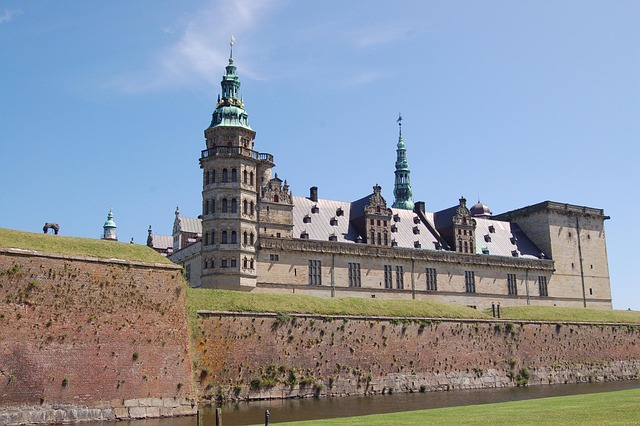
Photo by chiara_taz
Military significance and later history
Siege and fortification enhancements
During the Dano-Swedish War (1658–1660), Kronborg was besieged and captured by Swedish forces under Carl Gustaf Wrangel. The occupation resulted in the removal of valuable artworks and treasures. After the Swedish withdrawal, Danish authorities undertook extensive fortification improvements, including the construction of the Crownwork bastions and new ramparts between 1688 and 1690, solidifying Kronborg's reputation as one of Europe's strongest fortresses.
Transition to military and penal use
From 1739 into the 20th century, Kronborg served as a military prison and barracks. Prisoners were often tasked with maintaining the fortifications. Notably, Queen Caroline Mathilde was imprisoned here in 1772. The castle ceased royal residential functions in 1785 and remained in military hands until 1923, after which restoration efforts began to preserve its historical and architectural legacy.
Architectural features and interior highlights
Castle layout and construction materials
Kronborg occupies a promontory approximately 12 meters above sea level, overlooking the Øresund. The castle's layout is a square courtyard enclosed by thick curtain walls combining medieval brickwork and Renaissance sandstone facades sourced from nearby Scania. The copper-clad roofs and ornate sandstone portals exemplify Renaissance craftsmanship.
Royal apartments and ceremonial halls
The north wing houses the royal apartments, preserving original 16th-century furnishings alongside 17th and 18th-century additions. The King’s Chamber features a large bay window overlooking the main entrance, while the Queen’s Chamber connects to the Banqueting Hall via the elevated Queen's Gallery.
The Banqueting Hall, measuring approximately 62 by 12 meters, was Northern Europe's largest at its completion in 1582. It originally featured a gilded ceiling and walls adorned with tapestries depicting Danish kings. After the 1629 fire, it was rebuilt with less lavish decoration but remains a magnificent ceremonial space. Adjacent is the Little Hall, decorated with surviving tapestries illustrating a lineage of Danish monarchs.
The chapel and other notable rooms
The castle chapel, inaugurated in 1582, is notable for surviving the 1629 fire intact. It contains original carved wooden furnishings and painted panels. Converted to a gymnasium and fencing hall in the 18th century, it was restored and reopened in the 19th century.
Other significant interiors include the Scottish Suite and Frederik V’s apartments, which showcase a blend of Renaissance and later stylistic influences.
Kronborg in culture and legend
Kronborg's global fame is largely due to its identification as Elsinore in Shakespeare's Hamlet. The castle has hosted annual Shakespearean festivals since the 20th century, attracting visitors worldwide. The first recorded performance of Hamlet at Kronborg was by the castle garrison in 1816.
A legendary connection to Ogier the Dane, a mythical Danish hero said to sleep within the castle until Denmark's dire need, enriches its cultural mystique. A statue of Ogier stands in the castle casemates, symbolizing this enduring folklore.
UNESCO World Heritage status and modern preservation
In 2000, Kronborg Castle was inscribed as a UNESCO World Heritage Site in recognition of its exceptional Renaissance architecture and historical significance in maritime control and cultural heritage. Extensive 20th-century restoration efforts have preserved its structural integrity and artistic treasures, making it a premier tourist destination and a testament to Denmark's rich history.
Today, visitors can explore the castle's fortified walls, grand halls, royal chambers, and chapel, experiencing a remarkable continuity of history from medieval times through the Renaissance and beyond. Kronborg remains a vibrant cultural landmark, celebrated for its architectural splendor and its place in world literature.
Frequently asked questions (FAQ)
- What is the historical significance of Kronborg Castle?
- Kronborg Castle, also known as Hamlet's Castle, is a UNESCO World Heritage site that dates back to the late 15th century. It played a vital role in the defense of Denmark and served as a royal residence, significantly influencing European politics and culture during the Renaissance.
- When was Kronborg Castle built?
- The construction of Kronborg Castle began in 1420, but it underwent significant renovations and expansions in the following centuries, particularly during the reign of King Frederick II in the late 16th century. The castle's design reflects the transition from medieval fortifications to Renaissance architecture.
- Can I visit Kronborg Castle year-round?
- Yes, Kronborg Castle is open to visitors year-round, but hours may vary depending on the season. It’s best to check the official website for current opening hours and any special events that may affect access.
- What are the ticket prices for Kronborg Castle?
- Tickets for adults are approximately 120 DKK, while children under 18 can enter for free. There are also discounts available for students and seniors, making it an accessible attraction for families and visitors of all ages.
- Is it possible to explore the castle's grounds and gardens?
- Absolutely! Visitors are welcome to explore the beautifully landscaped gardens and grounds surrounding Kronborg Castle. The outdoor areas offer stunning views of the Øresund Strait and are a perfect spot for leisurely walks.
- What is the best time to visit Kronborg Castle?
- The best time to visit Kronborg Castle is during the spring and summer months when the weather is pleasant and outdoor activities are plentiful. Additionally, many events and reenactments take place during this time, enhancing the visitor experience.
- How do I get to Kronborg Castle from Copenhagen?
- Kronborg Castle is easily accessible from Copenhagen by train, taking about 45 minutes. Trains depart regularly from Copenhagen Central Station to Helsingør, and the castle is just a short walk from the train station.
- What nearby attractions should I visit when at Kronborg Castle?
- Nearby attractions include the Maritime Museum of Denmark and the charming old town of Helsingør, known for its picturesque streets and local shops. Additionally, the stunning beaches along the coast provide a great opportunity for relaxation after exploring the castle.
- Is Kronborg Castle accessible for visitors with disabilities?
- Yes, Kronborg Castle is committed to accessibility for all visitors. There are designated ramps and elevators to assist those with mobility challenges, ensuring that everyone can enjoy the castle's rich history and architecture.
Photo gallery

Photo by Rasmus Andersen

Information
Website
Visit websiteSources & official resources
Verify the information above using these authoritative references.
Loading map...
Visitor reviews
No reviews yet. Been here? Write the first review and help other travelers!
Write the first reviewVisited this castle? Share your experience
Your review helps other travelers and adds first-hand knowledge to our encyclopedia.


