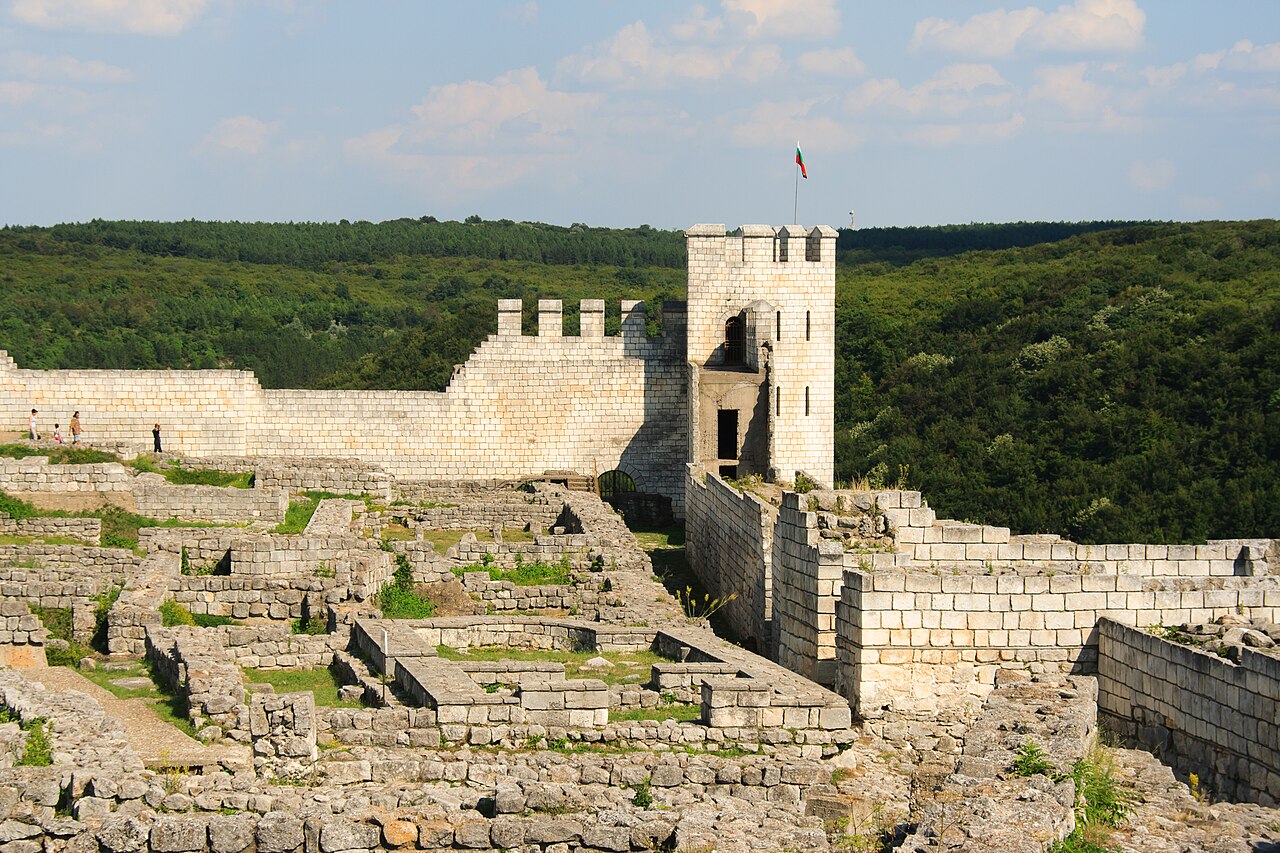
Palmatis Fortress

Palmatis fortress in Tervel, Bulgaria
Tervel, Bulgaria
Early Medieval (5th–10th c.)

Palmatis fortress is an important archaeological site dating back to the 6th century AD, located near the village of Onogur in the region of Tervel, Bulgaria. This early medieval fortress occupies a strategic position on a high plateau that descends towards a dry valley to the northeast, offering commanding views of the surrounding landscape. The fortress was part of the defensive network in the region during the period of late antiquity and the early Byzantine era.

Historical context and strategic importance

The fortress was constructed during the Early Medieval period, a time characterized by significant military and political changes in the Balkans. It was built to protect the Roman road that connected Durostorum (modern Silistra) and Marcianopolis (modern Devnya), two important urban centers of the Roman and Byzantine empires. This road was a vital artery for military movements and trade, making the fortress a key point for controlling regional communications and defense.

Architectural features and layout

The remains of Palmatis fortress reveal a typical late antiquity military architecture adapted to the natural topography of the plateau. The fortress walls were constructed to take advantage of the elevated terrain, which provided natural defense on several sides. The layout likely included defensive walls with towers, gates, and internal buildings to support the garrison stationed there, although much of the structure survives only in ruins.

Early-Christian basilica

One of the most significant archaeological discoveries within the fortress is the Early-Christian basilica dating from the reign of Emperor Justinian the Great (527–565 AD). This basilica is a testament to the religious and cultural life within the fortress during the Byzantine period. The church's remains include typical basilica features such as a nave, aisles, and an apse, reflecting the architectural style of the time.

Archaeological significance and preservation

Palmatis fortress offers valuable insights into the military and religious history of the region during the transition from Roman to Byzantine control. Excavations have uncovered artifacts and structural remains that illustrate the fortress's role in regional defense and ecclesiastical development. The site is currently classified as an archaeological site and is partially preserved, with ongoing efforts to study and protect its remains.

Visiting Palmatis fortress

Visitors to Palmatis fortress can explore the ruins set against the backdrop of the Bulgarian countryside. The site is accessible from the nearby village of Onogur and offers an opportunity to experience a lesser-known but historically rich fortress. While facilities may be limited, the fortress's location and archaeological remains provide a compelling visit for those interested in early medieval history and Byzantine architecture.

Loading map...

Visitor reviews

No reviews yet. Been here? Write the first review and help other travelers!

Write the first review

Visited this castle? Share your experience

Your review helps other travelers and adds first-hand knowledge to our encyclopedia.
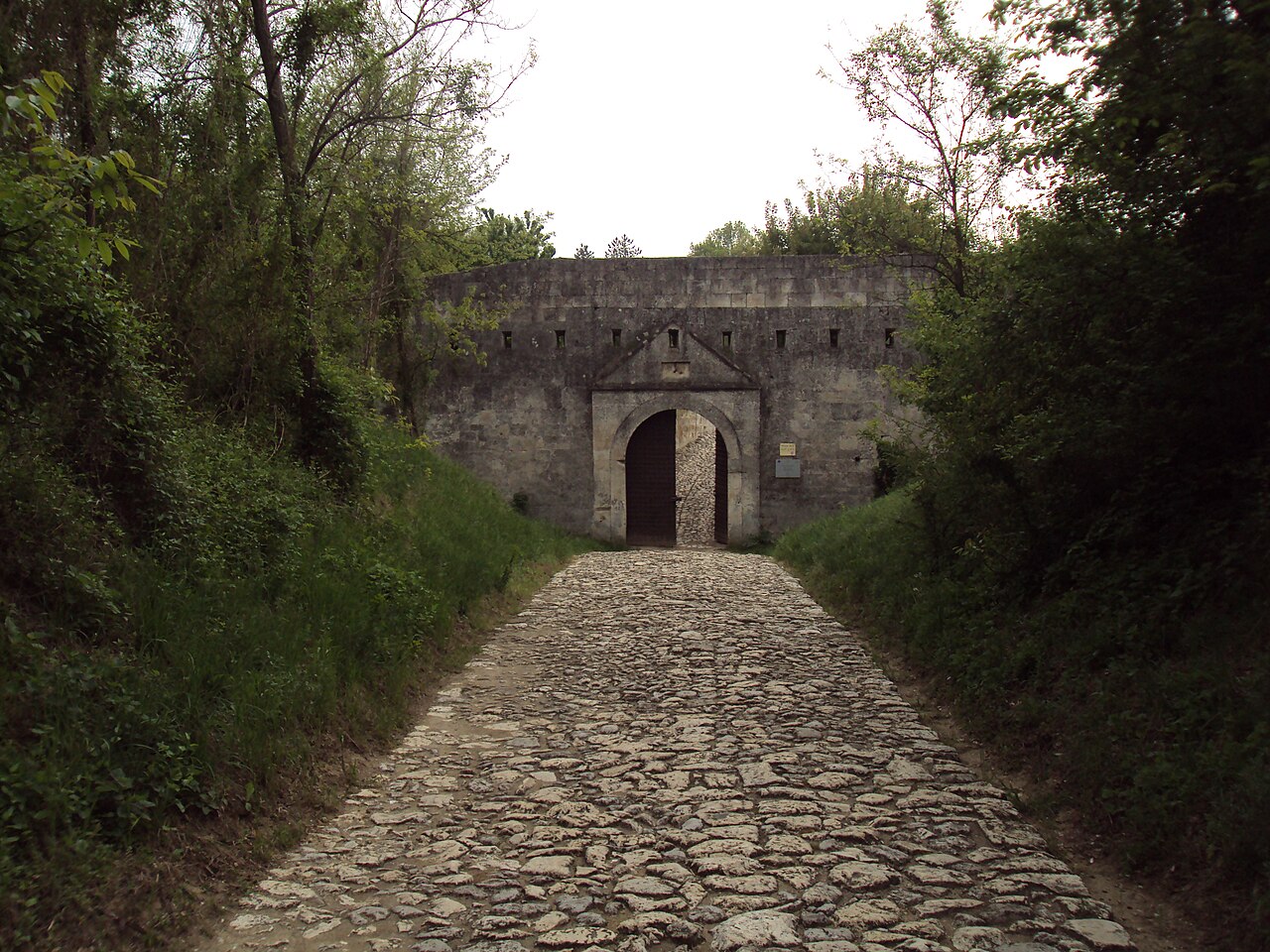
Write a review

(5/5)

0/2000 characters

Your review will be visible after admin approval

Nearby castles

41 km
Medjidi Tabia Fortress — Bulgaria castle

Medjidi Tabia Fortress

Silistra, Bulgaria

The Medjidi Tabia Fortress is a significant bastioned fortress located in Silistra, Bulgaria, constructed between 1841 and 1853. It was designed by the renowned German military engineer Helmuth von Moltke, who surveyed the site during his 1837 visit. The fortress was named after Sultan Abdulmejid I, who inspected the construction in 1847, lending his name to the structure as Majidi Tabia. Strategic importance and historical context The fortress was built during a period of intense military modernization within the Ottoman Empire, aimed at strengthening defenses along the Danube River frontier. Its location in Silistra was critical for controlling access to the Danube and defending against incursions from the north. The fortress's construction reflects the 19th-century military architectural trends, incorporating bastioned fortifications designed to withstand artillery sieges. Architectural design and features Medjidi Tabia is characterized by its bastioned layout, which includes angular bastions projecting outward from the curtain walls to provide overlapping fields of fire. This design was a departure from medieval castle styles, embracing modern principles of fortification to counter artillery threats. The fortress features thick, sloped walls built to absorb and deflect cannon fire, and a complex system of moats and earthworks that enhanced its defensive capabilities. The internal layout included barracks, ammunition depots, and command posts, all arranged to support a garrison capable of sustained defense. The fortress's walls are punctuated by embrasures and firing positions optimized for muskets and cannons. The siege of Silistria during the Crimean War In 1854, the fortress gained historical prominence during the Crimean War when it withstood a prolonged month-long siege by Russian forces. The Siege of Silistria was a key episode in the conflict, demonstrating the fortress's strategic value and the effectiveness of its modern bastioned design. Despite intense bombardment and assaults, the defenders held out, contributing to the eventual failure of the Russian campaign in the region. Later history and current status Following its military use, the fortress gradually lost strategic importance as warfare evolved and borders shifted. Today, Medjidi Tabia Fortress is preserved as a museum, offering visitors insight into Ottoman military architecture and the historical events of the mid-19th century. The site includes exhibitions on the Crimean War and the fortress's role in regional defense. The fortress remains in well-preserved condition, with much of its original structure intact, including bastions, walls, and internal buildings. Its preservation allows for detailed study of 19th-century bastioned fortifications and serves as a cultural landmark in Silistra. Visiting information and cultural significance Visitors to Medjidi Tabia Fortress can explore the extensive fortifications and learn about the military engineering innovations of the era. The museum provides educational programs and guided tours that highlight the fortress's architectural features and historical context. The fortress stands as a reminder of the Ottoman Empire's military efforts to modernize its defenses and the turbulent history of the Danube frontier during the 19th century. It is an important cultural heritage site in Bulgaria, attracting historians, architecture enthusiasts, and tourists interested in military history.

Modern (19th–20th c.)
Details
73.1 km

Ovech Fortress

Provadia, Bulgaria

Ovech Fortress is a significant stone stronghold situated east of the town of Provadia in Bulgaria. This fortress occupies a strategic rocky plateau, commanding views over the surrounding landscape, which made it a vital military and administrative center through multiple historical periods. Archaeological research has revealed that the site was initially used from the 3rd century AD, continuing through the first decades of the 7th century, and then reoccupied from the 10th to the 11th centuries until the late 17th century. This long span of use reflects the fortress's importance across different eras and cultures. Historical significance and cultural succession The fortress was inhabited successively by several major civilizations: Thracians, Romans, Byzantines, Bulgarians, and Ottoman Turks. Each culture left its imprint on the fortress's structure and function. The site is closely linked to notable historical events and figures, such as the reign of Tsar Ivaylo (1277–1280), a Bulgarian ruler known for his peasant uprising and defense of the Bulgarian state. The fortress also played a role during the crusade of Amadeus IV, Count of Savoy in 1366 and the crusade of Vladislav Varnenchik in 1444, marking its strategic military importance in medieval conflicts. Architectural features and layout Ovech Fortress is characterized by its impressive stone fortifications adapted to the natural rock formations of the plateau. It has three main entrances, each with unique features: The eastern entrance retains its original form, including stairs carved directly into the rock, providing a rugged and authentic access route that is still usable today, especially for visitors arriving by private transport. The western entrance connects to the town of Provadia via a distinctive spiral staircase consisting of 111 steps, showcasing medieval engineering adapted to the terrain. The northern entrance serves as the main gateway to the fortress. A 150-meter-long bridge structure links this entrance to the adjacent Tabiite Plateau, facilitating access and defense. Key internal structures Inside the fortress, several notable features attract visitors and historians alike: The 79-meter-deep well, known as the "talking well," was a crucial water source during sieges and remains a remarkable example of medieval engineering. The bishop’s church reflects the religious significance of the fortress during its peak periods. The knight’s prison and the tower with the devil’s path highlight the military and defensive aspects of the fortress. The Friars’ holes are another intriguing feature, possibly used for refuge or storage. The golden age of Ovech Fortress The fortress reached its zenith between the 12th and 14th centuries, when it functioned as a multifaceted center encompassing military, religious, economic, and administrative roles. During this period, it was a key stronghold in the region, contributing to the defense and governance of the surrounding territories. Visiting Ovech Fortress today The fortress is open year-round to visitors, offering a rich historical experience. Access is facilitated by the preserved entrances and stairways, and a guide from the Museum of History of Provadia is available to provide detailed explanations of the site's history and features. Visitors can also find informational materials and souvenirs on site, enhancing the educational and cultural value of the visit. Ovech Fortress stands as a well-preserved testament to Bulgaria's medieval heritage, combining natural rock formations with human ingenuity in fortification architecture. Its layered history and diverse cultural influences make it a valuable destination for those interested in medieval military architecture and Bulgarian history.

Early Medieval (5th–10th c.)
Details
84.1 km
Shumen Fortress — Bulgaria castle

Shumen Fortress

Shumen, Bulgaria

Shumen Fortress is a prominent archaeological site located on a strategic hill overlooking the city of Shumen in north-eastern Bulgaria. This ancient fortress embodies a rich historical tapestry spanning from the early Iron Age through the medieval Bulgarian Empires. Its remains offer insight into the defensive architectures and cultural influences that shaped the region over millennia. Early history and Iron Age origins The site of Shumen Fortress has evidence of human settlement dating back to the early Iron Age. Archaeological findings indicate that a village existed nearby during this period, which was later inhabited by the Thracians in the 5th century BC. The Thracians were known for their fortified settlements and warrior culture, which laid the groundwork for the fortress's later military significance. Roman and Byzantine fortifications Between the 2nd and 4th centuries AD, the fortress came under Roman control. The Romans constructed robust stone towers and walls as part of their efforts to secure the empire's northern territories. These fortifications were designed to withstand sieges and control key routes. Following the Roman period, the fortress was refurbished by the Byzantines, who maintained it as a garrison town. This phase saw the continuation and enhancement of the defensive structures, adapting them to the military needs of the Byzantine Empire in the region. Role in the First and Second Bulgarian Empires The First Bulgarian Empire, founded by the Ancient Bulgars in the late 7th century AD, incorporated Shumen Fortress into a network of fortifications protecting the capitals of Pliska and Preslav, as well as the religious center of Madara. During this period, the fortress was a vital military and administrative center, guarding the empire's northeastern approaches. Shumen's importance fluctuated over the centuries. It functioned as a minor fort during the 10th to 12th centuries, a period marked by reduced military activity and economic decline. However, the fortress regained prominence in the 13th century as the Second Bulgarian Empire re-established itself, serving as a political and economic hub. In 1278, during the Uprising of Ivaylo, the fortress gained additional significance when the Byzantines temporarily seized the nearby capital of Preslav. Shumen became an important administrative and military center during this turbulent era. 14th-century zenith and Ottoman conquest The 14th century marked the fortress's peak as a well-developed citadel, reflecting the architectural and military advancements of the time. Its walls and towers were reinforced, and it served as a critical stronghold against external threats. In 1388, the fortress fell to the Ottoman Turks during a campaign led by their first vizier, Çandarlı Ali Pasha. This conquest marked the beginning of Ottoman dominance in the region. The fortress's final destruction came in 1444, following the Battle of Varna, where the Ottomans defeated a Christian coalition led by Władysław III of Poland. The Ottomans demolished the fortifications to prevent its future military use, leaving the fortress deserted thereafter. Archaeological excavations and modern restoration Systematic archaeological excavations at Shumen Fortress began in 1957, uncovering numerous artefacts and structural remains that illuminate its complex history. Excavations revealed fortress walls, towers, and the foundations of monasteries and churches at the fortress's foot, some of which were reconstructed in the 1980s. Restoration efforts intensified in the early 21st century, with a major project titled "Bulgaria Begins Here" commencing in 2012. Supported by the European Economic Area (EEA) and Norway Grants, the project aimed to preserve and promote the fortress as a cultural heritage site. By 2015, restoration works had stabilized the fortress walls, created visitor pathways, and installed turnstiles to manage access. Additional infrastructure included artistic lighting, climate control equipment for preservation, and informative brochures to enhance the visitor experience. These improvements have made the site accessible and engaging for tourists and scholars alike. Architectural features and layout The fortress occupies a naturally defensible hilltop, utilizing the terrain for strategic advantage. Its layout includes remnants of stone walls that once enclosed the settlement, with defensive towers positioned at key points to provide overlapping fields of fire. Excavations have uncovered the foundations of religious buildings, reflecting the fortress's role as not only a military installation but also a spiritual center during the medieval period. The presence of monasteries and churches indicates a settled community with ecclesiastical importance. Visiting Shumen Fortress today Today, Shumen Fortress stands as a significant archaeological ruin open to the public. Visitors can explore the extensive remains, walk along the restored walls, and learn about the site's layered history through onsite information and museum exhibits in Shumen city. The fortress's elevated position offers panoramic views of the surrounding landscape, providing context to its historical role in regional defense. The site is a valuable destination for those interested in Balkan history, medieval fortifications, and Bulgarian cultural heritage.

Early Medieval (5th–10th c.)
Details