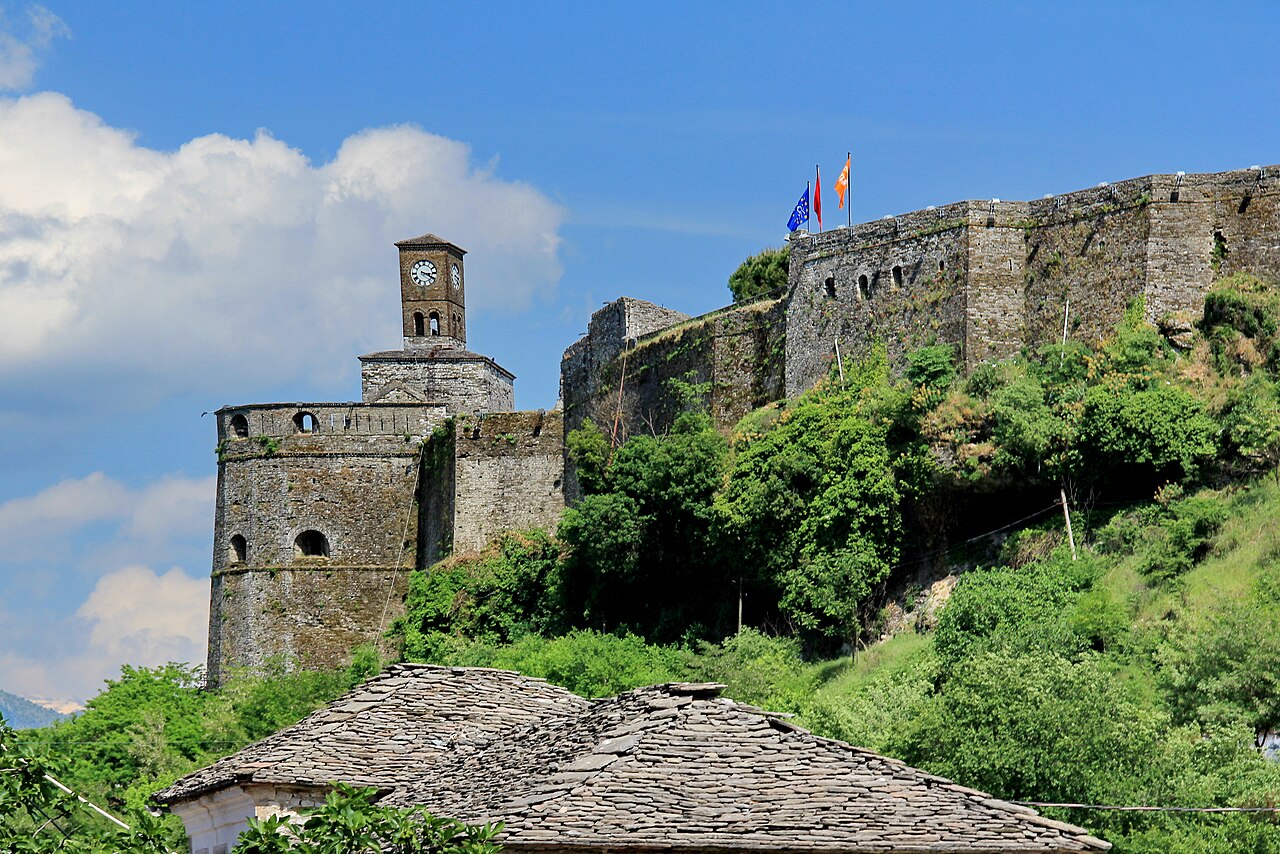
Paleokastrë Castle
Paleokastrë Castle, locally known as Kalaja e Paleokastrës, is situated north of the village of Palokastër in the Gjirokastër county of southern Albania. This site represents an important example of an early medieval Roman military fortification, originally constructed during the late 3rd or early 4th century AD. The castle occupies a strategic position on a river terrace formed at the confluence of the Drino and Kardhiq rivers, which provided natural defensive advantages and control over the surrounding landscape.
Roman origins and strategic importance
The castle began its life as a Roman castrum, a fortified military camp designed to secure Roman territorial control in the region. Its construction in the 4th century aligns with a period of increasing military fortifications across the Roman Empire, as external pressures from migrating tribes and internal instability prompted enhanced defensive measures. The location on the river terrace was carefully chosen to oversee key waterways and facilitate communication and supply routes.
Destruction and reconstruction during the late antiquity
Paleokastrë Castle suffered significant damage in 378 AD when it was destroyed by invading Goths during their incursions into the Balkans. This event coincided with the broader period of turmoil known as the Migration Period, which saw numerous barbarian invasions that contributed to the weakening of Roman authority in the region.
Despite this destruction, the castle was rebuilt in the 5th century, reflecting its continued strategic value. The reconstruction phase included adaptations typical of late Roman military architecture, possibly incorporating early Byzantine influences as the Eastern Roman Empire sought to maintain control over the area. The site remained inhabited and functioned as a defensive stronghold until approximately the 6th century.
Archaeological discoveries and religious significance
Excavations conducted in the 1970s revealed important archaeological remains, including the foundations of two churches dating from the 5th and 6th centuries. These findings highlight the site's dual military and religious roles during late antiquity. The presence of churches within the castle complex suggests a settled community with established Christian practices, reflecting the broader Christianization of the Roman Empire during this period.
Architectural features and layout
While much of the original structure of Paleokastrë Castle lies in ruins, the archaeological evidence points to a typical Roman castrum layout, likely rectangular or trapezoidal in shape, with defensive walls enclosing the interior space. The walls would have been constructed of stone, reinforced with towers and gates positioned to maximize defensive capabilities. The castle's elevated position on the river terrace enhanced its natural defenses against attackers.
The uncovered churches within the castle indicate the inclusion of religious architecture integrated into the military complex, a feature common in late Roman and early Byzantine fortifications. The churches' foundations suggest basilica-style structures with apses, consistent with ecclesiastical architecture of the time.
Current condition and visitor experience
Today, Paleokastrë Castle is classified as an archaeological site. The remains are partially preserved, with visible foundations and some wall segments accessible to visitors. The site is freely accessible, allowing visitors to explore the ruins and appreciate the castle's strategic location amidst the fields and rivers.
Although the visible remains are limited, the castle's setting offers a tranquil atmosphere and a glimpse into the region's early medieval history. Its solitude and natural surroundings provide a unique experience for those interested in Roman military architecture and late antiquity archaeology.
Historical context and regional significance
Paleokastrë Castle serves as a valuable example of the military and religious transformations that occurred in the Balkans during the transition from Roman to Byzantine control. Its history reflects the broader patterns of conflict, reconstruction, and cultural change in the region during the early medieval period.
The castle's strategic riverside location underscores the importance of controlling waterways for defense and communication in late antiquity. It also illustrates the Roman Empire's efforts to fortify its borders against increasing external threats during the 4th and 5th centuries.
Nearby archaeological and cultural sites
The Gjirokastër region, where Paleokastrë Castle is located, is rich in historical and archaeological sites, including Ottoman-era castles and traditional settlements. Visitors to Paleokastrë can also explore these nearby landmarks to gain a broader understanding of the area's layered history.
Frequently asked questions (FAQ)
- How do I get to Paleokastrë Castle?
- Paleokastrë Castle is located north of the village of Palokastër in Gjirokastër county, Albania. Visitors can reach the site by car or local transport from Gjirokastër city, followed by a short walk to the castle ruins.
- What can I see at Paleokastrë Castle?
- Visitors can explore the archaeological remains of the Roman castrum, including foundations of defensive walls and two early Christian churches dating from the 5th and 6th centuries.
- Is Paleokastrë Castle suitable for a day trip?
- Yes, Paleokastrë Castle can be visited as a day trip from nearby towns. The site offers a quiet setting and insight into early medieval military and religious architecture.
- When was Paleokastrë Castle built and destroyed?
- The castle was originally built in the late 3rd or early 4th century and was destroyed by the Goths in 378 AD. It was later rebuilt in the 5th century and inhabited until the 6th century.
- Is there an entrance fee to visit Paleokastrë Castle?
- There is no entrance fee to visit Paleokastrë Castle. The site is freely accessible to the public.
Information
Loading map...
Visitor reviews
No reviews yet. Been here? Write the first review and help other travelers!
Write the first reviewVisited this castle? Share your experience
Your review helps other travelers and adds first-hand knowledge to our encyclopedia.