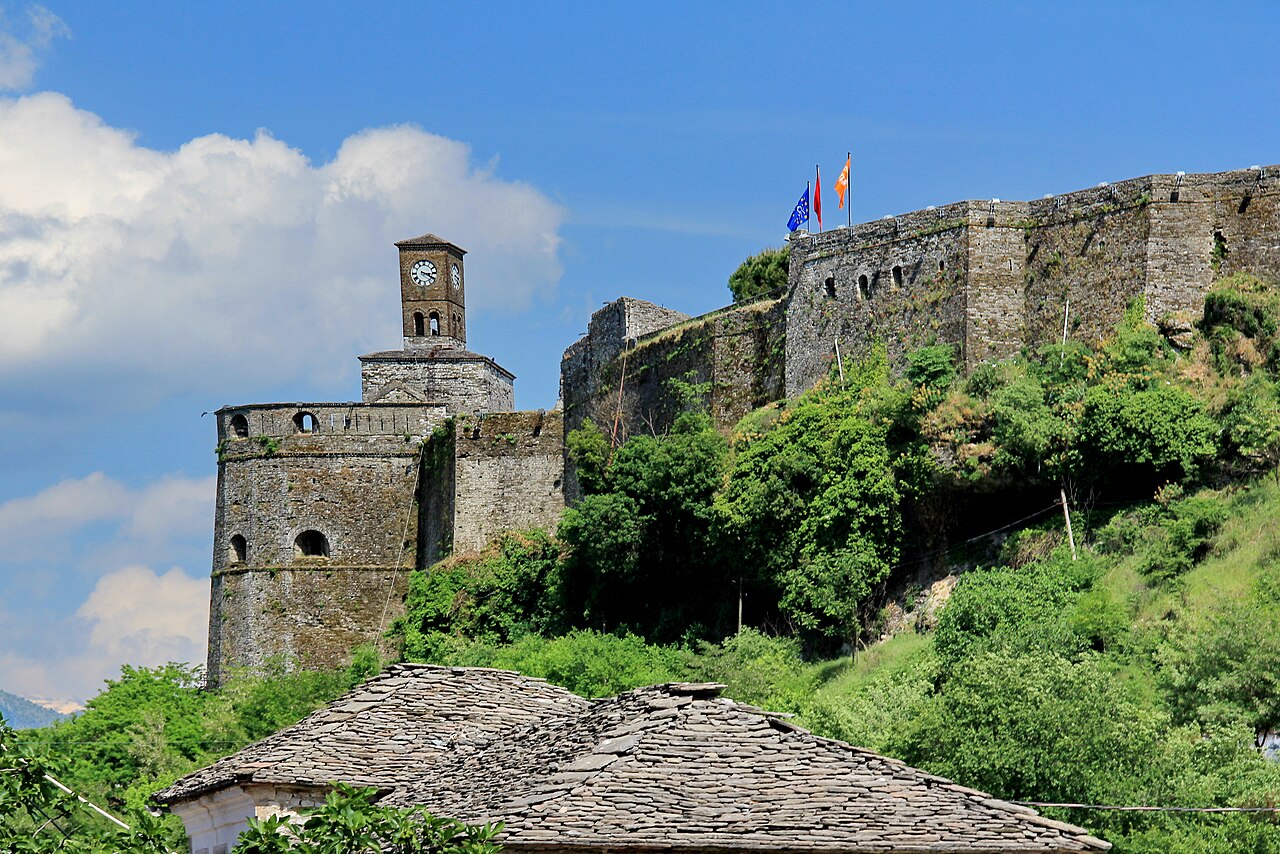
Kardhiq Castle
Kardhiq Castle, known locally as Kalaja e Kardhiqit, is a late medieval fortress located in the hamlet of Kardhiq in the Gjirokastër county of southern Albania. This hill castle stands prominently overlooking the valley of the Kardhiq River, commanding strategic views of the surrounding landscape. Constructed between the late 14th and early 15th centuries, it was originally built by the feudal Zenebishi family as a defensive stronghold against the expanding Ottoman Empire.
Historical context and origins
The castle first appears in historical records in the 1431–32 register of the Sanjak of Albania, by which time it had already fallen under Ottoman control. The Zenebishi family, notable local feudal lords, initiated the construction to protect their domain from Ottoman incursions during a period of intense military and political upheaval in the Balkans. The castle's early history is closely tied to the struggle between local Albanian nobility and the advancing Ottoman forces.
Architectural features and layout
Kardhiq Castle is a hill castle with a distinctive pentagonal plan featuring five corner towers. Of these towers, two are polygonal in shape, while the remaining three are rectangular. The walls of the castle are approximately 1.7 metres thick and include turrets that would have served defensive purposes such as providing vantage points for archers or artillery.
The main tower is notable for its polygonal form and a unique smooth band encircling it. This feature is uncommon and its exact purpose remains uncertain; it may represent a later repair or the site of a former inscription. The main tower's design bears resemblance to other fortifications associated with Ali Pasha of Ioannina, who undertook restoration work on the castle in the early 19th century.
Restoration by Ali Pasha
In the early 1800s, Ali Pasha of Ioannina, an influential Albanian Ottoman ruler known for his quasi-independent governance, restored Kardhiq Castle. His renovations aligned the castle's architectural style with other fortresses under his control, such as the nearby Libohovë Castle. The polygonal towers and robust defensive features reflect the military architectural trends of his era.
Location and accessibility
Situated on a hill, Kardhiq Castle offers commanding views over the Kardhiq River valley, an important geographical feature that contributed to its strategic significance. The castle is now a ruined fortress, partially overgrown but still accessible to visitors. Access requires locating a small path through the village structures, which can be somewhat challenging due to the terrain and vegetation.
Cultural and historical significance
Kardhiq Castle exemplifies the late medieval military architecture of the region and reflects the turbulent history of Albania during the Ottoman expansion. Its association with the Zenebishi family and later Ali Pasha of Ioannina connects it to significant historical figures and events in Albanian and Ottoman history. The castle's design and restoration highlight the evolution of defensive strategies in the Balkans from the 15th to the 19th centuries.
Preservation status
Today, Kardhiq Castle remains a ruined hill fortress with several towers still standing. The site is not extensively restored but retains important architectural elements that allow for study and appreciation of its historical context. The castle's walls, towers, and layout provide valuable insight into the military architecture of the period.
Visiting Kardhiq Castle
Visitors to Kardhiq Castle can explore the ruins freely, though the site is somewhat overgrown and requires careful navigation. The castle's remote location and natural surroundings offer a unique experience for those interested in medieval fortifications and Albanian history. While facilities are limited, the castle's evocative ruins and scenic setting make it a worthwhile destination for history enthusiasts and hikers alike.
Frequently asked questions (FAQ)
- How do I get to Kardhiq Castle?
- Kardhiq Castle is located in the village of Kardhiq, Albania, approximately 15 kilometers from the city of Gjirokastër. You can reach the castle by car or local transport, and there are signs guiding visitors from the main road. The scenic route offers beautiful views of the surrounding landscapes.
- What is the historical significance of Kardhiq Castle?
- Kardhiq Castle dates back to the Byzantine era and played a crucial role in the region's defense throughout history. It served as a strategic point during various conflicts, particularly during the Ottoman period. The castle is a testament to the rich history and cultural heritage of Albania.
- When was Kardhiq Castle built?
- Kardhiq Castle was originally built in the 5th century, with subsequent renovations and expansions occurring over the centuries. The castle's structures reflect various architectural styles that evolved over time, showcasing its historical importance. It stands today as a symbol of resilience and architectural ingenuity.
- Can I enter Kardhiq Castle?
- Yes, visitors can enter Kardhiq Castle and explore its ruins and surrounding areas. While some parts of the castle may have limited access due to restoration efforts, the site offers a fascinating glimpse into Albania's historical past. Be sure to bring comfortable shoes for walking around the uneven terrain.
- Why is Kardhiq Castle a popular tourist attraction?
- Kardhiq Castle attracts visitors due to its stunning panoramic views and its rich historical background. The castle's location atop a hill provides breathtaking vistas of the surrounding countryside, making it a great spot for photography. Additionally, its historical significance draws history enthusiasts from all over.
- Is it possible to visit Kardhiq Castle year-round?
- Yes, Kardhiq Castle is open to visitors year-round, although the best time to visit is during the spring and fall when the weather is mild. Summer can be hot, while winter may bring colder temperatures and potential snow. Regardless of the season, the castle offers a unique experience for all visitors.
- What are the opening hours for Kardhiq Castle?
- Kardhiq Castle is typically open from 9 AM to 6 PM during the tourist season, which runs from April to October. In the off-season, hours may vary, so it’s advisable to check in advance before your visit. Planning your trip during opening hours will ensure you have ample time to explore the site.
- Are there any ticket prices for visiting Kardhiq Castle?
- Entrance to Kardhiq Castle is generally free, making it an accessible site for all visitors. However, occasional guided tours may have a fee, which can enhance your experience by providing in-depth historical context. Always check local resources for any changes in pricing before your visit.
- What nearby attractions can I visit when I go to Kardhiq Castle?
- While visiting Kardhiq Castle, you can also explore the nearby city of Gjirokastër, known for its well-preserved Ottoman architecture and UNESCO World Heritage status. Additionally, the natural beauty of the Drino Valley offers hiking and outdoor activities. These attractions complement the historical experience of the castle with cultural and scenic exploration.
Information
Loading map...
Visitor reviews
No reviews yet. Been here? Write the first review and help other travelers!
Write the first reviewVisited this castle? Share your experience
Your review helps other travelers and adds first-hand knowledge to our encyclopedia.