Ozalj Castle
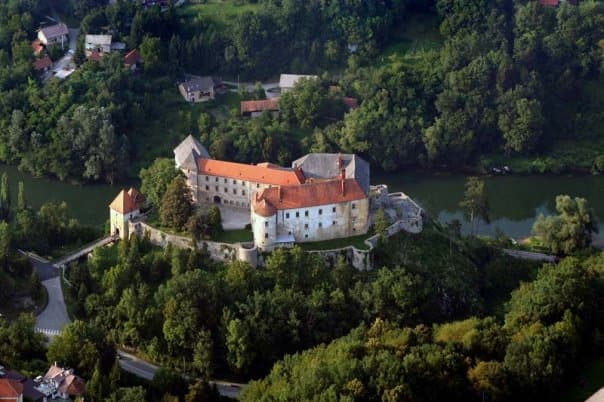
Ozalj Castle stands as a remarkable example of medieval fortification perched dramatically on a stone cliff overlooking the Kupa River in Karlovac County, Croatia. This fortress is not only an architectural gem but also a monument steeped in Croatian history, particularly noted for its association with the noble families of Frankopan and Zrinski. The castle's origins trace back to the 13th century, although the site itself bears evidence of much earlier occupation, including remnants of ancient Roman walls dating from the 6th century. This layered history makes Ozalj Castle a unique palimpsest of architectural and cultural evolution.
Early history and architectural evolution
The earliest stone constructions at Ozalj likely began in the 6th century, as indicated by the surviving Roman masonry fragments. However, the castle as it is recognized today primarily began taking shape in the high medieval period, with the first written record dating to 1244, when it came under royal possession. Over the centuries, the fortress was expanded and modified by successive noble families, each leaving their architectural imprint.
Medieval fortifications and layout
The castle complex is architecturally diverse, reflecting construction phases from different eras. Visitors enter the old town via a distinctive wooden bridge, historically movable until 1821. The bridge’s central supporting column is particularly notable; originally a guardhouse tower equipped with arrow slits for defense, its lower section is triangular while the upper part is quadrangular, showcasing medieval military architectural ingenuity.
The entrance leads into a fortified complex featuring several key elements: the entrance tower built in 1599 by Juraj IV Zrinski, a smaller adjacent tower, the imposing main tower, and the Babonić tower, which is the oldest surviving part of the castle. Surrounding these are the southern, eastern, and northern wings, each a substantial two-story building, and the Palas Zrinskih, the residential palace of the Zrinski family.
Renaissance and baroque transformations
In the 18th century, Ozalj Castle underwent significant restoration and transformation, shifting from a purely defensive fortress to a more refined residence. The castle was extensively remodeled under the ownership of the Perlas and Batthyány families. The Perlas family demolished parts of the older structures, while Teodor Batthyány added a second floor to the northern wing and constructed a new Baroque tract, enhancing the castle’s residential comfort and aesthetic appeal.
One of the notable adaptations was the conversion of the former Palas, long thought to be the oldest building in the complex, into a grain warehouse. This building became known as the Žitnica, reflecting its new agricultural function.
Historical significance and notable events
Ozalj Castle holds an important place in Croatian history. It was the shared stronghold of two of Croatia’s most influential noble families, the Frankopans and the Zrinskis. The castle was a central site during the Zrinski–Frankopan conspiracy, a significant but ultimately tragic episode in Croatian history in the late 17th century, where these noble families opposed Habsburg rule.
The castle's strategic location and robust fortifications made it a key defensive site and a symbol of noble power in the region. Its preservation allows insight into the military and residential architecture of the medieval and early modern periods in Croatia.
Current condition and visitor experience
Today, Ozalj Castle is in a well-preserved state, offering visitors a rich historical experience. The castle houses a museum and a library, providing cultural and educational resources that deepen the understanding of the castle’s past and the families who shaped it.
The castle complex invites exploration of its towers, courtyards, and historic halls, with interpretive displays that highlight its architectural evolution and historical context. Visitors can appreciate the blend of medieval fortification elements with later Renaissance and Baroque modifications, all set against the scenic backdrop of the Kupa River valley.
Architectural highlights
- Babonić tower: The oldest surviving tower, a testament to the castle's medieval origins.
- Entrance tower: Constructed in 1599, a key defensive and ceremonial gateway.
- Wooden bridge and guardhouse tower: Unique structural feature with a triangular base and quadrangular upper section.
- Palas Zrinskih: The noble residence reflecting Renaissance and Baroque influences.
- Baroque tract: Added by Teodor Batthyány, showcasing 18th-century architectural style.
Cultural heritage and legacy
Ozalj Castle remains a symbol of Croatian noble heritage and resilience. Its association with the Frankopan and Zrinski families links it to pivotal moments in Croatia’s struggle for autonomy and identity. The castle’s preservation and continued use as a museum and cultural site ensure that its legacy endures, attracting scholars, tourists, and history enthusiasts alike.
Its architectural diversity, from Roman remnants to medieval fortifications and Baroque enhancements, offers a comprehensive narrative of the region’s historical and cultural transformations over more than a millennium.
Frequently asked questions (FAQ)
- What is the historical significance of Ozalj Castle?
- Ozalj Castle has a rich history dating back to the 13th century, serving as a strategic fortress and residence for various noble families. Its architectural style reflects the evolution of medieval fortifications, and it played a crucial role in the region's defense against invaders. Today, it stands as a testament to Croatia's medieval heritage.
- When was Ozalj Castle built?
- Ozalj Castle was originally constructed in the early 13th century, with significant modifications and expansions occurring in the following centuries. The castle's design showcases elements from different architectural periods, making it an interesting site for history enthusiasts. Its long-standing presence has allowed it to witness many historical events in the region.
- Can I visit Ozalj Castle?
- Yes, Ozalj Castle is open to visitors who wish to explore its historic grounds and learn about its fascinating history. Guided tours are often available, providing insights into the castle's architecture and the lives of those who once inhabited it. Be sure to check the official website for current visiting hours and tour availability.
- What are the opening hours for Ozalj Castle?
- Ozalj Castle typically opens to visitors from 10 AM to 6 PM during the peak tourist season, but hours may vary in the off-season. It’s recommended to check the castle's official website or contact them directly for the most accurate and updated information regarding opening times. Planning your visit accordingly can enhance your experience.
- Is it possible to access Ozalj Castle with limited mobility?
- Ozalj Castle has some accessibility features, but due to its historical structure, certain areas may present challenges for visitors with limited mobility. It’s advisable to contact the castle staff before your visit to inquire about specific accessibility options available. They can provide guidance on the best ways to enjoy your visit.
- What are the ticket prices for visiting Ozalj Castle?
- Ticket prices for Ozalj Castle are generally affordable, making it accessible for most visitors. Discounts may be available for students, seniors, and families, so be sure to ask about any applicable promotions when purchasing your tickets. Prices can vary based on the time of year and any special events taking place.
- When is the best time to visit Ozalj Castle?
- The best time to visit Ozalj Castle is during the spring and early autumn months when the weather is mild and pleasant. These seasons typically see fewer crowds, allowing for a more intimate experience while exploring the castle grounds. Additionally, the surrounding landscape is particularly beautiful during these times.
- What nearby attractions should I consider while visiting Ozalj Castle?
- While visiting Ozalj Castle, you can explore the charming town of Ozalj, which offers picturesque views and local dining options. Nearby attractions include the Kupa River, ideal for nature lovers, and the beautiful landscapes of the surrounding countryside. These sites can enhance your visit and provide a fuller experience of the region.

Information
Loading map...
Visitor reviews
No reviews yet. Been here? Write the first review and help other travelers!
Write the first reviewVisited this castle? Share your experience
Your review helps other travelers and adds first-hand knowledge to our encyclopedia.