Novigrad na Dobri Castle
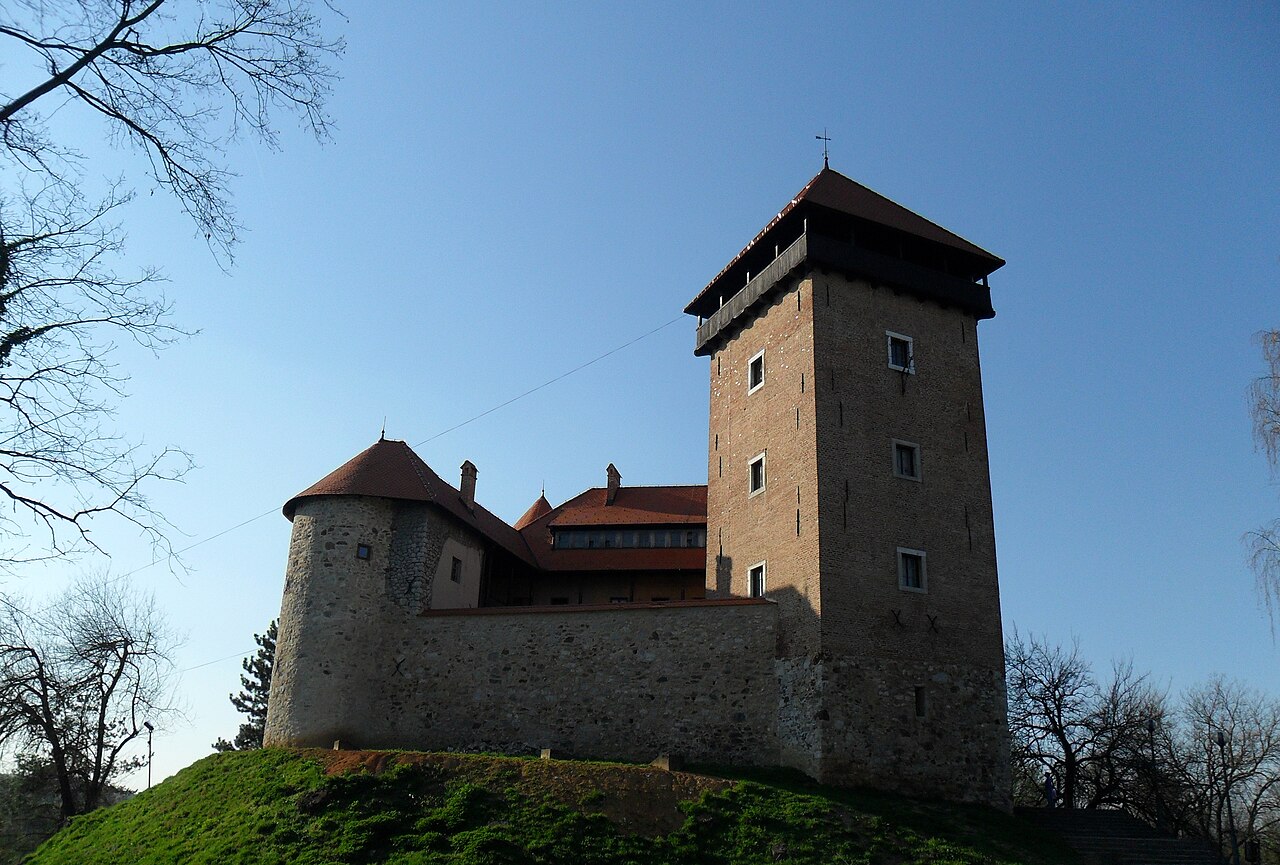
Novigrad na Dobri Castle stands prominently above the river Dobra and the bridge crossing it, near the town of Netretić in Croatia. This historic fortress was constructed in the 14th century during the late medieval period, originally serving as a defensive stronghold for the Frankopan noble family. Positioned west of the city of Karlovac, Novigrad has witnessed centuries of military, political, and architectural transformations, reflecting the turbulent history of the region.
Origins and early history
The exact date when Novigrad first appeared is uncertain, but its name suggests it was a "new town" possibly built near or replacing an older settlement. Historical sources mention the "old Dobra" as an established center as early as 1193, indicating the strategic importance of this location along the river.
The Frankopan family, a powerful Croatian noble house, acquired this property in the 14th century when Count Gaspar Frankopan Trzacki purchased the nearby town of Ozalj. Novigrad Castle was built approximately fifty years later, evolving from a simple defensive tower into a fortified castle complex.
Architectural evolution and features
Originally constructed as a medieval fortress, Novigrad was designed to control the river crossing and protect the surrounding lands. Over the centuries, the castle underwent significant modifications. From its initial form as a defensive tower, it expanded into a walled fortress featuring fortified walls, battlements, and towers that enhanced its defensive capabilities.
During the 18th century, under the ownership of Baron Patacic, the castle was transformed into a Baroque mansion with a romantic ambiance. This renovation introduced more refined architectural elements, blending the fortress's military character with residential comfort and aesthetic appeal.
The castle's location along the historic Karolina road—constructed between 1726 and 1732—further emphasized its strategic and logistical importance. A memorial plaque above the entrance once commemorated the stay of Austrian Emperor Joseph II in 1783, highlighting Novigrad's role as a significant noble residence.
Historical significance and events
Novigrad na Dobri played a notable role during the preparation of the Zrinski-Frankopan conspiracy in the 17th century. It was one of the key locations where Frank Krsto Frankopan planned an armed rebellion against the ruling Habsburg court. This conspiracy aimed to resist Habsburg centralization and defend Croatian autonomy but ultimately led to severe repercussions for the noble families involved.
After the failed conspiracy and the execution of the Zrinski and Frankopan leaders in 1671, Novigrad suffered significant decline. The fortress was occupied by Krajina general Josip Herberstein, commander of Karlovac, and experienced looting and devastation. The once luxuriously equipped palace began to decay, reflecting the broader decline of Frankopan properties.
In 1809, the castle was acquired by French Major Haraminčić, and later in 1939, it became property of the Banovina of Croatia. The castle endured further damage during World War II, particularly in 1944, after which it was largely abandoned and left to deteriorate.
Preservation and restoration efforts
Despite its decline, Novigrad na Dobri was recognized for its cultural and historical value. In 1969, the Regional Institute for the Protection of Cultural Monuments in Zagreb included it in the Registry of Immovable Cultural Monuments, acknowledging its significance as a heritage site.
Restoration efforts began in 1999, initiated by the Society of Friends of Novigrad na Dobri “Frankopan”. These conservation projects aimed to stabilize the ruins, restore basic dimensions, and revive Novigrad as a recognizable landmark in the landscape. The restoration has focused on preserving the castle's medieval and baroque architectural elements, highlighting its layered history.
Architectural and cultural importance today
Today, Novigrad na Dobri Castle stands as a partially restored late medieval fortress with significant baroque modifications. Its elevated position above the river and bridge continues to dominate the surrounding landscape, providing insight into the defensive strategies and noble lifestyles of past centuries.
The castle's association with the Frankopan family and its role in Croatian history make it an important cultural monument. Visitors can appreciate the blend of military architecture and residential refinement, as well as the castle's connection to key historical events such as the Zrinski-Frankopan conspiracy.
Ongoing preservation efforts ensure that Novigrad remains a visible link to Croatia's medieval and early modern past, contributing to regional identity and heritage tourism.
Information
Loading map...
Visitor reviews
No reviews yet. Been here? Write the first review and help other travelers!
Write the first reviewVisited this castle? Share your experience
Your review helps other travelers and adds first-hand knowledge to our encyclopedia.