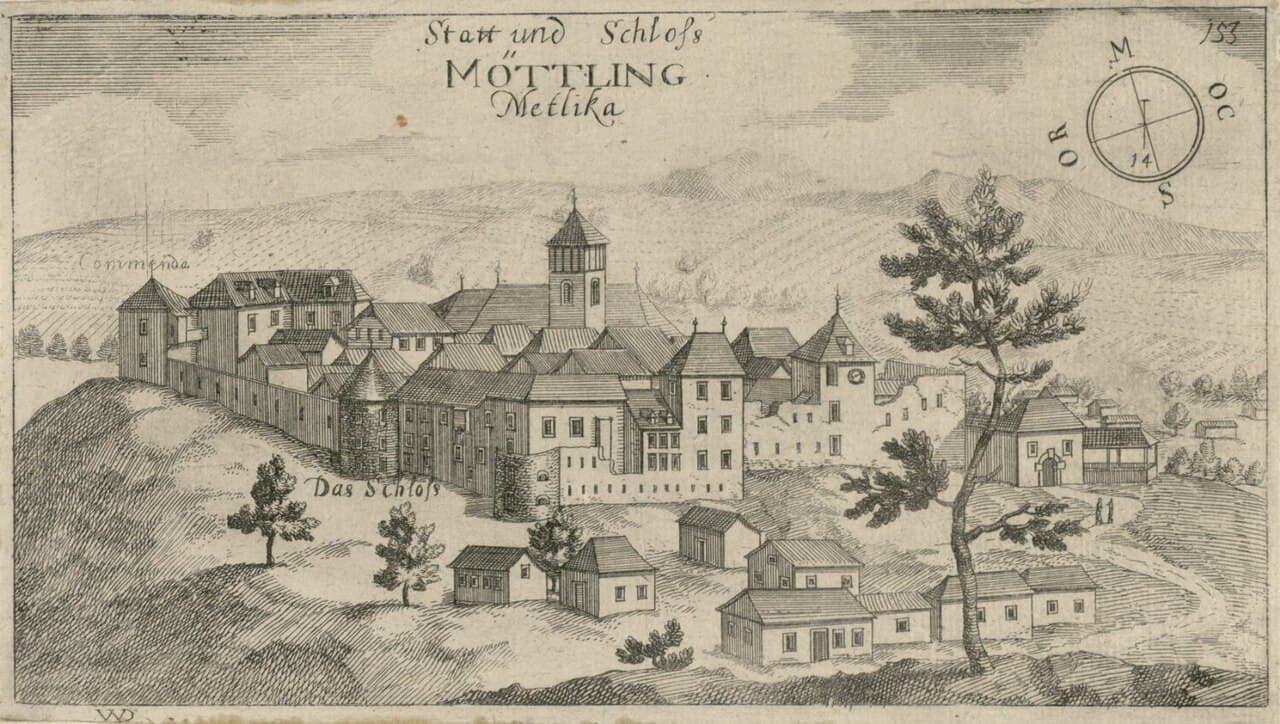
Metlika Castle — Slovenia castle

Metlika Castle

Metlika Castle: a 15th-century hill castle in southeastern Slovenia
Metlika, Metlika, Slovenia
Late Medieval (14th–15th c.)
Well Preserved

Metlika Castle is a prominent 15th-century hill castle situated above the historic center of Metlika, a town in southeastern Slovenia close to the Croatian border. First mentioned in written records in 1456, the castle has a rich history marked by its strategic role in regional defense and its evolving ownership through the centuries.

Historical significance and early ownership

During the turbulent late medieval period, particularly throughout the 15th and 16th centuries, Metlika Castle was under the possession of the Counts of Alap. This era was characterized by frequent Ottoman incursions into the region, and the castle served as a vital defensive stronghold against these invasions. Its location atop a hill provided commanding views of the surrounding landscape, enabling early warnings and robust defense mechanisms.

Subsequently, the castle passed into the hands of the House of Frankopan, a noble family influential in Croatian and Slovenian history. Later ownership transferred to the chapterhouse of the bishopric of Zagreb, reflecting the castle's importance not only militarily but also ecclesiastically and administratively in the region.

Architectural features and structural evolution

Metlika Castle exemplifies late medieval hill castle architecture, characterized by its robust defensive walls, towers, and strategic positioning. The castle's design includes a fortified courtyard, battlements, and a keep that would have served as both a residence and a last defense point. Over the centuries, modifications were made to adapt to changing military technologies and residential needs.

The castle endured significant damage from fires in 1705 and 1790, which necessitated extensive repairs and renovations. These restorations likely introduced elements reflective of architectural trends of those periods, although the core medieval structure remains prominent.

Modern history and current use

Remarkably, Metlika Castle survived World War II intact, avoiding the destruction that befell many similar structures. Post-war, it was nationalized and repurposed to serve cultural and educational functions. Since 1951, it has housed the Museum of White Carniola, which preserves and exhibits the cultural heritage of the region.

The museum's collections include artifacts illustrating the cultural history of White Carniola, a variety of Roman and medieval stone markers and memorials, and an ethnological collection that portrays the traditional way of life in the area. These exhibits provide valuable insights into the region’s historical continuity and cultural identity.

Additional facilities within the castle complex include the Metlika Slovene Firefighting Museum, housed in the former stables and outbuildings, which documents the history of firefighting in the region. The castle also features a wedding hall on the second floor and a wine cellar in the basement, blending historical ambiance with contemporary uses.

The Gangl Gallery, located within the castle, hosts temporary exhibitions and is an integral part of the Museum of White Carniola’s cultural offerings, attracting visitors interested in both history and the arts.

Location and regional context

Situated in the Metlika region of Slovenia, the castle’s hilltop position not only provided strategic military advantages but also offers panoramic views of the surrounding countryside and the nearby Croatian border. This geographical setting underscores the castle's historical role as a frontier fortress and cultural landmark.

Visiting Metlika Castle today

Visitors to Metlika Castle can explore its extensive museum collections, enjoy the architectural ambiance of the well-preserved late medieval structure, and attend various cultural events hosted in the Gangl Gallery. The castle’s multifunctional spaces, including the wedding hall and wine cellar, make it a vibrant part of the local community and a destination for tourists interested in history, culture, and heritage.

Frequently asked questions (FAQ)

What is the historical significance of Metlika Castle?
Metlika Castle, dating back to the 12th century, is a significant historical landmark in Slovenia, reflecting the region's medieval heritage. It has served various purposes throughout history, including a noble residence and a military fortification, showcasing the architectural evolution of the area.
When was Metlika Castle built?
Metlika Castle was originally constructed in the 12th century, with various modifications and restorations occurring over the centuries. Its long history has contributed to its unique blend of architectural styles, including Gothic and Renaissance elements.
What are the opening hours for Metlika Castle?
Metlika Castle is typically open to visitors from 10 AM to 6 PM during the summer months, and hours may vary in the off-season. It is advisable to check the castle's official website for the most current information on opening hours before planning your visit.
Can I take a guided tour of Metlika Castle?
Yes, guided tours are available at Metlika Castle, providing visitors with in-depth knowledge about its history and architecture. These tours are often led by knowledgeable guides who can share fascinating stories and insights about the castle and its surroundings.
Is it possible to access Metlika Castle with limited mobility?
While Metlika Castle is a historic site, efforts have been made to improve accessibility for visitors with limited mobility. It is recommended to contact the castle in advance to inquire about specific accessibility options and any assistance available during your visit.
What is the best time to visit Metlika Castle?
The best time to visit Metlika Castle is during the late spring and early autumn when the weather is pleasant and conducive to outdoor exploration. Additionally, during these months, the surrounding gardens and landscapes are particularly beautiful, enhancing your overall experience.
Are there any nearby attractions to visit after exploring Metlika Castle?
Yes, after visiting Metlika Castle, you can explore nearby attractions such as the charming town of Metlika, the Kolpa River, and various local wineries. These sites offer a chance to experience the natural beauty and cultural richness of the region.
How much do tickets cost for Metlika Castle?
Tickets for Metlika Castle are reasonably priced, often ranging from €5 to €10 for adults, with discounts available for children and seniors. Group rates may also apply, so it's beneficial to check in advance for any special offers or promotions.

Photo gallery

Metlika Castle
Click to view

Photo by Johann Weikhard von Valvasor•Public domain

1 photo • Click any image to view in full screen

Information

Hill Castle

Loading map...

Visitor reviews

No reviews yet. Been here? Write the first review and help other travelers!

Write the first review

Visited this castle? Share your experience

Your review helps other travelers and adds first-hand knowledge to our encyclopedia.

Write a review

(5/5)

0/2000 characters

Your review will be visible after admin approval

Nearby castles

7 km

Gradac Castle

Grad, Slovenia

Gradac Castle, located in the settlement of Grad in southeastern Slovenia, is a notable example of a high medieval fortress with a history dating back to the 13th century. First mentioned in written records in 1228, the castle occupies a strategic position on a small island, which historically provided natural defense advantages. This location contributed to its role in regional control and protection during the Middle Ages. Historical background and ownership The castle's origins are rooted in the turbulent times of the high medieval period, a time characterized by frequent territorial disputes and the consolidation of noble estates. Over the centuries, Gradac Castle changed hands multiple times, reflecting the shifting political landscape of the region. Its last private owner was a businessman named Gusić from Zagreb, who is commemorated on the castle grounds with a mausoleum. Architectural features and layout Gradac Castle was originally constructed as a fortified island stronghold, featuring defensive walls and towers typical of the high medieval fortification style. While much of the original medieval structure has been altered or lost, the castle island is now predominantly covered by a large Renaissance park. This park includes remnants of formal garden design such as an alley, which points to the castle's later adaptation into a more residential and aesthetic estate during the Renaissance period. The Renaissance park The Renaissance park surrounding the castle is notable for its size and design, although it has suffered from neglect and overgrowth in recent decades. The park's layout likely included carefully planned walkways, ornamental plantings, and possibly water features, which were characteristic of Renaissance garden design aimed at enhancing the castle's prestige and comfort. Conservation and restoration efforts By the late 20th century, Gradac Castle faced significant deterioration due to exposure and lack of maintenance. Recognizing its cultural value, the Municipality of Metlika undertook important conservation measures, including repairing the castle's roof in the late 1990s to halt further decay. These efforts have been crucial in preserving the remaining structure and preventing collapse. There are ongoing plans to restore the castle comprehensively and renew the surrounding park. These initiatives aim to revive the castle as a cultural and historical landmark, potentially opening it to visitors and integrating it into regional heritage tourism. Significance and cultural heritage Gradac Castle stands as a testament to the region's medieval history and Renaissance cultural influences. Its combination of a high medieval fortress core with a later Renaissance park reflects the architectural and social evolution of noble residences in Slovenia. The castle's location in the Grad region and its association with notable historical figures contribute to its importance as a heritage site. Visitors to Gradac Castle can appreciate the layered history visible in its ruins and landscape, from the defensive structures of the Middle Ages to the ornamental gardens of the Renaissance. The mausoleum of the last owner adds a personal historical dimension, linking the site to the modern era and the legacy of the families who shaped its story.

High Medieval (11th–13th c.)
Details
12.6 km
Ozalj Castle — Croatia castle

Ozalj Castle

Ozalj, Croatia

Ozalj Castle stands as a remarkable example of medieval fortification perched dramatically on a stone cliff overlooking the Kupa River in Karlovac County, Croatia. This fortress is not only an architectural gem but also a monument steeped in Croatian history, particularly noted for its association with the noble families of Frankopan and Zrinski. The castle's origins trace back to the 13th century, although the site itself bears evidence of much earlier occupation, including remnants of ancient Roman walls dating from the 6th century. This layered history makes Ozalj Castle a unique palimpsest of architectural and cultural evolution. Early history and architectural evolution The earliest stone constructions at Ozalj likely began in the 6th century, as indicated by the surviving Roman masonry fragments. However, the castle as it is recognized today primarily began taking shape in the high medieval period, with the first written record dating to 1244, when it came under royal possession. Over the centuries, the fortress was expanded and modified by successive noble families, each leaving their architectural imprint. Medieval fortifications and layout The castle complex is architecturally diverse, reflecting construction phases from different eras. Visitors enter the old town via a distinctive wooden bridge, historically movable until 1821. The bridge’s central supporting column is particularly notable; originally a guardhouse tower equipped with arrow slits for defense, its lower section is triangular while the upper part is quadrangular, showcasing medieval military architectural ingenuity. The entrance leads into a fortified complex featuring several key elements: the entrance tower built in 1599 by Juraj IV Zrinski, a smaller adjacent tower, the imposing main tower, and the Babonić tower, which is the oldest surviving part of the castle. Surrounding these are the southern, eastern, and northern wings, each a substantial two-story building, and the Palas Zrinskih, the residential palace of the Zrinski family. Renaissance and baroque transformations In the 18th century, Ozalj Castle underwent significant restoration and transformation, shifting from a purely defensive fortress to a more refined residence. The castle was extensively remodeled under the ownership of the Perlas and Batthyány families. The Perlas family demolished parts of the older structures, while Teodor Batthyány added a second floor to the northern wing and constructed a new Baroque tract, enhancing the castle’s residential comfort and aesthetic appeal. One of the notable adaptations was the conversion of the former Palas, long thought to be the oldest building in the complex, into a grain warehouse. This building became known as the Žitnica, reflecting its new agricultural function. Historical significance and notable events Ozalj Castle holds an important place in Croatian history. It was the shared stronghold of two of Croatia’s most influential noble families, the Frankopans and the Zrinskis. The castle was a central site during the Zrinski–Frankopan conspiracy, a significant but ultimately tragic episode in Croatian history in the late 17th century, where these noble families opposed Habsburg rule. The castle's strategic location and robust fortifications made it a key defensive site and a symbol of noble power in the region. Its preservation allows insight into the military and residential architecture of the medieval and early modern periods in Croatia. Current condition and visitor experience Today, Ozalj Castle is in a well-preserved state, offering visitors a rich historical experience. The castle houses a museum and a library, providing cultural and educational resources that deepen the understanding of the castle’s past and the families who shaped it. The castle complex invites exploration of its towers, courtyards, and historic halls, with interpretive displays that highlight its architectural evolution and historical context. Visitors can appreciate the blend of medieval fortification elements with later Renaissance and Baroque modifications, all set against the scenic backdrop of the Kupa River valley. Architectural highlights Babonić tower: The oldest surviving tower, a testament to the castle's medieval origins. Entrance tower: Constructed in 1599, a key defensive and ceremonial gateway. Wooden bridge and guardhouse tower: Unique structural feature with a triangular base and quadrangular upper section. Palas Zrinskih: The noble residence reflecting Renaissance and Baroque influences. Baroque tract: Added by Teodor Batthyány, showcasing 18th-century architectural style. Cultural heritage and legacy Ozalj Castle remains a symbol of Croatian noble heritage and resilience. Its association with the Frankopan and Zrinski families links it to pivotal moments in Croatia’s struggle for autonomy and identity. The castle’s preservation and continued use as a museum and cultural site ensure that its legacy endures, attracting scholars, tourists, and history enthusiasts alike. Its architectural diversity, from Roman remnants to medieval fortifications and Baroque enhancements, offers a comprehensive narrative of the region’s historical and cultural transformations over more than a millennium.

High Medieval (11th–13th c.)
Details
18.4 km

Gracar Turn Castle

Hrastje, Slovenia

Gracar Turn Castle, also known as Grätzer's Tower, is a notable example of a late medieval fortress located in Hrastje, Slovenia. Although it is not documented in medieval sources directly, the renowned historian Valvasor mentions that a manor stood on this site during the 14th century. The castle takes its name from the Grätzer family, who originated from nearby Gradac and are credited with its initial construction. Historical background and ownership The castle's early history is somewhat obscure due to the lack of direct medieval records. However, it is known that the Grätzer family established the manor in the 14th century, which laid the foundation for the present castle complex. Over the centuries, the property changed hands multiple times, reflecting the turbulent history of the region. In 1821, the castle was purchased by Anton Rudež, a significant figure who contributed to the castle's cultural heritage. Janez Trdina, a prominent Slovene writer and ethnographer, was frequently a guest at Gracar Turn during Rudež's ownership. Trdina composed several of his works at the castle, including his most famous collection, Fables and Tales of the Gorjancers, which captures the folklore and traditions of the Gorjanci hills region. Architectural features and layout The core structure of Gracar Turn Castle is a multi-story residential palacium, which served as the main living quarters. This central building is surrounded by a rectangular fortified complex, a common design in late medieval castles aimed at defense and residence. The complex is anchored by two imposing square towers that provide vantage points for surveillance and protection. The castle's architecture reflects the late medieval style with functional defensive elements such as thick walls and limited access points, designed to withstand sieges and attacks. The rectangular layout allowed for efficient use of space within the defensive perimeter, combining residential comfort with military utility. Damage and restoration During World War II, part of Gracar Turn Castle was severely damaged when it was set on fire by partisan fighters. This event marked a significant moment in the castle's history, reflecting the broader conflict and resistance movements in Slovenia during the war. Following the war, efforts were made to renovate and restore the castle, preserving its historical and architectural integrity. Today, the castle stands as a restored late medieval monument, showcasing its original form while accommodating necessary repairs. The restoration work has focused on maintaining the castle's characteristic features, including the square towers and the multi-story palacium, ensuring that visitors can appreciate its historical significance and architectural design. Gracar Turn's cultural significance Beyond its architectural and historical importance, Gracar Turn Castle holds a special place in Slovenian cultural history due to its association with Janez Trdina. The castle served as a creative retreat where Trdina developed his literary works that document the folklore of the region. This connection adds a layer of cultural heritage to the site, attracting visitors interested in both history and literature. The castle's location in Hrastje situates it within a region known for its natural beauty and historical landmarks, making it a point of interest for tourists exploring Slovenian medieval architecture and cultural history.

Late Medieval (14th–15th c.)
Details
