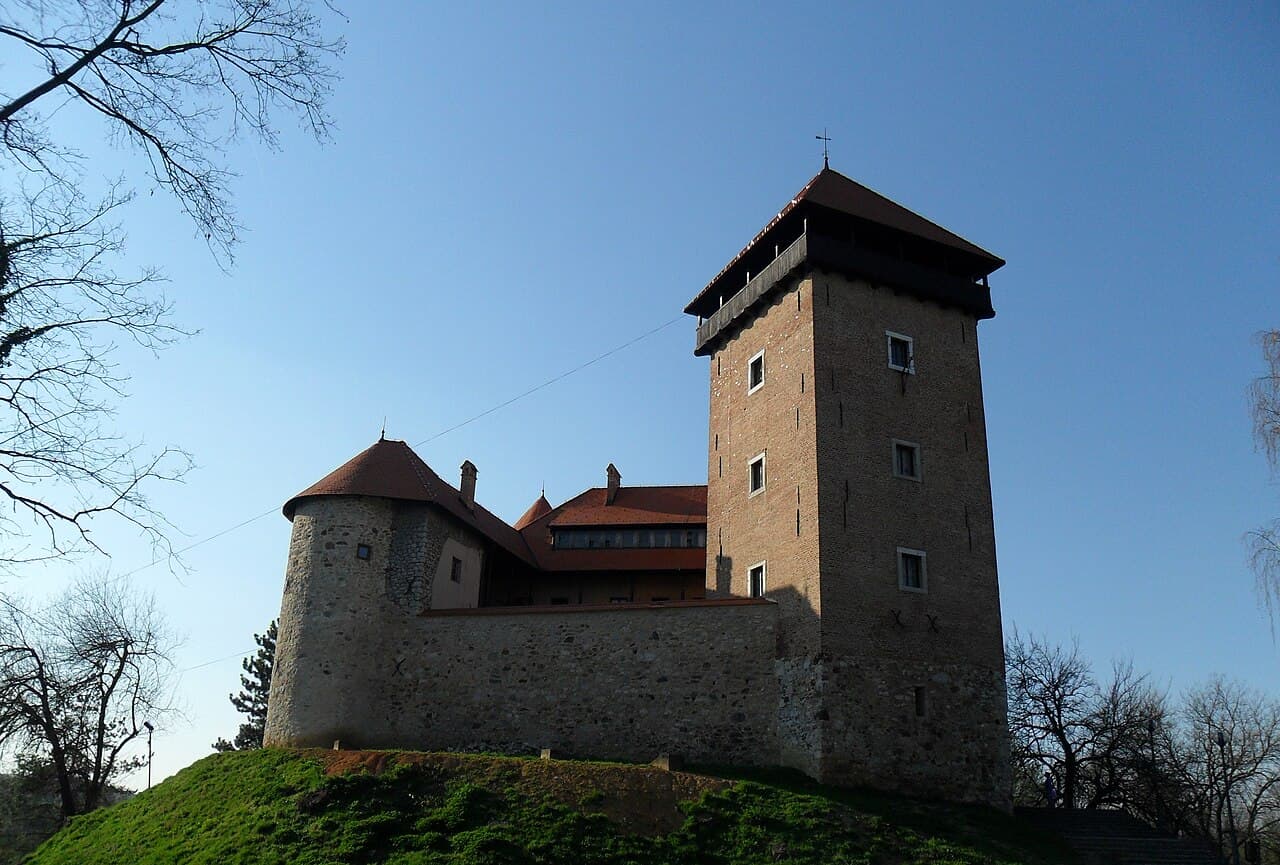
Dubovac Castle
Dubovac Castle stands prominently overlooking the city of Karlovac in central Croatia. This historic fortress is a notable example of a hill castle whose origins trace back to the 13th century, during the High Medieval period. Its strategic location atop an artificial hill provided extensive views and defensive advantages over the surrounding landscape, a common medieval military tactic to enhance security and surveillance.
Medieval origins and early architecture
The core of Dubovac Castle is its imposing square tower, believed to have been constructed in the 13th century. This tower formed the initial stronghold of the castle, serving as both a defensive structure and a residence. The design reflects typical High Medieval fortification principles, with thick stone walls and limited openings to withstand sieges.
During the 15th century, the castle underwent significant rebuilding that introduced elements of the Renaissance architectural style. This transformation included the addition of more refined structural details and improvements to the living quarters, reflecting the period's shift towards comfort and aesthetics alongside defense.
Ownership and historical significance
Throughout its history, Dubovac Castle has been under the possession of several prominent noble families and military figures. Initially owned by the Slavonian nobleman family Sudar, it later passed to the influential Croatian noble houses of the Frankopan and Zrinski families. Both families played critical roles in Croatian history and were known for their military leadership and patronage of the arts.
From 1671 to 1809, the castle was owned by the Karlovac generals, emphasizing its ongoing military importance in the region during the early modern period. This era saw the castle function as a strategic military base, overseeing the defense of Karlovac and its environs.
19th-century romantic renovation
In 1837, the castle entered a new phase under the ownership of Count Laval Nugent, a notable military commander and nobleman. Count Nugent undertook a comprehensive renovation of the castle, redesigning it in the spirit of Romanticism. This renovation embraced the 19th-century Romantic movement's fascination with medieval architecture, enhancing the castle's aesthetic appeal with stylistic elements that evoked chivalry and historical grandeur.
The Romantic renovation included restoration of the castle's exterior and interior spaces, blending historical authenticity with contemporary tastes. This period helped preserve the castle's structural integrity and contributed to its current appearance, which combines medieval fortification with 19th-century romanticized features.
20th-century restoration and modern use
Dubovac Castle underwent another significant restoration in 1952, guided by graphic sources from the late 18th century. This restoration aimed to repair damage and restore architectural details to reflect the castle's historical appearance accurately. The project helped preserve the castle as a cultural monument and tourist attraction.
In recent decades, the castle was adapted for use as a hotel, which led to interior modifications that altered some original features. However, efforts have been made to repair and reverse these changes to maintain the castle's historical character. Today, Dubovac Castle houses museum exhibits, including a large model of the surrounding countryside, providing visitors with educational insights into the region's history and geography.
Architectural features and defensive design
The castle's location on an artificial hill is a distinctive feature, enhancing its defensive capabilities by elevating it above the surrounding terrain. The fortress walls and battlements were designed to resist attacks and provide vantage points for surveillance and defense. The square tower remains the dominant architectural element, symbolizing the castle's medieval origins.
Additional features include fortified gates and courtyards that facilitated the movement and defense of troops. The castle's layout reflects the evolution of military architecture from purely defensive to incorporating residential and administrative functions over time.
Legacy and cultural significance
Dubovac Castle is recognized as an important cultural and historical landmark in Karlovac County. It has been commemorated on Croatian postage stamps, highlighting its significance in national heritage. The castle attracts visitors interested in medieval history, architecture, and Croatian noble lineages.
Its preservation and ongoing restoration efforts ensure that Dubovac Castle remains a valuable educational resource and a symbol of the region's historical resilience and architectural evolution.
Visitor experience and museum exhibits
Visitors to the castle can explore its well-preserved exterior and interior spaces, including the museum displays that showcase artifacts and models related to the castle's history and the surrounding landscape. Guided tours provide detailed information about the castle's construction phases, owners, and role in regional defense.
The castle's elevated position offers panoramic views of Karlovac and the nearby countryside, enhancing the visitor experience with scenic vistas that complement the historical atmosphere.
Frequently asked questions (FAQ)
- What is the historical significance of Dubovac Castle?
- Dubovac Castle, located in Karlovac, Croatia, was built in the 16th century and served as a defensive fortress against Ottoman invasions. It played a crucial role in the region's history and is an important symbol of Croatian heritage, showcasing the architectural style of its time.
- When was Dubovac Castle built?
- Dubovac Castle was constructed in the mid-16th century, with its construction starting around 1550. Its strategic location was chosen to oversee the surrounding area and protect the city of Karlovac.
- Can I visit Dubovac Castle?
- Yes, visitors are welcome to explore Dubovac Castle. The site offers a glimpse into its rich history and stunning architecture, making it a popular destination for tourists and history enthusiasts alike.
- What are the opening hours for Dubovac Castle?
- Dubovac Castle is typically open to visitors from 9 AM to 6 PM during the tourist season, which generally runs from April to October. It is advisable to check for specific opening times or any changes in schedule before planning your visit.
- Is it possible to access Dubovac Castle with public transport?
- Yes, Dubovac Castle can be accessed via local public transport from Karlovac city center. Buses frequently run to the area, and once you arrive, it's just a short walk to the castle.
- What is the best time to visit Dubovac Castle?
- The best time to visit Dubovac Castle is during the spring and early autumn months, when the weather is mild and the surrounding landscapes are particularly beautiful. This timing also allows you to enjoy various outdoor activities and events held near the castle.
- Are there any nearby attractions to Dubovac Castle?
- Yes, nearby attractions include the picturesque city of Karlovac, known for its beautiful parks and rivers. Additionally, you can explore the Karlovac City Museum and the Aquatika freshwater aquarium, both of which are within a short distance from the castle.
- How much are the ticket prices for Dubovac Castle?
- Entrance to Dubovac Castle is generally affordable, with ticket prices around 30 kuna for adults. Discounts may be available for students and children, making it an accessible destination for families and groups.
Photo gallery

Information
Loading map...
Visitor reviews
No reviews yet. Been here? Write the first review and help other travelers!
Write the first reviewVisited this castle? Share your experience
Your review helps other travelers and adds first-hand knowledge to our encyclopedia.



