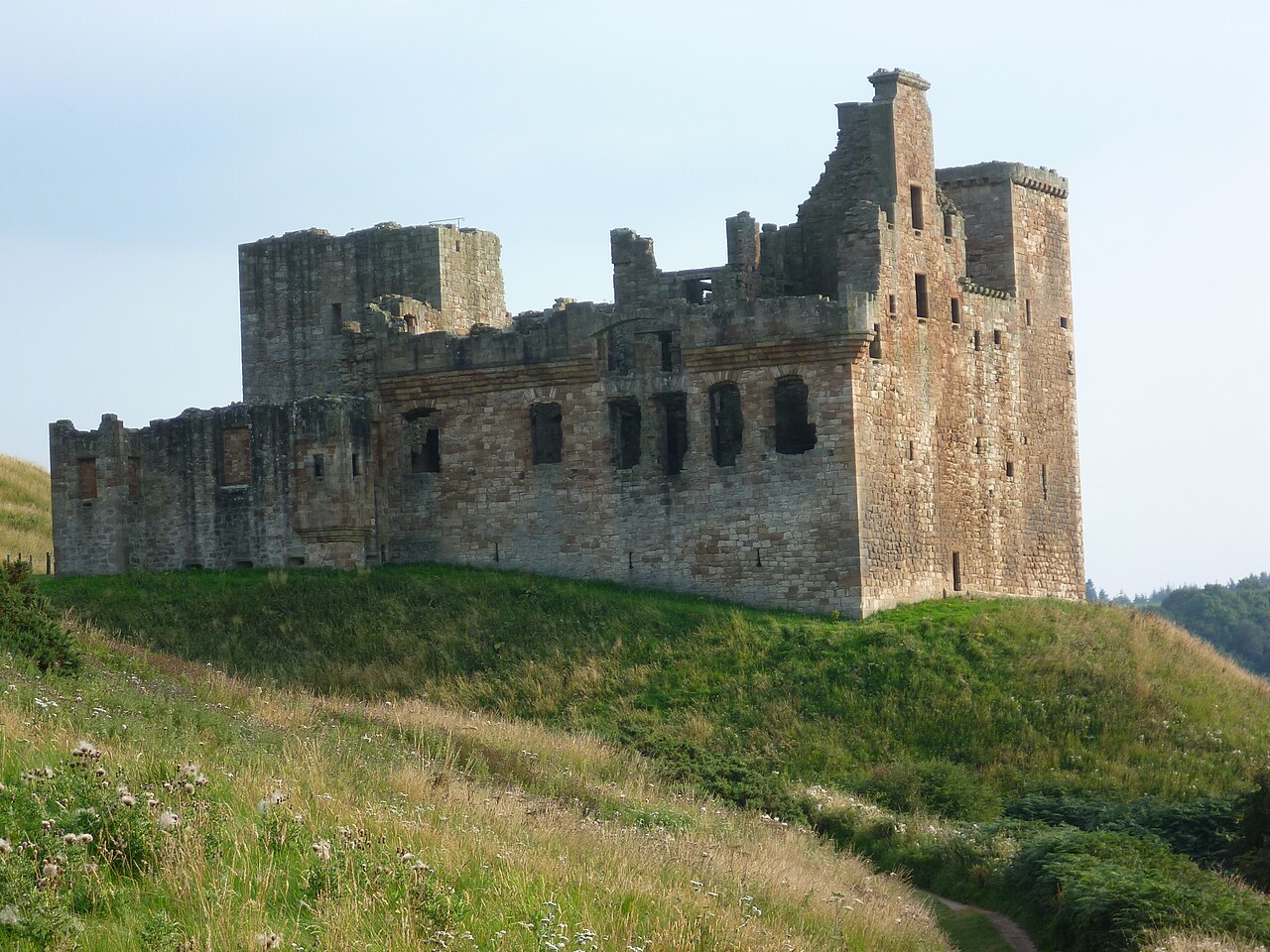
Oxenfoord Castle
Oxenfoord Castle stands as a remarkable example of Scottish architectural evolution, located in the parish of Pathhead, Scotland. The estate's origins trace back to the 12th century when it was first owned by the Riddel family, an early Scottish lineage. Over centuries, the castle transformed from a fortified tower house into a refined country residence, reflecting the tastes and ambitions of its successive owners.
The castle's earliest significant structure was a 16th-century L-plan tower house built by the MacGill family, who took ownership in the 1500s. This tower house served as a defensive residence typical of the period, with thick walls and limited openings designed for protection. In 1651, James MacGill was ennobled as the Viscount of Oxfuird, cementing the family's noble association with Oxenfoord.
In the late 18th century, the estate passed into the Dalrymple family through the marriage of Elizabeth Hamilton to Sir John Dalrymple, 4th Baronet. Sir John Dalrymple was a distinguished lawyer, scientist, and historian who commissioned the celebrated architect Robert Adam in 1780 to transform the existing tower house into an elegant country house. Adam's work, completed by around 1783, retained the core of the original tower but expanded and reimagined the building with classical design principles. The castle was rebuilt in sandstone, featuring refined decorative elements such as battlement-like parapets that referenced medieval fortifications in a sophisticated manner.
Architectural transformation by Robert Adam
Adam's redesign of Oxenfoord Castle is a notable example of his ability to blend classical architecture with the existing medieval structure. The castle's layout maintained the footprint of the earlier tower house, but the elevations and interiors were transformed to suit late 18th-century tastes. The use of sandstone and the incorporation of classical motifs brought a sense of grandeur and elegance to the estate, elevating it from a defensive stronghold to a stately home.
The castle's exterior features include battlemented parapets that provide a romantic nod to its fortified past while serving a purely decorative function. The interiors were likely updated with refined plasterwork, elegant staircases, and spacious reception rooms typical of Adam's country house commissions, although specific interior details are less documented.
Expansion under William Burn in the 19th century
In 1842, the 8th Earl of Stair commissioned the architect William Burn to enlarge the castle. Burn's work nearly doubled the size of the building by adding a new wing and an entrance hall. His design was carefully executed to complement Adam's earlier work, preserving the architectural harmony of the complex. Burn was known for his skill in sympathetic expansions of existing structures, and his contribution to Oxenfoord Castle is a fine example of this approach.
The new wing and entrance enhanced the castle's functionality and grandeur, reflecting the status of the Dalrymple family as prominent Scottish nobility. Burn’s addition maintained the sandstone construction and stylistic motifs consistent with Adam’s classical influence, ensuring a seamless visual transition between the phases of construction.
Landscape and grounds: pinetum and designed gardens
The estate grounds were further enriched during the 19th century by the 8th and 9th Earls of Stair, who established a pinetum—a specialized collection of pine trees—adding botanical interest and aesthetic appeal to the landscape. This arboretum forms part of the larger designed gardens and parkland surrounding the castle, which are recognized for their horticultural significance.
The grounds are included in Scotland’s Inventory of Gardens and Designed Landscapes, where they are acknowledged for excellence in two categories. This recognition highlights the estate’s importance not only for its architectural heritage but also for its contribution to Scotland’s landscape design traditions.
Oxenfoord Viaduct: an architectural complement
Approximately 50 meters north of the castle stands the Oxenfoord Viaduct, built around 1783. This sandstone masonry bridge carries the main access road over a steep ravine and features three arches, with a double-height central arch flanked by two smaller ones. The viaduct’s parapet is adorned with crenellations, stone battlements that echo the castle’s decorative battlemented parapets, creating a cohesive visual link between the structures.
Both the castle and the viaduct are protected as category A listed buildings, underscoring their architectural and historic significance. The viaduct is not only functional but also an important aesthetic element of the estate, enhancing the approach to the castle.
Historical significance and later uses
Oxenfoord Castle served as the principal seat of the Earls of Stair after the 8th Earl inherited the title in 1840. However, by 1864, the 10th Earl shifted the family’s primary residence to Lochinch Castle in Galloway, leading to a diminished role for Oxenfoord as a family home.
In the 20th century, the castle found a new purpose as the site of Oxenfoord Castle School from 1931 to 1993, founded by Lady Marjorie Dalrymple. After the school's closure, the property returned to private ownership within the Dalrymple family and has since been used mainly for private and corporate events.
Preservation and heritage status
Since 1971, Oxenfoord Castle and its estate have been designated as category A listed buildings, reflecting their outstanding architectural and historic interest. This status ensures the protection and careful management of the castle and its associated structures.
The castle is a well-preserved example of the blend of medieval defensive architecture and 18th- and 19th-century classical country house styles. It communicates the layered history of Scottish aristocratic residences, showcasing the transition from fortified tower houses to elegant stately homes.
Today, Oxenfoord Castle stands as a testament to Scotland's rich architectural heritage, embodying centuries of history through its fabric and landscape. It continues to attract interest for its architectural significance, historical associations, and beautifully designed grounds.
Frequently asked questions (FAQ)
- How do I get to Oxenfoord Castle?
- Oxenfoord Castle is located in Pathhead, United Kingdom, easily accessible by car and public transport. If traveling by car, follow the A7 road from Edinburgh and look for signs to Pathhead. For public transport, local buses run regularly from nearby towns, and the nearest train station is approximately 5 miles away.
- What are the opening hours for Oxenfoord Castle?
- Oxenfoord Castle is typically open to visitors from April to October, with specific opening times varying by day. It is advisable to check the official website or contact the castle directly for the most current visiting hours before planning your visit. Special events may alter the standard hours, so be sure to verify ahead of time.
- Can I take photographs inside Oxenfoord Castle?
- Yes, visitors are welcome to take photographs in designated areas of Oxenfoord Castle. However, it is important to respect any restrictions regarding photography in private rooms or during special events. Always check with staff if you're uncertain about photography rules during your visit.
- When was Oxenfoord Castle built?
- Oxenfoord Castle was built in the early 19th century, with its construction completed in 1811. The castle was designed by the architect William Burn, showcasing a blend of Gothic and Scottish baronial architectural styles. Its rich history adds to the charm of the property, making it a fascinating site for visitors.
- Why is Oxenfoord Castle historically significant?
- Oxenfoord Castle holds historical significance as a residence of the prominent Home family and has been a focal point of local heritage since its establishment. The castle's architecture and the stories of its inhabitants reflect the social and cultural history of Scotland. Visitors can explore its beautifully preserved rooms and gardens, which carry the legacy of centuries past.
- Is it possible to host events at Oxenfoord Castle?
- Yes, Oxenfoord Castle offers facilities for hosting various events, including weddings, corporate functions, and private gatherings. The picturesque setting and stunning architecture provide a unique backdrop for memorable occasions. It is recommended to contact the castle's event coordinator for more information on availability and services.
- What is the best time to visit Oxenfoord Castle?
- The best time to visit Oxenfoord Castle is during the spring and summer months when the gardens are in full bloom and guided tours are available. The mild weather allows for comfortable exploration of the grounds and surrounding area. Additionally, special events and exhibitions often take place during this period, adding to the experience.
- Are there any nearby attractions to Oxenfoord Castle?
- Yes, there are several nearby attractions worth exploring, including the picturesque village of Pathhead and the historic town of Dalkeith. Visitors can also enjoy the beautiful Midlothian countryside, which offers walking trails and scenic views. These nearby sites complement a visit to Oxenfoord Castle, making for a full day of exploration.
- What are the ticket prices for visiting Oxenfoord Castle?
- Ticket prices for visiting Oxenfoord Castle vary depending on the season and any special events occurring during your visit. Generally, adult tickets are priced reasonably, with discounts available for children and seniors. Check the official website for the most up-to-date pricing information and any available family packages.
Information
Website
Visit websiteSources & official resources
Verify the information above using these authoritative references.
Loading map...
Visitor reviews
No reviews yet. Been here? Write the first review and help other travelers!
Write the first reviewVisited this castle? Share your experience
Your review helps other travelers and adds first-hand knowledge to our encyclopedia.