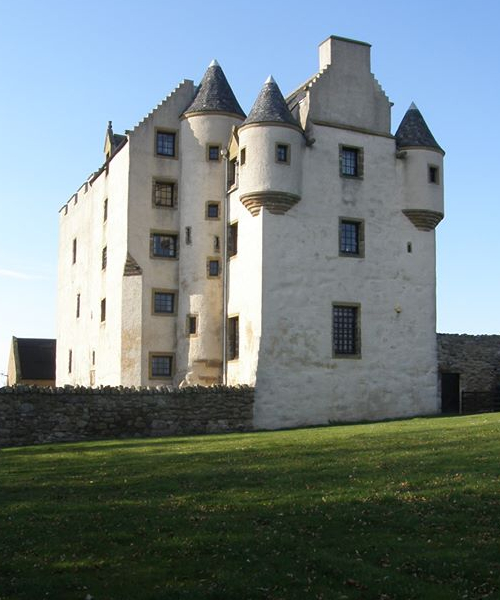
Carberry Tower
Carberry Tower stands as a significant hill castle near Musselburgh, Scotland, embodying centuries of Scottish history and architectural evolution. Originally constructed as a medieval defensive tower house, it has witnessed pivotal moments in Scotland's royal and political past, including the surrender of Mary, Queen of Scots in 1567. Over time, the castle transitioned from a fortress to a refined country estate, reflecting changes in ownership, style, and function.
Early origins and medieval foundations
The estate of Carberry, initially recorded as "Caerbairin," dates back to the reign of King David I in the 12th century, when the lands were granted to the monks of Dunfermline Abbey. The earliest documented landholder was John de Crebarrie, but it was the Johnstone family who first held the tower itself. The original structure was a modest, square tower house built primarily for defense, characteristic of Scottish medieval architecture. Its thick stone walls and simple robust form were designed to withstand attacks during a turbulent period marked by clan conflicts and border skirmishes.
Political significance and historic events
Carberry Tower's location and ownership placed it at the heart of significant historical events. In the mid-16th century, the estate was leased by Hugh Rigg, King’s Advocate, who played a controversial role advising the Scottish Regent during the 1547 Battle of Pinkie Cleugh. The most notable event associated with the estate is the 1567 surrender of Mary, Queen of Scots on nearby Carberry Hill. This event marked a critical turning point in Scottish history, symbolizing the end of Mary's reign and the rise of opposing Scottish lords. The adjacent Queen’s Mount monument commemorates this historic moment, linking the landscape to Scotland’s royal heritage.
Ownership transitions and architectural evolution
Following the Scottish Reformation, the lands and tower were seized by the Crown in 1587. The Maitland family was appointed as superiors, but the Rigg family regained tenure through a royal charter granted by Anne of Denmark in 1600. The property changed hands several times in the 17th and 18th centuries, including ownership by Sir Adam Blair of Lochwood and later Sir Robert Dickson of Inveresk. During the Jacobite rebellion of 1745, the estate was near the path of rebel forces advancing to the Battle of Prestonpans.
In 1760, John Fullerton began enlarging the tower, adding extensions in a unique anti-clockwise pattern around the original square structure. These additions transformed the medieval fortress into a more comfortable residence while respecting traditional Scottish country house aesthetics. The estate passed by marriage to the Elphinstone family in 1801, who further altered the property from 1830 onwards. Under William Elphinstone, 15th Lord Elphinstone, the house and grounds underwent extensive redesigns, including the creation of an arboretum with diverse tree species, enhancing the estate's botanical significance.
20th-century developments and modern restoration
Sydney Herbert, 16th Lord Elphinstone, married Lady Mary Bowes-Lyon, sister of Queen Elizabeth, the Queen Mother. During World War I, the estate hosted a Red Cross bazaar in 1915, with participation from the young Elizabeth. The Elphinstones continued improving the grounds, introducing formal gardens in 1911 and enriching the parkland with specimen plantings that reflected early 20th-century horticultural trends.
After the deaths of Sydney and Lady Mary in the mid-20th century, the estate was bequeathed to the Church of Scotland. The church adapted the tower for use as a conference center, adding an annexe and constructing a chapel in the park. The estate land was gradually sold off in parcels, although much of the surrounding area remains under the ownership of the Buccleuch Estate.
In the 21st century, the property passed through several owners, including the Gartmore House charitable trust and Clarenco LLP, which invested in extensive restoration to operate the tower as a hotel and events venue. The current owner, Kingsland Estate Ltd, acquired the estate in 2015, continuing its preservation and adaptive reuse. The tower was also notable for hosting the Carberry Festival, a Christian arts event held from 1986 to 2008, which featured worship, music, and children’s programs within the chapel.
Architectural features and estate grounds
The medieval tower house
The core of Carberry Tower is a fortified square tower house dating from the late 15th century. Its design emphasizes defense, with thick stone walls and minimal decorative features, typical of Scottish tower houses built to withstand sieges and raids. The original structure reflects the practical needs of the medieval Scottish nobility, balancing residential and military functions.
Later expansions and stylistic continuity
The 18th-century expansions by John Fullerton and subsequent 19th-century alterations by the Elphinstone family enlarged the living quarters while maintaining the architectural harmony of the estate. The anti-clockwise sequence of additions around the original tower created a cohesive complex that blends medieval fortification elements with the comfort and style of a country house. The materials and construction techniques respected traditional Scottish vernacular, ensuring visual and structural continuity.
Gardens and landscape design
The estate’s grounds feature formal gardens laid out in 1911, showcasing early 20th-century garden design principles. The arboretum, established by the 15th Lord Elphinstone, contains a diverse collection of specimen trees and plants, contributing to the estate’s botanical interest. The landscaping enhances the natural beauty of the parkland, creating a serene environment that complements the historic architecture.
20th-century additions
The Church of Scotland’s adaptations included a conference annexe attached to the main house and a chapel constructed within the park. These additions serve functional purposes while respecting the site's historic character. The chapel became a focal point for community and religious events, especially during the Carberry Festival years.
Cultural heritage and preservation status
Carberry Tower is protected as a Category B listed building, recognizing its regional historical and architectural importance. The surrounding gardens and landscape are included in the Inventory of Gardens and Designed Landscapes in Scotland, highlighting the estate’s cultural and botanical significance. Restoration efforts in the 21st century have carefully preserved the tower’s medieval fabric while adapting it for modern use as a hotel and events venue.
The nearby Queen’s Mount monument on Carberry Hill stands as a lasting memorial to the 1567 surrender of Mary, Queen of Scots, connecting the estate to a defining moment in Scottish history. Together, the tower and monument form a historic landscape that attracts visitors interested in Scotland’s royal past, architectural heritage, and natural beauty.
Frequently asked questions (FAQ)
- How do I get to Carberry Tower?
- Carberry Tower is located just a short drive from Edinburgh, making it easily accessible by car or public transport. For those using public transport, local buses connect to nearby towns, and taxis can be arranged from the city center.
- What is the historical significance of Carberry Tower?
- Carberry Tower has a rich history dating back to the 15th century and is known for its role during the Scottish Reformation and the imprisonment of Mary, Queen of Scots. The tower has been a witness to numerous historical events, making it a fascinating site for history enthusiasts.
- When was Carberry Tower built?
- Carberry Tower was originally built in the 15th century, with significant renovations occurring in the 17th century. Its architecture reflects the styles and needs of the time, showcasing Scotland's historical building techniques.
- Can I take a guided tour of Carberry Tower?
- Yes, guided tours of Carberry Tower are available for visitors, providing insights into its history and architecture. It is recommended to book in advance, especially during peak tourist seasons, to ensure availability.
- Why is Carberry Tower a popular wedding venue?
- Carberry Tower is renowned for its stunning scenery and historic charm, making it a sought-after location for weddings. The beautiful grounds and elegant interiors provide a picturesque backdrop for couples looking to celebrate their special day.
- Is it possible to stay overnight at Carberry Tower?
- Yes, Carberry Tower offers accommodation options for those wishing to experience its historic ambiance overnight. Guests can enjoy comfortable rooms and unique amenities, making it a perfect getaway.
- What are the opening hours for Carberry Tower?
- Carberry Tower is generally open to visitors from 10 AM to 5 PM, but hours may vary based on the season or special events. It is advisable to check the official website for the most current visiting hours before planning your trip.
- What are the ticket prices for visiting Carberry Tower?
- Ticket prices for Carberry Tower vary depending on the type of tour and age of the visitor. Discounts may be available for seniors, students, and children, so be sure to check the official website for detailed pricing information.
- What is the best time to visit Carberry Tower?
- The best time to visit Carberry Tower is during the spring and summer months when the gardens are in full bloom and the weather is pleasant. However, autumn also offers beautiful foliage, making it an attractive time for visitors.
- Are there any nearby attractions to visit?
- Yes, there are several nearby attractions, including the historical town of Musselburgh and the scenic East Lothian coastline. Visitors can also explore Edinburgh, which is just a short drive away, offering a wealth of cultural and historical sites.
Information
Website
Visit websiteSources & official resources
Verify the information above using these authoritative references.
Loading map...
Visitor reviews
No reviews yet. Been here? Write the first review and help other travelers!
Write the first reviewVisited this castle? Share your experience
Your review helps other travelers and adds first-hand knowledge to our encyclopedia.