Ourouer Tower
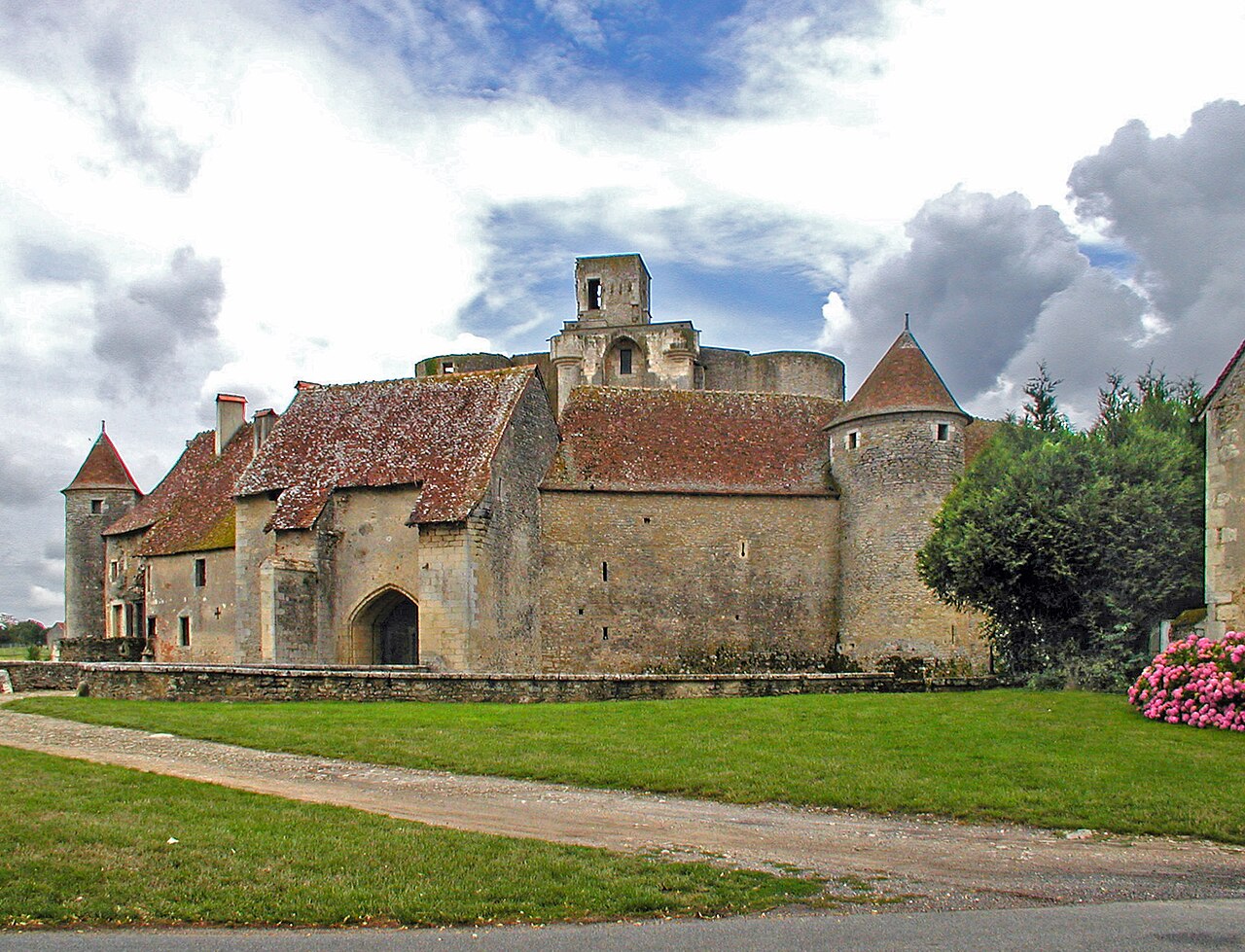
Ourouer Tower, known locally as Donjon de Ourouer, is a significant example of a 13th-century medieval keep located just south of the village of Ourouer-les-Bourdelins in the Cher department of France. This tower stands as a solitary remnant of a once larger fortified complex that played an important role in the region's feudal history.
The origins and construction of Ourouer Tower
The tower was constructed during the High Medieval period, specifically in the 13th century, by Jean Troussebois, a knight who became the Lord of Charentonnay through his marriage to Isabelle de Charenton. The original structure was a square-shaped keep, a common design choice in medieval fortifications intended to provide a strong defensive position. Keeps like this served as the fortified residence of the lord and a last refuge during attacks.
The keep was part of a larger fortified estate, which would have included additional defensive walls, outbuildings, and possibly a moat, although these elements have not survived. The tower’s strategic location near the D-6 road suggests it was well placed to oversee and control the surrounding lands and routes.
Architectural features and modifications
Originally designed as a defensive stronghold, the keep’s robust stone walls and limited openings reflect its military purpose. Over time, especially during the 15th or 16th century, the tower underwent modifications to adapt to changing needs. These alterations coincided with the estate’s period of prosperity, likely transforming parts of the keep to better serve as a residence rather than purely a fortress.
Such modifications may have included enlarging windows, adding fireplaces, or internal restructuring to improve comfort and habitability. Unfortunately, detailed records or surviving features of these changes are scarce, but the evolution from a purely military structure to a residential one is typical of many medieval keeps during this period.
Historical context and later history
During the French Revolution at the end of the 18th century, Ourouer Tower and its estate were confiscated as part of the widespread redistribution of noble properties. The estate was divided and sold off in parcels. Most of the original buildings were either demolished or repurposed for agricultural use, reflecting the social and economic upheavals of the time.
Despite this, the keep itself survived, primarily because it was converted into a residence. Its sturdy construction made it suitable for continued use, even as the surrounding estate disappeared.
Present condition and accessibility
Today, Ourouer Tower remains privately owned and is not open to the public. Its well-preserved keep is still visible from the nearby D-6 road, offering a glimpse into the medieval past of the Cher region. Although visitors cannot enter the property, the tower’s silhouette against the rural landscape continues to attract interest from history enthusiasts and travelers passing through the area.
Significance of Ourouer Tower
As a High Medieval keep, Ourouer Tower represents the feudal architecture typical of the 13th century in central France. Its survival through centuries of change, including the upheaval of the French Revolution, marks it as a valuable cultural and historical landmark. The tower exemplifies the transition of medieval fortifications from military bastions to noble residences, reflecting broader social and architectural trends in late medieval France.
Frequently asked questions (FAQ)
- Can I visit Ourouer Tower?
- Ourouer Tower is private property and not open to public visits. However, it is visible from the nearby D-6 road for viewing from outside.
- When was Ourouer Tower built?
- Ourouer Tower was constructed in the 13th century during the High Medieval period by the knight Jean Troussebois.
- What architectural style is Ourouer Tower?
- Ourouer Tower is a medieval keep typical of the High Medieval period, characterized by a square-shaped fortified structure designed for defense.
- What happened to Ourouer Tower during the French Revolution?
- During the French Revolution, the estate was confiscated and sold in parcels. Most buildings were demolished or repurposed, but the keep survived as a residence.
- Is Ourouer Tower part of a larger castle complex?
- Originally, Ourouer Tower was part of a larger fortified estate, but only the keep remains today after the rest of the complex was lost.
Information
Current owner
Private owner
Address
Next to the D-6 road, France
Loading map...
Visitor reviews
No reviews yet. Been here? Write the first review and help other travelers!
Write the first reviewVisited this castle? Share your experience
Your review helps other travelers and adds first-hand knowledge to our encyclopedia.