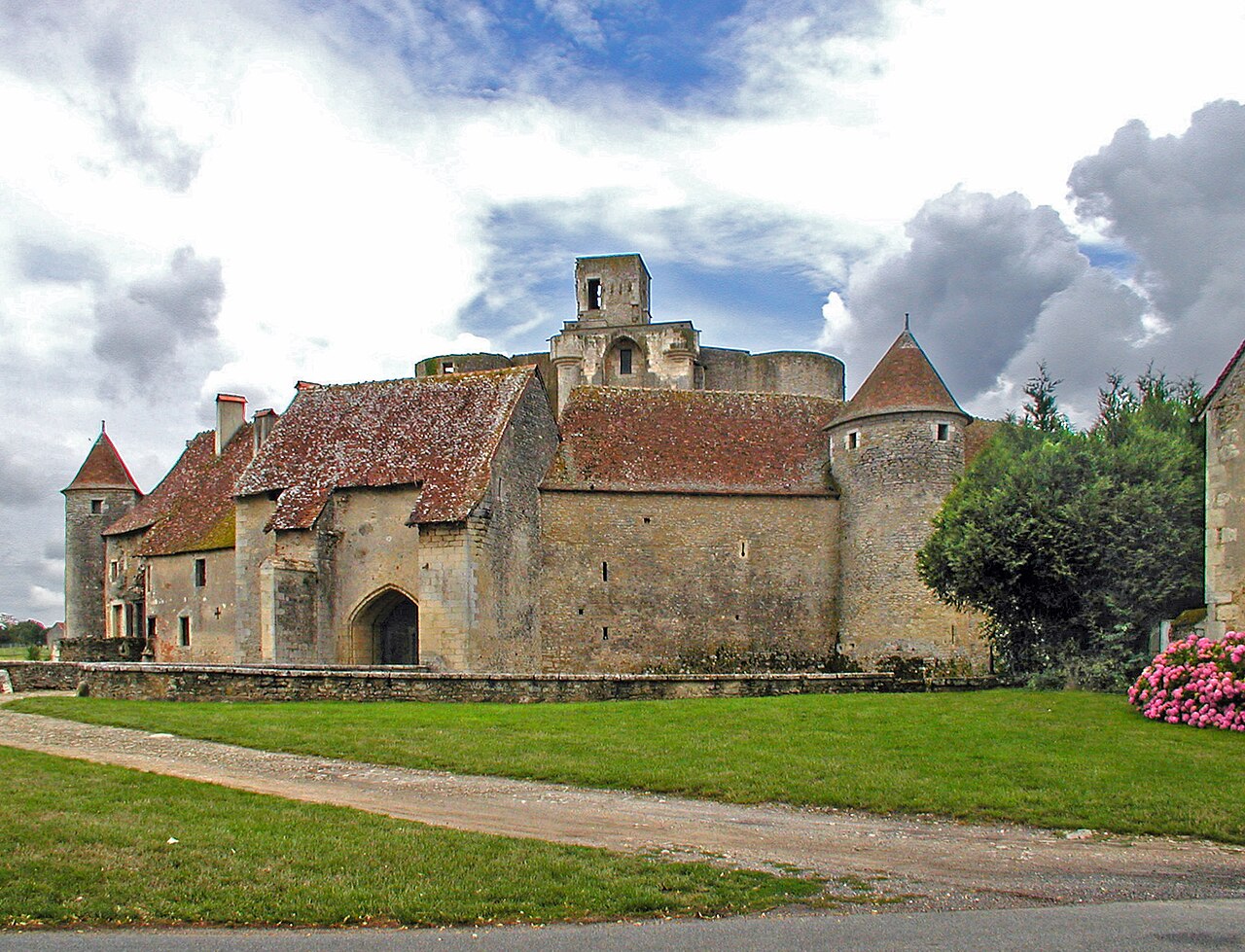
Château de Bannegon
Château de Bannegon stands as a remarkable example of medieval military architecture combined with Renaissance influences, located in the commune of Bannegon, France. Originally built in the 12th century, this hill castle was strategically positioned to guard the border between the historic regions of Berry and Bourbonnais. Its enduring presence offers a window into the turbulent history of the region, reflecting centuries of conflict, architectural evolution, and cultural significance.
Early origins and strategic importance
The site of Château de Bannegon began as a defensive stronghold in the 11th century, initially established by the local inhabitants to protect territorial boundaries. The earliest known owners, the La Porte family, controlled the area around the year 1000. By the 12th century, the castle had taken shape with its foundational fortifications, including stone walls and a keep, designed to withstand the military threats of the high medieval period.
Its location on a hill overlooking the Auron River provided natural defensive advantages, enhanced by man-made features such as moats and watchtowers. This positioning was crucial during the Hundred Years’ War, when the castle served as a key defensive outpost. The castle's role in regional defense is underscored by the visits of King Charles VII in 1431 and 1454, emphasizing its strategic and political significance within the kingdom.
Architectural features and fortifications
The castle is enclosed within a large, trapezoid-shaped fortified perimeter, which utilizes the natural landscape of the Auron River to enhance its defenses. The stone curtain walls are robust, forming a strong barrier around the complex, typical of high medieval military architecture. The castle's most prominent feature is its keep (donjon), which served both as a defensive stronghold and residential quarters.
The Tour des Barres, named after the Barres family who took ownership in the late 14th century, remains a significant architectural element. This tower, dating from the late 13th to early 14th century, is notable for its height and the distinctive chimney rising approximately 9.5 meters. The chimney indicates the dual purpose of the tower as a fortified residence, providing both defense and domestic comfort.
Historical records describe the castle as being surrounded by moats and multiple watchtowers, which created layered defenses that complicated direct assaults. The castle's entrance was originally protected by a drawbridge, controlling access to the keep and adding to its defensibility.
Renaissance restoration and religious conflicts
In the 16th century, Château de Bannegon underwent significant changes reflecting the architectural trends of the Renaissance. The addition of an early Renaissance-style building introduced new aesthetic elements while preserving much of the castle's medieval character. This blend of styles illustrates the transition in castle architecture from purely military fortresses to more comfortable noble residences.
The castle's history during this period is marked by its involvement in the religious wars of the Reformation. Its owners aligned with the Protestant cause, leading to a notable siege in 1568. The castle was defended for fifteen days by Marie de Brabançois against an assault by 2,000 troops dispatched by the Bourbonnais governor Montaré. Despite the valiant defense, the siege resulted in partial destruction of the fortress. This event highlights the castle's continued military importance even as warfare and politics evolved.
Modern history and preservation efforts
Following the upheavals of the French Revolution, Château de Bannegon was seized as national property and sold. The 19th century saw dedicated restoration efforts aimed at preserving the castle's medieval appearance. These restorations focused on maintaining the facades, roofing, and timber frameworks, ensuring the survival of key architectural features.
In 1988, the château came under the ownership of the de Bengy family, who established the association Bannegon Millénaire in 1993 to oversee ongoing restoration projects. Since 1996, the castle has hosted annual medieval festivals, which serve both as cultural celebrations and fundraising events for its upkeep.
The château was officially recognized as a historic monument in 1936, with specific elements such as its facades, roofs, and structural frameworks designated as protected historic monuments in 1965. These designations underscore the cultural and heritage importance of Château de Bannegon within the French historical landscape.
The castle today and visitor experience
Today, Château de Bannegon retains much of its medieval character, with its imposing fortifications and main tower offering visitors a tangible connection to its storied past. The castle’s location at approximately 46°48′8″N latitude and 2°42′56″E longitude continues to reflect its original strategic purpose guarding the frontier between historic territories.
Visitors can explore the trapezoidal fortified enclosure, the remains of the moats, and the Tour des Barres, which stands as a testament to the castle’s enduring legacy. The annual medieval festivals provide an immersive experience into the castle’s history and medieval culture, attracting enthusiasts of history and architecture alike.
Frequently asked questions (FAQ)
- What is the historical significance of Château de Bannegon?
- Château de Bannegon is a remarkable example of medieval architecture in France, dating back to the 12th century. It played a crucial role in the region's history, serving as a strategic fortress during various conflicts and showcasing the evolution of defensive architecture over the centuries.
- When was Château de Bannegon built?
- Construction of Château de Bannegon began in the early 12th century, making it one of the oldest castles in the region. Its architectural style reflects the medieval period, with significant renovations and expansions occurring in subsequent centuries.
- Can I visit Château de Bannegon?
- Yes, visitors are welcome at Château de Bannegon. The castle offers guided tours that provide insights into its rich history and architectural features, allowing guests to fully appreciate its significance.
- What are the opening hours for Château de Bannegon?
- Château de Bannegon is typically open to visitors from March to October, with specific hours varying by season. It is advisable to check the official website or contact the castle for the most current opening times before planning your visit.
- Is it possible to access Château de Bannegon with a wheelchair?
- While Château de Bannegon strives to accommodate all visitors, some areas may present challenges for wheelchair access due to the castle's historic structure. It is recommended to contact the castle in advance to inquire about accessibility options and available facilities.
- What are the ticket prices for visiting Château de Bannegon?
- Ticket prices for Château de Bannegon vary based on age and type of tour, with discounts often available for students and seniors. It's best to check the castle's official website for the most accurate and up-to-date pricing information.
- When is the best time to visit Château de Bannegon?
- The best time to visit Château de Bannegon is during the spring and early fall when the weather is pleasant, and the surroundings are particularly beautiful. Visiting during weekdays can also help you avoid larger crowds.
- Are there any nearby attractions to Château de Bannegon?
- Yes, the region surrounding Château de Bannegon is rich in history and natural beauty, with several other castles and charming villages nearby. Visitors can explore the picturesque landscapes and enjoy local cuisine at nearby restaurants after touring the castle.
Information
Website
Visit websiteSources & official resources
Verify the information above using these authoritative references.
Loading map...
Visitor reviews
No reviews yet. Been here? Write the first review and help other travelers!
Write the first reviewVisited this castle? Share your experience
Your review helps other travelers and adds first-hand knowledge to our encyclopedia.