Otanaha Fortress
Otanaha Fortress is a significant historical site located in the Gorontalo province on Sulawesi Island, Indonesia. Constructed in 1522 by King Ilato of the Gorontalo Kingdom in collaboration with Portuguese sailors, the fortress was designed to strengthen the region's security and defense during a period marked by increasing European influence and local power struggles. Situated atop Dembe Hill, the fortress commands a strategic vantage point overlooking the surrounding landscape, including the expansive Limboto Lake and parts of the Gorontalo region.
Historical context and construction
The construction of Otanaha Fortress took place in the early 16th century, a time when the Renaissance period was influencing architectural and military developments globally, although the fortress itself reflects a unique fusion of local and European techniques. The collaboration between King Ilato and Portuguese sailors highlights the interaction between indigenous rulers and European powers in Southeast Asia during this era. The fortress was built as a bastioned structure to provide a robust defense mechanism against both local conflicts and the threat of foreign invasions.
Materials and building techniques
The fortress is notable for its distinctive construction materials. It was built using a mixture of sand, calcium, and the eggs of Maleo birds, a rare and unusual combination that provided durability and strength. The use of Maleo bird eggs, indigenous to the region, is an example of local resourcefulness and adaptation in construction practices. The walls and bastions of the fortress exhibit this unique composite, which has helped preserve the structure over centuries despite the tropical climate.
Architectural features and layout
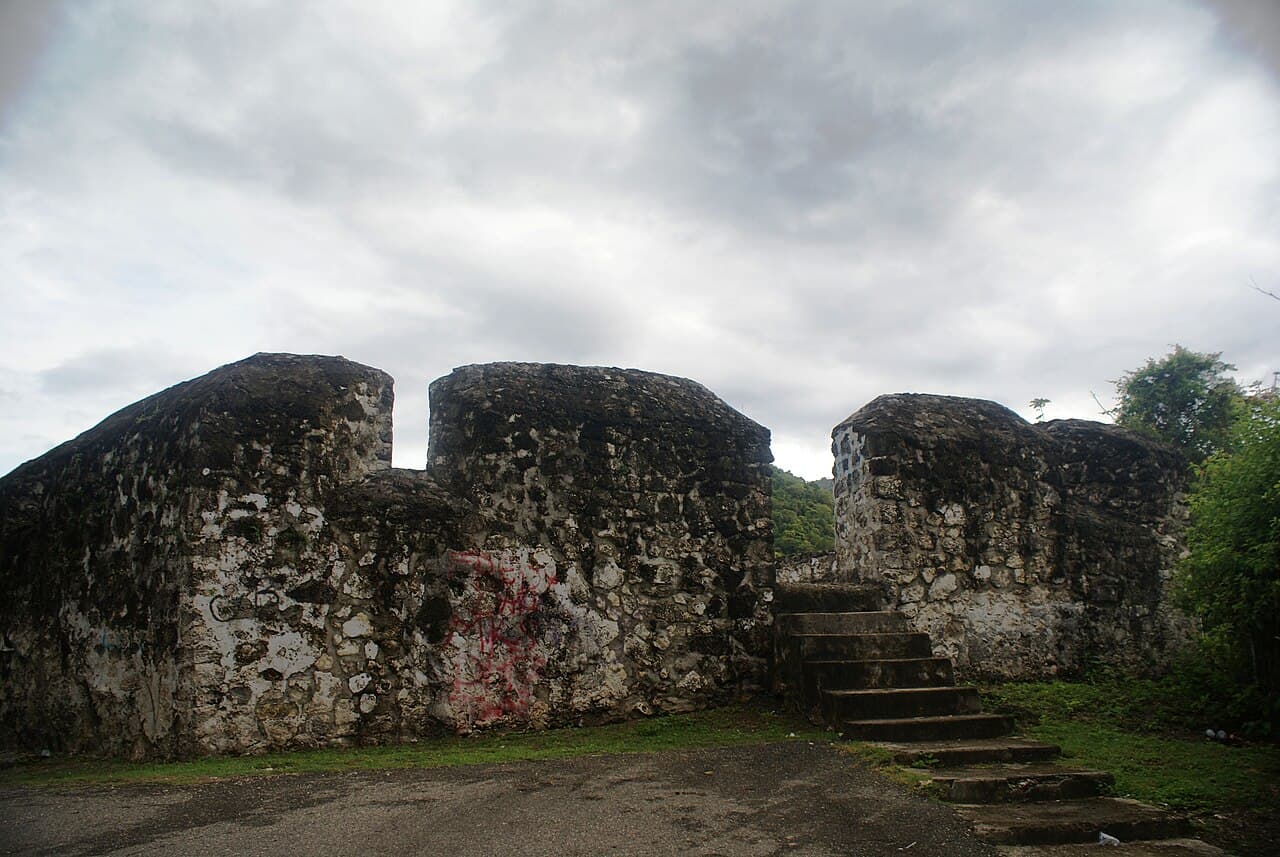
Otanaha Fortress is classified as a bastioned fortress, a style characterized by angular bastions designed to provide wide fields of fire and improved defensive capabilities. The fortress layout takes advantage of the natural topography of Dembe Hill, incorporating the steep slopes into its defensive strategy.
Access and stairways
Visitors today can reach the fortress by ascending a series of 348 steps divided into four main stopovers, which serve as resting points. The first segment consists of 52 steps leading from the base to the first stopover, followed by 83 steps to the second stopover. The climb continues with 53 steps to the third stopover and 89 steps to the fourth. From the final stopover, an additional 71 steps lead to the fortress entrance. This stairway not only provides physical access but also offers visitors progressively expansive views of the surrounding landscape.
Defensive structures
The fortress includes several bastions and defensive walls constructed to withstand attacks. The bastions are positioned to cover multiple angles, allowing defenders to repel assaults effectively. The design reflects an understanding of contemporary military architecture adapted to local conditions and materials. The fortress's elevated position on Dembe Hill enhances its defensive advantage, making it difficult for attackers to approach unnoticed.
Panoramic views and cultural significance
From the top of Otanaha Fortress, visitors can enjoy sweeping views of Limboto Lake, one of the largest lakes in Sulawesi, and the surrounding Gorontalo region. These vistas provide insight into the strategic importance of the fortress's location, overseeing vital waterways and land routes. The fortress remains a symbol of local heritage and resilience, representing the historical interactions between indigenous kingdoms and European powers.
Tourism and preservation
Today, Otanaha Fortress is a popular tourist destination in Gorontalo province. Efforts to preserve the site focus on maintaining its structural integrity and promoting its historical and cultural value. Visitors are drawn not only by the fortress's architectural uniqueness but also by the opportunity to experience a significant piece of Indonesian history amidst natural beauty.
Frequently asked questions (FAQ)
- How do I reach Otanaha Fortress?
- To reach Otanaha Fortress, visitors must climb a total of 348 steps divided into four main stopovers on Dembe Hill. The climb is moderately challenging but offers scenic views at each resting point.
- What materials were used to build Otanaha Fortress?
- The fortress was constructed using a unique mixture of sand, calcium, and the eggs of Maleo birds, which contributed to the durability of its walls.
- When was Otanaha Fortress built and by whom?
- Otanaha Fortress was built in 1522 by King Ilato of the Gorontalo Kingdom in collaboration with Portuguese sailors to strengthen regional defenses.
- What can I see from the top of Otanaha Fortress?
- From the fortress summit, visitors can enjoy panoramic views of Limboto Lake and the surrounding Gorontalo region, highlighting the strategic location of the fort.
- Is Otanaha Fortress accessible for all visitors?
- The fortress requires climbing a significant number of steps, which may be challenging for visitors with mobility issues. Visitors should be prepared for a moderately strenuous ascent.
Photo gallery

Information
Loading map...
Visitor reviews
No reviews yet. Been here? Write the first review and help other travelers!
Write the first reviewVisited this castle? Share your experience
Your review helps other travelers and adds first-hand knowledge to our encyclopedia.