Fort Oranje (Ternate)
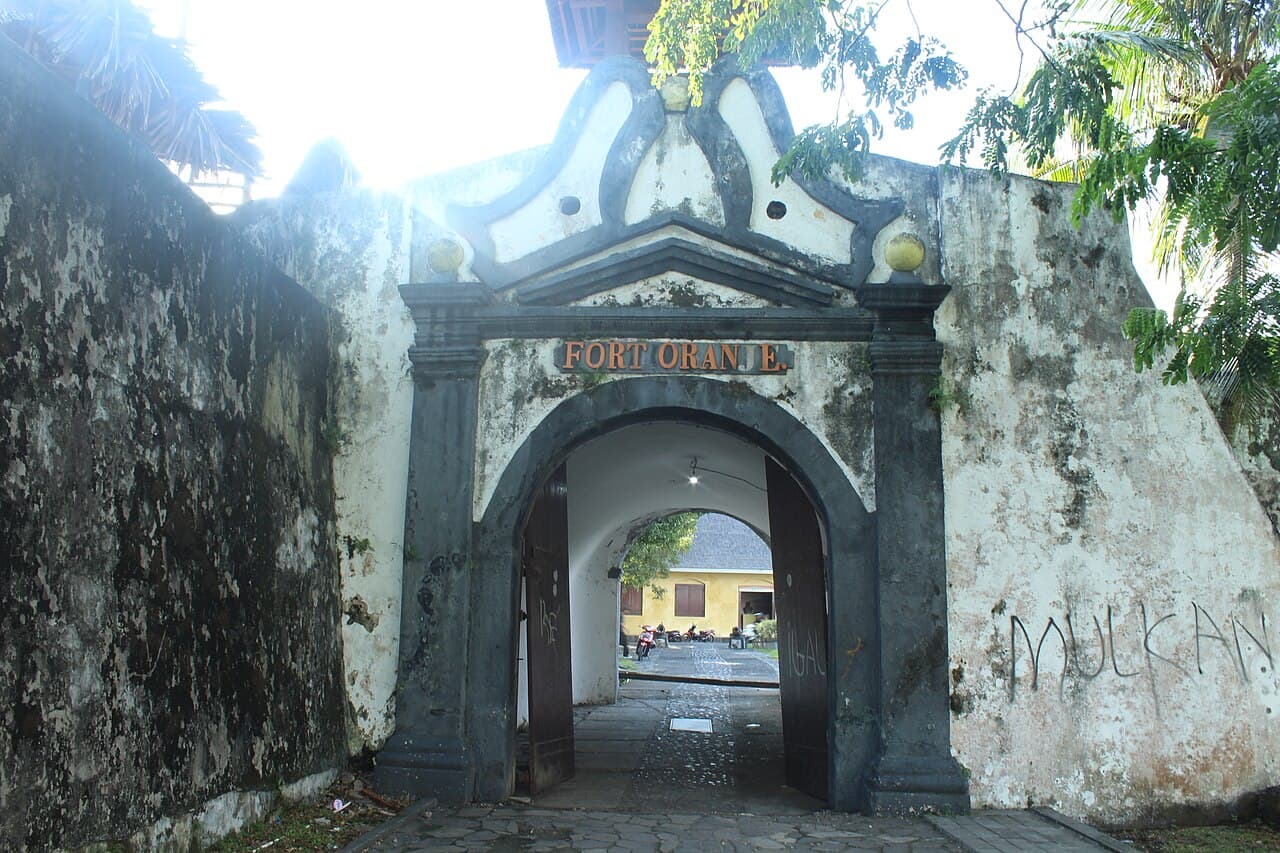
Fort Oranje is a prominent 17th-century Dutch bastioned fortress located on the island of Ternate in Indonesia. Constructed during the Renaissance period, this fort represents one of the most significant examples of European colonial military architecture in Southeast Asia. It was built by the Dutch East India Company (VOC) to secure their control over the lucrative spice trade in the Maluku Islands, particularly the valuable cloves that grew abundantly on Ternate.
Historical context and construction
The island of Ternate was a crucial center for the spice trade from the early 16th century. Originally controlled by the local sultanate, the arrival of European powers, including the Portuguese and later the Dutch, led to the establishment of fortified structures to assert dominance. Fort Oranje was constructed in the early 1600s, replacing earlier Portuguese fortifications on the site.
The fort's construction began shortly after the Dutch ousted the Portuguese from Ternate in 1606. Built primarily of coral stone and local materials, the fort was designed in the bastioned fortress style, characterized by angled bastions that allowed defenders to cover all approaches with overlapping fields of fire. This design was typical of Renaissance military architecture and was aimed at resisting cannon fire and improving defensive capabilities.
Architectural features
Fort Oranje is notable for its star-shaped bastions at each corner, which provided strategic vantage points for artillery placement. The thick stone walls, some reaching several meters in thickness, were designed to withstand bombardments. Inside, the fort contained barracks, storage rooms, and a central courtyard, facilitating the garrison's operations.
The fort's location on the coast allowed it to control access to the harbor, making it a critical point for maritime defense and trade regulation. The main gate faced the sea, protected by a moat and drawbridge in earlier configurations, although these features have changed over time.
Role in regional history
Throughout the 17th and 18th centuries, Fort Oranje served as the administrative and military center for Dutch activities in the Maluku Islands. It played a key role in the VOC's efforts to monopolize the spice trade by controlling the production and export of cloves.
The fort witnessed several conflicts, including local uprisings and challenges from competing European powers. Despite these challenges, it remained a symbol of Dutch colonial power until the decline of the VOC and the eventual transfer of control to the Dutch colonial government.
Preservation and current status
Today, Fort Oranje is well preserved and serves as a historical monument and tourist attraction in Ternate. Its robust walls and bastions remain largely intact, offering visitors insight into the military engineering of the period and the colonial history of Indonesia.
The site is accessible to the public, with guided tours available that explain the fort's history, architecture, and significance in the spice trade era. Efforts have been made to maintain the fort's structural integrity and to promote its cultural heritage value.
Architectural significance
As a bastioned fortress, Fort Oranje exemplifies the adaptation of European fortification principles to tropical island conditions. The use of local materials combined with Renaissance-era design principles resulted in a fortification that was both functional and durable.
The fort's design reflects the strategic military thinking of the time, emphasizing defense against artillery and naval attacks. Its star-shaped bastions are a hallmark of Renaissance military architecture, aimed at eliminating blind spots and maximizing defensive coverage.
Influence on regional fortifications
Fort Oranje influenced the design of other forts in the region, as the Dutch sought to replicate its effective defensive features across their colonial territories. It stands as a testament to the military and economic ambitions of the Dutch East India Company in the Indonesian archipelago.
Visiting information
The fort is open to visitors daily, with typical opening hours from morning until late afternoon. Entrance fees are generally modest, supporting the maintenance and preservation of the site. Visitors can explore the bastions, walls, and internal chambers, gaining a comprehensive understanding of the fort's role in history.
Frequently asked questions (FAQ)
- When was Fort Oranje built and by whom?
- Fort Oranje was constructed in the early 17th century by the Dutch East India Company after they ousted the Portuguese from Ternate in 1606.
- What architectural style characterizes Fort Oranje?
- Fort Oranje is designed in the Renaissance bastioned fortress style, featuring star-shaped bastions and thick stone walls to withstand artillery attacks.
- Can visitors explore Fort Oranje today?
- Yes, Fort Oranje is well preserved and open to the public, offering tours that highlight its historical and architectural significance.
- Why was Fort Oranje strategically important?
- The fort controlled access to Ternate's harbor, allowing the Dutch to regulate the spice trade and defend against rival powers.
- What materials were used in the construction of Fort Oranje?
- The fort was built using coral stone and local materials, which were combined with European design principles to create a durable structure.
Photo gallery

Information
Loading map...
Visitor reviews
No reviews yet. Been here? Write the first review and help other travelers!
Write the first reviewVisited this castle? Share your experience
Your review helps other travelers and adds first-hand knowledge to our encyclopedia.