Fort Kalamata
Fort Kalamata is a significant example of a coastal star fort constructed during the 16th century by the Portuguese on the island of Ternate in Indonesia's Maluku Islands. Originally named Santa Lucia, the fort later became widely known as Fort Kalamata, a name derived from Pengeran Kalamata, who was the younger brother of the Sultan of Ternate Madarsyah. This fortification was part of the Portuguese strategy to control the lucrative spice trade in the region, particularly cloves, which were abundant in the Maluku Islands.
Strategic location and design
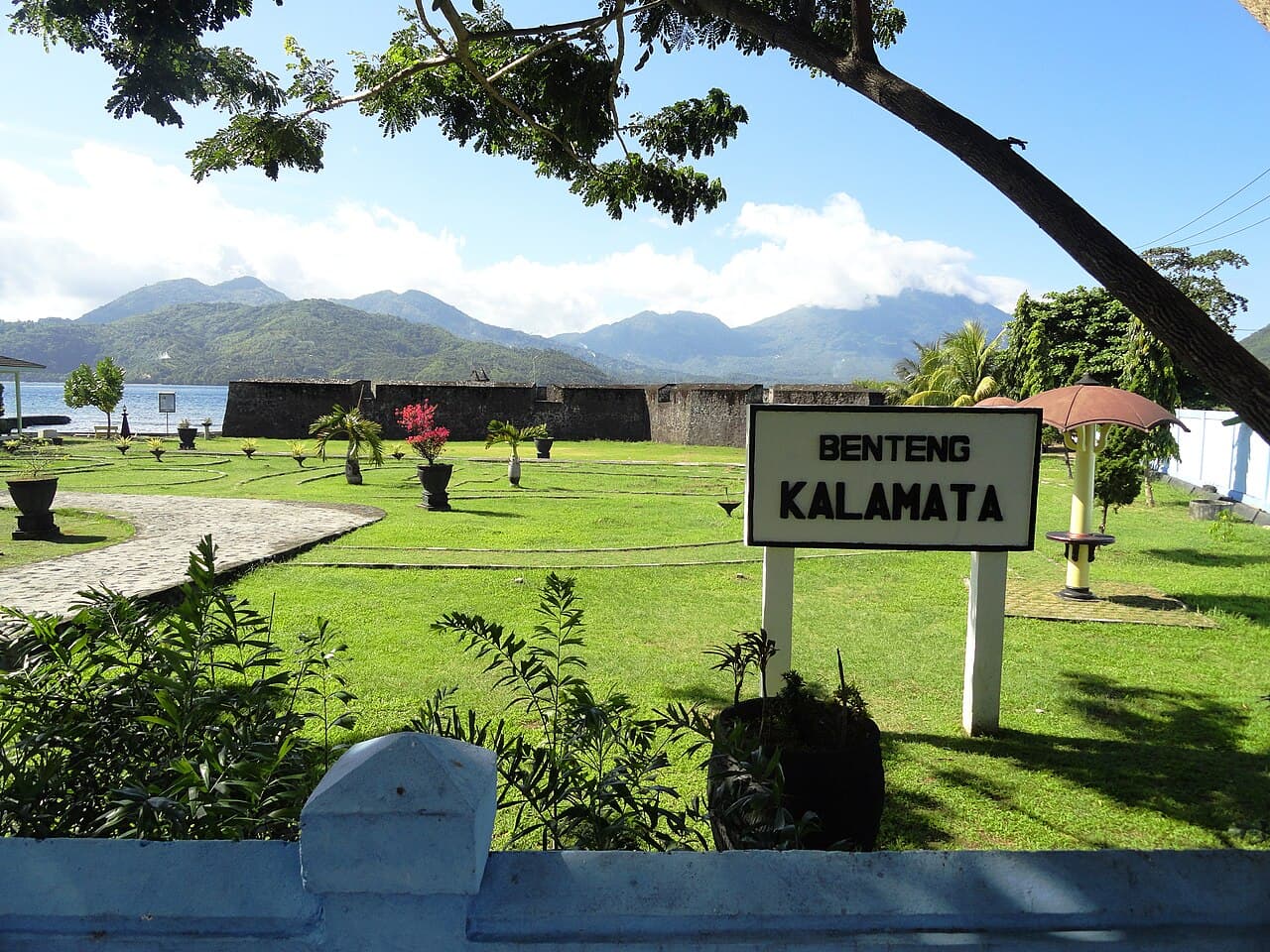
Fort Kalamata is situated at the south-eastern corner of Ternate Island, approximately 1 km south of Bastiong, directly on the edge of the water. Its location provided a commanding view over the surrounding sea routes, enabling control and defense against rival powers and pirates. The fort is classified as a bastioned fortress, characterized by its star-shaped design which was innovative for its time and allowed for better defensive coverage and elimination of blind spots.
The star fort layout includes multiple bastions protruding from the main walls, enabling defenders to cover adjacent walls with crossfire. This architectural design was a response to the evolving military technology of the era, particularly the increasing use of cannon artillery, which rendered traditional medieval castles vulnerable. The fort's walls are thick and robust, built to withstand bombardment and provide secure platforms for artillery placement.
Historical context and significance
Constructed during the height of Portuguese influence in Southeast Asia, Fort Kalamata was part of a network of fortifications established to secure Portuguese dominance over the spice islands. The fort's original name, Santa Lucia, reflects the Portuguese tradition of naming forts after saints. Over time, the local name Fort Kalamata became more common, reflecting the integration of local history and figures into the fort's identity.
Pengeran Kalamata, after whom the fort is named, was a notable figure in Ternate's royal family. His association with the fort highlights the complex relationships between European colonial powers and local rulers, who often collaborated or contested control over strategic sites.
Architectural features and preservation
The fort's bastioned design includes several angular bastions that project outward, allowing defenders to cover all approaches. The walls are constructed from local stone and coral materials, typical of fortifications in the Maluku Islands. The fort includes features such as gun ports, ramparts, and defensive walls designed to resist naval attacks.
Despite centuries of exposure to tropical weather and historical conflicts, Fort Kalamata remains partially preserved. Restoration efforts have been undertaken to maintain its structural integrity and make it accessible to visitors. Today, the fort is open to the public, serving as a cultural and historical landmark that offers insight into the colonial history and military architecture of the region.
Visiting Fort Kalamata
Visitors to Fort Kalamata can explore the remains of the bastioned fortress and enjoy views of the surrounding sea and Ternate Island. The site provides educational opportunities about the Portuguese colonial period, local history, and the strategic importance of the Maluku Islands in global trade during the 16th century.
The fort's accessibility and coastal setting make it a popular destination for tourists interested in history, architecture, and maritime heritage. Interpretive signage and guided tours help contextualize the fort's role in the broader history of Southeast Asia.
Frequently asked questions (FAQ)
- What is Fort Kalamata and where is it located?
- Fort Kalamata is a 16th-century Portuguese-built coastal star fort located on Ternate Island in Indonesia's Maluku Islands.
- Why is Fort Kalamata also called Santa Lucia?
- The fort was originally named Santa Lucia by the Portuguese, reflecting their tradition of naming forts after saints.
- What is the architectural style of Fort Kalamata?
- Fort Kalamata is a bastioned fortress featuring a star-shaped design typical of early modern military architecture to defend against cannon fire.
- Is Fort Kalamata open to visitors?
- Yes, Fort Kalamata is open to the public and offers opportunities to explore its partially preserved bastions and walls.
- What historical significance does Fort Kalamata hold?
- Fort Kalamata was built to control the spice trade and represents Portuguese colonial influence in the Maluku Islands during the 16th century.
Photo gallery

Information
Loading map...
Visitor reviews
No reviews yet. Been here? Write the first review and help other travelers!
Write the first reviewVisited this castle? Share your experience
Your review helps other travelers and adds first-hand knowledge to our encyclopedia.