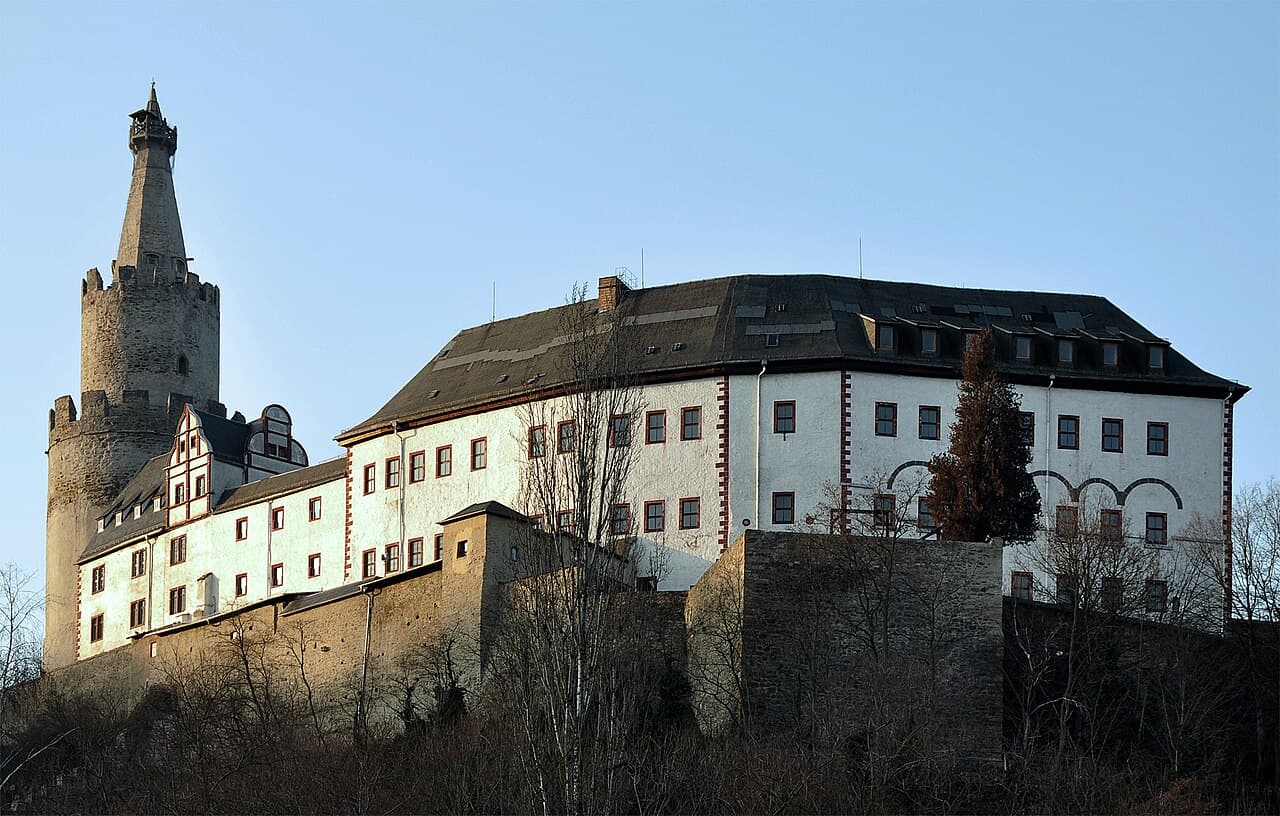
Osterburg castle stands prominently on a hill in the heart of Weida, Germany, commanding views over the town and surrounding landscape. This high medieval fortress dates back to the 12th century, making it one of the region's oldest surviving castles. The castle's most striking feature is its imposing 54-metre-high keep, which ranks as the third highest and among the oldest surviving keeps in Germany, showcasing the impressive military architecture of the period.
Architectural significance of the keep
The keep at Osterburg is a remarkable example of medieval defensive design, constructed primarily from robust stone masonry. Its height and solid construction were intended to serve both as a lookout and a final refuge during sieges. The keep's walls are thick and feature narrow windows designed for archers, reflecting the castle's role in regional defense during the high medieval period.
The watchman's parlour and battlements
Above the second array of battlements sits the watchman's parlour, a unique feature that was actively used until 1917. This chamber provided shelter and vantage for the watchman tasked with guarding the castle and town from potential threats. The parlour's location above the battlements allowed for a panoramic view, crucial for early warning and communication.
Geological and historical landmarks
On the castle terrace, visitors can find a monument marking a significant geological boundary: the furthest southern reach of the ice sheet during the Elster glaciation. This natural history marker adds an additional layer of interest to the castle grounds, linking the site not only to medieval history but also to the ancient geological past of the region.
Historical context and ownership
Osterburg's origins in the 12th century place it firmly in the era when castles were crucial for territorial control and defense in the Holy Roman Empire. The castle likely served as a stronghold for local nobility, overseeing trade routes and asserting feudal authority. Over centuries, Osterburg has witnessed various historical events and changes in ownership, reflecting the shifting political landscape of Thuringia and Saxony regions.
Preservation and visitor experience
Today, Osterburg is well preserved, allowing visitors to explore its medieval architecture and enjoy panoramic views of Weida from the keep. The castle's accessibility and historical significance make it a popular destination for those interested in medieval fortifications and German history. Interpretive signage and guided tours provide insights into the castle's construction, historical role, and architectural features.
Architectural features and layout
The castle complex includes fortified walls, gatehouses, a courtyard, and residential quarters, typical of hill castles built during the high medieval period. The strategic placement on a hill provided natural defense advantages, complemented by man-made fortifications. The combination of military and residential elements illustrates the dual role of castles as both defensive structures and noble residences.
Significance in German castle heritage
Osterburg is recognized as an important cultural and architectural monument within Germany's rich heritage of medieval castles. Its towering keep and well-preserved structures offer valuable insights into castle construction techniques and feudal life during the 12th century. The castle's unique features, such as the watchman's parlour and glaciation monument, further distinguish it among German castles.
Frequently asked questions (FAQ)
- What is the historical significance of Osterburg?
- Osterburg is a medieval castle located in Weida, Germany, with roots dating back to the 12th century. It played a crucial role in regional defense and governance, exemplifying the feudal system of the time. The castle's architecture and historical artifacts offer insights into the life and culture during the Middle Ages.
- When was Osterburg built?
- Osterburg was originally constructed in the 12th century, serving as a stronghold for local nobility. Over the centuries, it has undergone several renovations and expansions, reflecting various architectural styles. Today, it stands as a testament to the historical evolution of military architecture.
- Can I visit Osterburg?
- Yes, Osterburg is open to visitors who wish to explore its historical grounds and learn about its significance. Guided tours are available, providing an in-depth look at the castle's history and architecture. Be sure to check the official website for up-to-date visiting information.
- What are the opening hours for Osterburg?
- Osterburg typically opens to visitors from 10 AM to 5 PM, but hours may vary depending on the season and special events. It is advisable to check the castle's official website or contact them directly for the most accurate and current information. Planning your visit ahead of time ensures a smoother experience.
- Is it possible to access Osterburg with mobility aids?
- Osterburg strives to be accessible to all visitors, but due to its historic nature, some areas may present challenges for those using mobility aids. It is recommended to contact the castle administration prior to your visit to discuss specific accessibility options available. They can provide useful information to enhance your experience.
- What is the best time to visit Osterburg?
- The best time to visit Osterburg is during the late spring and early autumn when the weather is mild, and the surroundings are lush and vibrant. These seasons also see fewer crowds, allowing for a more enjoyable exploration of the castle and its grounds. Special events and guided tours are often scheduled during this time, enhancing your visit.
- Are there any nearby attractions to Osterburg?
- Yes, there are several nearby attractions, including the beautiful town of Weida, which offers charming streets and local shops. Additionally, visitors can explore other historical sites in the region, such as churches and museums that showcase the area's rich heritage. Combining your trip with these sites makes for a full day of exploration.
- What are the ticket prices for entering Osterburg?
- Ticket prices for entering Osterburg vary, but generally, they are quite affordable, with discounts available for students, seniors, and children. Family tickets are often offered at a reduced rate, making it a great destination for groups. For the latest pricing and any special offers, it is best to check the official castle website before your visit.
Photo gallery

Information
Website
Visit websiteSources & official resources
Verify the information above using these authoritative references.
Loading map...
Visitor reviews
No reviews yet. Been here? Write the first review and help other travelers!
Write the first reviewVisited this castle? Share your experience
Your review helps other travelers and adds first-hand knowledge to our encyclopedia.



