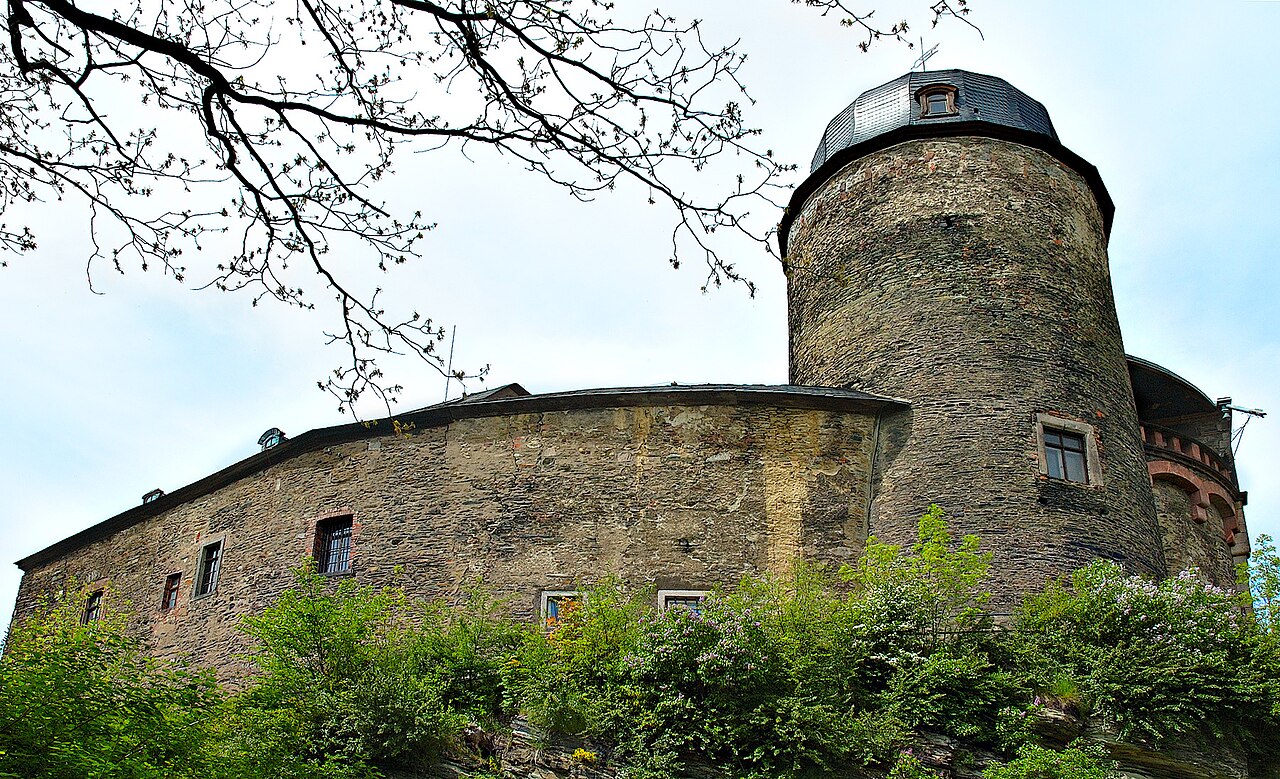
Netzschkau Castle
Netzschkau Castle is a well-preserved example of a late medieval fortress located in the town of Netzschkau, Germany. Constructed around 1490 by Caspar von Metzsch, the castle reflects the architectural transition of the period with its distinctive late Gothic style elements and later Renaissance influences. Although the Metzsch family built Netzschkau Castle, their primary residence remained the nearby Castle Mylau, which influenced the castle's function as a secondary stronghold rather than a principal home.
Architectural design and features
The castle's structure is characterized by a rectangular long building with an adjoining round tower and a rectangular tower positioned at the front, situated prominently near the market square opposite the church. The exterior facade is notable for its striking color contrast between lime white plaster and strong red accents, which highlight the building's architectural details. The staggered gables and arched curtain windows are hallmark features of the late Gothic style and contribute to the castle's imposing yet elegant appearance.
Inside, several ornate sandstone door frames date back to the original construction phase, showcasing the craftsmanship of the late 15th century. The interiors retain much of their original furnishing, including a rare and impressive 4.10-meter-high tiled stove from 1627. The castle also houses an uncommon coat of arms and some of the oldest examples of German stamp stucco on the ceilings, featuring intricate friezes and ornamental designs that reflect Renaissance artistic trends.
Historic decorative elements
Among the castle's most valuable interior treasures are a gilded wooden coffered ceiling and various possessions of the last countess, which provide insight into the castle's aristocratic heritage. These elements emphasize the castle's role not only as a defensive structure but also as a residence that valued artistic and cultural refinement.
Historical context and ownership
Originally constructed by the Metzsch family, Netzschkau Castle changed hands in the 19th century when it was acquired by Count Heinrich von Schönburg-Hinterglauchau in 1858. Count Heinrich and his wife, Marie Clementine (1789–1863), occasionally resided at the castle, appreciating its peaceful rural setting. During this period, the surrounding grounds were transformed into a 4-hectare English-style castle park, reflecting the 19th-century romantic landscaping trends that favored naturalistic gardens over formal layouts.
The castle remained in the Schönburg family until the death of Countess Frida von Schönburg-Hinterglauchau (1864–1943). Subsequently, the city of Netzschkau acquired the property in 1944. At that time, the castle was in a state of neglect, with significant deterioration including the collapse of the concert hall ceiling in 1947, which damaged much of the valuable stucco work.
Restoration and modern use
Extensive restoration efforts began in the early 1990s after subsidies were approved in 1990. From 1991 to 1995, the castle underwent significant structural and external renovations that stabilized and preserved its historic fabric. Archaeological excavations conducted in 1999 uncovered important findings now displayed in the castle's permanent exhibition, enriching understanding of its history and development.
The Förderverein Schloss Netzschkau eV, founded in 1998, now manages the castle with a focus on historical monument preservation and cultural use. The castle hosts a variety of events in its restored spaces, including the vaulted castle café, the magnificent concert hall, and the rustic fencing floor. These venues accommodate concerts, exhibitions, lectures, readings, and dance workshops, making Netzschkau Castle a vibrant cultural center.
Visiting the castle
The castle and its permanent exhibition are open to visitors on weekends and public holidays from April to October. Visitors can explore the castle's rich architectural heritage, original interiors, and the beautiful English-style park, gaining insight into the region's medieval and post-medieval history.
Architectural significance and style
Netzschkau Castle is a notable example of a late medieval hill castle that combines Gothic architectural features with later Renaissance decorative elements. Its preservation of original interior furnishings and decorative arts, such as the tiled stove and stucco ceilings, provides valuable examples of craftsmanship from the 15th and 17th centuries. The castle's adaptive reuse as a cultural venue demonstrates a successful model of heritage conservation.
Information
Loading map...
Visitor reviews
No reviews yet. Been here? Write the first review and help other travelers!
Write the first reviewVisited this castle? Share your experience
Your review helps other travelers and adds first-hand knowledge to our encyclopedia.